Introduction to Smartphone Flex Cables
When repairing smartphones, one of the most overlooked but essential components is the flex cable, also commonly known as the ribbon cable. Whether you’re fixing a display, camera, charging port, or button, choosing the right cable can make the difference between a smooth repair and hours of frustration.
What Is a Mobile Flex Cable?
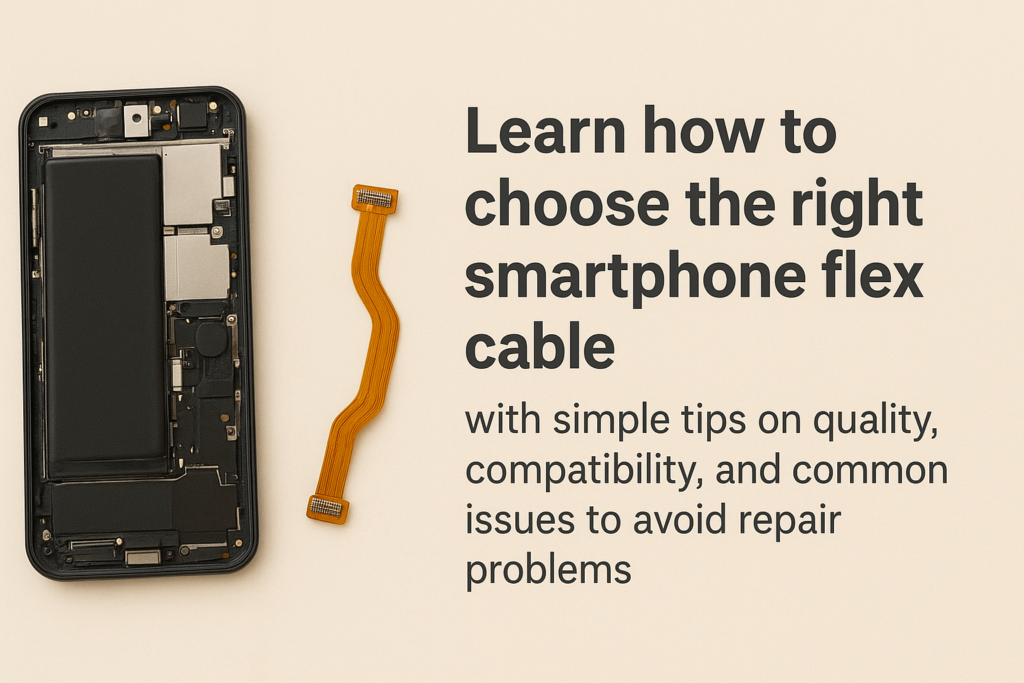
A mobile flex cable is a thin, flexible printed circuit (FPC) that connects different components inside a smartphone. Think of it as the “nervous system” of the phone, routing signals through narrow, bendable pathways.
Why Flex Cables Matter in Phone Repairs
Without a high-quality flex cable, even brand-new components like LCD screens or charging ports may not work correctly. A poor-quality cable can cause intermittent faults that are hard to diagnose, making a reliable flex cable crucial in any repair.
Types of Smartphone Flex Cables
Flex cables vary depending on their function. Here are the most common ones you’ll encounter:
Display Flex Cable
This cable carries video signals to the screen. A defective display flex can cause flickering, lines, or no display.
Touchscreen Flex Cable
Handles the input from the touch panel. Low-quality cables may result in ghost touches or unresponsive areas.
Charging Port Flex Cable
Connects the Type-C/Lightning/Micro USB port to the motherboard. Faulty versions cause intermittent charging or slow charging.
Camera Flex Cable
Links the front or rear camera to the mainboard. Problems here create camera black screens or failed camera initialisation.
Side-Key / Power Button Flex Cable
Responsible for the volume and power keys. A damaged one means your buttons stop responding.
Mainboard Interconnect Flex Cable
This cable connects two PCBs (logic boards) and is crucial for many Android models. Damage may cause sudden reboots or no power.
Key Factors to Consider When Purchasing Flex Cables
Buying the right flex cable can be tricky. Here’s what to look for:
Compatibility With Phone Model
Always match the exact model number — even minor variations (e.g., Samsung A10 vs A10S) may not be compatible.
Quality Grades (Orig/OEM/Copy)
- Original (Orig): Same as factory. Best reliability, highest cost.
- OEM: Made by contracted manufacturers. Good quality at a lower price.
- Copy/Aftermarket: Cheaper, but risky—often causes functional issues.
Flex Cable Thickness & Copper Quality
High-quality flex cables use thicker copper layers for better conductivity and durability.
Connector Precision and Pin Alignment
Poor alignment causes loose connections and intermittent issues.
Durability and Bend Resistance
A good flex cable should withstand multiple bends without breaking. Look for reinforced bending areas.
Common Problems Caused by Low-Quality Flex Cables
Cheap flex cables often lead to frustrating issues. Here are common symptoms:
Touch Issues and Ghost Touch
A weak or unstable connection can cause unwanted touches or unresponsive areas.
Display Flickering or No Display
The screen may flash, show lines, or stay black due to poor signal transmission.
Charging Instability
The device may charge slowly, stop randomly, or fail to detect the charger.
Camera Failure or Black Screen
A camera flex with poor signal quality may cause the app to crash.
Intermittent Power or Restarting
Faulty mainboard flex cables often cause reboot loops or random shutdowns.
How to Identify High-Quality Flex Cables
Here’s how technicians quickly judge flex cable quality:
Visual Inspection Checklist
- Smooth, evenly printed traces
- Clean, straight connectors
- No oxidation or residue
- Reinforced bend sections
Testing Before Full Assembly
Always connect the cable temporarily to test touch, display, and charging before sealing the phone.
Importance of Reliable Suppliers
Long-term experience and certification matter. Avoid unknown suppliers offering suspiciously low prices.
Where to Buy Reliable Mobile Flex Cables
OEM Suppliers
Great for bulk buyers and repair shops needing consistency.
Professional Wholesale Markets
Places like Shenzhen Huaqiangbei offer high-quality and verified components.
Trusted Online Vendors
Choose sellers with high ratings, clear product descriptions, and return policies.
Best Practices for Handling and Installing Flex Cables
Even good flex cables can fail if mishandled.
Avoiding Over-bending
Sharp bends weaken the copper, leading to cracks and signal issues.
Proper Connector Insertion
Align gently — never force the connector. Even slight misalignment causes failure.
Keeping Cables Clean and Dust-Free
Dust can block connectors. Use anti-static tools and avoid touching the contact pins.
Conclusion
Choosing the right mobile flex cable is a small step that makes a big difference in smartphone repair quality. From ensuring compatibility to inspecting connector precision, a careful approach helps avoid unnecessary rework and prevents frustrating functional issues. By using reliable suppliers and proper installation techniques, you can significantly improve repair success rates and extend device longevity.
FAQs
1. Are OEM flex cables reliable?
Yes, OEM cables are very reliable and offer a good balance between cost and performance.
2. Can I use the same flex cable for different phone models?
No. Flex cables are model-specific and should match the exact device variant.
3. Why does my touch screen behave erratically after replacement?
It’s often due to a poor-quality touch flex cable or improper installation.
4. How can I avoid damaging a flex cable during repair?
Avoid sharp bends, use proper tools, and handle connectors gently.
5. What’s the safest place to buy good-quality flex cables?
Reputable suppliers, OEM distributors, or trusted online marketplaces.