Introduction
Why LCD Screen Procurement Is Riskier Than It Looks
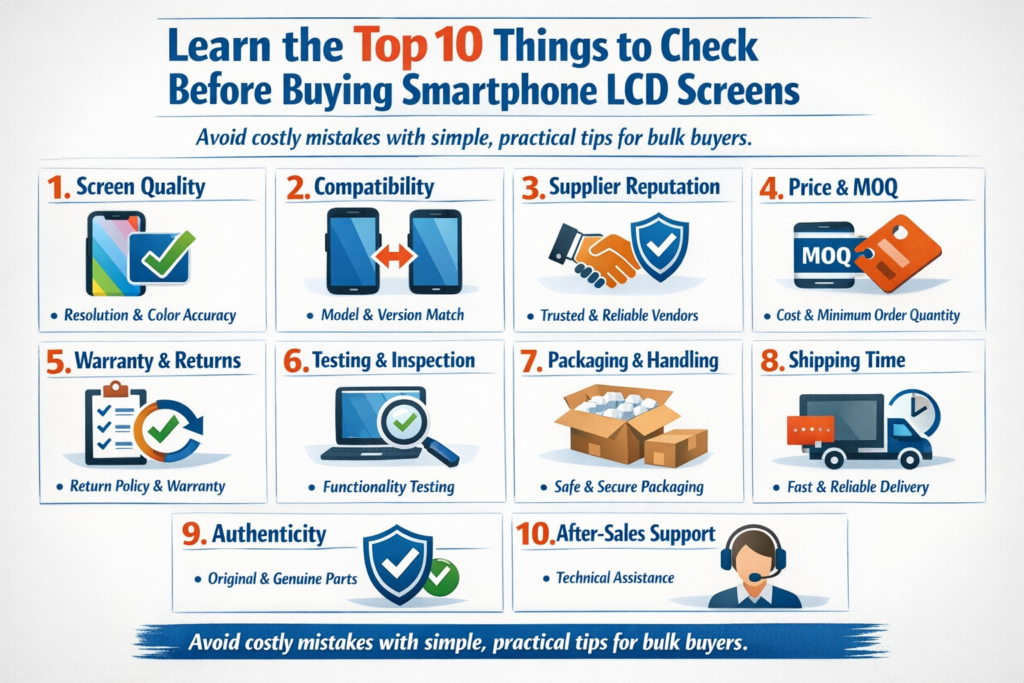
Buying smartphone LCD screens sounds simple—find a model, check the price, place an order. Easy, right? Not quite. In reality, LCD screen procurement is one of the easiest ways for repair shops and bulk buyers to lose money fast. One wrong version, a mismatched connector, or a low-grade panel can turn a “good deal” into a stack of unsellable inventory.
Think of LCD procurement like buying shoes online without checking the size chart. They might look right, but once they arrive, you’re stuck.
Who This Guide Is For
This article is written for:
- Phone repair shops
- Refurbishers and secondary assemblers
- Wholesalers and bulk LCD buyers
If you care about stable quality, predictable costs, and fewer returns, you’re in the right place.
1. Screen Model and Version Compatibility
Understanding Phone Model Variants
One phone model doesn’t always mean one screen. Manufacturers release multiple variants for different markets, chipsets, and production batches. Even phones with the same name may use different LCD suppliers.
Regional and Carrier Differences
A model sold in Asia may use a different LCD version than the same model sold in Europe or the US. Carrier-locked phones can also introduce hidden compatibility differences.
Matching Screen Version Numbers Correctly
Always confirm:
- Screen version number
- Compatible motherboard revision
- Supported firmware
Skipping this step is like installing the wrong engine in a car—it might fit, but it won’t run.
2. Original vs Aftermarket vs Refurbished Screens
What “Original” Really Means in the Market
In the repair industry, “original” often means refurbished original—not brand new from the phone brand. Truly brand-new original LCDs are rare and expensive.
Pros and Cons of Aftermarket Screens
Aftermarket screens are newly produced by third-party factories. They’re cheaper and widely available but vary heavily in quality.
Pros:
- Lower cost
- Stable supply
Cons:
- Inconsistent color and brightness
- Shorter lifespan if low-grade
How Refurbished Screens Are Made
Refurbished screens reuse original LCD panels with replaced glass, backlight, or touch layers. Quality depends entirely on the refurbishing process.
3. LCD vs OLED – Know What You’re Buying
Key Technical Differences
LCD uses backlight layers, while OLED emits light pixel by pixel. Mixing them up leads to brightness issues, fingerprint failures, or power drain.
Cost and Repair Market Implications
LCDs are cheaper, more durable, and easier to refurbish—making them ideal for budget repairs and bulk procurement.
4. Connector and Interface Type
FPC Connector Variations
Even minor differences in FPC connectors can cause:
- No display
- Flickering
- Touch failure
Why Small Connector Differences Cause Big Problems
Connectors are not universal. One wrong pin layout can kill the screen or the motherboard.
5. Screen With Frame vs Without Frame
Benefits of LCD Screens with Frame
Screens with frame:
- Reduce installation risk
- Save labor time
- Lower breakage rates
For bulk buyers, this often means lower total cost—even if the unit price is higher.
When Frameless Screens Make Sense
Experienced technicians may prefer frameless screens for cost control, but the risk is higher.
6. Quality Grades and Pricing Ranges
Common LCD Quality Grades Explained
- Grade A: Best color, brightness, and lifespan
- Grade B: Minor defects, acceptable for budget repairs
- Grade C: Visible issues, high return risk
Typical Price Ranges by Grade
Cheaper screens aren’t always cheaper once returns and labor are factored in.
7. Functional Testing Before Bulk Acceptance
Essential Display Tests
Always test:
- Display brightness
- Color uniformity
- Dead pixels
Touch, Brightness, Color, and Dead Pixel Checks
Skipping testing is like shipping without insurance—you’re gambling.
8. Backlight and Color Consistency Issues
Common Backlight Problems
- Uneven brightness
- Light leakage
- Flickering
Color Deviation and How to Spot It
Compare screens side by side under the same brightness settings to catch color shifts early.
9. Warranty, Return, and After-Sales Terms
What a Real Warranty Should Cover
A proper warranty includes:
- DOA replacement
- Installation-safe returns
- Clear time limits
Red Flags in Supplier Warranty Policies
“No returns after installation” is a warning sign.
10. Supplier Reliability and Long-Term Cooperation
How to Evaluate LCD Screen Suppliers
Look for:
- Stable quality
- Clear communication
- Consistent batch control
Why Stable Suppliers Save More Money Long-Term
A reliable supplier reduces returns, rework, and customer complaints—saving more than chasing the lowest price.
Common Procurement Traps to Avoid
Price-Only Decision Making
The cheapest screen often becomes the most expensive mistake.
Ignoring Sample Testing
Never skip samples, especially for large orders.
Best Practices for Repair Shops and Bulk Buyers
Building a Standard Inspection Process
Create checklists for every incoming batch.
Managing Inventory Risk
Buy smaller test batches before scaling orders.
Conclusion
Smartphone LCD procurement isn’t about finding the lowest price—it’s about balancing compatibility, quality, testing, and supplier reliability. By paying attention to these ten key considerations, repair shops and bulk buyers can avoid costly mistakes, protect their reputation, and build a more profitable operation. Buy smart, test carefully, and think long-term.
FAQs
1. Are all “original” LCD screens brand new?
No. Most “original” screens in the market are refurbished using original panels.
2. Is it safer to buy screens with frame?
Yes, especially for bulk orders and less-experienced technicians.
3. How many screens should I sample test before bulk buying?
At least 3–5 units per batch is recommended.
4. Why do screens with the same model look different?
Different LCD suppliers, backlight batches, or refurbishing quality.
5. What’s the biggest mistake bulk buyers make?
Choosing price over long-term reliability.