
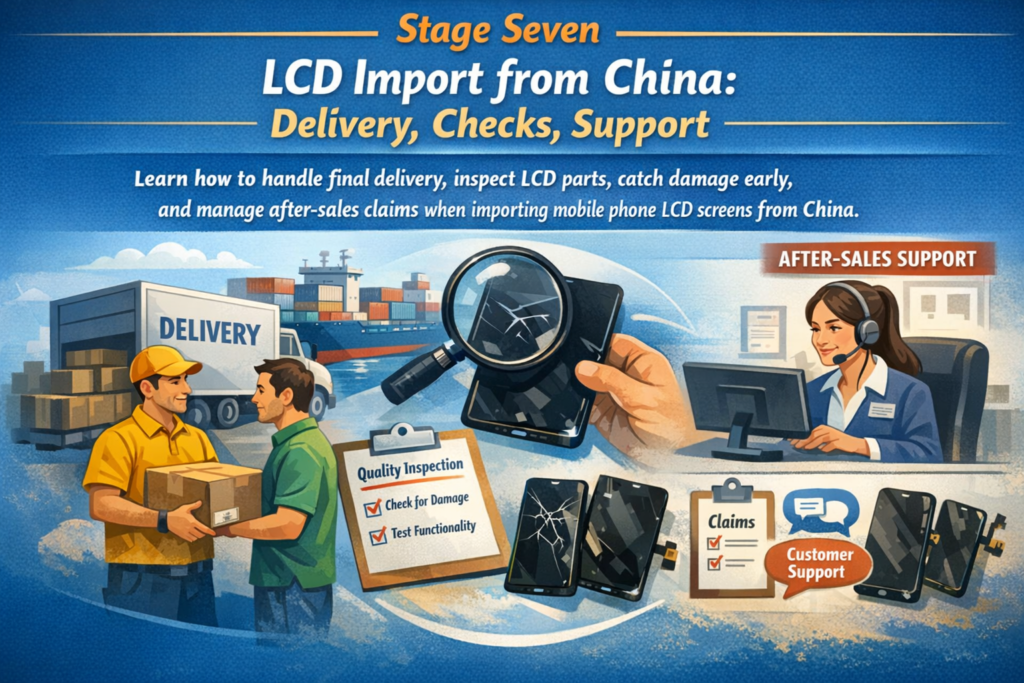
Understanding Stage Seven in the LCD Import Process
Stage Seven is where everything finally comes together. You’ve sourced the LCD screens, shipped them across borders, cleared customs, and paid the duties. Now comes the moment of truth: delivery, inspection, and after-sales handling. Think of this stage as the finish line of a marathon—cross it carelessly, and all previous effort can go to waste.
Why the Final Stage Is Critical
This stage determines whether you actually receive what you paid for. Miss a damaged carton, skip a quality check, or sign documents too quickly, and you might be stuck with losses that suppliers, freight forwarders, and insurers refuse to cover.
Common Risks at the Delivery and Inspection Stage
The most common risks include hidden transport damage, missing quantities, mixed models, defective LCD panels, and poor documentation. These issues often surface only after the goods arrive, which is why structured inspection is non-negotiable.
Post-Customs Clearance: What Happens Next
Once customs releases your cargo, the process isn’t over—it’s just entering its most hands-on phase.
Cargo Release After Customs
After customs clearance, the cargo becomes eligible for pickup from the port, airport, or bonded warehouse. Delays at this point can lead to storage charges, so timing matters.
Key Documents Needed After Clearance
You’ll typically need the customs release notice, delivery order, packing list, and identification of the consignee. Keep these ready to avoid unnecessary back-and-forth.
Arranging Final Transportation
Choosing Trucks or Local Couriers
Depending on shipment size, you may use trucks for palletized cargo or local couriers for smaller batches. LCD screens are fragile, so shock protection and proper stacking are essential.
Timing and Cost Considerations
Peak hours, distance, and warehouse availability all affect delivery cost. Smart scheduling saves money and reduces handling risks.
Delivery Appointment and Unloading
Scheduling with Warehouses
Always book a delivery slot in advance. Warehouses often reject unannounced arrivals, leading to rescheduling fees and delays.
Manual vs Mechanical Unloading
Forklifts, pallet jacks, or manual unloading should be chosen based on carton weight and stacking. Mishandling here is a top cause of screen breakage.
On-Site Cargo Verification
Checking Carton Quantity
Before unloading is complete, count the number of cartons and compare it with the delivery documents. This is your first line of defense.
Verifying Shipping Marks and Labels
Check carton markings, model numbers, and batch codes. A mismatch could signal mixed shipments or labeling errors.
Inspecting Outer Packaging
Common Types of Packaging Damage
Watch for crushed corners, water stains, torn cartons, or oil marks. These are red flags for internal damage.
How to Identify Transport-Related Issues
Even minor dents can indicate pressure damage to LCD panels inside. Never ignore “small” packaging issues.
Carton Opening and Internal Inspection
Sampling Ratio for Carton Opening
You don’t need to open every box, but random sampling is essential. A typical ratio might be 5–10%, depending on shipment size.
Anti-Static and Protective Packaging Checks
LCD screens should be sealed in anti-static bags with foam or trays. Any missing protection is a serious concern.
Quantity Verification
Matching Packing Lists
Use the packing list to confirm total quantities and individual model counts. Errors often occur when multiple models are shipped together.
Model-by-Model Quantity Confirmation
Separate and count each model. Mixing models during counting is a recipe for inventory chaos later.
Quality Sampling Inspection
Applying AQL Standards
Many buyers use AQL (Acceptable Quality Level) standards to define sampling ratios and acceptable defect limits. This keeps inspections fair and consistent.
Functional Testing for LCD Screens
Power-on tests, display checks, brightness evaluation, and touch response (for assembled screens) should all be performed. A screen that looks fine but fails electrically is still defective.
Recording Issues and Collecting Evidence
Photo and Video Documentation
If you find shortages, damage, or defects, take clear photos and videos immediately. Capture carton labels, packaging, and test results.
Noting Exceptions on Delivery Receipts
Always write abnormalities on the delivery note before signing. A clean signature can void your right to claim.
Signing Delivery Documents
Conditional Acceptance
If issues exist, sign with remarks such as “Received with damage” or “Subject to inspection results.” This protects your position.
Avoiding Unconditional Sign-Off Risks
Unconditional signatures are often interpreted as full acceptance, even if defects are discovered later.
Warehousing Qualified Goods
Proper Storage for LCD Screens
Store LCD screens in dry, dust-free environments with anti-static protection. Poor storage can cause failures weeks later.
Batch and Model-Based Shelving
Organize inventory by model and batch to simplify traceability and after-sales handling.
Inventory System Data Entry
Stock Updates
Enter quantities, models, and batch numbers into your inventory system as soon as possible to avoid discrepancies.
Traceability and Batch Management
Good data allows you to track issues back to specific shipments or suppliers, saving time and money.
Isolating Defective Products
Physical Separation Practices
Defective units should be placed in a clearly marked, separate area to avoid accidental resale.
Preventing Mixed Inventory Risks
Mixing bad units with good stock can destroy customer trust and create expensive returns later.
Supplier Feedback and Negotiation
Submitting Claims to Suppliers
Send a formal claim email with evidence, inspection reports, and clear descriptions of the issue.
Common Resolution Options
Solutions may include replacement shipments, refunds, credits, or repairs, depending on agreements.
Returns, Exchanges, and Insurance Claims
Return Logistics and Re-Customs Clearance
Returning goods internationally often requires export and re-import declarations. It’s complex and costly, so weigh options carefully.
Transport Insurance Claim Procedures
If losses fall under transport insurance, notify the insurer immediately and submit all required documents within the claim window.
Conclusion
Stage Seven is not just a formality—it’s the gatekeeper of your profits. From arranging final delivery to conducting inspections and managing after-sales claims, every step matters. Treat this stage with discipline and attention, and you’ll protect your cash flow, supplier relationships, and brand reputation. Skip steps, and you risk turning a successful import into a costly lesson.
FAQs
1. Why is inspection after delivery so important for LCD screens?
Because LCD screens are fragile, and hidden damage or defects often only appear after unpacking and testing.
2. Can I claim compensation after signing the delivery note?
Only if exceptions were noted. A clean signature often voids claims.
3. What is a reasonable sampling ratio for LCD inspection?
Typically 5–10%, or according to agreed AQL standards.
4. Should defective LCD screens be returned to China?
Not always. Returns involve complex customs procedures, so alternatives like refunds or replacements are often better.
5. Does transport insurance cover all damages?
No. Coverage depends on policy terms, packaging condition, and proper documentation.



