Introduction to the Growing Tecno Aftermarket Screen Industry
Smartphones are everywhere. From busy markets in Lagos to crowded streets in Karachi and vibrant cities across Latin America, phones are no longer a luxury — they’re lifelines. And at the center of every smartphone? The screen.
It’s the most interactive part of the device. It’s also the most fragile.
For users of Tecno mobile phones, screen damage is one of the most common repair issues. With Tecno dominating emerging markets thanks to its affordability and strong distribution, the aftermarket LCD screen industry has exploded.
But here’s the thing: not all replacement screens are equal.
If you’re a repair technician, distributor, or bulk buyer, understanding this layered market isn’t optional — it’s survival.
Let’s break it down.
Why Smartphone Screens Are the Most Replaced Component
Think of the screen as the “face” of the phone. It’s constantly exposed. Drops, pressure, heat, moisture — it takes the hit every time.
Unlike internal components, a cracked screen is immediately visible and unusable. That urgency fuels massive demand for replacements.
And where there’s demand, there’s a market.
Tecno’s Dominance in Emerging Markets
Tecno’s success strategy is simple: powerful features at aggressive pricing.
Series like Spark, Pop, and Camon dominate price-sensitive regions. The result? Millions of devices in circulation — and millions of potential screen repairs.
More devices = more breakage = more aftermarket opportunity.
It’s that straightforward.
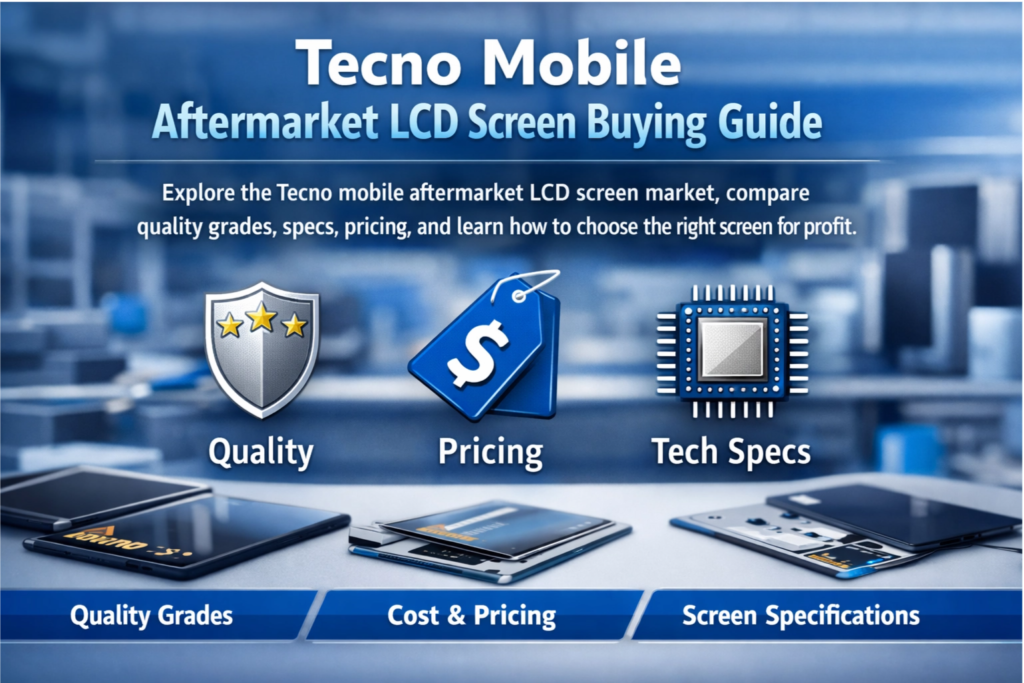
Understanding the Aftermarket Pyramid – Three Core Quality Grades
The Tecno screen aftermarket isn’t black and white. It’s a pyramid with three major tiers.
Let’s climb it.
Original Screens (Genuine Factory Parts)
These are screens sourced directly from official production channels. They may be:
- Brand-new original parts
- Pulled from unused devices (disassembled units)
Advantages of Original Screens
- Perfect color calibration
- Exact brightness levels
- Smooth touch response
- Zero compatibility issues
The experience is identical to factory condition.
Disadvantages of Original Screens
- High cost
- Limited availability
- Mostly restricted to official service centers
Ideal for premium repair services and demanding customers.
OEM Screens (Factory-Equivalent Alternatives)
OEM screens are produced by authorized or similar factories but sold outside official channels.
They are the sweet spot.
Strengths of OEM Screens
- 90–95% performance of original
- Much better pricing
- Strong profit margin potential
Most professional repair shops rely on OEM.
Limitations of OEM Screens
- Slight brightness variation
- Minor color tone differences
- No official warranty
Still, for most customers, the difference is barely noticeable.
High-Copy / Assembled Screens (Budget Aftermarket Options)
This is the lowest tier — often labeled as:
- AAA screen
- Aftermarket screen
- Compatible screen
Pros of High-Copy Screens
- Extremely low price
- Useful for old or entry-level devices
- Good for ultra-budget repairs
Cons of High-Copy Screens
- Poor brightness
- Washed-out colors
- Touch lag or ghost touch
- Short lifespan
Cheap upfront can mean expensive long term.
Display Technologies Used in Tecno Smartphones
Different Tecno models use different panel technologies. Understanding this is critical.
OLED / AMOLED Technology
High-end models like some Camon Pro variants use OLED.
OLED screens:
- Self-lit pixels
- True blacks
- High contrast
- Thinner design
- Support in-display fingerprint
They’re beautiful — and expensive.
Aftermarket OLED replacements must match fingerprint compatibility and refresh rate.
INCELL LCD Technology
INCELL integrates the touch layer into the LCD panel.
Benefits:
- Thinner than traditional LCD
- Better light transmission
- Faster touch response
It’s the “middle ground” — excellent balance of performance and cost.
Traditional LCD Panels
Common in Spark and Pop series.
Features:
- Backlight-dependent
- Durable
- Affordable
- Usually 60Hz refresh rate
- HD+ resolution
They’re reliable workhorses.
Key Technical Specifications You Must Check
Specs aren’t just numbers. They define user experience.
Screen Size & Resolution
Size must match exactly.
For example:
- Spark 10 Pro – 6.8 inches
- Spark 10 – 6.6 inches
Resolution types:
- HD+ (720 × 1600)
- FHD+ (1080 × 2460)
Low-grade screens sometimes downgrade resolution — resulting in blurry visuals.
Always verify.
Refresh Rate (60Hz, 90Hz, 120Hz)
Refresh rate = smoothness.
If the original device supports 90Hz and you install a 60Hz screen?
The customer will feel the lag instantly.
Never mismatch.
Brightness (Nits & cd/m² Explained)
Brightness determines outdoor visibility.
- Standard LCD: 400–500 nits
- Premium models: higher
Cheap screens may drop to 350 cd/m² — terrible under sunlight.
Brightness is profit insurance. Don’t ignore it.
Touch Sampling Rate & Response Speed
For gamers, touch matters.
Low-quality screens cause:
- Dead zones
- Delayed response
- Random touches
Always test by drawing continuous lines across the display.
Pricing Structure in the Tecno Aftermarket
Why do prices change weekly?
Because:
- Raw material costs fluctuate
- Demand spikes seasonally
- Panel factory output varies
- Currency exchange impacts imports
Margins for repair shops typically range between 15–40%, depending on grade.
Smart buyers balance cost and reputation.
Practical Buying Guide for Repair Shops & Wholesalers
This is where real money is made — or lost.
Model Matching & Compatibility Traps
Tecno often releases:
- Spark 8
- Spark 8C
- Spark 8P
They may look identical but use different connectors.
Always confirm:
- Model number
- Flex cable position
- Connector type
One wrong purchase can wipe out profits.
Testing Procedures Before Bulk Purchase
Always test samples:
- Check for dead pixels
- Inspect backlight bleed
- Test brightness control
- Draw touch lines
- Verify camera cutout alignment
No testing = gambling.
Evaluating Suppliers & Warranty Terms
Good suppliers offer:
- DOA replacement
- Clear warranty terms
- Consistent grading
If a deal seems too cheap, it usually hides high defect rates.
Identifying Refurbished Screens
Refurbished screens reuse original panels but replace glass.
They’re cost-effective but quality varies heavily.
Trust supplier reputation over pricing.
Common Mistakes to Avoid When Purchasing Tecno LCD Screens
- Choosing cheapest option blindly
- Ignoring refresh rate
- Skipping sample testing
- Mixing up model variants
- Underestimating brightness specs
Every mistake costs money — or customers.
Future Trends in the Tecno Aftermarket Display Market
Expect:
- More high-refresh-rate panels
- Better INCELL adoption
- Price drops in OLED
- Stronger quality competition
As Tecno upgrades its devices, the aftermarket must evolve too.
The smart players will adapt first.
Conclusion
The Tecno aftermarket LCD screen market is not simple — it’s layered, competitive, and technical.
From original OLED panels to budget LCD copies, every grade serves a purpose. The key is understanding where quality meets profitability.
If you’re a repair shop owner or distributor, your reputation depends on what you install. Choose wisely, test thoroughly, and build supplier relationships carefully.
Because in this market, knowledge isn’t power.
It’s profit.
FAQs
1. Are OEM screens safe to use for Tecno repairs?
Yes. High-quality OEM screens offer near-original performance at better pricing and are widely used by professional repair shops.
2. How can I check if a screen is original or high-copy?
Compare brightness, color accuracy, and touch response. Original screens typically have superior consistency and packaging quality.
3. Do all Tecno models use LCD screens?
No. Some higher-end models use OLED panels, while entry and mid-range models mostly use LCD or INCELL technology.
4. Is higher brightness always better?
Generally yes, especially for outdoor visibility. However, it must match the device’s power and display compatibility.
5. Should wholesalers buy refurbished screens?
Only if sourced from reliable suppliers with strict quality control. Otherwise, defect rates may be high.