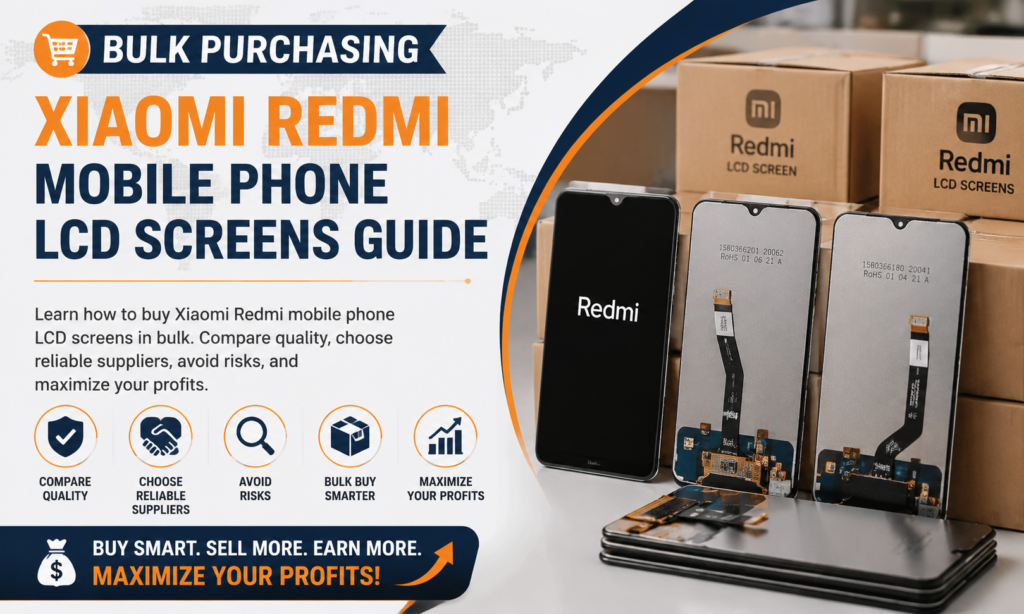
The global smartphone repair industry has changed dramatically in recent years. As smartphone users keep their devices longer, the demand for replacement parts continues to grow, especially for popular brands such as Xiaomi Redmi. For repair shops, wholesalers, distributors, and online sellers, purchasing Redmi mobile phone LCD screens in bulk can create significant business opportunities. However, buying hundreds or thousands of replacement displays is not as simple as finding the lowest price and placing an order. A wrong purchasing decision can result in defective inventory, customer complaints, delayed shipments, and financial losses.
Xiaomi Redmi smartphones have become extremely popular because they offer strong performance at competitive prices. Models such as the Redmi Note series, Redmi K series, Redmi A series, and Redmi Turbo series are widely used across Asia, Europe, Latin America, Africa, and the Middle East. This large installed user base creates continuous demand for replacement LCD assemblies. However, the Redmi LCD market also includes many different product qualities, suppliers, and manufacturing processes. Understanding these differences is essential before making a bulk purchase.
For professional buyers, successful procurement is about more than purchasing screens at a cheap price. It requires evaluating product quality, supplier reliability, technical specifications, packaging standards, logistics methods, and after-sales service. A good supplier relationship works like a long-term partnership rather than a simple transaction. When buyers understand what to check before ordering, they can reduce risks and build a stable supply chain for their repair business.
Understanding the Xiaomi Redmi LCD Screen Wholesale Market
Why Redmi Replacement Screens Are Popular Among Repair Businesses
The popularity of Xiaomi Redmi replacement screens comes from the brand’s massive global user base and affordable smartphone positioning. Redmi devices are designed to provide excellent value, which has helped millions of consumers choose them as their daily smartphones. When these phones experience cracked screens, damaged touch panels, or display failures, many users prefer repairing them instead of purchasing new devices.
For repair companies, this creates a reliable aftermarket opportunity. Compared with flagship smartphones, Redmi repair parts usually have lower purchasing costs, allowing technicians to provide affordable repair services while maintaining healthy profit margins. A repair shop that stocks popular Redmi LCD models can complete repairs faster because customers do not need to wait for parts to arrive.
The wholesale market is especially active for high-volume models. For example, Redmi Note series devices often sell in large quantities because they target mainstream consumers. A distributor who maintains inventory of popular Redmi LCD assemblies can serve many repair stores without constantly waiting for new shipments.
However, the high demand also attracts many suppliers with different quality levels. Some suppliers focus on premium replacement displays, while others compete mainly through extremely low prices. Buyers need to understand that two LCD screens with the same model number may have significant differences in brightness, touch response, durability, and failure rates.
The Growth of Xiaomi Redmi Repair Demand Worldwide
The smartphone repair industry has benefited from changing consumer behavior. Instead of replacing phones every one or two years, many users now keep devices longer due to rising smartphone prices and improved hardware durability. This trend has increased demand for replacement components, including LCD screens.
According to industry research, Asia remains the largest smartphone manufacturing and repair ecosystem, with China serving as the primary production and distribution center for mobile phone spare parts. Shenzhen’s Huaqiangbei electronics market has become one of the world’s most important hubs for mobile phone components, connecting manufacturers, wholesalers, and international buyers.
For international buyers, sourcing Redmi LCD screens directly from Chinese suppliers offers advantages such as wider model availability, competitive pricing, faster production cycles, and customization options. However, buyers must carefully evaluate suppliers because the quality difference between factories can directly affect business reputation.
Key Factors to Consider Before Buying Redmi LCD Screens in Bulk
Identifying the Correct Redmi LCD Screen Model and Specification
One of the most common mistakes in bulk purchasing is ordering the wrong LCD model. Xiaomi has released many Redmi smartphones, and some models have similar names but different display specifications. A small mistake in model identification can result in hundreds of unusable screens.
Before placing a bulk order, buyers should confirm:
- Exact Xiaomi Redmi model number
- Display size
- Resolution specification
- LCD or AMOLED technology
- Connector type
- Frame or without-frame structure
- Fingerprint sensor compatibility
- Touch IC version
For example, a buyer ordering a Redmi Note 12 LCD screen must confirm whether the requirement is for the standard Note 12 version, Note 12 4G, Note 12 Pro, or another regional variant. Different versions may use different display assemblies.
Professional suppliers usually request the original phone model, pictures of the damaged screen, or part numbers before confirming an order. This process prevents unnecessary mistakes and ensures compatibility.
Understanding LCD Quality Grades and Manufacturing Standards
Quality grading is one of the most important topics in Redmi LCD wholesale purchasing. Different suppliers may use different terms such as AAA, A+, A, OEM, original refurbished, or aftermarket, but these descriptions are not always standardized.
A buyer should ask detailed questions instead of relying only on labels.
A typical comparison looks like this:
| Screen Type | Quality Level | Advantages | Possible Risks |
|---|---|---|---|
| Original Pull/Original Refurbished | Highest | Original display performance | Limited availability, higher price |
| OEM Quality | High | Good brightness and compatibility | Requires trusted supplier |
| Premium Aftermarket | Medium-High | Cost-effective | Quality depends on factory |
| Standard Aftermarket | Medium | Lower purchase cost | Higher defect possibility |
For wholesale buyers, choosing the right balance between quality and price is essential. A slightly cheaper LCD screen may appear attractive initially, but high return rates can quickly eliminate the savings.
A reliable supplier should provide quality inspection information, including:
- Display testing
- Touch testing
- Brightness checking
- Dead pixel inspection
- Color testing
- Frame inspection
- Functional testing
Original, OEM, and Aftermarket Redmi LCD Screens Explained
Differences Between Original and Compatible Redmi Displays
Many buyers entering the mobile spare parts industry are confused about the difference between original and aftermarket screens. The term “original” can have different meanings depending on the supplier.
An original screen may refer to:
- Original factory display removed from used phones
- Original panel repaired with new glass
- Original production components assembled again
Aftermarket screens are manufactured by third-party factories using compatible technologies. Modern aftermarket manufacturers can produce high-quality displays that perform very well, but quality varies significantly.
For wholesale buyers, the most important question is not simply “Is it original?” but rather “Does this product meet my market requirements?”
A repair distributor serving premium customers may require higher-grade displays, while a market focused on affordable repairs may prefer cost-effective alternatives.
How Quality Affects Customer Satisfaction and Return Rates
Screen quality directly affects customer experience. A display with poor brightness, inaccurate colors, weak touch response, or short lifespan can damage a repair company’s reputation.
Customers usually do not see the supplier behind the product. They only see the final repair result. If the screen fails after installation, they blame the repair shop.
This is why experienced buyers focus on total cost rather than purchase price alone. A screen that costs $2 less but creates frequent complaints may actually become more expensive.
A stable supplier with consistent quality helps businesses reduce warranty claims and improve customer trust.
Choosing a Reliable Xiaomi Redmi LCD Screen Supplier
Evaluating Factory Capability and Supplier Experience
Selecting the right supplier is one of the most important decisions in bulk purchasing. A professional supplier should have experience with Xiaomi Redmi screens and understand international wholesale requirements.
Important supplier evaluation points include:
- Years of experience in mobile LCD distribution
- Factory or warehouse capability
- Available inventory
- Quality control process
- Export experience
- Customer support ability
Suppliers located in Shenzhen often have advantages because they are close to major component factories and logistics networks. This allows faster product updates and better access to new Redmi models.
A trustworthy supplier should communicate clearly about product specifications, lead times, packaging, and warranty policies.
Checking Inspection Procedures and Quality Control Systems
Quality inspection is the foundation of successful LCD procurement. Before shipping, professional suppliers should test each screen.
Common inspection procedures include:
- Appearance inspection
- Display test
- Touch function test
- Connector inspection
- Brightness test
- Assembly inspection
- Packaging inspection
For large orders, buyers can also request random sample testing before shipment.
Important Technical Details When Purchasing Redmi Displays
Touch Sensitivity, Brightness, and Color Performance
A replacement screen should provide similar performance to the original device. Important technical factors include touch accuracy, brightness level, viewing angle, and color reproduction.
Low-quality displays may show problems such as:
- Slow touch response
- Ghost touch
- Uneven brightness
- Color distortion
- Flickering
These issues are especially important for repair businesses because customers immediately notice display problems.
Frame Assembly, Glass Quality, and Installation Compatibility
Buyers should also consider whether they need:
- LCD with frame
- LCD without frame
- Soft OLED
- Hard OLED
- TFT replacement
A complete assembly with frame can reduce installation time, while a screen without frame may offer lower cost for experienced technicians.
Glass quality is another important factor. Poor glass can crack easily during installation or daily use.
Packaging and Shipping Considerations for Bulk LCD Orders
Protecting Screens During International Transportation
LCD screens are fragile products. Even high-quality displays can be damaged if packaging is poor.
Professional packaging usually includes:
- Anti-static protection
- Foam protection
- Individual boxes
- Strong export cartons
- Shock-resistant materials
For international shipments, packaging quality is as important as product quality.
Managing Customs, Logistics, and Delivery Risks
International buyers should plan logistics carefully. Common shipping options include:
| Shipping Method | Best For | Typical Advantage |
|---|---|---|
| DHL/FedEx/UPS | Small urgent orders | Fast delivery |
| Air Cargo | Medium-large orders | Balanced cost and speed |
| Sea Freight | Large shipments | Lowest transportation cost |
Understanding customs requirements in the destination country can prevent delays.
Pricing Strategies for Xiaomi Redmi LCD Wholesale Buyers
Balancing Low Cost With Long-Term Product Quality
Price is important, but it should not be the only purchasing factor. The cheapest supplier may not provide the best business value.
A professional buyer considers:
- Product quality
- Defect rate
- Warranty support
- Delivery reliability
- Communication efficiency
A slightly higher purchase price can create better long-term profitability if the product quality is stable.
Understanding MOQ, Samples, and Bulk Order Discounts
Before placing a large order, buyers should request samples. Testing several units helps confirm quality before investing significant capital.
Many suppliers offer better prices for larger quantities. However, buyers should avoid excessive inventory unless the model has strong market demand.
Inventory management is especially important because smartphone models change quickly.
Common Mistakes to Avoid When Importing Redmi LCD Screens
Choosing Suppliers Only Based on Lowest Price
The lowest price often comes with hidden risks. Some extremely cheap LCD screens may use lower-quality components, weaker glass, or inconsistent production standards.
Successful wholesalers focus on reliable supply rather than temporary price advantages.
Ignoring After-Sales Support and Warranty Policies
A professional supplier should provide clear warranty terms. Buyers should understand:
- Warranty period
- Defective product handling
- Replacement process
- Technical support
Good after-sales service helps international buyers operate smoothly.
Conclusion: Building a Successful Redmi LCD Screen Procurement Strategy
Bulk purchasing Xiaomi Redmi mobile phone LCD screens can become a profitable business opportunity when buyers approach procurement strategically. The key is not simply finding the cheapest product but building a reliable supply chain based on quality, communication, and long-term cooperation.
Successful buyers carefully verify models, understand quality grades, test samples, evaluate suppliers, and manage logistics properly. Whether you operate a repair center, wholesale business, or online store, choosing the right Redmi LCD supplier can directly influence your profitability and customer satisfaction.
The mobile repair market will continue growing as consumers extend smartphone usage cycles. Businesses that establish stable sourcing channels today will have stronger advantages in the future.
Frequently Asked Questions About Redmi LCD Bulk Purchasing
1. What is the best way to buy Xiaomi Redmi LCD screens in bulk?
The best method is to work directly with an experienced mobile LCD supplier, request samples, confirm quality standards, and start with a manageable order quantity before expanding.
2. Are aftermarket Redmi LCD screens reliable?
Yes, high-quality aftermarket Redmi LCD screens can perform very well. The key is choosing suppliers with strict quality control and consistent manufacturing standards.
3. How many Redmi LCD screens should I order for my first purchase?
It depends on your market demand. New buyers should usually test popular models first before investing in large inventory.
4. What information should I provide when requesting a Redmi LCD quotation?
Provide the exact phone model, required quantity, quality grade, shipping destination, and whether you need frame assembly.
5. Why should I source Redmi LCD screens from China?
China has a mature mobile spare parts supply chain, competitive pricing, large inventory availability, and experienced exporters, making it one of the most important sourcing locations for Redmi replacement screens.