
1. Overview of Apple’s iPhone Market in 2026
Apple continues to occupy a powerful position in the global smartphone industry in 2026. Its iPhone product line has developed from a premium mobile phone into a complete technology ecosystem, combining advanced processors, professional camera systems, sophisticated display technology, artificial intelligence, and long-term software support. For consumers, this means more choices across different budgets and usage requirements. For smartphone wholesalers, repair shops, and mobile phone parts distributors, it creates an equally important opportunity: the demand for replacement screens and accessories continues as millions of devices remain in daily use. The iPhone 17 family has been particularly successful, while the newer 2026 lineup introduces additional premium and foldable options. Understanding which models sell best and which display technologies they use is essential for anyone involved in the mobile phone replacement parts industry.
Global iPhone Sales and Market Performance
According to Counterpoint Research, the iPhone 17 was the world’s best-selling smartphone in the first half of 2026, measured by unit sales. The iPhone 17 Pro and iPhone 17 Pro Max followed it in the rankings. Counterpoint also reported that the iPhone 17 series generated more than $170 billion in wholesale revenue during its first year, representing an 11% increase compared with the iPhone 16 series’ first-year revenue. These figures demonstrate that Apple’s success is not limited to expensive flagship models. The standard iPhone 17 has become a particularly important volume driver because it offers a combination of premium display features, camera improvements, storage capacity, and performance at a lower price than the Pro models. Counterpoint Research+1
The second-quarter results also reveal how strong Apple’s position remains despite challenging market conditions. Counterpoint reported that the iPhone 17 captured approximately 6% of global smartphone sales in Q2 2026, with the iPhone 17 Pro Max and iPhone 17 Pro occupying the next two positions. Apple secured five places in the global top-ten smartphone ranking, alongside five Samsung models. This concentration shows that a relatively small number of popular devices account for a substantial proportion of global smartphone purchases. For replacement screen distributors, such concentrated demand makes model-specific inventory planning particularly valuable. Rather than purchasing large quantities of every available screen model, wholesalers can prioritize devices with stronger sales histories and established repair demand. Counterpoint Research+1
Why Apple Continues to Dominate the Premium Smartphone Market
One major reason behind Apple’s continued success is its ability to connect hardware, software, and services into one consistent user experience. Consumers who already use an iPad, MacBook, Apple Watch, or AirPods often prefer to remain within the Apple ecosystem when upgrading their smartphones. The company’s long-term software support also helps older iPhone models retain practical value, making them attractive in the second-hand and refurbished markets. Even when consumers purchase a new model, their previous device may continue circulating through resale channels, creating additional demand for replacement displays, batteries, charging components, cameras, and other parts. This extended product lifecycle is especially important for wholesale suppliers because the replacement parts market does not depend exclusively on newly launched phones.
Another factor is Apple’s approach to product positioning. Instead of competing only through low prices, Apple offers several models targeting different customer groups. Standard models appeal to everyday users, Pro versions attract photography enthusiasts and professionals, and specialized devices target consumers who prioritize lightweight construction or larger display experiences. The introduction of the foldable iPhone Duo in 2026 further expands Apple’s product strategy. For the mobile phone accessories industry, every new design creates opportunities as well as technical challenges. Suppliers must understand screen dimensions, panel construction, connectors, frame compatibility, and replacement requirements before investing in inventory.
2. Best-Selling Apple iPhone Models in 2026
Apple’s 2026 iPhone lineup covers a broad range of customers, from budget-conscious buyers to consumers seeking the most advanced flagship experience. However, the newest model is not automatically the best-selling model. Actual sales depend on pricing, regional availability, carrier promotions, consumer purchasing habits, and the timing of product launches. Based on the available 2026 sales rankings, the iPhone 17 family remains particularly important. The following comparison combines verified sales performance with the broader product lineup available in November 2026. It is important to distinguish between confirmed sales rankings and general product positioning because complete full-year 2026 sales figures have not yet been finalized.
iPhone 17: The Best-Selling iPhone Model
The iPhone 17 has established itself as one of Apple’s strongest mainstream smartphones. Counterpoint Research identified it as the world’s best-selling smartphone in both Q1 and Q2 2026, and its first-half sales performance placed it ahead of other individual smartphone models worldwide. One important reason is the improvement in the standard model’s specifications. Unlike previous generations, where consumers sometimes needed to purchase a Pro model to obtain certain premium display features, the iPhone 17 offers a 6.3-inch OLED display with ProMotion technology and adaptive refresh rates up to 120Hz. This makes the standard model attractive to people who want a smooth visual experience without paying flagship Pro prices. Its combination of performance, storage, camera capabilities, and display quality gives it a broad customer base. Counterpoint Research+1
From a replacement parts perspective, the iPhone 17 deserves particular attention. A popular model usually develops a larger installed user base, which can translate into greater long-term demand for screen replacements. Accidental drops, pressure damage, display lines, touch failures, and other physical problems create opportunities for independent repair businesses. Wholesalers should monitor demand for complete screen assemblies, including OLED panels, touch digitizers, and frame-mounted assemblies where available. They should also distinguish between different quality grades rather than assuming that all replacement displays provide identical performance. Brightness, color reproduction, touch sensitivity, power consumption, and compatibility with the original device are all important purchasing considerations.
iPhone 17 Pro Max: Premium Performance and Large-Screen Demand
The iPhone 17 Pro Max is another major contributor to Apple’s premium smartphone business. Its large display appeals to consumers who enjoy watching videos, playing games, editing photos, reading documents, and working on mobile applications. Large-screen smartphones also create a distinctive repair market because customers often want to preserve their existing devices rather than replace them with another expensive flagship. The Pro Max segment generally attracts buyers who prioritize advanced cameras, battery life, premium construction, and high-performance hardware. Although the purchase price is higher than that of the standard iPhone, demand remains strong among customers who want the most capable conventional iPhone experience.
For screen wholesalers, the Pro Max category deserves careful attention because larger OLED panels can have different procurement costs and handling requirements. A high-quality replacement display should maintain appropriate brightness, uniformity, touch responsiveness, and color accuracy. The installation process also requires technicians to pay attention to the display flex cable, adhesive positioning, frame condition, and surrounding components. A replacement screen that looks acceptable in a warehouse test may still produce problems after installation if its touch response or display calibration is inconsistent. This is why professional testing and supplier quality control are particularly important for expensive flagship replacement screens.
iPhone 17 Pro: A Strong Choice for Professional Users
The iPhone 17 Pro sits between the standard iPhone 17 and the larger Pro Max in Apple’s product strategy. It targets consumers who want advanced performance and camera functions without necessarily choosing the biggest available phone. Its premium display, high-end processing capabilities, and professional camera system make it attractive to content creators, business users, and mobile photography enthusiasts. Counterpoint’s Q2 2026 ranking placed it among the three best-selling smartphone models worldwide, demonstrating that consumers continue to show strong interest in Apple’s premium devices. Counterpoint Research+1
For replacement screen distributors, the Pro model is important because its customer base is often willing to pay more for dependable repairs. A poor-quality display can significantly affect the perceived value of an otherwise excellent smartphone. Color shifts, uneven brightness, poor viewing angles, touch delays, and excessive battery consumption are problems that professional repair businesses want to avoid. Suppliers should therefore provide clear information about panel type, quality grade, compatibility, warranty terms, and testing procedures. Maintaining consistent quality is often more valuable than offering the lowest possible purchase price.
iPhone 17e and iPhone 16: Value-Oriented Models
The iPhone 17e provides a more affordable entry into Apple’s newer smartphone generation, while the iPhone 16 continues to serve customers who want a capable iPhone without purchasing the latest flagship. These models are important because affordability plays a major role in purchasing decisions, particularly in emerging markets and prepaid mobile channels. Counterpoint’s Q2 2026 bestseller report included the iPhone 17e and iPhone 16 among the global top ten smartphone models. This demonstrates that older and more affordable iPhones can remain commercially relevant even when newer premium models are available. Counterpoint Research+1
The replacement screen market for these devices may be especially attractive to wholesalers serving independent repair shops. Customers who purchase a value-oriented smartphone may be more likely to repair a damaged screen when the cost of replacement is reasonable compared with purchasing a new phone. In addition, older models often have a longer-established repair ecosystem, making it easier for distributors to understand demand patterns and inventory requirements. However, buyers should never assume that two iPhone generations use interchangeable displays simply because their dimensions appear similar. Panel connectors, frame structures, flex cable positions, display control systems, and software compatibility must all be checked before ordering.
iPhone 18 Pro, iPhone Air, and iPhone Duo: The New 2026 Generation
Apple’s 2026 lineup has expanded beyond traditional smartphone designs. The iPhone 18 Pro targets premium users seeking advanced performance and camera technology, while the iPhone Air focuses on lightweight construction and a slim form factor. The iPhone Duo represents an especially significant development because it introduces Apple’s first foldable iPhone, featuring a 7.6-inch internal display and a 5.4-inch external display. These products broaden the range of display formats available to Apple customers. Apple+1
For the replacement parts industry, the iPhone Duo deserves special attention, although its repair market should be approached cautiously. Foldable displays involve more complicated mechanical and electronic structures than conventional flat OLED panels. The hinge, flexible display layers, protective surface, internal wiring, and folding mechanism all require specialized manufacturing and repair knowledge. A damaged foldable panel may involve more than a simple glass replacement, and repair costs can be substantially different from those of conventional iPhones. Distributors should initially focus on verified specifications, genuine compatibility, repair feasibility, and supplier reliability rather than purchasing large quantities before market demand becomes clear.
3. Apple iPhone Screen Technology Explained
The display is one of the most important components of any modern smartphone. It affects how users read text, view photographs, watch videos, play games, and interact with applications. Apple has invested heavily in display engineering, and OLED technology has become central to the modern iPhone experience. Compared with conventional LCD panels, OLED displays produce light directly through individual pixels, allowing deeper blacks and high contrast. This technology also enables thinner display assemblies and supports sophisticated visual features such as HDR content and always-on display functions on supported models. For screen wholesalers, understanding these technologies is essential because replacement products must reproduce the original display experience as closely as possible.
Super Retina XDR OLED Displays
Apple uses the Super Retina XDR name for its advanced OLED display technology. The iPhone 17, for example, features a 6.3-inch all-screen OLED display with a resolution of 2622 × 1206 pixels and a pixel density of 460 pixels per inch. It also supports HDR, True Tone, a wide P3 color gamut, and a typical contrast ratio of 2,000,000:1. Its listed brightness specifications include 1,000 nits typical maximum brightness, 1,600 nits peak HDR brightness, and up to 3,000 nits peak outdoor brightness. These specifications demonstrate how far smartphone OLED technology has developed. Users can enjoy sharp text, detailed photographs, vivid colors, and improved outdoor visibility. Apple
OLED technology works differently from traditional LCD technology. An LCD panel requires a backlight to illuminate its liquid crystal layer, while OLED pixels generate their own light. When an OLED pixel displays black, it can be switched off, producing very deep blacks and excellent contrast. This structure also allows manufacturers to develop thinner display assemblies, although the actual thickness of a finished screen depends on its supporting layers and protective materials. For replacement screen manufacturers, OLED production requires precise control over organic materials, thin-film encapsulation, pixel structures, and electrical connections. Small manufacturing defects can lead to dead pixels, uneven brightness, image retention, or other display problems.
LTPO OLED, Refresh Rates, Brightness, and Resolution
Another important development in premium iPhone displays is LTPO OLED technology. LTPO stands for Low-Temperature Polycrystalline Oxide, a technology used in certain OLED backplanes to support more flexible refresh-rate control. By adjusting how frequently the screen refreshes, compatible devices can balance visual smoothness and power consumption. For example, a screen can use a higher refresh rate when displaying fast-moving content and reduce the refresh rate when showing relatively static information. This can improve the overall user experience while helping manage battery consumption.
The iPhone 17’s ProMotion display supports adaptive refresh rates up to 120Hz. Compared with a conventional 60Hz display, a 120Hz screen can show motion more smoothly, particularly during scrolling, gaming, and interface animations. However, refresh rate is only one part of overall display quality. Resolution determines image detail, brightness affects outdoor visibility, and color calibration influences how accurately photographs and videos appear. A replacement display supplier should therefore avoid describing a product as high quality based on refresh rate alone. Buyers should also evaluate color consistency, touch response, viewing angles, power consumption, and long-term stability.
4. iPhone Screen Materials and Manufacturing
Modern iPhone displays are sophisticated assemblies made from multiple layers rather than a single piece of glass. Depending on the model and display design, these layers can include a protective cover glass, touch-sensing components, optical adhesives, OLED panel layers, thin-film encapsulation, supporting structures, and flexible printed circuit connections. Each layer has a specific function, and the performance of the complete assembly depends on how accurately these components work together. For example, the cover glass protects the screen from everyday contact, while the OLED panel generates the images users see. The touch layer detects finger movements and communicates them to the device’s control system. When a manufacturer produces a replacement screen, it must consider the entire assembly rather than simply reproducing the visible dimensions of the original panel.
OLED Panel Structure and Key Components
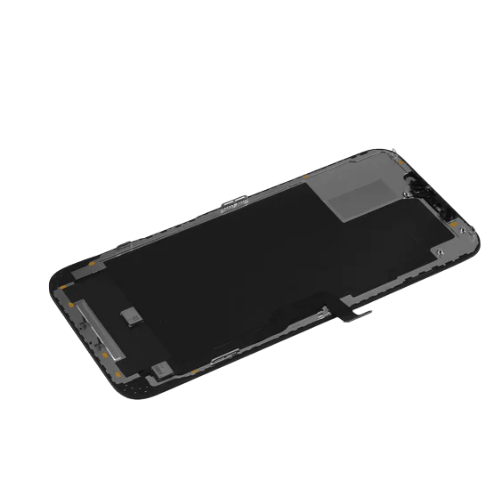
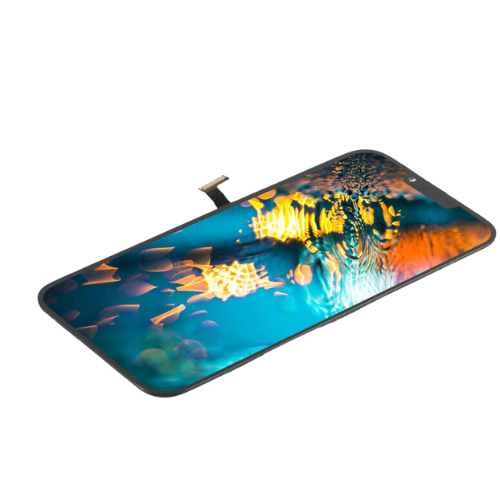
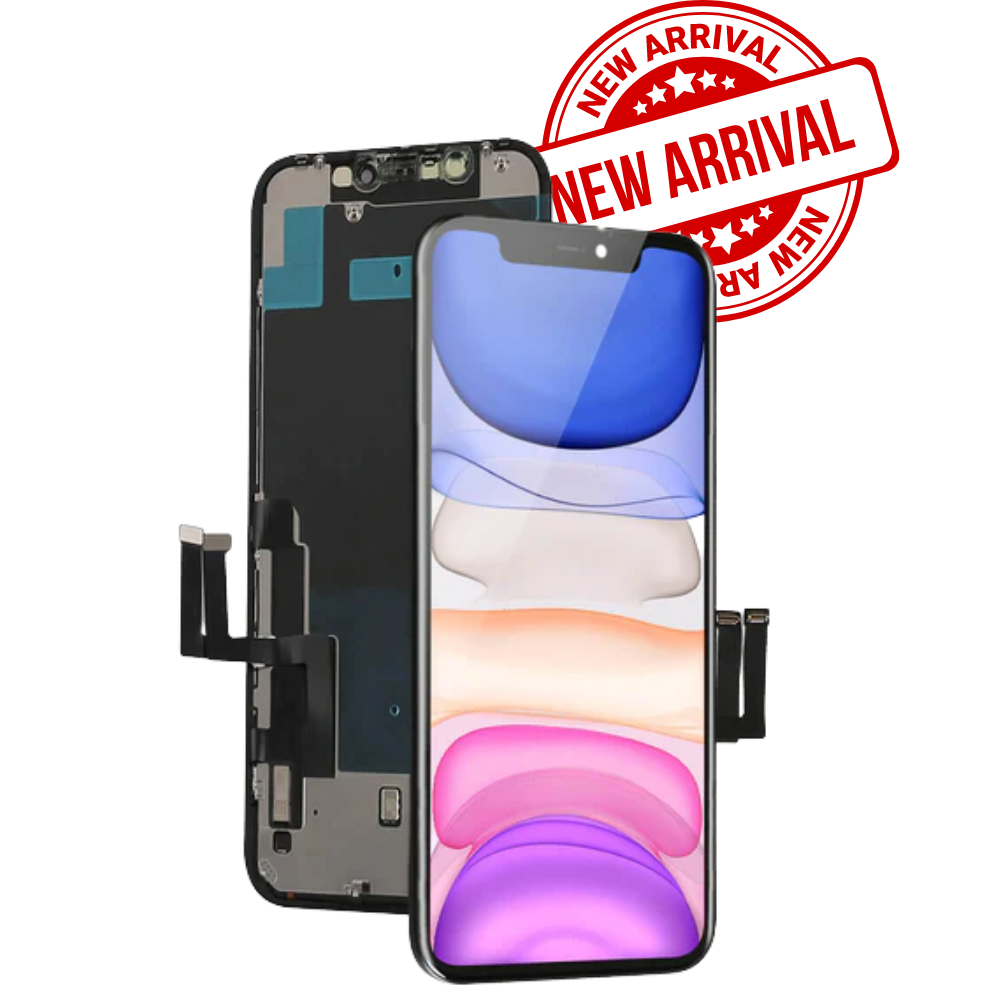
An OLED replacement screen generally contains several functional layers. The upper protective layer provides resistance against scratches and everyday handling, while optical bonding materials help reduce unwanted reflections between layers. The OLED panel contains the light-emitting pixels, and the supporting circuitry controls how these pixels operate. Flexible printed circuit boards connect the display assembly to the smartphone motherboard, transmitting display signals and supporting touch-related functions. Depending on the specific model, additional components may include integrated touch-control electronics, shielding materials, and structural support layers. A small difference in connector positioning or circuit design can make a replacement screen incompatible even when its external size looks identical to the original.
Manufacturing quality depends heavily on material selection and production accuracy. Poor optical bonding can create visible bubbles or uneven areas, while inadequate encapsulation may allow moisture to affect sensitive OLED materials. Incorrect alignment can also cause installation difficulties, especially when the screen is designed to fit a particular frame. Professional manufacturers use controlled assembly environments, automated bonding equipment, electrical testing, and visual inspection to reduce these risks. For wholesalers, understanding this manufacturing process helps explain why replacement screens from different suppliers can have substantially different prices. A lower purchase price may reflect differences in materials, manufacturing precision, testing standards, or warranty coverage.
Display Suppliers and Manufacturing Quality
The global smartphone display industry includes several major manufacturers with extensive experience in LCD and OLED technologies. Companies such as Samsung Display, LG Display, BOE, and other specialist panel manufacturers contribute to the wider display supply chain. However, the original panel supplier can vary by model, production batch, region, and sourcing arrangement. It is therefore inaccurate to assume that every iPhone of a particular generation uses panels from only one manufacturer. Buyers should request reliable product documentation rather than relying on unsupported supplier claims.
For replacement parts distributors, the distinction between original supply-chain panels and aftermarket assemblies is particularly important. An original pulled screen may have been removed from a previously used device, while a refurbished screen may combine a recovered original OLED panel with newly installed glass. A newly manufactured aftermarket display may use a different panel source and construction method. All three categories can serve different market segments, but their quality, condition, pricing, and expected performance should be clearly explained. A professional wholesaler should communicate these differences honestly to avoid customer complaints and unnecessary returns.
5. iPhone Screen Comparison: 2026 Models
Choosing the right replacement screen starts with understanding the original device. Although Apple’s newer iPhones share certain design principles, their display dimensions, resolutions, internal connections, and assembly structures are not necessarily interchangeable. The following table provides a practical comparison of selected models and their market positions. Specifications are included where they are publicly established; details that require individual model verification are deliberately not guessed.
| iPhone model | Display technology | Screen size | Market positioning |
|---|---|---|---|
| iPhone 17 | OLED, ProMotion | 6.3 inches | Mainstream bestseller |
| iPhone 17 Pro | OLED, ProMotion | 6.3 inches | Premium flagship |
| iPhone 17 Pro Max | OLED, ProMotion | 6.9 inches | Large-screen flagship |
| iPhone 17e | OLED | 6.1 inches | Value-oriented |
| iPhone 16 | OLED | 6.1 inches | Previous-generation value |
| iPhone 18 Pro | OLED | Verify official model specification | Premium 2026 flagship |
| iPhone Air | OLED | Verify official model specification | Slim and lightweight |
| iPhone Duo | Foldable display | 7.6-inch internal / 5.4-inch external | Foldable flagship |
Note: Display sizes and technology are provided as a model overview, not as a screen interchangeability guide. Always verify exact model numbers and replacement part specifications before purchasing.
The comparison highlights an important point: screen size alone is not enough to identify a compatible replacement display. Two models can have similar diagonal measurements but different flex cable locations, connector pin arrangements, mounting structures, and electronic control requirements. Even products within the same generation can have different display assemblies. For this reason, professional screen suppliers normally organize their inventory by exact model compatibility and product grade. They may also provide model numbers, product photographs, connector images, and installation information to help buyers avoid ordering errors.
From a commercial perspective, the iPhone 17 family is a sensible category for wholesalers to monitor because its strong sales performance creates a growing installed user base. The iPhone 16 also remains relevant because older devices continue to circulate in secondary markets. Meanwhile, the iPhone 18 family and iPhone Duo represent emerging opportunities that require closer observation. A balanced inventory strategy should include established high-demand models and carefully selected newer products, rather than concentrating all purchasing budgets on the latest launch.
6. Original, Refurbished, Soft OLED, and Hard OLED Replacement Screens
The replacement screen market contains several product categories, and understanding their differences is essential for wholesalers and repair businesses. Customers may ask for an original screen, an original pulled display, a refurbished OLED, a soft OLED, or a hard OLED. These descriptions are not interchangeable. Each category has different manufacturing characteristics, pricing structures, and potential applications. A supplier who clearly explains these differences can help customers select the right product for their budgets and quality expectations. This is particularly important when selling to international distributors, because buyers may serve different customer segments in different countries.
Original and Original Pulled Screens
Original service-pack screens are supplied through authorized or designated original parts channels, depending on the market and availability. They are generally selected by repair businesses that prioritize original specifications, consistent performance, and compatibility. Original pulled screens, by contrast, are recovered from previously used devices. They may retain their original panel and electronics, but their condition depends on previous usage, handling, and refurbishment history. A pulled screen should be carefully inspected for scratches, burn-in, dead pixels, color changes, and touch problems before resale.
Refurbished OLED Screens
Refurbished OLED screens are generally made by recovering a usable original OLED panel and replacing damaged outer glass or other components where technically appropriate. This process can offer a practical balance between original panel characteristics and lower purchasing costs. However, refurbishment quality varies significantly between factories. Poor glass removal techniques can damage the OLED layer, while inaccurate bonding can lead to bubbles, dust, uneven edges, or touch problems. Buyers should ask suppliers about their refurbishment procedures, equipment, inspection standards, and warranty conditions before placing wholesale orders.
Soft OLED vs. Hard OLED
Soft OLED and hard OLED are two important categories in the aftermarket replacement screen industry. The difference mainly relates to the construction and supporting substrate of the OLED panel. Soft OLED commonly uses a flexible substrate, while hard OLED typically uses a more rigid glass substrate. These construction differences can influence flexibility, thickness, durability, and how the replacement panel fits into the original device structure.
| Feature | Soft OLED | Hard OLED |
|---|---|---|
| Substrate | Flexible | Rigid glass |
| Flexibility | Higher | Lower |
| Impact tolerance | Generally better | Generally more vulnerable to impact |
| Structural design | Flexible construction | More rigid construction |
| Typical price | Higher | Lower |
| Target market | Premium aftermarket repairs | Budget-conscious repairs |
| Main consideration | Cost and quality consistency | Rigidity and installation risks |
Soft OLED is often preferred for higher-grade aftermarket replacements because its flexible construction can better accommodate certain curved or compact display designs. Hard OLED is generally more affordable and can be suitable for customers who prioritize lower repair costs. However, neither category guarantees excellent performance automatically. The quality of the OLED material, manufacturing process, touch integration, bonding, and electronic compatibility all matter. A professionally manufactured hard OLED can be more dependable than a poorly manufactured soft OLED. Buyers should evaluate actual product samples instead of choosing solely by the product label.
TFT LCD and INCELL Replacement Displays
Although OLED has become the mainstream technology for modern premium iPhones, LCD technology remains relevant in the broader smartphone replacement market. TFT LCD and INCELL displays are particularly common in replacement parts for many Android smartphones and older device categories. INCELL technology integrates touch functionality into the display structure, potentially reducing assembly thickness compared with certain traditional LCD designs. These products can offer a more affordable repair option, depending on the device and available replacement specifications.
For iPhone wholesalers, however, it is important to distinguish between technologies supported by the original device and aftermarket alternatives. An LCD conversion screen should never be presented as equivalent to an original OLED display. Differences may include brightness, contrast, thickness, black-level performance, color reproduction, and power consumption. Professional distributors should identify the actual display technology in their product descriptions so repair businesses can make informed decisions.
7. Common iPhone Screen Problems and Repair Considerations
Even premium smartphones are not immune to physical damage. A phone may be dropped onto a hard surface, exposed to excessive pressure inside a bag, or damaged by accidental contact with water. The display can develop cracks, black spots, colored lines, flickering, touch failures, or complete image loss. Sometimes the glass remains intact while the OLED panel underneath is damaged. In other cases, the display may continue showing an image but fail to respond properly to touch. Understanding these problems helps wholesalers supply the correct replacement assemblies and enables repair shops to diagnose issues more accurately.
Cracked Glass and Damaged OLED Panels
Cracked glass is among the most recognizable smartphone display problems. A minor surface crack may initially seem harmless, but continued use can allow moisture and dust to enter damaged areas. If the OLED panel is also affected, users may notice black patches, colored lines, or irregular brightness. Repair technicians must determine whether the damage is limited to the cover glass or extends into the underlying display assembly. Depending on the damage and available repair methods, they may replace the complete display assembly or use specialized refurbishment equipment to recover a functioning panel.
For wholesale buyers, screen damage patterns can provide useful insights into inventory requirements. Models with larger screens may require more expensive replacement assemblies, while older devices may experience different types of damage depending on their construction and usage history. Repair shops also need reliable stock availability because customers often expect fast turnaround times. A distributor who can provide commonly requested screens quickly, together with consistent product quality, has an advantage over suppliers who compete only on price.
Touchscreen Failure and Display Flickering
Touchscreen problems can be caused by damaged digitizers, faulty flex cables, connector issues, or problems elsewhere in the phone’s electronic system. Users may experience delayed touch responses, unresponsive areas, random inputs, or complete touch failure. Display flickering can have different causes, including panel defects, damaged connectors, unstable electrical connections, and software-related problems. Therefore, technicians should perform proper diagnosis before deciding that the screen itself must be replaced.
A good replacement assembly should undergo testing before shipment. Important inspection items include touch sensitivity across the entire screen, brightness adjustment, color uniformity, display stability, and connector condition. Suppliers can also improve customer confidence by providing batch tracking and clear warranty procedures. For larger wholesale orders, buyers should request pre-shipment inspection records and sample testing. These steps help reduce the risk of receiving inconsistent products that may generate expensive after-sales problems.
Installation and Compatibility Considerations
Screen replacement is a technical process that requires appropriate tools and repair experience. Technicians may need to transfer certain components, remove adhesives, disconnect the battery, and carefully connect the replacement assembly. Incorrect handling can damage delicate flex cables or surrounding components. Some models also involve software-related configuration or calibration considerations. Repair shops should follow model-specific procedures and use suitable tools to minimize installation risks.
Wholesalers should also remember that a screen assembly is not simply a visual component. Compatibility may involve display control electronics, touch communication, sensor arrangements, frame dimensions, and software behavior. A product that physically fits may still produce functionality warnings or other limitations. Suppliers should clearly communicate any known limitations before customers purchase replacement parts. Accurate product descriptions are an important part of professional service.
8. iPhone LCD and OLED Replacement Market Trends in 2026
The global smartphone replacement parts market is influenced by several long-term trends, including higher smartphone prices, longer device replacement cycles, growing second-hand phone markets, and the increasing use of OLED displays. Consumers are often reluctant to replace an expensive flagship simply because its screen is damaged. Instead, they compare the cost of repairing the existing device with the cost of purchasing a new one. When replacement is more economical, screen repair becomes an attractive option. This behavior supports demand for replacement displays across multiple generations of iPhones, not just the newest models.
The broader smartphone market also experienced pressure in 2026. IDC reported that worldwide smartphone shipments declined 7.4% year over year in Q2 2026 to approximately 276.3 million units. Rising memory costs and supply constraints contributed to the difficult market environment. At the same time, Apple’s performance remained relatively strong, illustrating how premium brands can behave differently from the broader market. For parts distributors, this creates a reason to pay close attention to regional demand, device installed bases, and the availability of affordable repair solutions. Smartphone Market Insights+1
Why OLED Replacement Screens Are Becoming More Important
OLED adoption has changed the replacement display business. As more premium devices move away from conventional LCD technology, repair shops increasingly need access to OLED panels with dependable color performance, brightness, and touch functionality. OLED replacement screens also involve more complex manufacturing processes, which can affect sourcing costs and product quality. Buyers must consider the difference between original, refurbished, soft OLED, and hard OLED products when planning their inventory.
Another important development is the growing demand for transparent product grading. International buyers increasingly want to know exactly what they are purchasing. They may ask whether a screen is an original pulled panel, a refurbished original OLED, or a newly manufactured aftermarket product. They may also request information about brightness, color performance, warranty coverage, and defect rates. Suppliers who can provide accurate technical descriptions and consistent quality control are better positioned to build long-term business relationships.
Regional Demand and International Wholesale Opportunities
Different countries have different smartphone repair markets. In North America and Western Europe, many customers prefer premium replacement products because they want to maintain the performance of their expensive devices. In parts of Africa, South Asia, Latin America, and the Middle East, buyers may place greater emphasis on affordability and broad model coverage. These differences influence the types of screens wholesalers should stock.
A successful international distributor should avoid using one purchasing strategy for every market. Instead, it should analyze local phone usage patterns, popular iPhone generations, repair prices, shipping costs, and customer expectations. Some markets may generate stronger demand for original pulled and refurbished screens, while others may prefer new aftermarket OLED assemblies. A flexible supplier network makes it easier to respond to these differences without holding excessive inventory.
9. How Wholesale Buyers Can Choose Reliable iPhone Screen Suppliers
Choosing a reliable supplier is one of the most important decisions for mobile phone parts wholesalers. A competitive price may attract an initial order, but consistent quality, accurate specifications, stable inventory, and dependable after-sales service determine whether a business relationship lasts. Buyers should evaluate suppliers based on their manufacturing or sourcing capabilities, quality inspection procedures, product range, delivery arrangements, and warranty policies. It is also important to understand whether a supplier specializes in original screens, refurbished products, or aftermarket displays. A company that clearly communicates its capabilities is generally easier to work with than one that provides vague product descriptions and makes unrealistic quality promises.
Essential Quality Control Standards
Professional replacement screen suppliers should have a structured quality control process. This process should begin with incoming material inspection and continue through production, assembly, functional testing, and final packaging. For OLED screens, testing should cover dead pixels, color uniformity, brightness, touch response, display stability, and visible defects. For refurbished screens, additional inspection should verify the condition of the recovered panel and the quality of the glass replacement and bonding process.
Before purchasing a large quantity, wholesalers should request samples and test them in real devices. A useful evaluation process includes checking screen brightness at different levels, testing touch response across the entire display, examining white and black backgrounds, and confirming that the product fits the intended frame. Buyers should also test several units rather than relying on one sample. This helps identify batch-to-batch differences that may not be apparent from a single product. For long-term purchasing, suppliers should be able to provide clear defect-handling procedures and reasonable warranty arrangements.
Important Factors When Comparing Wholesale Suppliers
| Evaluation factor | What wholesale buyers should check |
|---|---|
| Product range | iPhone, Samsung, Xiaomi, Huawei, and other brands |
| Screen categories | Original, refurbished, soft OLED, hard OLED, INCELL |
| Quality inspection | Touch, brightness, pixels, color, and functionality |
| Product compatibility | Exact model and connector specifications |
| Inventory | Available stock and replenishment capability |
| MOQ | Minimum order quantity and mixed-model options |
| Warranty | Coverage period and defective-product policy |
| Shipping | DHL, FedEx, UPS, air freight, and other options |
| Communication | Technical support and timely order updates |
Why Shenzhen Is an Important Sourcing Destination
Shenzhen, China, is one of the world’s major electronics sourcing and manufacturing centers. Its mobile phone parts industry benefits from an established supply chain covering display components, electronic materials, connectors, protective accessories, packaging, and logistics services. Huaqiangbei is particularly well known as an electronics trading and distribution center, attracting international buyers looking for competitive prices and a wide range of mobile phone components.
For overseas wholesalers, working with an experienced Shenzhen supplier can simplify procurement by allowing different product categories to be sourced through one business relationship. Instead of contacting multiple suppliers for different models, buyers may be able to consolidate orders, coordinate quality inspections, and arrange international shipments through a single partner. However, supplier selection still requires due diligence. Buyers should verify product quality, business credentials, sample performance, payment terms, and shipping arrangements before committing to large orders.
10. Conclusion: The Best iPhone Models and Screen Opportunities in 2026
The Apple iPhone market in 2026 offers significant opportunities for both smartphone consumers and mobile phone replacement parts businesses. The iPhone 17 has emerged as the strongest individual smartphone model in the first half of the year, while the iPhone 17 Pro and Pro Max have also achieved impressive sales results. The iPhone 17e and iPhone 16 continue to attract value-conscious customers, and Apple’s newer iPhone 18 Pro, iPhone Air, and foldable iPhone Duo expand the company’s product range. Although complete full-year 2026 sales rankings are not yet available, the published results clearly demonstrate the commercial strength of Apple’s latest smartphone generations.
Display technology is another major development shaping the industry. OLED has become central to the iPhone experience, offering excellent contrast, vivid colors, thin construction, and advanced refresh-rate capabilities. At the same time, the replacement market has become more diverse, with original, refurbished, soft OLED, hard OLED, and other aftermarket products serving different customer requirements. Understanding the technical differences between these products is essential for wholesalers who want to reduce purchasing risks and provide better service to repair businesses.
For international mobile phone parts distributors, the best strategy is to combine market research with careful supplier selection. Focus on popular iPhone models, understand local repair demand, test replacement screens before purchasing in bulk, and maintain a product portfolio that balances quality and price. As smartphones become more advanced and consumers keep their devices longer, reliable replacement displays and professional after-sales service will remain important parts of the global mobile phone accessories industry.
Frequently Asked Questions (FAQs)
1. Which Apple iPhone is the best-selling smartphone in 2026?
According to Counterpoint Research, the iPhone 17 was the world’s best-selling smartphone in the first half of 2026. It also ranked first in Q2 2026, capturing approximately 6% of global smartphone sales during that quarter. The iPhone 17 Pro Max and iPhone 17 Pro followed in second and third place. Its strong combination of display quality, performance, camera capabilities, and competitive positioning has helped it attract a broad customer base.
2. Which iPhone models use OLED screens?
Modern iPhone generations predominantly use OLED displays. Models including the iPhone 16, iPhone 17, iPhone 17 Pro, iPhone 17 Pro Max, and newer premium models use OLED technology. Apple’s iPhone Duo also introduces foldable display technology. However, screen specifications and construction differ between models, so replacement screens must be selected according to the exact device.
3. What is the difference between iPhone Soft OLED and Hard OLED replacement screens?
The primary difference is the substrate construction. Soft OLED uses a flexible substrate, while Hard OLED generally uses a rigid glass substrate. Soft OLED typically offers greater flexibility and can be better suited to certain original device structures, while Hard OLED is usually a more affordable alternative. Actual durability and display performance depend on the materials and manufacturing quality of the specific product.
4. Which iPhone screens are worth stocking for wholesale businesses in 2026?
The iPhone 17, iPhone 17 Pro, iPhone 17 Pro Max, iPhone 16, and iPhone 17e are important models to consider because of their established market presence and sales performance. Buyers should also monitor demand for the newer iPhone 18 series and iPhone Air. The iPhone Duo may create a specialized future market for foldable replacement displays. Actual purchasing quantities should be based on local demand, repair volumes, and available working capital.
5. Where can international wholesalers buy iPhone LCD and OLED replacement screens?
Shenzhen, China, is a major sourcing destination for mobile phone LCD and OLED replacement screens. International wholesalers can find original, refurbished, soft OLED, hard OLED, and other aftermarket display products through established mobile phone parts suppliers. Before placing bulk orders, buyers should request samples, verify model compatibility, check quality control standards, and confirm warranty and shipping arrangements.
Contact Us for Mobile Phone LCD Screens and Accessories
Are you looking for a reliable supplier of iPhone LCD screens, OLED replacement displays, Samsung screens, Xiaomi screens, Huawei screens, or mobile phone accessories?
We welcome mobile phone wholesalers, distributors, repair shops, and international importers to contact us.
MoPhoneParts – Mobile Phone LCD Screens & Accessories
Your sourcing partner for wholesale mobile phone replacement screens and accessories from Shenzhen, China.
Manager: Loly Jiang
Mophoneparts@outlook.com
WhatsApp: +86 137 1130 8199
Our product range includes:
- iPhone original, refurbished, and aftermarket OLED screens.
- Samsung AMOLED and OLED replacement displays.
- Xiaomi and Redmi LCD and OLED screens.
- Huawei and Honor replacement screens.
- Soft OLED, Hard OLED, INCELL, and TFT LCD screens.
- Mobile phone spare parts and accessories.
Contact Loly Jiang today to discuss wholesale prices, product availability, samples, and international shipping solutions. We look forward to building long-term business partnerships with customers worldwide!