Athmhúnlú an tionscail taispeána domhanda
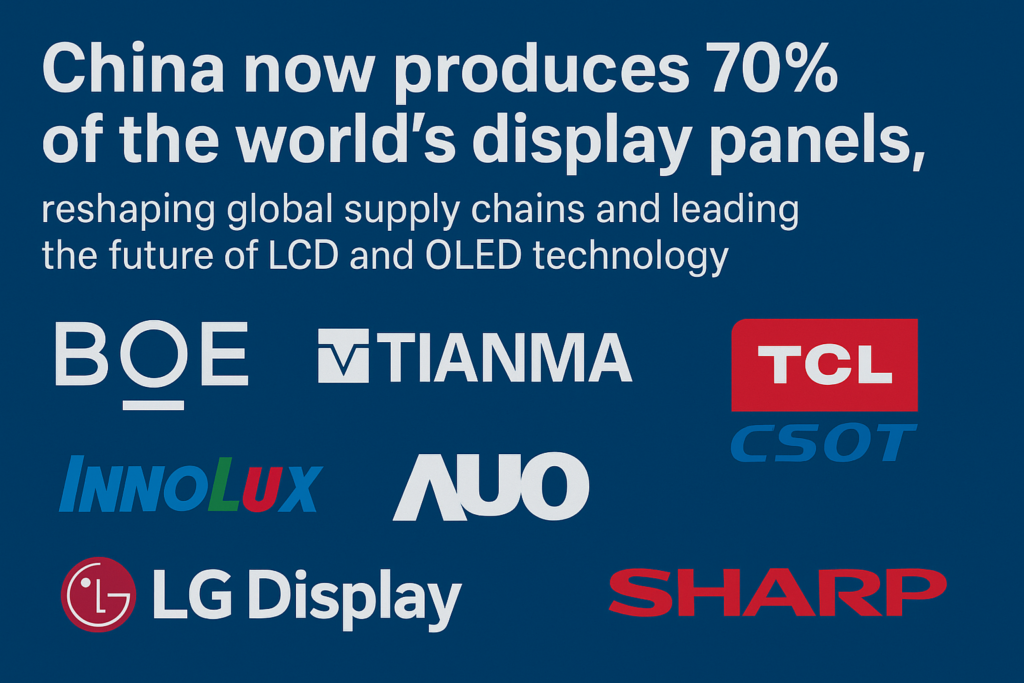
I 2025, tá an tírdhreach taispeána domhanda aththarraingthe go hoifigiúil. Don chéad uair sa stair, An tSín i seilbh 70% de tháirgeadh painéil taispeána domhanda, de réir na tuarascála is déanaí ón Omdia. Ciallaíonn sé seo go seacht gcinn as gach deich bpainéal taispeána a úsáidtear ar fud an domhain a thagann ó mhonarchana na Síne - athrú suntasach a dhaingníonn seasamh na Síne mar an chumhacht taispeántais domhanda.
Cad a chiallaíonn “sciar den mhargadh 70%” do shlabhraí soláthair domhanda?
Ní bhaineann an ceannasacht seo le huimhreacha amháin – léiríonn sé athailíniú ollmhór i dtionchar domhanda déantúsaíochta agus teicneolaíochta. Ó smartphones go teilifíseáin, scáileáin feithicleach chuig monatóirí cearrbhachais, Is é tionscal taispeána na Síne anois cnámh droma slabhra soláthair teicneolaíochta amhairc an domhain.
Tírdhreach Tionscal Taispeána Domhanda 2025
Buntáiste táirgthe ollmhór na Síne
Aschur taispeána na Síne i 2024 shroich measta ¥1.3 trilliún, ag gabháil thar leath den mhargadh taispeána domhanda. Dhá chroí-theicneolaíocht - LCD (56.25%) is Ollainn (14.51%) — an táirgeadh is mó, agus sáraíonn sciar an limistéir easpórtála 74% ar fud an domhain.
Ceannasacht taispeána smartphone
De réir TrendForce, Gabhadh lucht déanta painéil Síneach 68.8% den mhargadh taispeáint smartphone i 2024, agus táthar ag súil go sárú 70% isteach 2025. BOE i gceannas ar an pacáiste le 610 milliún lastais painéil smartphone réamh-mheasta i mbliana.
Ceannaireacht painéil teilifíse agus staitisticí lastais
Sa deighleog painéal teilifíse LCD, Tá láithreacht na Síne chomh láidir céanna. I R1 2025, shroich lastais phainéil teilifíse mórmhéide domhanda 63 milliún aonad, le gabháltas BOE 25.9%, CSOT 20.2%, agus HKC 14.4%.
Méid an mhargaidh agus neart onnmhairithe
Ligeann scála déantúsaíochta ollmhór na Síne di dul i gceannas ar onnmhairí freisin - gabháltas thar 74% de limistéar onnmhairithe taispeána an domhain, ag athdhearbhú a greim ar sholáthar domhanda.
Ardú Monaróirí Taispeáin na Síne
BOE - Ceannaire an tionscail
Tá BOE Technology Group anois ina shiombail de neart tionsclaíoch na Síne. I H1 2025, Thuairiscigh BOE ¥ 101.28 billiún in ioncam, an 8.45% méadú bliain ar bhliain, is ¥ 3.247 billiún i mbrabús glan, suas 42.15% ón mbliain roimhe sin.
Ceannaireacht lastais dhomhanda ar fud feistí
Coinníonn BOE ceannaireacht dhomhanda thar chúig phríomhréimse feidhmchlár - fóin chliste, táibléid, ríomhairí glúine, monatóirí, agus teilifíseáin — ag daingniú an #1 seasamh ar fud an domhain i lastais taispeána foriomlána.
An réabhlóid OLED faoi stiúir BOE
Is é OLED an t-inneall fáis nua do BOE. I H1 2025, Sáraíodh lastais OLED 71 milliún aonad, ag fás 7.5% bliain i ndiaidh bliana — ag dul thar an meán domhanda.
8.6-líne táirgeachta AMOLED giniúna
Chuaigh líne táirgeachta 8.6G AMOLED BOE isteach go luath ar shuiteáil trealaimh i mí na Bealtaine 2025 — ceithre mhí roimh an sceideal. Nuair a bheidh sé ag feidhmiú faoi dheireadh na 2026, ligfidh sé do BOE dul san iomaíocht le Samsung agus LG sa deighleog OLED ard-deireadh.
Fás CSOT agus Tianma
Tá TCL CSOT agus Tianma Microelectronics ar an méadú freisin. Tá sé tuartha go sroichfidh lastais phainéil smartphone CSOT 192 milliún aonad i 2025, cé go gcoimeádann Tianma timpeall 188 milliún aonad, le tacaíocht ó éileamh AMOLED ag ardú.
An Straitéis Dhá-Arian: Cómhaireachtáil LCD agus OLED
Conas a choimeádann an tSín LCD beo i ré nua
Cé gurb é OLED an todhchaí, Tá LCD fós mar bhunús leis. Gnólachtaí Síneach, barainneachtaí scála agus mionchoigeartú teicneolaíochta a ghiaráil, tionchar an-mhór ar tháirgeadh LCD le a 64% roinnt i 2024, ag súil a bhaint amach 69% isteach 2025.
Cathaoirleach BOE, Chen Yanshun, faoi deara go bhfuil LCD isteach a “céim fáis íseal-luaineachta”, fós mar cholún lárnach den teicneolaíocht taispeána do na deich mbliana atá romhainn.
An sprint OLED le haghaidh aitheantais dhomhanda
Idir an dá linn, Leanann móiminteam OLED na Síne ag ardú. 2024 chonaic a 27% méadú i lastais phainéil smartphone AMOLED, le réamh-mheasta 5.2% fás isteach 2025. BOE, Fís, agus Tianma isteach anois Slabhra soláthair Apple, bailíochtú domhanda a chruthú do theicneolaíocht OLED na Síne.
Le 2024, Thionóil monaróirí OLED na Síne 46% den mhargadh, ag dúnadh i gCóiré Theas 54%. I OLED solúbtha, Sciar na Síne cheana féin dul thar 57%, athrú stairiúil i gceannaireacht an tionscail a chomóradh.
Feidhmchláir atá ag Teacht Chun Cinn a Thiomáineann Cuar Fáis Nua
Taispeántais feithicleach: An chéad teorainn eile ag an tSín
Le fóin chliste ag druidim le sáithiú, Tá lucht déanta painéil na Síne ag díriú ar chuair fáis nua - agus tá taispeántais ngluaisteán ar bharr an liosta. I 2024, bhuail lastais taispeána ngluaisteán domhanda 232 milliún aonad, suas 6.3% bliain ar bhliain.
Treoraíonn BOE an deighleog seo le 17.6% sciar den mhargadh, ag soláthar brandaí cosúil le Zeekr, Changan, ciorcail, agus Dongfeng. Chomhfhorbair sé freisin a 30-orlach dé-scáileán le haghaidh samhail G9 XPeng agus a 10.25-taispeáint ionstraim orlach don G6.
Leathnú feithicleach Tianma
Tá Tianma sa dara háit le 36.9 milliún lastais, suas 25% bliain ar bhliain, ag soláthar BYD, BMW, Ford, agus Honda ar fud méideanna taispeána iolracha.
Cearrbhachas agus taispeántais esports: An chéad catha eile
Tá borradh faoi theorainn eile ag taispeántais Esports. 2024 chonaic 32.4 milliún monatóirí cearrbhachais LCD seolta go domhanda, suas 12% ón mbliain roimhe. An rath a bhí ar Miotas Dubh: Wukong go déanach 2024 chuir sé tuilleadh le héileamh intíre na Síne.
Agus COMPUTEX 2025, Nocht ASUS agus MSI 27-monatóireacht orlach 500Hz QD-OLED, caighdeán ardfheidhmíochta nua a chur in iúl. Táthar ag súil le héileamh taispeáint OLED ASUS dúbailte go dtí os a chionn 500,000 aonaid i 2025.
Na Dúshláin Romhainn
Buaiceanna in ábhair agus trealamh OLED
In ainneoin an rath, tá dúshláin fós ann - go háirithe in OLEDanna croí-ábhair agus trealamh déantúsaíochta. Tá an tSín fós ag brath go mór ar allmhairí le haghaidh ábhair orgánacha astaithe solais is maisc mhiotail mhín (FMM), faoi cheannas na Seapáine Idemitsu Kosan agus na S.A UDC.
Laigí i gcomhoibriú réamhtheachtacha-iartheachtacha
De réir CINNO Research, clúdach soláthraithe intíre amháin 39% de phróisis trealaimh OLED, le príomhréimsí mar uirlisí galú agus nochta a bhfuil níos lú ná 20% logánú. na Seapáine Toc, Canónach, is Nicon fós chun tosaigh ar na céimeanna ríthábhachtacha seo.
Mar thoradh air seo i timthriallta uchtaithe mall - uaireanta ag cur dhá bhliain ón bhfíorú go dtí an olltáirgeadh — ag cur bac ar nuálaíocht réamhtheachtacha agus ar thorthaí ar R&D.
An Aincheist Brabúsachta
Cé go bhfuil sciar den mhargadh ag fás, brabúsacht fós tanaí. Éilíonn déantúsaíocht OLED ard R&D, timthriallta fada, agus infheistíocht chaipitil throm, as a dtiocfaidh brú leanúnach airgeadais.
Fís, An dara táirgeoir AMOLED is mó sa tSín, mar eiseamláir den paradacsa seo — méadú gasta ar an margadh ach caillteanais leanúnacha. Ó 2021 chuig 2024, thaifead sé ceithre bliana as a chéile de ghlanchaillteanas, iomlán beagnach ¥10 billiún.
An Bóthar chun Ceannaireacht Dhomhanda
Deich mbliana ó shin, Bhí tionscal taispeána na Síne fós ag teacht suas. Inniu, tá sé an luas domhanda a shocrú. Le BOE, TCL CSOT, agus Tianma i measc na na cúig sholáthraí OLED is fearr ar domhan, Tá “Déanta sa tSín” tagtha chun cinn ó leantóir don nuálaí.
Léiríonn an t-aistriú isteach trealaimh luath do línte 8.6G OLED agus an t-ardú ar imchochlú gloine-bhunaithe cé chomh tapa agus atá an t-éiceachóras ag dul chun cinn. Ní hamháin go bhfuil tionscal taispeána na Síne san iomaíocht - tá sé chun tosaigh.
Deireadh: Tús Ré Nua
Trí ghabháil 70% de tháirgeadh taispeána domhanda, Tá rialacha an chluiche athscríofa ag an tSín. Ó LCD go OLED, ó smartphones go gluaisteáin, a teicneolaíochta, scála, agus tá an nuálaíocht ag múnlú an chaoi a bhfeiceann an domhan a thodhchaí digiteach anois.
Mar is maith le teorainneacha nua taispeántais solúbtha, micrea-LED, agus painéil ngluaisteán teacht chun cinn, Tá an tSín i riocht maith chun leanúint ar aghaidh chun tosaigh — ní hamháin i dtáirgeadh, ach leis an gcéad chaibidil eile den nuálaíocht taispeána domhanda a shainiú.
Ceisteanna Coitianta
1. Cén fáth a tháirgeann an tSín 70% de phainéil taispeána an domhain?
Mar gheall ar a scála unmatched, tacaíocht láidir rialtais, cumais déantúsaíochta chun cinn, agus infheistíocht leanúnach i R&D agus teicneolaíocht OLED.
2. Cé hiad na monaróirí taispeántais is fearr sa tSín i 2025?
Áirítear ar na cuideachtaí móra Grúpa Teicneolaíochta BOE, TCL CSOT, Micrileictreonaic Tianma, Fís, is HKC.
3. Cad iad na teicneolaíochtaí atá ag tiomáint tionscal taispeána na Síne?
Go príomha LCD is Ollainn, le fás tapa i AMOLED, Mini LED, is OLED solúbtha le haghaidh fóin chliste agus feidhmchláir ngluaisteán.
4. Cad iad na dúshláin atá os comhair na Síne i dtáirgeadh OLED?
Spleáchas ar ábhair agus ar threalamh allmhairithe, rátaí logánaithe íseal, agus timthriall glactha nuálaíochta mall ar fud an tslabhra soláthair.
5. Conas a fhorbróidh an margadh taispeána domhanda tar éis 2025?
Bí ag súil níos tapúla Glacadh OLED, cinn microLED, agus an tSín ag daingniú a ceannaireachta agus an iomaíocht dhomhanda ag díriú ar dhifreáil ardleibhéil.