Перестройка мировой индустрии дисплеев
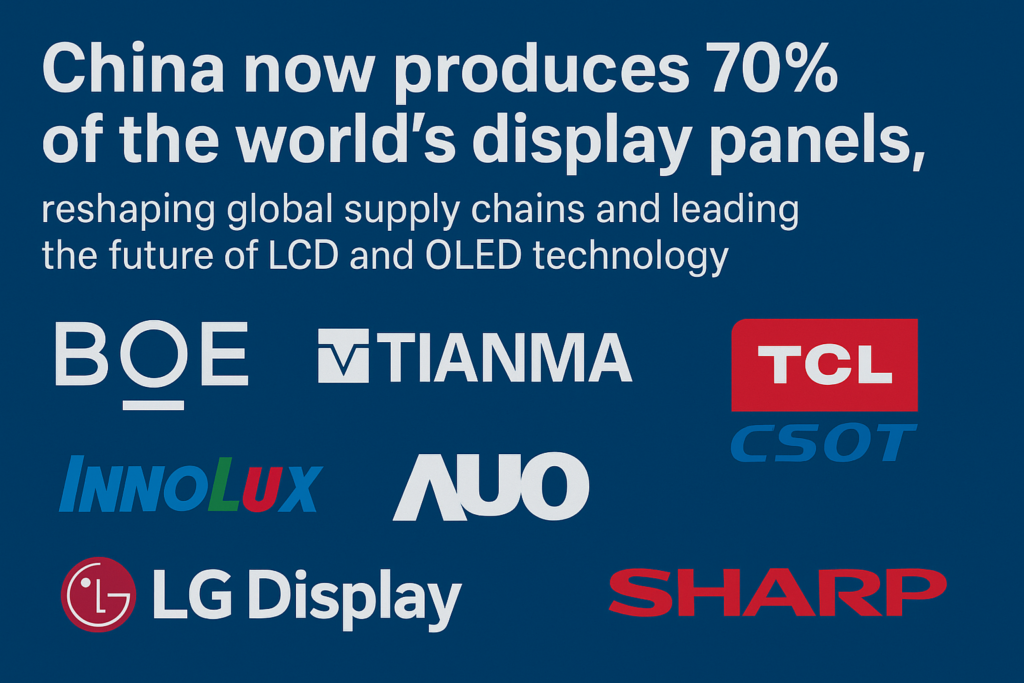
В 2025, глобальный ландшафт отображения официально был перерисован. Впервые в истории, Китай держит 70% мирового производства дисплейных панелей, согласно последнему отчету Omdia. Это означает, что семь из каждых десяти панелей дисплея используемые во всем мире, поступают с китайских заводов — монументальный сдвиг, который укрепляет позиции Китая как глобального производителя дисплеев..
Что означает «доля рынка 70%» для глобальных цепочек поставок?
Это доминирование связано не только с цифрами — оно представляет собой масштабную перестройку глобального влияния производства и технологий.. От смартфонов к телевизорам, автомобильные экраны для игровых мониторов, Китайская индустрия дисплеев в настоящее время составляет основу мировой цепочки поставок визуальных технологий..
Глобальный ландшафт индустрии дисплеев 2025
Огромное производственное преимущество Китая
Производство дисплеев Китая в 2024 достиг оценочного 1,3 триллиона йен, захватывая половина мирового рынка дисплеев. Две основные технологии — ЖК -дисплей (56.25%) и Олинг (14.51%) — доминировать в производстве, при этом доля экспортной территории превышает 74% по всему миру.
Доминирование дисплея смартфона
По данным TrendForce, Китайские производители панелей арестованы 68.8% рынка дисплеев для смартфонов в 2024, и ожидается, что превосходить 70% в 2025. Банк Англии лидирует с 610 миллионов поставок панелей для смартфонов прогнозируется в этом году.
Лидерство ТВ-панелей и статистика поставок
В сегменте ЖК-панелей для телевизоров, Присутствие Китая одинаково сильно. В первом квартале 2025, Достигнуты мировые поставки крупногабаритных телевизионных панелей 63 миллион единиц, с холдингом BOE 25.9%, CSOT 20.2%, и Гонконг 14.4%.
Размер рынка и сила экспорта
Огромные масштабы производства Китая позволяют ему доминировать и в экспорте. над 74% мировой экспортной площади дисплеев, вновь подтверждая свой контроль над глобальными поставками.
Рост числа китайских производителей дисплеев
BOE – лидер отрасли
BOE Technology Group стала символом промышленной мощи Китая. В первом полугодии 2025, Об этом сообщил Банк Англии Выручка 101,28 миллиарда йен, а 8.45% увеличение по сравнению с прошлым годом, и 3,247 миллиарда иен чистой прибыли, вверх 42.15% с прошлого года.
Глобальное лидерство в поставках различных устройств
BOE сохраняет глобальное лидерство в пяти ключевых областях применения — смартфонах, таблетки, ноутбуки, мониторы, и телевизоры — обеспечение безопасности #1 положение в мире в общих поставках дисплеев.
Революция OLED под руководством BOE
OLED — новый двигатель роста для BOE. В первом полугодии 2025, Поставки OLED превышены 71 миллион единиц, растет 7.5% по сравнению с прошлым годом — опережая средний мировой показатель.
8.6-производственная линия AMOLED поколения
Производственная линия 8.6G AMOLED компании BOE вступила в раннюю установку оборудования в мае 2025 — на четыре месяца раньше срока. После ввода в эксплуатацию к концу 2026, это позволит Банку Англии конкурировать с Samsung и LG в сегменте OLED высокого класса.
Рост CSOT и Tianma
TCL CSOT и Tianma Microelectronics также находятся на подъеме.. Прогнозируется, что поставки панелей для смартфонов CSOT достигнут 192 миллионов единиц в 2025, пока Тианма держится рядом 188 миллион единиц, поддерживается растущим спросом на AMOLED.
Двойная стратегия: Сосуществование ЖК и OLED
Как Китай сохраняет ЖК-дисплеи в новую эпоху
Хотя OLED — это будущее, ЖК-дисплей остается основой. Китайские фирмы, использование эффекта масштаба и технологических усовершенствований, доминировать в производстве ЖК-дисплеев с 64% доля в 2024, ожидается, что он достигнет 69% в 2025.
председатель Банка Англии, Чэнь Яньшунь, отметил, что ЖК вступил в «фаза роста низкой волатильности», останется ключевым столпом технологии отображения на следующее десятилетие.
Стремление к мировому признанию OLED
Тем временем, Динамика популярности OLED в Китае продолжает расти. 2024 увидел 27% увеличивать в поставках AMOLED-панелей для смартфонов, с прогнозируемым 5.2% рост в 2025. Банк Англии, Вижнокс, и Тианма уже вошли Цепочка поставок Apple, подтверждение глобальной валидации китайской технологии OLED.
К 2024, Китайские производители OLED провели 46% рынка, приближается к Южной Корее 54%. В гибком OLED, Доля Китая уже превзошел 57%, знаменуя исторический сдвиг в лидерстве отрасли.
Новые приложения, стимулирующие новые кривые роста
Автомобильные дисплеи: Следующий рубеж Китая
Смартфоны приближаются к насыщению, Китайские производители панелей нацелены на новые кривые роста, и автомобильные дисплеи возглавляют список. В 2024, Мировые поставки автомобильных дисплеев упали 232 миллион единиц, вверх 6.3% в годовом исчислении.
BOE лидирует в этом сегменте с 17.6% доля рынка, поставляя такие бренды, как Зикр, Чанган, Чери, и Дунфэн. Он также совместно разработал 30-дюймовый двойной экран для модели XPeng G9 и 10.25-дюймовый дисплей прибора для G6.
Автомобильная экспансия Tianma
Тианма занимает второе место с 36.9 миллион отправлений, вверх 25% в годовом исчислении, поставка БИД, BMW, Форд, и Хонда для разных размеров дисплеев.
Игровые и киберспортивные дисплеи: Следующее поле битвы
Киберспортивные мероприятия — еще один бурно развивающийся фронт. 2024 пила 32.4 миллионов игровых ЖК-мониторов поставляется по всему миру, вверх 12% с прошлого года. Успех Черный миф: Вуконг в конце 2024 еще больше увеличил внутренний спрос Китая.
И КОМПЬЮТЕКС 2025, ASUS и MSI представили 27-дюймовые QD-OLED-мониторы с частотой 500 Гц, сигнализируя о новом стандарте высокой производительности. Ожидается, что спрос на OLED-дисплеи ASUS увеличится. вдвое больше 500,000 единицы в 2025.
Предстоящие задачи
Узкие места в материалах и оборудовании OLED
Несмотря на успех, проблемы остаются — особенно в области OLED основные материалы и производственное оборудование. Китай по-прежнему сильно зависит от импорта органические светоизлучающие материалы и тонкие металлические маски (ФММ), доминирует Япония Идемицу Косан и США УДК.
Слабые стороны сотрудничества между верхними и нижними звеньями
По данным исследования CINNO, отечественные поставщики покрывают только 39% процессов OLED-оборудования, с такими ключевыми областями, как инструменты для испарения и воздействия имея меньше чем 20% локализация. Японии Ток, Канон, и Никон все еще доминировать на этих важных этапах.
Это приводит к медленным циклам внедрения — иногда занимающим два года от проверки к массовому производству — препятствуя инновациям в сфере разработки и доходам от R&Дюймовый.
Дилемма прибыльности
Хотя доля рынка растет, рентабельность остается низкой. Производство OLED требует высокий R&Дюймовый, длинные циклы, и большие капиталовложения, что приводит к устойчивому финансовому давлению.
Вижнокс, Второй по величине производитель AMOLED в Китае, иллюстрирует этот парадокс — быстрое расширение рынка, но постоянные потери. От 2021 к 2024, он записал четыре года подряд чистых убытков, на общую сумму почти 10 миллиардов йен.
Дорога к глобальному лидерству
Десять лет назад, Китайская индустрия дисплеев все еще догоняла. Сегодня, его задавая глобальный темп. С Банком Англии, ТКЛ CSOT, и Тианма среди пять крупнейших в мире поставщиков OLED, «Сделано в Китае» превратилось из последователь новатора.
Первые поставки оборудования для линий OLED 8.6G и распространение стеклянной инкапсуляции показывают, насколько быстро развивается экосистема.. Китайская индустрия дисплеев не только конкурирует, но и является ведущей.
Заключение: Рассвет новой эры
Захватив 70% мирового производства дисплеев, Китай переписал правила игры. От ЖК к OLED, от смартфонов до автомобилей, его технология, шкала, и инновации теперь формируют то, как мир видит свое цифровое будущее.
Поскольку новые границы, такие как гибкие дисплеи, микроLED, и автомобильные панели появляться, Китай имеет хорошие возможности для того, чтобы продолжать лидировать – не только в производстве, но в определении следующей главы глобальных инноваций в области дисплеев.
Часто задаваемые вопросы
1. Почему Китай производит 70% мировых дисплейных панелей?
Из-за своего непревзойденного масштаба, сильная государственная поддержка, передовые производственные возможности, и постоянные инвестиции в R&D и OLED-технологии.
2. Кто является ведущим производителем дисплеев в Китае? 2025?
В число ведущих компаний входят Технологическая группа BOE, ТКЛ CSOT, Тианма Микроэлектроника, Вижнокс, и Гонконг.
3. Какие технологии движут индустрией дисплеев Китая?
В первую очередь ЖК -дисплей и Олинг, с быстрым ростом в Амоль, Мини светодиод, и гибкий OLED для смартфонов и автомобильных приложений.
4. С какими проблемами сталкивается Китай в производстве OLED?
Зависимость от импортных материалов и оборудования, низкие показатели локализации, и медленный цикл внедрения инноваций по всей цепочке поставок.
5. Как будет развиваться мировой рынок дисплеев после 2025?
Ожидайте быстрее внедрение OLED, микроLED прорывы, и Китай укрепляет свое лидерство, в то время как глобальная конкуренция фокусируется на дифференциации высокого класса..