
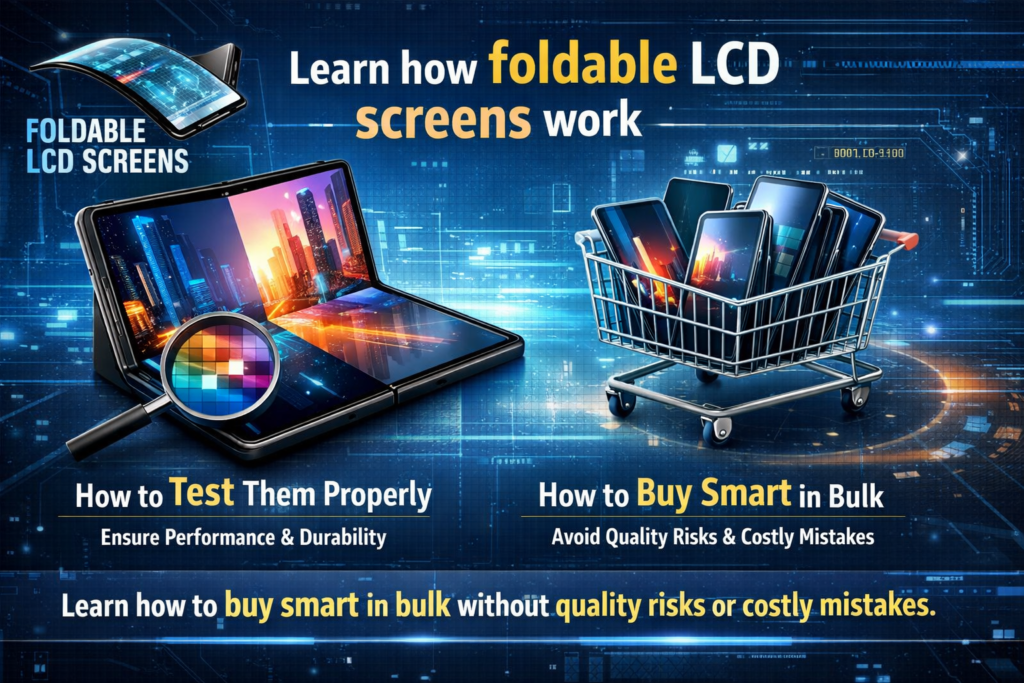
Introduzione agli schermi LCD pieghevoli
Gli smartphone pieghevoli non sono più gadget fantascientifici. Sono qui, stanno vendendo, e stanno rimodellando il modo in cui interagiamo con i dispositivi mobili. Mentre l’OLED spesso ruba i riflettori, Gli schermi LCD pieghevoli svolgono tranquillamente un ruolo cruciale, soprattutto laddove il controllo dei costi e la stabilità dell’offerta sono importanti.
Analizziamo tutto in parole povere e parliamo di come funziona la tecnologia LCD pieghevole, come ispezionare e testare correttamente questi pannelli, e come acquistarli senza calpestare mine nascoste.
Cos'è uno schermo LCD pieghevole?
Uno schermo LCD pieghevole è esattamente quello che sembra: uno schermo a cristalli liquidi progettato per piegarsi, piega, e aprirsi senza perdere funzionalità. A differenza dei tradizionali LCD rigidi, questi pannelli utilizzano substrati flessibili e unità di retroilluminazione appositamente progettate che possono sopravvivere a cicli di piegatura ripetuti.
Pensalo come un libro con pagine flessibili anziché in cartone rigido. Stessa idea, solo molto più tecnica.
Perché i display pieghevoli sono importanti negli smartphone moderni
I display pieghevoli offrono spazio sullo schermo più ampio senza aumentare le dimensioni tascabili. Per produttori e fornitori, Gli LCD pieghevoli forniscono un'alternativa più economica agli OLED pieghevoli, rendendoli attraenti per i mercati di fascia media ed emergenti.
Evoluzione della tecnologia dei display pieghevoli
Dai pannelli rigidi agli LCD flessibili
I primi LCD erano rigidi come un mattone. Col tempo, progressi nei substrati flessibili, transistor a film sottile, e le tecniche di laminazione hanno consentito ai pannelli LCD di piegarsi senza rompersi.
Innovazioni chiave nella progettazione del backplane flessibile
Il vero eroe qui è il backplane. I materiali TFT flessibili consentono ai segnali elettrici di rimanere stabili anche quando lo schermo si piega, riducendo il guasto dei pixel e la perdita di segnale.
Struttura principale degli schermi LCD pieghevoli
Vetro flessibile vs. Pellicola in poliimmide
La maggior parte degli LCD pieghevoli si basa sulla pellicola di poliimmide anziché sul vetro ultrasottile. È più leggero, più flessibile, e molto meno probabilità di rompersi sotto stress.
Unità di retroilluminazione (BLU) Design per LCD pieghevoli
A differenza degli LCD rigidi, le versioni pieghevoli utilizzano BLU segmentati o ultrasottili che mantengono la luminosità consentendo la flessione.
Integrazione del livello touch e del sensore
Lo strato tattile deve piegarsi con il display mantenendo la precisione. Una scarsa integrazione qui spesso porta a tocchi fantasma o zone morte.
LCD pieghevole vs OLED pieghevole
Costo, Durabilità, e posizionamento sul mercato
Gli LCD pieghevoli sono più economici e più facili da reperire in grandi volumi. OLED vince in contrasto e spessore, ma il display LCD vince sulla stabilità dei prezzi.
Perché il display LCD pieghevole è ancora importante nei mercati emergenti
Nelle regioni sensibili ai prezzi, gli LCD pieghevoli consentono design di telefoni innovativi senza spingere i prezzi al dettaglio nella stratosfera.
Sfide tecniche comuni degli schermi LCD pieghevoli
Problemi di piega e stress da piegatura
Una piegatura ripetuta causa stress meccanico nella zona delle cerniere, portando a pieghe visibili o affaticamento dei pixel nel tempo.
Perdita di luce e luminosità irregolare
Una progettazione BLU non corretta spesso provoca zone chiare o scure vicino alla piega.
Cambiamento di colore dopo piegature ripetute
I colori possono spostarsi dopo migliaia di pieghe: un segnale di avvertimento precoce dell'affaticamento del materiale.
Processo di produzione di pannelli LCD pieghevoli
Processo di laminazione e piegatura
La laminazione di precisione garantisce che gli strati rimangano uniti durante la piegatura. Una fase di laminazione errata può rovinare un intero lotto.
Controllo di qualità nella produzione di massa
Ispezione ottica automatizzata (AOI) i sistemi rilevano tempestivamente i difetti, riducendo le perdite a valle.
Ispezione visiva degli schermi LCD pieghevoli
Controllo dei difetti superficiali
Ispezionare sotto una forte luce per eventuali graffi, ammaccature, o irregolarità del rivestimento.
Graffi, Ammaccature, e danni al rivestimento
Anche i più piccoli difetti superficiali possono peggiorare dopo i cicli di piegatura.
Metodi di test funzionali
Test di luminosità e uniformità del colore
Controlla Mura, ombreggiatura, o incoerenza di colore sul pannello.
Test di sensibilità al tocco e risposta
Testa la precisione del multi-touch prima e dopo la piegatura.
Prova di stress del ciclo di piegatura
Gli LCD pieghevoli di alta qualità dovrebbero sopravvivere a decine di migliaia di pieghe senza guasti.
Test ambientali e di affidabilità
Test di alta temperatura e umidità
Il calore e l'umidità accelerano l'invecchiamento. I buoni pannelli resistono allo stress.
Test di resistenza alle cadute e alla pressione
Gli schermi piegati affrontano punti di pressione diversi rispetto a quelli piatti: i test sono importanti.
Difetti comuni riscontrati durante l'ispezione
Macchie nere, Macchie bianche, e Mura
Spesso legato a problemi di TFT o di retroilluminazione.
Sfarfallio e guasto della retroilluminazione
Una bandiera rossa che indica potere o instabilità dei BLU.
Standard e certificazioni per schermi LCD pieghevoli
Standard di qualità del settore
Cerca la conformità con i parametri di affidabilità ISO e interni.
Perché la certificazione è importante per gli acquirenti
I pannelli certificati riducono i tassi di restituzione e le controversie sulla garanzia.
Considerazioni sull'approvvigionamento per schermi LCD pieghevoli
Scegliere il fornitore giusto
I fornitori affidabili offrono la tracciabilità, rapporti di prova, e uscita stabile.
LCD pieghevoli OEM e aftermarket
I pannelli OEM offrono coerenza; I pannelli aftermarket offrono flessibilità di prezzo: scegli saggiamente.
Suggerimenti per l'acquisto in blocco per i distributori
Test a campione prima degli ordini di massa
Non saltare mai il campionamento. È più economico dei resi.
Protezione dell'imballaggio e del trasporto
Un imballaggio scadente rovina gli schermi di buona qualità. Semplice proprio così.
Controllo dei costi e gestione dei rischi
Bilanciare prezzo e qualità
Lo schermo più economico è spesso l’errore più costoso.
Ridurre i tassi di restituzione post-vendita
Una buona ispezione equivale a meno mal di testa in seguito.
Tendenze future nella tecnologia LCD pieghevole
Pannelli più sottili e maggiore durata
Aspettatevi design più sottili con una maggiore durata di piegatura.
Espansione nei modelli di smartphone di fascia media
Gli LCD pieghevoli alimenteranno i telefoni pieghevoli a prezzi accessibili in tutto il mondo.
Conclusione
Gli schermi LCD pieghevoli sono un mix intelligente di innovazione e praticità. Potrebbero non essere appariscenti, ma forniscono risultati laddove conta: efficienza in termini di costi, scalabilità, e affidabilità. Comprendendo la tecnologia, eseguire ispezioni e test adeguati, e prendere decisioni informate sugli appalti, acquirenti e distributori possono stare al passo con i tempi evitando costose insidie.
Domande frequenti (FAQ)
1. Gli schermi LCD pieghevoli sono abbastanza resistenti per l'uso quotidiano?
SÌ, se adeguatamente fabbricati e testati, possono gestire migliaia di pieghe in modo affidabile.
2. Come posso rilevare i pannelli LCD pieghevoli di scarsa qualità??
Cerca una luminosità non uniforme, problemi di tocco, sfarfallio, e pieghe visibili fin dall'inizio.
3. Gli LCD pieghevoli sono più economici degli OLED pieghevoli?
Generalmente, SÌ. Gli LCD offrono un migliore controllo dei costi, soprattutto negli ordini all'ingrosso.
4. Qual è il rischio maggiore quando si acquistano LCD pieghevoli in grandi quantità??
Saltare i test sui campioni e affidarsi esclusivamente al prezzo.
5. La tecnologia LCD pieghevole continuerà a crescere?
Assolutamente. È particolarmente forte nei mercati degli smartphone di fascia media ed emergenti.



