Introduzione
La Cina è stata a lungo riconosciuta come il il più grande hub di fornitura di componenti per smartphone al mondo, con mercati offline come Huaqiangbei di Shenzhen E Baima Electronics City di Guangzhou fungendo da calamita per gli acquirenti globali. Ancora, navigare in questi vivaci centri può essere entrambe le cose emozionante e stimolante, soprattutto per i commercianti stranieri e i proprietari di piccole imprese.
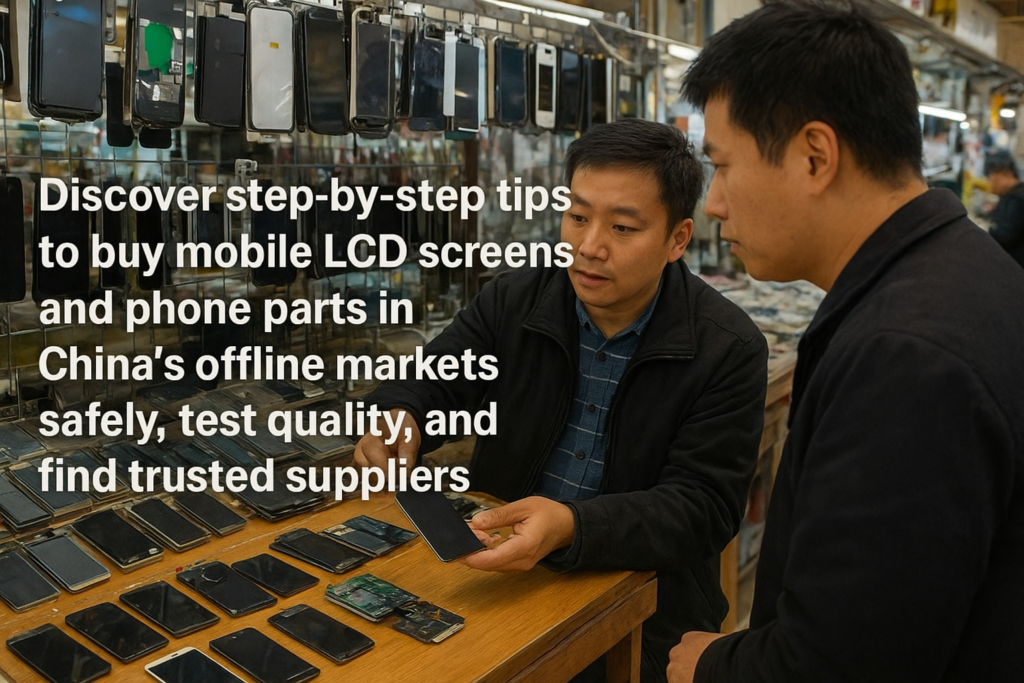
Questo articolo funge da a completare, guida pratica per gli acquirenti esteri, proprietari di officine di riparazione mobili, e venditori di e-commerce transfrontalieri che intendono acquistare schermi LCD mobili e componenti interni direttamente dai mercati offline della Cina. Imparerai a processo di acquisto passo dopo passo, incluso come trovare fornitori affidabili, testare i prodotti, negoziare i prezzi, gestire la spedizione, ed evitare le trappole comuni.
1: Preparazione strategica: conosci te stesso e il mercato
1.1 Definisci le tue esigenze di approvvigionamento
Prima di entrare nei mercati elettronici cinesi, sii cristallino su ciò di cui hai bisogno:
- Obiettivo principale: Mobile Schermi LCD (assemblaggio completo, vetro di copertura, o display interno).
- Elementi secondari: Batterie, telecamere, e schede madri.
- Specifiche chiave: Compatibilità del modello, risoluzione, tipo di connettore, e grado di qualità (A++, A+, UN, o replica).
- Quantità: Decidi tra piccoli lotti di prova o ordini all'ingrosso.
Avere un elenco acquisti dettagliato ti aiuta a rimanere organizzato ed evitare confusione nell'ambiente caotico del mercato.
1.2 Identificare i mercati target
La Cina ospita numerosi hub dell’elettronica, Ma Shenzen rimane il cuore pulsante del commercio globale di componenti per smartphone.
- Shenzhen Huaqiangbei (Il Centro dell'Universo): Il cluster del mercato dell'elettronica più famoso al mondo, con sezioni dedicate agli LCD, patatine, batterie, e accessori.
- Guangzhou Baima & Città informatica del Pacifico: Ideale per i piccoli commercianti o per i prodotti di elettronica di categoria mista.
- Zonizzazione del mercato a Huaqiangbei:
- Mercato delle parti mobili di Jixiang: Specializzato in LCD e touchscreen.
- Longsheng & Mercato digitale di Yuanwang: Ideale per componenti mobili di fascia alta.
- Tongtiandi & Mercato dell'elettronica SEG: Perfetto per i piccoli e medi rivenditori.
Ogni zona ha la sua specialità: sapere dove andare fa risparmiare tempo e denaro.
1.3 Condurre ricerche pre-mercato
Prima di volare in Cina, raccogliere dati di base sui prezzi E contatti dei fornitori utilizzando piattaforme online come 1688, Alibaba, O Gruppi WeChat.
Preparare:
- UN scheda di gara dettagliata con modelli, quantità, e aspettative sui prezzi.
- UN piano di bilancio compreso il viaggio, strumenti di test, e costi logistici.
Queste basi garantiscono trattative più fluide una volta arrivati sul posto.
2: Il processo di acquisto principale in sei fasi: immersione nel mercato
2.1 Primo passo: Scegliere il fornitore giusto: “Estrazione dell’oro” vs. “Evitare i campi minati”
Categorie di fornitori
- Agenti autorizzati dal marchio: Offri ricambi originali ma a prezzi premium.
- Grandi grossisti: Provide a stable supply and better discounts.
- Counter Booths (Small Shops): Great for flexible or mixed orders, but require careful inspection.
Evaluation Tips
- Observe their booth size and professionalism.
- Ask if they support mixed batch orders.
- Collect business cards, aggiungere WeChat, and build early rapport.
2.2 Step Two: Product Quality Inspection — The “Eagle Eye” Test
Three Essential On-Site Tests
- Ispezione visiva: Check for scratches, pixel morti, bolle, or uneven backlight.
- Test funzionali: Always carry a test motherboard or request testing at the booth to verify color accuracy, sensibilità al tocco, and brightness consistency.
- Specification Verification: Confirm the exact model, tipo di connettore, and version.
Ask About Warranty Policies
Make sure the supplier clarifies:
- Periodo di garanzia (usually 3–6 months).
- Replacement or refund procedures.
- Scope of coverage (factory defect vs. damage by use).
A trustworthy supplier never hesitates to provide this information.
2.3 Passo tre: Negoziazione del prezzo: l’arte della contrattazione
Fondamenti della negoziazione
Tuo leva dipende da:
- Quantità ordinata.
- Grado di qualità selezionato.
- Consapevolezza dei prezzi di mercato.
Suggerimenti per la negoziazione
- Confronta almeno tre fornitori prima di finalizzare.
- Menziona il tuo piano di cooperazione a lungo termine per vincere affari migliori.
- Chiarire se i prezzi includono tasse e spese di spedizione.
Una volta soddisfatto, confermare:
- Termini di pagamento (deposito contro. pagamento completo).
- Tempi di consegna.
- Penali per consegne tardive o difettose.
2.4 Passo quattro: Effettuare l'ordine – “Muoversi con decisione”
Dopo aver verificato la qualità del prodotto e il prezzo negoziato:
- Firma a contratto di acquisto o fattura proforma.
- Assicurati tutti i dettagli (modello, quantità, prezzo, pagamento, data di consegna, e destinazione) sono corretti.
- Paga un depositare (solitamente 30-50%) per garantire l'ordine.
Conserva i registri digitali dei contratti e delle ricevute per un follow-up senza intoppi.
2.5 Passo cinque: Spedizioni ed esportazioni: la logistica è l'ancora di salvezza
Opzioni logistiche
- Espresso internazionale (DHL, Fedex, UPS): Meglio per i piccoli, beni di alto valore.
- Trasporto aereo: Opzione bilanciata: veloce ma leggermente costosa.
- Trasporto via mare: Costo più basso, ideale per grandi ordini all'ingrosso, ma lento.
Utilizzo di spedizionieri
- Puoi utilizzare il partner di trasporto del fornitore o assumi il tuo.
- Un affidabile spedizioniere aiuta con la dichiarazione di esportazione, pratiche doganali, e assicurazione.
Documenti necessari
- Fattura
- Lista imballaggio
- Contrarre
- Modulo di dichiarazione di esportazione
2.6 Passaggio sei: Sdoganamento: attraversamento dei confini senza intoppi
Ruolo dell'importatore
Prima della spedizione, confermare:
- Quello del tuo paese regolamenti sull'importazione, doveri, E requisiti di certificazione (per esempio., CE, FCC).
- Scegli tra auto-autorizzazione O “doppia autorizzazione” (porta a porta) tramite uno spedizioniere.
- Prepara tutto il necessario documenti doganali in anticipo.
Una preparazione adeguata riduce al minimo i ritardi di sdoganamento e le potenziali multe.
3: Passaggi successivi all'acquisto: concludere il tutto in modo professionale
3.1 Ispezione delle merci: il checkpoint finale
Quando arriva la merce:
- Verificare integrità e quantità della confezione.
- Condotta ispezioni a campione seguendo gli stessi test effettuati in Cina.
- Documentare eventuali problemi con foto o video per prove.
Se tutto è andato a buon fine, registrare i dettagli della spedizione per la futura tracciabilità.
3.2 Gestione post-vendita e creazione di relazioni
Se sorgono problemi di qualità:
- Contatta il tuo fornitore immediatamente con foto/video.
- Fare riferimento a quanto concordato termini di garanzia per reso o sostituzione.
Mantenere fiducia e comunicazione è essenziale per le partnership a lungo termine.
I fornitori sono più disposti a supportare i clienti abituali che rispettano l’etichetta aziendale.
4: Avvertenze sui rischi e consigli pratici
Rischi comuni
- Qualità del prodotto incoerente.
- Parti contraffatte o ricondizionate.
- Problemi di comunicazione e barriere linguistiche.
- Frode nei pagamenti o danni logistici.
Strategie comprovate
- Ispeziona sempre la merce di persona prima del pagamento.
- Utilizzo deposito a garanzia di terzi O pagamenti sicuri tramite piattaforma.
- Acquistare assicurazione sulla spedizione per consegne internazionali.
- Considerare assumere un traduttore o un agente locale se sei nuovo sul mercato.
Queste misure preventive possono farti risparmiare molto tempo, soldi, e frustrazione.
Conclusione
L’acquisto di LCD mobili e parti interne nei mercati offline cinesi è un’operazione viaggio pieno di opportunità e sfide. Con a processo sistematico, UN mentalità cauta, E solidi rapporti con i fornitori, puoi costruire una pipeline di approvvigionamento stabile che alimenta la crescita della tua attività.
Padroneggiando il metodo di appalto in sei fasi e rimanere vigili durante tutto il processo, non solo eviterai le trappole più comuni, ma otterrai anche un vantaggio competitivo a lungo termine nel mercato globale della riparazione e rivendita di dispositivi mobili.
FAQ
1. È sicuro per gli stranieri acquistare direttamente a Huaqiangbei?
SÌ, è generalmente sicuro, ma gestisci sempre le transazioni in modo professionale e utilizza fornitori affidabili.
2. Quali strumenti dovrei portare quando testo gli schermi LCD?
Porta un test motherboard, cavo di ricarica, e un power bank completamente carico per le prove in loco.
3. Posso ottenere facilmente parti OEM originali??
SÌ, ma dovrai trovare distributori autorizzati del marchio O grossisti verificati con una forte reputazione.
4. Qual è la garanzia tipica per gli schermi mobili?
La maggior parte dei fornitori offre 3–6 mesi, a seconda della qualità del prodotto e dei termini contrattuali.
5. Dovrei assumere un agente di approvvigionamento locale?
Se è la tua prima volta, SÌ - possono gestire il linguaggio, negoziazione, e logistica per rendere la tua esperienza più fluida.