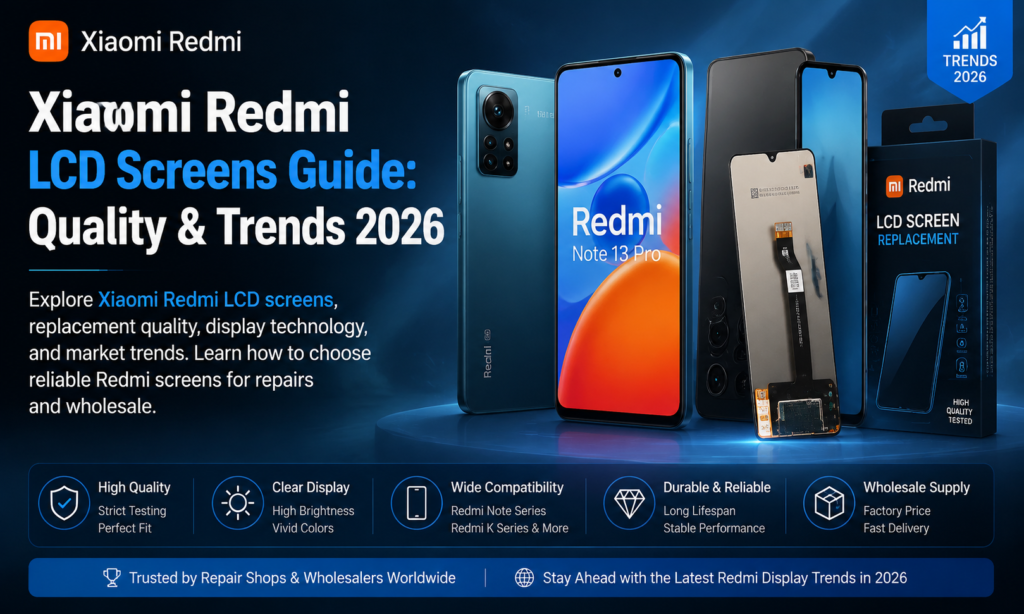
Tá an taispeáint smartphone ar cheann de na comhpháirteanna is tábhachtaí a chinneann taithí úsáideora. Cibé an bhfuil daoine ag féachaint ar fhíseáin, ag imirt cluichí, ag brabhsáil na meáin shóisialta, nó feidhmchláir ghnó a úsáid, bíonn tionchar díreach ag cáilíocht an scáileáin ar an gcaoi a n-idirghníomhaíonn siad lena ngutháin. I measc na brandaí smartphone domhanda, Xiaomi Redmi anois ar cheann de na roghanna is coitianta mar gheall ar a chothromaíocht idir feidhmíocht, inacmhainneacht, agus crua-earraí iontaofa. Do na milliúin na n-úsáideoirí ar fud an domhain, Tairgeann fóin chliste Redmi sonraíochtaí iontacha ar phraghsanna iomaíocha, rud a fhágann go bhfuil an-tóir orthu i margaí ar fud na hÁise, Eoraip, Meiriceá Laidineach, Afraic, agus an Meánoirthear.
De réir mar a leanann smartphones Redmi ag leathnú a sciar den mhargadh, an t-éileamh ar Scáileáin athsholáthair Xiaomi Redmi LCD tar éis méadú go tapa freisin. Siopaí deisiúcháin, dáileoirí, agus tá mórdhíoltóirí páirteanna fón póca i gcónaí ag lorg taispeántais Redmi ardchaighdeáin a sholáthraíonn gile maith, dathanna cruinn, feidhmíocht dteagmháil láidir, agus iontaofacht fhadtéarmach cobhsaí. Cén dóigh faoin spéir a ...?, níl gach scáileán athsholáthair mar an gcéanna. Áirítear ar an margadh taispeántais mhonarcha bunaidh, Scáileáin OEM-chaighdeán, scáileáin athchóirithe, agus roghanna iarmhargadh ar chostas níos ísle, gach ceann acu le leibhéil feidhmíochta éagsúla.
Cuidíonn tuiscint ar theicneolaíocht Redmi LCD le tomhaltóirí, teicneoirí deisiúcháin, agus déanann mórdhíoltóirí cinntí ceannaigh níos fearr. Ó struchtúr taispeána agus próisis déantúsaíochta go grádú cáilíochta agus treochtaí sa todhchaí, soláthraíonn an t-alt seo treoir iomlán ar na scáileáin LCD fón póca Xiaomi Redmi is déanaí agus míníonn sé cad a dhéanann taispeáint athsholáthair iontaofa.
Teicneolaíocht Taispeána Xiaomi Redmi a thuiscint
Éabhlóid na Scáileáin Smartphone Redmi
Sheol Xiaomi an branda Redmi chun fón cliste inacmhainne a sholáthar le sonraíochtaí láidre crua-earraí. Thar na blianta, Tá feistí Redmi tagtha chun cinn ó fhóin bhuiséid bhunúsach le painéil LCD shimplí go fóin chliste ardleibhéil le taispeántais ardráta athnuachana, cruinneas dath feabhsaithe, agus teicneolaíocht dteagmháil níos fearr.
smartphones Redmi Luath a úsáidtear go príomha traidisiúnta IPS LCD taispeántais toisc gur thairg siad dea-chaighdeán íomhá agus ag an am céanna costais táirgthe a choinneáil inacmhainne. Tháinig tóir ar theicneolaíocht IPS toisc gur sholáthair sé uillinneacha féachana níos fearr agus dathanna níos cruinne i gcomparáid le scáileáin TFT LCD níos sine. Thug sé seo deis d’fhóin Redmi dul san iomaíocht go láidir i margadh na bhfón cliste buiséid.
De réir mar a chuaigh teicneolaíocht na bhfón cliste chun cinn, Thug Redmi réitigh taispeána ardfheidhmíochta isteach. Is minic a bhíonn scáileáin mhóra Iomlán HD+ i gceist le samhlacha sraith Redmi Note nua-aimseartha, rátaí athnuachana arda, agus leibhéil gile feabhsaithe. Cé go bhfuil taispeántais AMOLED ag éirí níos coitianta i bhfóin chliste préimhe, Tá teicneolaíocht LCD fós tábhachtach i go leor samhlacha Redmi toisc go soláthraíonn sé buntáistí in éifeachtúlacht costais, marthanacht, agus cobhsaíocht déantúsaíochta.
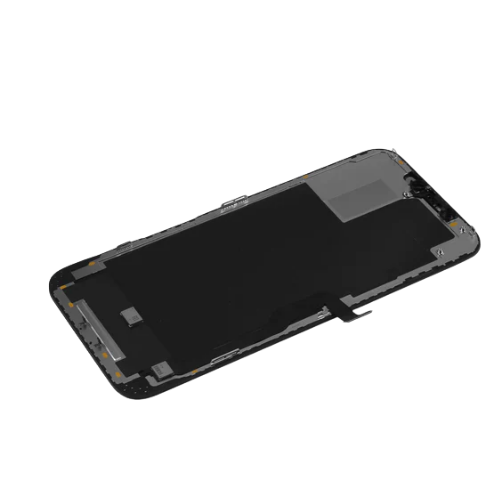
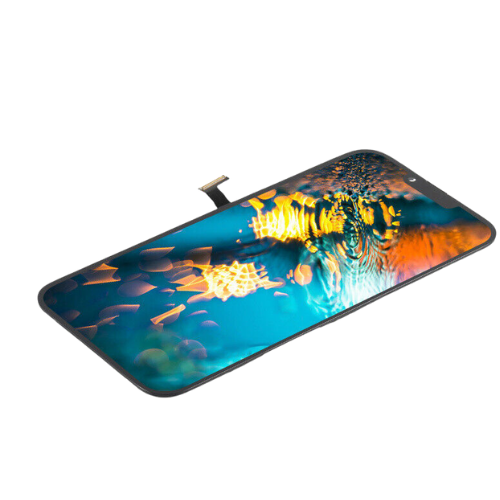
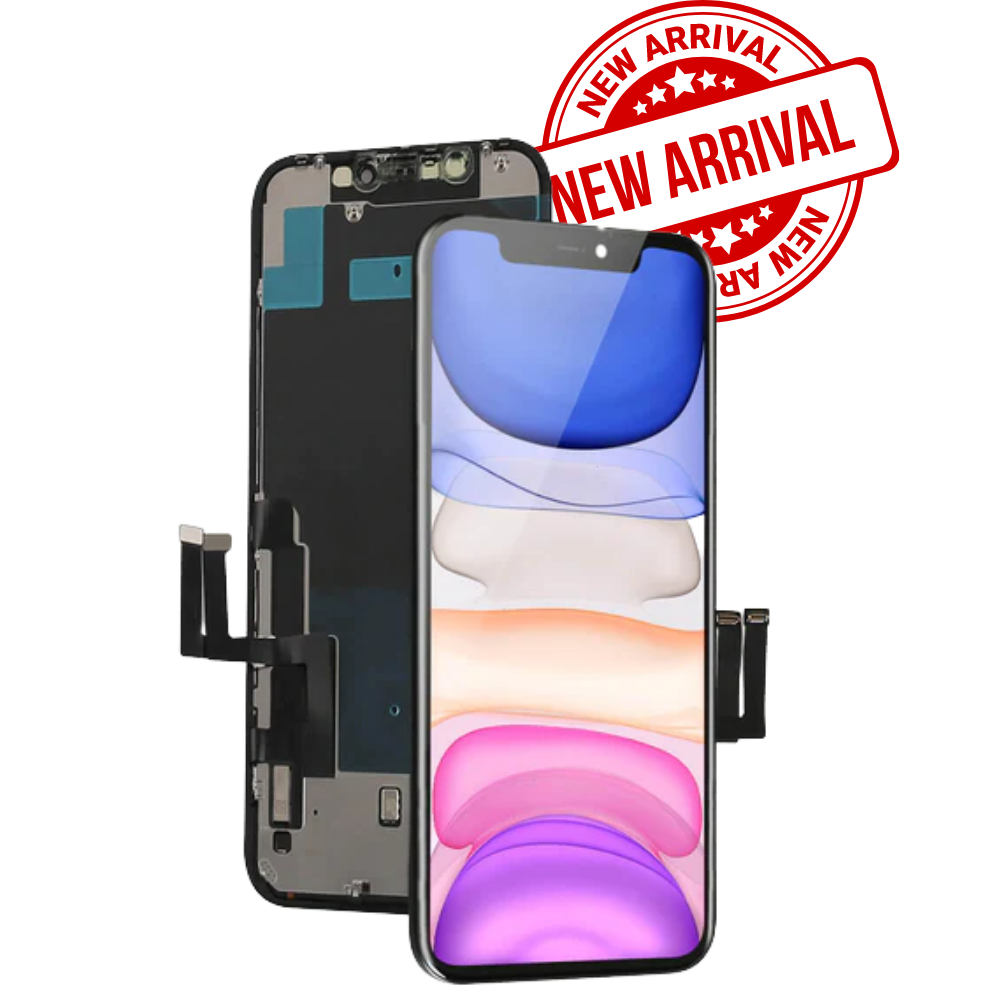
Ní painéal gloine amháin é taispeáint fón cliste. Is modúl casta é atá comhdhéanta de shraitheanna iolracha, lena n-áirítear an ghloine chosanta, braiteoir tadhaill, Painéal LCD, córas backlight, IC tiománaí, agus nasc cábla solúbtha. Bíonn tionchar ag gach ciseal ar an taithí úsáideora deiridh. Caithfidh scáileán Redmi LCD ardchaighdeáin cumarsáid mhaith a choinneáil idir na comhpháirteanna seo chun oibriú rianúil a sheachadadh.
Léiríonn forbairt taispeántais Redmi treocht iomlán an tionscail smartphone: leanann monaróirí ag feabhsú cáilíocht scáileáin agus iad ag rialú costais. Tá an t-iarmhéid seo tábhachtach go háirithe do Redmi toisc go ndíríonn an branda ar fheistí inacmhainne a sheachadadh gan eispéiris úsáideora riachtanacha a íobairt.
LCD vs AMOLED: Cén Fós Úsáideann Roinnt Múnlaí Redmi Taispeántais LCD
Tá go leor déantúsóirí fón cliste ag bogadh i dtreo teicneolaíocht AMOLED mar gheall ar bhuntáistí cosúil le blacks níos doimhne, cóimheasa codarsnachta níos airde, agus tomhaltas cumhachta níos ísle faoi choinníollacha áirithe. Cén dóigh faoin spéir a ...?, Úsáidtear scáileáin LCD go forleathan i go leor feistí Redmi mar go dtugann siad roinnt buntáistí praiticiúla.
| Gné | Scáileán Redmi LCD | Scáileán AMOLED |
|---|---|---|
| Teicneolaíocht Taispeána | Taispeáin Criostail Leachtach le backlight | Picteilíní orgánacha astaithe solais |
| Costas | Costas táirgthe níos ísle | Costas táirgthe níos airde |
| Feidhmíocht Gile | Aschur gile cobhsaí | Gile buaic den scoth |
| Riosca Dóite Isteach | An-íseal | Is féidir tar éis úsáid fadtéarmach |
| Codarsnacht Datha | Maith | Ar fheabhas |
| Cobhsaíocht Reatha | Láidir | Ag brath ar choinníollacha úsáide |
D'úsáideoirí a thugann tosaíocht d'inacmhainneacht agus marthanacht, Tá LCD fós ina rogha phraiticiúil. Go ginearálta tá rioscaí níos ísle ag painéil LCD maidir le coinneáil íomhá agus is féidir leo feidhmíocht chobhsaí a choinneáil ar feadh tréimhsí fada. Déanann sé seo tarraingteach iad d'fhóin chliste leibhéal iontrála agus lár-raoin.
Do ghnólachtaí deisiúcháin, Tá sé níos éasca scáileáin LCD a aimsiú agus a athsholáthar freisin mar go leanann go leor samhlacha Redmi ag baint úsáide as réitigh chaighdeánaithe taispeána. Cruthaíonn sé seo éiceachóras iarmhargadh láidir ina bhfuil scáileáin athsholáthair ar fáil ar fud an domhain.
Cineálacha scáileán LCD Fón Xiaomi Redmi is déanaí i 2026
Scáileáin LCD Redmi Iontrála
Díríonn an chatagóir smartphone Redmi leibhéal iontrála ar inacmhainneacht agus inúsáidteacht laethúil. Is gnách go n-úsáideann samhlacha cosúil le fóin sraith Redmi A scáileáin LCD atá éifeachtach ó thaobh costais de atá deartha le haghaidh feidhmeanna fón cliste riachtanacha, lena n-áirítear glaoch, teachtaireachtaí, ag brabhsáil, agus siamsaíocht.
Is gnách go mbíonn taifeach HD+ nó HD sna modúil LCD seo, rátaí athnuachana caighdeánach, agus feidhmiúlacht dteagmháil iontaofa. Cé nach bhfuil siad in iomaíocht go díreach le taispeántais príomhthionscadal, cuireann siad luach den scoth ar fáil d'úsáideoirí a dteastaíonn fóin chliste phraiticiúla uathu.
Is é príomhbhuntáiste scáileáin Redmi LCD leibhéal iontrála ná a gcothromaíocht idir praghas agus iontaofacht. Is gnách go mbíonn scáileán athsholáthair do na samhlacha seo inacmhainne, deisiúcháin a dhéanamh tarraingteach go heacnamaíoch i gcomparáid leis an bhfón iomlán a athsholáthar.
Do mhórdhíoltóirí agus siopaí deisiúcháin, Léiríonn scáileáin Redmi LCD leibhéal iontrála catagóir táirge ard-toirte. Toisc go ndíoltar na milliúin fóin chliste Redmi ar phraghas réasúnta ar fud an domhain, tá an t-éileamh athsholáthair fós láidir fiú blianta tar éis seolta.
Teicneolaíocht Taispeána Sraith Nóta Redmi
Tá an An tsraith redmi nóta Is ionann é agus ceann de na teaghlaigh smartphone is rathúla ag Xiaomi. Tá tóir ar na feistí seo toisc go gcomhcheanglaíonn siad próiseálaithe cumhachtacha, cadhnraí móra, ceamaraí chun cinn, agus taispeántais ardchaighdeáin.
Thug go leor samhlacha Redmi Note isteach teicneolaíochtaí LCD feabhsaithe, lena n-áirítear:
- Taifeach iomlán HD+
- Rátaí athnuachana níos airde
- Rátaí samplála tadhaill feabhsaithe
- Feidhmíocht gile níos fearr
- Réitigh gloine cosanta feabhsaithe
Tá cáilíocht taispeána smartphones Redmi Note anois ina phointe díola tábhachtach. Bíonn úsáideoirí ag súil le scrollú mín, féachana compordach, agus dathanna cruinn fiú ó fheistí inacmhainne.
Le haghaidh margaí athsholáthair, Tá scáileáin LCD Redmi Note i measc na dtáirgí is minice a iarrtar. Is minic go bhfanann samhlacha coitianta ar an éileamh deisiúcháin ar feadh roinnt blianta tar éis iad a scaoileadh, deiseanna leanúnacha a chruthú do sholáthraithe páirteanna.
Sonraíochtaí Eochair na Scáileáin Redmi LCD
Réiteach, Gile, agus Ráta Athnuachana
Agus scáileán Redmi LCD á mheas, cinneann roinnt sonraíochtaí teicniúla cáilíocht iomlán.
Réiteach tionchar géire íomhá. Taispeánann scáileáin ardtaifigh íomhánna níos mionsonraithe agus téacs níos soiléire. Úsáideann go leor fóin chliste Redmi nua-aimseartha taifeach Full HD+, soiléireacht den scoth a sholáthar le haghaidh úsáide laethúil.
Gile a chinneann cé chomh héasca is féidir le húsáideoirí an scáileán a fheiceáil faoi choinníollacha soilsithe éagsúla. Ba chóir go gcoimeádfadh taispeáint Redmi ardchaighdeáin infheictheacht mhaith lasmuigh, go háirithe faoi sholas díreach.
Ráta athnuachana tar éis éirí ina phríomhghné smartphone. Feidhmíonn taispeántais thraidisiúnta ag 60Hz, ach thug samhlacha Redmi níos nuaí isteach rátaí athnuachana 90Hz agus 120Hz. Cruthaíonn rátaí athnuachana níos airde beochan níos míne agus feabhsaíonn siad eispéiris cluichíochta.
Ba cheart go mbeadh LCD athsholáthair ag teacht leis na sonraíochtaí bunaidh nuair is féidir. D'fhéadfadh gile laghdaithe a bheith mar thoradh ar scáileán ar chaighdeán níos ísle a shuiteáil, freagra dteagmháil níos moille, nó dathanna míchruinn.
Íogaireacht Tadhaill agus Marthanacht Taispeána
Ní mór do scáileán smartphone níos mó a dhéanamh ná íomhánna a thaispeáint. Caithfidh sé ionchur úsáideora a bhrath go cruinn tríd an gciseal tadhaill.
Úsáideann modúil Redmi LCD ardchaighdeáin braiteoirí tadhaill iontaofa a sholáthraíonn:
- Luas freagartha tapa
- Aitheantas cruinn il-dteagmháil
- Feidhmíocht chobhsaí tar éis a shuiteáil
- Comhoiriúnacht mhaith le máthairchlár an fhóin
Is fachtóir tábhachtach eile é marthanacht. Ós rud é go minic go dtiteann fóin chliste nó go mbíonn siad faoi lé brú, ní mór cosaint láidir gloine agus cáilíocht tionóil iontaofa a bheith ag scáileáin athsholáthair.
Is minic go ndéanann soláthraithe gairmiúla nósanna imeachta iniúchta iolracha sula seoltar scáileáin Redmi LCD. Féadfaidh na tástálacha seo a bheith san áireamh:
- Taispeáin tástáil datha
- Tástáil feidhm dteagmháil
- Tástáil gile
- Iniúchadh picteilín marbh
- Cigireacht cábla agus cónascaire
Bunaigh, OEM, agus Scáileáin Athsholáthair Redmi LCD iarmhargadh
Difríochtaí idir Scáileáin Bunaidh agus Comhoiriúnacha
Áiríonn an margadh athsholáthair leibhéil cháilíochta éagsúla. Cuidíonn tuiscint ar na difríochtaí le ceannaitheoirí fadhbanna gan choinne a sheachaint.
| Cineál Scáileáin | Leibhéal Cáilíochta | Tréithe |
|---|---|---|
| Scáileán Tarraingt Bunaidh | is airde | Bainte as gléasanna bunaidh, comhpháirteanna fíor |
| Scáileán Nua Bunaidh | Priofa | Táirgeadh bunaidh ar leibhéal na monarchan |
| Scáileán OEM | Ard | Léirithe de réir sonraíochtaí bunaidh |
| Scáileán iarmhargadh | Athróg | Braitheann cáilíocht ar mhonaróir |
De ghnáth soláthraíonn scáileáin bhunaidh an taithí is gaire don fheiste mhonarcha. Cén dóigh faoin spéir a ...?, tá siad níos costasaí agus uaireanta deacair iad a aimsiú le haghaidh samhlacha níos sine.
Is minic gur fearr le gnólachtaí deisiúcháin scáileáin cáilíochta OEM mar go dtugann siad cothromaíocht láidir idir costas agus feidhmíocht.
D’fhéadfadh go mbeadh cuma chomhchosúil ar scáileáin iarmhargadh ar chaighdeán íseal ach d’fhéadfadh fadhbanna a bheith acu amhail gile lag, Íogaireacht tadhaill lag, dathanna mícheart, nó saolré níos giorra.
Conas Athsholáthairtí Redmi LCD Ardchaighdeáin a Aithint
Ba cheart go soláthródh soláthraí iontaofa Redmi LCD faisnéis táirge soiléir agus caighdeáin cháilíochta. Ba cheart do cheannaitheoirí smaoineamh:
- Aicmiú grád scáileáin
- Nósanna imeachta tástála
- Beartas barántas
- Taithí an tsoláthraí
- Aiseolas ó chustaiméirí
De ghnáth soláthraíonn soláthraithe gairmiúla tuarascálacha cigireachta mionsonraithe agus deimhníonn siad comhoiriúnacht roimh an loingsiú.
Do mhórdhíoltóirí a cheannach cainníochtaí móra, tá comhsheasmhacht tábhachtach go háirithe. Is féidir le soláthraí a sholáthraíonn sampla amháin den scoth ach baisceanna táirgeachta neamhréireach fadhbanna tromchúiseacha gnó a chruthú.
Déantúsaíocht Scáileán Redmi LCD agus Rialú Cáilíochta
Próiseas Táirgthe Modúil Smartphone LCD
Tá ilchéimeanna cruinneas i gceist le próiseas déantúsaíochta scáileáin Redmi LCD.
Ar dtús, déantar an painéal LCD a tháirgeadh agus a thástáil. Ansin an ciseal dteagmháil, gloine chosanta, agus cuirtear comhpháirteanna tiománaithe le chéile. Tar éis tionóil, déantar tástáil leictreach agus amhairc ar gach modúl.
Tá tábhacht ar leith ag baint leis an bpróiseas nascáil. Is minic a úsáideann taispeántais chliste nua-aimseartha teicneolaíocht nascáil chun cinn chun na sraitheanna taispeána a nascadh. Is féidir fadhbanna cosúil le boilgeoga a bheith mar thoradh ar dhroch-chaighdeán nascáil, scaradh, nó teipeanna tadhaill.
Tar éis an tionól deiridh, déanann monaróirí cigireachtaí cáilíochta roimh phacáistiú. Is gnách go n-úsáideann monarchana iontaofa trealamh tástála uathoibrithe in éineacht le hiniúchadh láimhe.
Fadhbanna Coiteann Cáilíochta agus Réitigh
Áirítear le saincheisteanna athsholáthair coitianta Redmi LCD:
| Fadhb | Cúis Féideartha | Réiteach |
|---|---|---|
| Teip dteagmháil | Droch-chaighdeán braiteoir tadhaill | Bain úsáid as modúil athsholáthair tástálaithe |
| Gile íseal | Comhpháirteanna backlight lag | Roghnaigh scáileáin de ghrád níos airde |
| Difríocht datha | Athrú cáilíochta painéil | Meaitseáil na sonraíochtaí bunaidh |
| Picteilíni marbh | Lochtanna déantúsaíochta | Déan iniúchadh roimh loingsiú |
| Saolré gearrthóg | Comhpháirteanna ar chaighdeán íseal | Roghnaigh soláthraithe iontaofa |
Is é rialú cáilíochta an príomhdhifríocht idir soláthraithe gairmiúla agus díoltóirí ar chostas íseal. Is féidir le scáileán beagán níos saoire éirí costasach má chuireann sé gearáin ó chustaiméirí agus athchur arís agus arís eile.
Treochtaí Margaidh Mórdhíola Scáileán Xiaomi Redmi LCD
Éileamh Domhanda ar Thaispeántais Athsholáthair Redmi
Leanann an tionscal deisithe fón cliste domhanda ag leathnú de réir mar a roghnaíonn úsáideoirí feistí a dheisiú seachas iad a athsholáthar. Cruthaíonn bonn úsáideora suiteáilte mór Redmi éileamh láidir ar pháirteanna athsholáthair.
Tíortha ina bhfuil daonra mór úsáideoirí Redmi, lena n-áirítear an India, Meicsiceo, Indinéis, an Bhrasaíl, Nigéir, agus go leor margaí Eorpacha, leanúint ar aghaidh ag giniúint éileamh ar mhodúil Redmi LCD.
Do mhórdhíoltóirí, Is táirgí tarraingteach iad scáileáin Redmi toisc go bhfuil siad le chéile:
- Bonn custaiméirí mór
- Éileamh deisiúcháin go minic
- Raon múnla leathan
- Costais athsholáthair inacmhainne
Conas a roghnaíonn Gnólachtaí Deisiúcháin Soláthraithe Iontaofa
Tá roghnú an tsoláthraí ceart ar cheann de na cinntí is tábhachtaí do chuideachtaí deisiúcháin.
De ghnáth déanann ceannaitheoirí gairmiúla measúnú ar sholáthraithe bunaithe ar:
- Comhsheasmhacht cáilíochta an táirge
- Infhaighteacht fhardail
- Luas loingseoireachta
- Tacaíocht theicniúil
- Seirbhís bharántas
Ní hamháin go ndíolann soláthraí iontaofa scáileáin. Soláthraíonn siad réitigh a chuidíonn le gnólachtaí rioscaí a laghdú agus sásamh custaiméirí a fheabhsú.
Treochtaí Teicneolaíochta Taispeána Redmi sa Todhchaí
Leanfar le todhchaí taispeántais Redmi de réir roinnt treochtaí móra. Rátaí athnuachana níos airde, éifeachtúlacht fuinnimh feabhsaithe, cosaint gloine níos láidre, agus beidh feidhmíocht dath níos fearr ag éirí níos coitianta.
Cé go bhfuil uchtú AMOLED ag méadú, Leanfaidh teicneolaíocht LCD ar aghaidh ag imirt ról tábhachtach i bhfóin chliste inacmhainne. D'fhéadfadh feabhsuithe i ndéantúsaíocht LCD ligean d'fheistí Redmi amach anseo gile níos fearr a bhaint amach, dearaí níos tanaí, agus éifeachtúlacht chumhachta feabhsaithe.
Beidh an margadh athsholáthair níos gairmiúla freisin. Tá níos mó custaiméirí ag súil le páirteanna deisiúcháin a mheaitseálann an fheidhmíocht bhunaidh. Soláthraithe a dhíríonn ar rialú cáilíochta, caighdeáin tástála, agus beidh buntáistí níos láidre ag saineolas teicniúil.
De réir mar a leanann Xiaomi ag leathnú ar fud an domhain, Fanfaidh scáileáin Redmi LCD mar chatagóir thábhachtach sa tionscal páirteanna fón póca.
Deireadh
Is cuid thábhachtach den mhargadh taispeáint smartphone domhanda iad scáileáin LCD fón póca Xiaomi Redmi. Ó fheistí inacmhainne sraith Redmi A go samhlacha tóir Redmi Note, Leanann teicneolaíocht LCD ag soláthar feidhmíochta iontaofa do na milliúin úsáideoirí.
Sonraíochtaí taispeána a thuiscint, gráid cháilíochta, próisis déantúsaíochta, agus cabhraíonn roghnú soláthraithe le tomhaltóirí agus gnólachtaí cinntí níos fearr a dhéanamh. Cibé an bhfuil tú ag deisiú fón cliste amháin nó ag ceannach na mílte scáileán athsholáthair, tá sé riachtanach réiteach iontaofa Redmi LCD a roghnú.
Leanfaidh todhchaí taispeántais Redmi ag comhcheangal inacmhainneacht le teicneolaíocht fheabhsaithe. De réir mar a fhásann an t-éileamh ar dheisiú fón cliste ar fud an domhain, Fanfaidh scáileáin Redmi LCD ardchaighdeáin mar chatagóir táirge luachmhar do sholáthraithe, mórdhíoltóirí, agus gairmithe deisiúcháin.
Ceisteanna Coitianta Maidir le Scáileáin Xiaomi Redmi LCD
1. An bhfuil scáileáin athsholáthair Xiaomi Redmi LCD mar an gcéanna le scáileáin bhunaidh?
Níl. Tá leibhéil cháilíochta éagsúla ag scáileáin athsholáthair, bunaidh san áireamh, OEM, agus leaganacha iarmhargadh. Braitheann an caighdeán ar an monaróir, ábhair, agus caighdeáin táirgthe.
2. Cé chomh fada is a mhaireann scáileán athsholáthair Redmi LCD de ghnáth?
De ghnáth is féidir le scáileán athsholáthair Redmi LCD ardchaighdeáin roinnt blianta de ghnáthúsáid a sholáthar nuair a shuiteáiltear agus a chothabháiltear i gceart.
3. An féidir scáileán AMOLED a chur in ionad scáileán Redmi LCD?
Go ginearálta, níl. Úsáideann scáileáin LCD agus AMOLED teicneolaíochtaí éagsúla, chónaisc, agus ceanglais chomhoiriúnachta na máthairchlár. Caithfidh páirteanna athsholáthair an tsamhail fón bunaidh a mheaitseáil.
4. Cad ba cheart do mhórdhíoltóirí a sheiceáil sula gceannaítear scáileáin Redmi LCD?
Ba cheart do mhórdhíoltóirí taithí an tsoláthraí a sheiceáil, nósanna imeachta tástála táirgí, polasaithe bharántas, gráid cháilíochta, agus athbhreithnithe custaiméirí sula ndéantar mór-orduithe.
5. Cén fáth a bhfuil tóir ar scáileáin Redmi LCD sa mhargadh deisiúcháin?
Tá bonn mór úsáideoirí domhanda ag smartphones Redmi, costais deisiúcháin inacmhainne, agus go leor samhlacha a éilíonn páirteanna athsholáthair, rud a fhágann go bhfuil éileamh mór ar scáileáin Redmi LCD ar fud an domhain.