1. Введение
1.1 Цель исследования
Целью этого отчета является анализ и прогнозирование мирового рынка дисплеев для мобильных телефонов, в частности ЖК -дисплей (жидкокристаллический дисплей) и Олинг (органический светодиод) - над следующий 20 годы (2025–2045). Он дает представление о тенденциях поставок., рост доходов, конкурентная динамика, технологические сдвиги, и риски, для поддержки принятия стратегических решений для производителей, OEM-производители, инвесторы, и политики.
1.2 Объем: Мобильный ЖК-дисплей против. Олинг
Мы ориентируемся на смартфон отображает только, исключая другие типы, такие как телевизоры, мониторы, или автомобильные дисплеи. Наш анализ сравнивает жесткие и гибкие OLED, различные варианты ЖК-дисплея, и прогнозирует долгосрочную долю рынка, технологическая эволюция, и региональная динамика.
1.3 Методология и источники данных
Наш прогноз основан на:
- Исторические данные и данные об отгрузках из Омдия (например, Омдия сообщает, что в 2024, Достигнуты поставки AMOLED 784 миллион единиц, превосходит поставки TFT-LCD). Омдия+1
- Отображение тенденций дохода (например, Прогноз на неделю SID Display: Доходы от OLED $46 Б в 2024, ЖК -дисплей $83 Б). Показ Ежедневно+1
- Отраслевые исследования из источников китайского рынка (например, Прогнозы китайского рынка OLED). Китайская сеть интернет-новостей
- Прогнозы рыночного отчета (Рынок дисплеев для смартфонов MRFR от 2022 к 2032). будущее исследования рынка
- Дополнительные данные из корпоративных объявлений (например, Комментарии Universal Display Corp со ссылкой на данные Omdia). собака финансового отчета
2. Технология дисплея смартфона: Обзор
2.1 Что такое ЖК-дисплей?
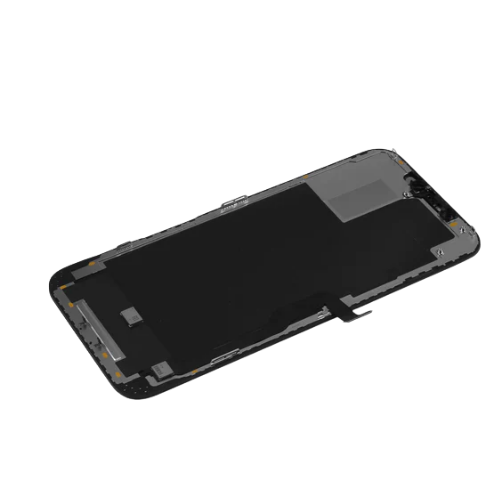
ЖК -дисплей (Жидкокристаллический дисплей) — это зрелая технология отображения, в которой для создания изображений используется подсветка, проходящая через жидкие кристаллы.. Существуют различные типы (TFT, IPS, и т. д.), но все они полагаются на отдельный источник света.
2.2 Что такое OLED?
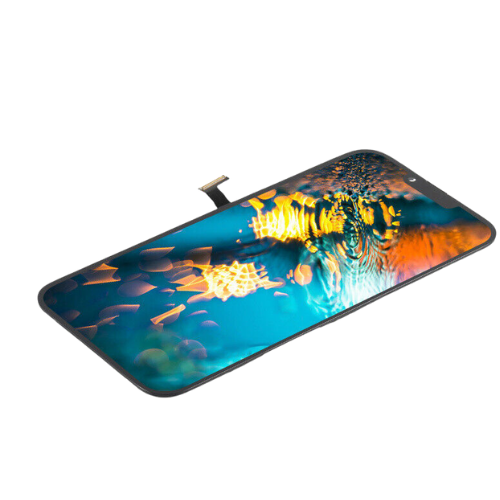
Олинг (Органический светоизлучающий диод) панели излучают собственный свет: каждый пиксель самосветится. Это позволяет получить более глубокий черный цвет., более высокий контраст, и потенциально более энергоэффективные конструкции, когда части экрана темные.
2.3 Ключевые различия: Власть, Гибкость, Расходы
- Власть: OLED может отключать отдельные пиксели — в некоторых случаях более энергоэффективно.
- Гибкость: OLED-панели можно сделать гибкими, включение складных телефонов.
- Расходы: Исторически, OLED стоил дороже за единицу, чем LCD, особенно для гибких или высококачественных версий.
3. Исторический контекст и эволюция рынка
3.1 Ранняя эпоха: Доминирование ЖК-дисплея
В начале 2010-х годов, ЖК-дисплей был доминирующей технологией в смартфонах из-за его более низкой стоимости и отлаженного производства.. В большинстве основных устройств используется TFT-LCD или IPS LCD..
3.2 Распространение OLED в смартфонах
За последнее десятилетие, OLED постепенно проник в смартфоны высокого класса. Преимущества контраста, форм-фактор, и энергопотребление (в темном режиме) сделал это привлекательным. Складные телефоны ускорили внедрение гибких OLED-дисплеев.
3.3 Ключевые переломные моменты
- Появление гибких OLED в складных устройствах
- Снижение затрат за счет массового производства
- Стратегические инвестиции крупных производителей панелей (например, Банк Англии, Samsung, LG)
- Переход крупных OEM-производителей на OLED для премиальных линеек
4. Текущее состояние рынка (2024–2025 г.)
4.1 Данные об отправке: OLED против ЖК-дисплея (Единицы)
- По данным Омдиа, в 2024, Поставки AMOLED достиг 784 миллион единиц, пока Поставки TFT-LCD упал на 761 миллион единиц. Омдия
- Это ознаменовало первый раз Поставки OLED превзошли TFT-LCD в смартфонах. Омдия
4.2 Распределение доходов по технологиям
- На основе недели отображения SID 2025 прогноз, отображать доходы в 2024 были примерно: Олинг: $46 миллиард, ЖК -дисплей: $83 миллиард. Отображать ежедневно
- Согласно контрапункту в переведенном китайском анализе, Достигнут глобальный доход от OLED-дисплеев доллар США 46 Б в 2024. Восточная удача
- Omdia проектирует OLED (Амоль) доход для достижения $53 Б в течение всего года (прогноз на будущее). Мобильный мир в прямом эфире
4.3 Региональная динамика и ключевые игроки
- Китай это главная сила: Китайские производители OLED (Банк Англии, Тианма, Вижнокс, и т. д.) агрессивно масштабируются. Омдия+1
- Корея (Дисплей Samsung, LG) продолжает играть ведущую роль, особенно в гибких OLED.
- Согласно отчету китайского рынка, Ожидается, что проникновение гибких OLED в Китае резко вырастет; прозрачные/гибкие технологии также могут расширить. Китайская сеть интернет-новостей
5. Драйверы роста OLED
5.1 Падение производственных затрат
- По мере увеличения мощности производства OLED (особенно в Китае), стоимость единицы снижается.
- Масштаб китайских производителей гибких OLED-дисплеев и конкурентоспособные цены побудили все больше OEM-производителей перейти на OLED-телефоны среднего класса.. Омдия
5.2 Гибкий / Тренд складных смартфонов
- Рост популярности складных телефонов стимулирует спрос на гибкие OLED.
- Согласно отчетам китайской промышленности, складные форм-факторы являются основным фактором будущего внедрения OLED. Китайская сеть интернет-новостей
5.3 Энергоэффективность & Опыт показа
- Способность OLED отключать пиксели обеспечивает экономию энергии, особенно в темных режимах пользовательского интерфейса.
- Пользователи все чаще требуют более насыщенных визуальных эффектов, высокая частота обновления, и гибкие форм-факторы.
5.4 Инновации в материалах и технологиях
- Новые процессы, такие как OLED с струйной печатью и экономичное осаждение повышают производительность и сокращают затраты.
- Gen-8.6 и другие передовые заводы строятся для расширения производства.. Омдия
6. Проблемы внедрения OLED
6.1 Давление на производственные затраты
Производство OLED (особенно гибкий) остается более сложным и дорогим, чем ЖК-дисплей. Масштабирование требует капиталоемких производств.
6.2 Конкуренция со стороны новых технологий
- Микро-светодиод: Хотя все еще появляется, Микросветодиоды представляют собой потенциальную долгосрочную угрозу.
- QD OLED: Комбинированные технологии могут конкурировать в премиальном сегменте.
6.3 Риски цепочки поставок
Сырье (органические соединения, герметизирующие материалы) и специализированное оборудование может стать узким местом производства.
6.4 Риск выгорания & Долголетие
OLED-панели могут выгорать при определенных условиях., вызывает обеспокоенность по поводу долгосрочной надежности у некоторых пользователей.
7. Роль ЖК-дисплеев в будущем
7.1 Почему ЖК-дисплей остается актуальным
- Более дешевое производство
- Уже существующие крупные мощности
- Более простая и стабильная цепочка поставок
7.2 Бюджетный / Сегмент бюджетных смартфонов
Для телефонов начального уровня и ниже среднего., ЖК-дисплеи могут оставаться доминирующими из-за своего ценового преимущества..
7.3 Тенденции производственных мощностей ЖК-дисплеев
Some LCD fabs are being repurposed, but many remain active for mobile display production.
7.4 Regionally Differentiated Demand
In markets where cost sensitivity is high (emerging markets), LCD will likely still serve a large portion of demand.
8. Market Size Forecast (2025–2045)
8.1 Base-case Scenario Assumptions
- Continued OLED adoption, особенно гибкий
- Moderate decline in LCD units but stable for budget segment
- No sudden disruption from Micro-LED before 2035
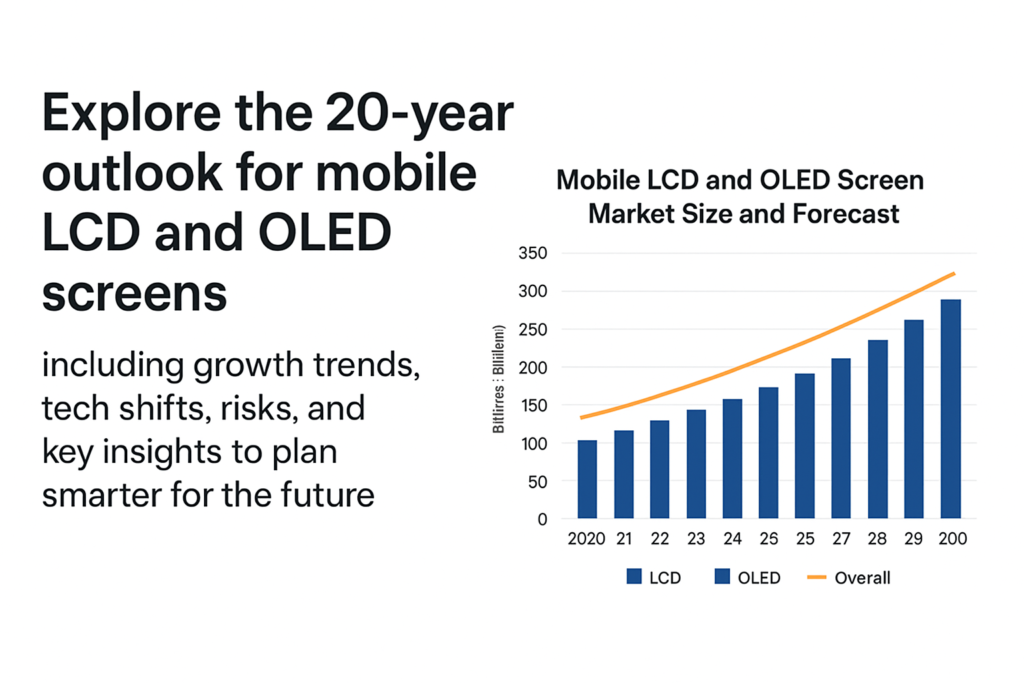
8.2 OLED Shipment Forecast
- Олинг (Амоль) shipments: growing from ~0.78 B in 2024, to over 1.2–1.4B units annually by the early 2030s (projected estimate based on trend)
- Revenue growth: from ~$46B in 2024 to potentially ~$70B+ in peak years (assuming ASPs stabilize or slightly drop but volume increases)
8.3 LCD Shipment Forecast
- Поставки ЖК-дисплеев могут снизиться в абсолютных единицах, например, от 761 М в 2024, постепенно, возможно, 400–600 М в последующие годы, когда OLED заполнит верхний/средний сегменты
- Доход: снижение отражает как снижение количества единиц продукции, так и ценовое давление; но все же значительная часть общего рынка мобильных дисплеев приходится на устройства более низкого уровня..
8.4 Доля OLED и LCD с течением времени
- К 2030, OLED может захватывать 60–70%+ рынка дисплеев для смартфонов по единицам (тем более, что гибкий подход становится все более распространенным)
- К 2040, возможно, мы увидим OLED доминирующий (>70%) если новый сбой не ускорится.
9. Технологические тенденции & Инновации
9.1 Гибкий и складной OLED
- Складные телефоны будут продолжать стимулировать спрос на гибкие OLED-экраны.
- Больше OEM-производителей могут выпустить сворачиваемые или растягивающиеся устройства, растущий спрос на гибкие панели.
9.2 ЛТПО, Тандемный OLED, Струйная печать
- ЛТПО (Низкотемпературный поликристаллический оксид) backplanes enable variable refresh rates and power savings.
- Тандемный OLED складывает слои для продления срока службы и снижения энергопотребления.
- OLED со струйной печатью потенциально может снизить производственные затраты и увеличить урожайность.
9.3 Гибридные технологии
- QD OLED (квантовая точка + Олинг) может быть нацелен на премиальные рынки.
- Микро-светодиод: пока еще зарождается, среднесрочный рост (после 2030 года) может бросить вызов OLED в некоторых сегментах.
9.4 Устойчивое развитие & Энергоэффективность
- Экономия энергии за счет OLED в темных интерфейсах помогает повысить энергоэффективность.
- Производители могут больше инвестировать в экологически чистые материалы и переработку.
10. Прогноз регионального рынка
10.1 Китай
- Мощное наращивание мощности OLED.
- Массовое отечественное производство и внедрение смартфонов.
- Гибкие OLED уже масштабируются китайскими производителями.
10.2 Южная Корея
- Дом Samsung Display и LG, продолжающееся лидерство в области гибких OLED-дисплеев высокого класса.
- Вероятно, останется ключом к инновациям.
10.3 Европа & Северная Америка
- Премиальные сегменты устройств.
- Стабильный спрос, но чувствительность к цене может замедлить полное проникновение OLED в средний диапазон.
10.4 Развивающиеся рынки (Индия, Юго-Восточная Азия)
- Чувствителен к цене: ЖК-дисплей может продолжать оставаться сильным здесь.
- Но поскольку стоимость OLED падает, OLED среднего класса может стать мейнстримом.
11. Конкурентная среда & Ключевые игроки
11.1 Основные производители OLED-панелей
- Дисплей Samsung: сильный в области гибких и премиальных OLED.
- LG Дисплей: Олинг, гибкий, но более ограничен в небольших мобильных устройствах.
- Банк Англии / Вижнокс / Тианма (Китай): быстро растет, конкурентоспособный по стоимости.
11.2 Производители ЖК-панелей & Их стратегия
- Некоторые производители ЖК-дисплеев сокращают размеры; другие могут перейти на нишевые или специализированные ЖК-дисплеи..
- Производители устаревших ЖК-дисплеев должны решить, инвестировать ли в OLED или модернизировать.
11.3 Новые участники / Прорывные игроки
- Новые производители микросветодиодов.
- Стартапы, работающие над OLED-процессами нового поколения (например, струйный, тандем).
12. Риски и неопределенности
12.1 Макроэкономические риски
- Рецессии, инфляция, Потрясения в цепочке поставок могут замедлить спрос на смартфоны.
- Капиталоемкость новых фабрик высока — риск, если спрос замедлится.
12.2 Технологический прорыв
- Micro-LED или другие технологии отображения могут вытеснить OLED в долгосрочной перспективе..
- Если улучшение стоимости или доходности Micro-LED ускорится, Рост OLED может быть ограничен.
12.3 Торговые и геополитические риски
- Экспортные ограничения, тарифы, или геополитическая напряженность может нарушить цепочки поставок панелей.
- Зависимость от конкретных регионов в плане сырья или инвестиций рискованна..
12.4 Узкие места в цепочке поставок
- Недостаток органического материала, оборудование, или квалифицированная рабочая сила может замедлить масштабирование мощностей.
13. Стратегические рекомендации для заинтересованных сторон
13.1 Для производителей (Панель)
- Инвестируйте в гибкую емкость OLED и осаждение нового поколения (например, струйный).
- Оптимизация доходности, снизить затраты за счет автоматизации.
- Изучите партнерские отношения для хеджирования рисков (например, с OEM-производителями, поставщики сырья).
13.2 Для OEM-производителей смартфонов
- Постепенно переводите модели среднего класса на OLED по мере снижения затрат..
- Используйте гибкий OLED для складных устройств и инновационных форм-факторов..
- Заключить долгосрочные контракты с производителями панелей для обеспечения мощностей..
13.3 Для инвесторов
- Сосредоточьтесь на производителях панелей, масштабирующих гибкие OLED.
- Watch for emerging Micro-LED plays.
- Assess risks in capital-intensive fab projects.
13.4 For Governments & Policy Makers
- Encourage local OLED capacity via incentives.
- Support R&D in advanced display tech (Олинг, Микро-светодиод).
- Facilitate supply chain resilience (материалы, talent).
14. Future Scenarios
14.1 OLED-Dominant Scenario
- OLED becomes >70% of mobile display units by 2040.
- Flexible OLED is widespread; foldables and rollables common.
- LCD becomes niche, mostly in ultra-budget devices.
14.2 Balanced Coexistence Scenario
- OLED takes 60%+ share by 2030, but LCD remains significant (~30–40%) in lower segments.
- LCD fabs remain economically viable due to volume demand.
14.3 Disruption Scenario (Микро-светодиод / Другой)
- Micro-LED or hybrid tech begins serious adoption in late 2030s.
- OLED growth slows; new tech eats into premium but also mid-range segments.
15. Заключение
Over the next 20 годы, the mobile display market is likely to shift strongly toward OLED, driven by flexible form factors, падение затрат, и инновации. Однако, ЖК-дисплей не исчезнет в одночасье — он продолжит играть важную роль в чувствительных к ценам сегментах и на развивающихся рынках.. Производители и OEM-производители, которые разумно инвестируют в возможности OLED и технологии следующего поколения., при управлении рисками, могут позиционировать себя, чтобы извлечь выгоду из этой структурной трансформации. В то же время, заинтересованным сторонам следует следить за прорывными технологиями, такими как Micro-LED, что может изменить ландшафт дисплеев в долгосрочной перспективе.
Часто задаваемые вопросы
- ЖКД полностью исчезнет 2045?
Не обязательно. Хотя ожидается, что распространение OLED будет расти, ЖК-дисплеи могут сохраниться в сегментах недорогих смартфонов и смартфонов начального уровня., особенно в чувствительных к затратам регионах. - Что движет быстрым ростом OLED?
Ключевыми факторами являются снижение затрат на производство OLED., популярность складных телефонов, и превосходное качество дисплея (контраст, гибкость) OLED-предложения. - Когда Micro-LED может начать серьезно конкурировать с OLED в смартфонах?
Micro-LED может начать конкурировать с OLED в конец 2030-х - начало 2040-х годов, в зависимости от стоимости, урожай, и масштабируемость массового производства. - Существуют ли серьезные риски для производителей OLED??
Да — риски включают высокие капитальные затраты, ограничения цепочки поставок, потенциальный технологический сбой, и конкуренция со стороны новых технологий отображения. - Какие регионы будут лидировать по внедрению OLED?
Китай и Южная Корея, вероятно, будут лидировать как в производстве, так и в внедрении благодаря сильным производителям панелей.. Развивающиеся рынки могут последовать примеру OLED, поскольку стоимость OLED снижается и становится более гибкой. / OLED среднего класса становится более доступным.