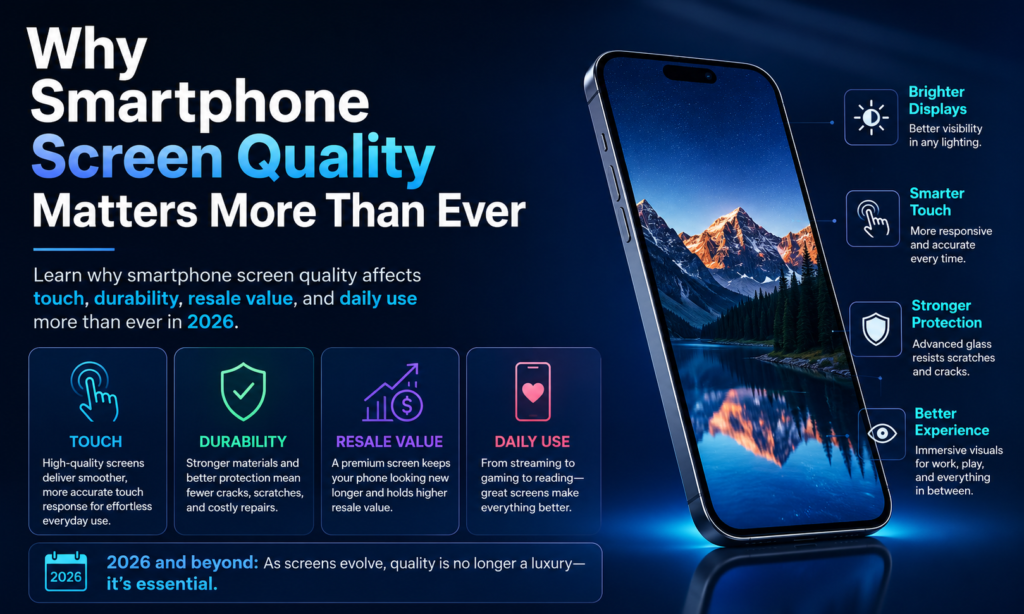
Cén Fáth a bhfuil Cáilíocht Scáileáin Smartphone Níos Mó ná Riamh
Ní feistí cumarsáide simplí iad fóin chliste nua-aimseartha a thuilleadh. Consóil cluichíochta iad, ceamaraí gairmiúla, meaisíní eagarthóireachta, uirlisí loingseoireachta, críochfoirt baincéireachta, agus fiú oifigí iniompartha. Mar gheall air seo, tá an taispeáint mar chroílár eispéireas iomlán an úsáideora. Gach swipe, sconna, scrollaigh, agus braitheann beochan ar chaighdeán an tionóil scáileáin. Is féidir le hathsholáthar ar dhroch-chaighdeán an fón príomhthionscadal a bhraitheann saor agus frustrachas fiú.
Smaoinigh ar an méid ama a chaitheann tú ag féachaint ar do ghuthán gach lá. Tugann taighde ó thuairiscí anailísíochta soghluaiste iolracha le fios go sáraíonn an meánúsáid fón cliste i go leor tíortha 4 chuig 5 uair sa lá. Ciallaíonn sé sin go n-idirghníomhaíonn do shúile agus do mhéara i gcónaí leis an scáileán. Má bhraitheann an freagra tadhaill moill nó éiríonn an ghloine gréisceach tar éis cúpla seachtain, tugann tú faoi deara láithreach é. Tá sé cosúil le carr só a thiomáint le boinn bochta. Féadfaidh an carr bogadh fós, ach athraíonn an taithí go hiomlán.
Fachtóir tábhachtach eile ná luach athdhíola. Tá ceannaitheoirí inniu níos cliste ná riamh. Déanann go leor ceannaitheoirí fón athláimhe iniúchadh cúramach ar thaispeántais sula gceannaítear gléasanna úsáidte. Is iondúil go ndíolann fóin le scáileáin bunaidh gan teagmháil níos tapúla agus bíonn luach níos airde acu. Is minic a íslíonn taispeáint droch-athchóirithe le teorainneacha dubha míchothroma nó freagairt tadhaill lag muinín an cheannaitheora láithreach. I margaí préimhe mar iPhones agus samhlacha Samsung Ultra, is féidir le barántúlacht an scáileáin difear suntasach a dhéanamh ar phraghsáil athdhíola.
Bíonn tionchar freisin ag cáilíocht deisiúcháin ar iontaofacht fhadtéarmach. Ní gloine amháin é tionól taispeána. Áiríonn sé greamacháin, braiteoirí tadhaill, Sraitheanna OLED nó LCD, cáblaí flex, frámaí, agus uaireanta braiteoirí bithmhéadracha. Má tá aon chuid reassembled lag, fadhbanna cosúil le teagmháil taibhse, ardaithe scáileáin, cur isteach deannaigh, agus éiríonn damáiste uisce i bhfad níos dóichí le himeacht ama.
Cad is Scáileán Brúite Bunaidh ann
An Scáileán Brúite Bunaidh, ar a dtugtar go minic a Scáileán Pure Bunaidh nó Taispeáint Bunaidh Monarcha, tagraíonn sé do thionól scáileáin nach bhfuil scartha nó atógáil riamh tar éis táirgeadh mhonarcha. D'fhág an taispeáint an monaróir mar chomhthionól aonair iomlán agus tá sé fós gan teagmháil inmheánach. An ghloine, ciseal tadhaill, Painéal OLED nó LCD, freagair, agus greamachán suiteáilte go léir ag baint úsáide as próisis mhonarcha bunaidh.
Próiseas Déantúsaíochta Monarcha
Le linn táirgeadh smartphone, úsáideann monaróirí innealra ardfhorbartha a oibríonn i seomraí glan saor ó dheannach. Nasctar na sraitheanna scáileáin le chéile ag baint úsáide as lamination bhfolús agus trealamh beacht rialaithe teochta. Cruthaíonn an próiseas seo ailíniú thar a bheith cruinn idir an ghloine, digiteoir dteagmháil, agus painéal taispeána. Is é an toradh cuma réidh gan uaim le bearnaí beagnach dofheicthe agus teorainneacha dubh go foirfe.
Tá próiseas nascáil na monarchan thar a bheith beacht mar is féidir fiú boilgeoga aeir micreascópacha nó neamhréireachtaí brú beag difear a dhéanamh ar íogaireacht dteagmháil agus aonfhoirmeacht taispeána. Infheistíonn monaróirí móra fóin chliste na milliúin i gcórais tionóil uathoibrithe chun an cruinneas seo a choinneáil. Sin é an fáth go mbraitheann scáileáin mhonarcha bunaidh go minic níos réidh agus níos scagtha i gcomparáid le hathsholáthar iarmhargadh.
Foinsí na Scáileáin Fíor Bunaidh
De ghnáth tagann scáileáin brúite bunaidh ó dhá phríomhfhoinse:
| Cineál Foinse | Cur síos |
|---|---|
| Scáileáin Pacáiste Seirbhíse Nua | Páirteanna athsholáthair oifigiúla arna soláthar trí bhealaí deisiúcháin údaraithe |
| Scáileáin Díchumtha Bunaidh | Taispeántais bainte de ghutháin deontóra gan sraitheanna inmheánacha a scaradh |
Ní dhearnadh scaradh gloine riamh ar fhíor-scáileán bunaidh. Níor théigh aon teicneoir é, greamachán gearrtha go hinmheánach, nó an painéal a ath lannú. Fanann gach rud i riocht monarchan. Sin é an fáth go meastar scáileáin bhunaidh an caighdeán óir sa tionscal deisiúcháin.
Cad is Scáileán Athbhrúite ann
A Scáileán Athbhrúite, ar a dtugtar freisin a Scáileán Bunaidh Athchóirithe nó Scáileán Athsholáthair Gloine, thosaíonn mar thaispeántas fíor bunaidh le gloine sheachtrach briste. In ionad an tionól iomlán a chaitheamh amach, scarann na teicneoirí deisiúcháin an ghloine damáiste ón bpainéal taispeána feidhme agus cuireann siad ciseal seachtrach gloine nua isteach.
Ligeann an próiseas seo do shiopaí deisiúcháin painéil OLED nó LCD daor a athúsáid agus costais á laghdú go mór.
Scaradh Gloine agus Ath-Lamination
De ghnáth leanann an próiseas athchóirithe roinnt céimeanna teicniúla:
- Déantar an ghloine seachtrach scáinte a théamh agus a scaradh ón taispeáint.
- Déantar an t-iarmhar greamachán d'aois a ghlanadh go cúramach.
- Tá lionsa gloine seachtrach nua suiteáilte.
- Nascann trealamh lamination folúis na sraitheanna le chéile arís.
- Baintear boilgeoga aeir i ndlísheomraí brú.
Tá an taispeáint inmheánach bunaidh fós, ach cuirtear na comhpháirteanna seachtracha in ionad. I go leor cásanna, an ciseal tadhaill, ghreamaitheacha, freagair, nó féadfar lúibíní tacaíochta a athrú freisin.
Braitheann cáilíocht an phróisis seo go mór ar scil an teicneoir agus cáilíocht an trealaimh. Is féidir le monarchana athchóirithe ard-deireadh torthaí iontacha a tháirgeadh, agus d’fhéadfadh ceardlanna ar chostas íseal taispeántais a chruthú le lochtanna infheicthe.
Cén Fáth a nÚsáideann Siopaí Deisiúcháin Taispeántais Athbhrúite
Tá painéil OLED nua-aimseartha thar a bheith costasach. Ar fheistí suaitheanta, féadfaidh an taispeáint féin ionadaíocht a dhéanamh 30% chuig 50% de luach iomlán an ghutháin. laghdaítear costais deisiúcháin go mór ach an ghloine sheachtrach briste a athsholáthar.
Mar shampla, d'fhéadfadh go gcosnódh sé dhá oiread níos mó agus leagan athbhrúite a chur in ionad príomhscáileáin OLED atá go hiomlán bunaidh. Déanann an difríocht praghais sin scáileáin athchóirithe tarraingteach d'úsáideoirí atá feasach ar bhuiséad. Níl go leor daoine ag iarraidh ach fón inúsáidte gan praghsanna deisiúcháin préimhe a íoc.
Croídhifríochtaí Struchtúrtha Idir an Dá
Ar an gcéad amharc, féadfaidh scáileáin bhunaidh agus athbhrúite a bheith beagnach mar an gcéanna. Go hinmheánach, áfach, tá roinnt difríochtaí criticiúla ann.
Ciseal Gloine
Úsáideann scáileáin bhunaidh gloine chruaite de ghrád mhonarcha le bratuithe préimhe. Is minic a úsáideann taispeántais athbhrúite soláthraithe gloine tríú páirtí. Úsáideann roinnt athchóiritheoirí ard-deireadh ábhair den scoth, ach tá go leor leaganacha níos saoire ag brath ar ghloine marthanachta níos ísle.
Ciseal Tadhaill
Tá an ciseal freagartha tadhaill i scáileáin bhunaidh fós ailínithe go foirfe ó thionól an mhonarcha. Uaireanta bíonn neamhréireachtaí beaga i gceist le scáileáin athbhrúite le linn athlamination, go háirithe timpeall imill chuartha.
Painéal Taispeána
Féadfaidh an OLED nó an LCD féin a bheith fós fíor-bhunaidh i scáileáin athbhrúite. Is é seo an chúis is mó fós le roinnt taispeántais athchóirithe a sholáthraíonn cáilíocht íomhá den scoth.
Greamaitheacha agus Fráma
Tá cur i bhfeidhm ghreamaitheach mhonarcha thar a bheith comhsheasmhach. Féadfaidh scáileáin athbhrúite gliú iarmhargadh a úsáid le marthanacht agus feidhmíocht uiscedhíonta éagsúla.
Is féidir gur beag difríochtaí struchtúracha a d’fhéadfadh a bheith ann, ach thar míonna úsáide éiríonn siad níos suntasaí.
Comparáid Cáilíochta Beachtais agus Nascála
Ceann de na bealaí is éasca chun taispeántais bhunaidh a idirdhealú ó na cinn athchóirithe ná cruinneas nascáil. Breathnaíonn scáileáin mhonarcha an-aonfhoirmeach mar go rialaíonn meaisíní gach codán de milliméadar le linn tionóil.
Is gnách go mbíonn scáileáin brúite bunaidh i gceist:
- Teorainneacha dubh foirfe siméadrach
- Bearnaí imeall íosta
- Aistrithe mín idir fráma agus gloine
- Dáileadh greamaitheach fiú
Seans go dtaispeánfar scáileáin athbhrúite:
- Teorainneacha dubh míchothrom
- Garbhacht imeall beag
- Riosca cur isteach deannaigh
- Overflow greamaitheacha
- Ardú beag timpeall coirnéil
Samhlaigh comparáid a dhéanamh idir faire só a cuireadh le chéile san Eilvéis agus uaireadóir deisithe arna atógáil de láimh. Féadfaidh an dá fheidhm, ach mothaíonn an caighdeán críochnú difriúil.
Baineann saincheist eile le dul in aois ghreamaitheach fadtéarmach. Is féidir le gliú droch-chaighdeán lagú tar éis nochtadh teasa, taise, nó teocht luchtaithe arís agus arís eile. Uaireanta bíonn ardú imeall nó bubbling míonna tar éis na suiteála mar thoradh air seo.
Cáilíocht Taispeána agus Feidhmíocht Tadhaill
Baineann níos mó le hinúsáidteacht laethúil ná sonraíochtaí teicniúla don chuid is mó daoine. Seans go mbeidh cuma inghlactha ar scáileán ar dtús, ach nochtann cruinneas tadhaill agus comhsheasmhacht dath an fíorcháilíocht le himeacht ama.
Seachadann scáileáin brúite bunaidh:
- Calabrú dath cruinn
- Gile aonfhoirmeach
- Rianú dteagmháil sofhreagrach
- Feidhmíocht athnuachana cobhsaí
- Brath tadhaill imeall níos fearr
Is féidir le scáileáin athbhrúite feidhmiú go maith fós, go háirithe leaganacha athchóirithe ardchaighdeáin. I ngnáththascanna cosúil le teachtaireachtaí, ag brabhsáil, agus ag breathnú físeáin, is ar éigean a thugann go leor úsáideoirí faoi deara difríochtaí. Cén dóigh faoin spéir a ...?, uaireanta tagann fadhbanna subtle le linn cluichíochta, clóscríobh tapa, nó gothaí beachtas.
I measc na saincheisteanna coitianta:
| Fadhb Féideartha | Riosca Scáileáin Athbhrúite |
|---|---|
| Moill dteagmháil Edge | Meánach |
| Dteagmháil Ghost | Meánach |
| Criosanna marbh | Íseal go Meánach |
| Neamhréireacht dath | Meánach |
| Laghdú gile | Íseal |
| Tint OLED míchothrom | Meánach |
Is minic a bhraitheann gamers gairmiúla agus úsáideoirí troma na difríochtaí seo níos tapúla mar go mbraitheann siad go mór ar chruinneas tadhaill agus ar fhreagrúlacht taispeána.
Cumhdach Oleafóbach agus Marthanacht Gloine
Is é ceann de na gnéithe is mó a bhfuiltear ag súil leis de thaispeántais na nguthán cliste ná an sciath oleophobic. Cuidíonn an ciseal dofheicthe seo le cur in aghaidh méarloirg agus cruthaíonn sé an mhothú “préimh” mín nuair a shleamhnaíonn do mhéar trasna an scáileáin.
Úsáideann scáileáin mhonarcha bunaidh bratuithe chun cinn le marthanacht níos fearr. Fanann an dromchla gloine níos míne níos faide agus cuireann sé i gcoinne bailiú ola ar bhealach níos éifeachtaí.
Úsáideann go leor scáileáin athbhrúite gloine athsholáthair níos saoire le bratuithe níos laige. Tar éis roinnt míonna, úsáideoirí faoi deara go minic:
- Tógáil méarloirg níos tapúla
- Mothú swipe greamaitheach
- Laghdaigh réidh
- Scratáil níos éasca
Tá sé cosúil le pana cócaireachta neamh-bata a chur i gcomparáid le bréige saor. Oibríonn an dá cheann ar dtús, ach aois amháin i bhfad níos fearr.
Athraíonn cruas gloine go mór freisin. Scrataíonn roinnt gloine iarmhargadh níos éasca ó bhoinn, eochracha, nó cáithníní gainimh i bpócaí.
Fráma, Cábla Flex, agus Difríochtaí Backlight
Tá tábhacht níos mó ag baint leis an struchtúr tacaíochta inmheánach ná mar a thuigeann go leor úsáideoirí. Coinníonn scáileáin bhunaidh na lúibíní uile atá suiteáilte sa mhonarcha, cáblaí flex, agus sraitheanna treisithe gan teagmháil.
D'fhéadfadh go mbeadh scáileáin athbhrúite i gceist:
- Frámaí tacaíochta athsholáthair
- Cáblaí lúbtha flex
- Pointí sádrála athoibrithe
- Mion scratches backlight
- Iarmhar greamaitheach
Féadfaidh na hathruithe folaithe seo tionchar a imirt ar mharthanacht. D'fhéadfadh cáblaí flex a bhí fillte rómhór le linn deisiúcháin lagú le himeacht ama. Ní fhéadfaidh hailt solder a cruthaíodh le linn athchóirithe a bheith ag teacht le hiontaofacht mhonarcha bunaidh.
Ar fheistí LCD, féadfaidh imperfections backlight soilsiú míchothrom a chruthú. Ar thaispeántais OLED, féadfaidh sraitheanna inmheánacha damáiste línte glasa a fhorbairt níos déanaí, ag caochadh, nó picteilíní marbh.
Uiscedhíonach agus Frithsheasmhacht deannaigh
Tá fóin chliste nua-aimseartha ag brath níos mó ar fhriotaíocht uisce. Úsáideann feistí cosúil le iPhones agus príomhthionscadal Samsung Galaxy greamacháin séalaithe timpeall an taispeántais chun cur isteach taise a chosc.
Caomhnaíonn scáileáin mhonarcha bunaidh na rónta seo i bhfad níos fearr toisc gur cuireadh le chéile iad faoi choinníollacha rialaithe. D'fhéadfadh go gcaillfidh scáileáin athbhrúite roinnt iontaofacht uiscedhíonta tar éis athchóirithe.
Fiú má fhógraíonn siopa deisiúcháin “athchóiriú uiscedhíonach,” tá sé thar a bheith deacair fíorshéalaithe ag leibhéal na monarchan a bhaint amach. Is féidir le neamhréireachtaí greamaitheacha bídeach ligean do dheannach nó taise dul isteach le himeacht ama.
Tá sé seo tábhachtach go háirithe d'úsáideoirí a:
- Úsáid fóin lasmuigh go minic
- Beo i dtimpeallachtaí tais
- Cleachtadh le fóin
- Taisteal go minic
- Nochtar fearais de thaisme don bháisteach
D'fhéadfadh sé nach mbeadh tábhacht láithreach le comhréiteach beag i séalaithe ach d'fhéadfadh creimeadh inmheánach nó damáiste braiteoir Aghaidh ID a bheith mar thoradh air.
Fadhbanna Coitianta Aimsithe i Scáileáin Athbhrúite
Níl gach scáileán athbhrúite dona. Tá cuid acu ionadh go maith. Fós, bíonn rioscaí coitianta le feiceáil níos minice i gcomparáid le taispeántais bhunaidh nach dteagmháil léi.
Seo iad na saincheisteanna is coitianta a bhíonn ag teicneoirí deisiúcháin:
| Fadhb | Cúis |
|---|---|
| Teorainneacha dubh míchothrom | Mí-ailíniú le linn lamination |
| Deannach faoi ghloine | Drochchoinníollacha seomra glan |
| Ardaithe imeall | Greamachán lag |
| Smudging méarloirg | Sciath olaafóbach ar chaighdeán íseal |
| Íogaireacht dteagmháil laghdaithe | Brú nascáil neamhréireach |
| Scáileán flickering | Strus painéal inmheánach |
| Sceitheadh éadrom | Séalaithe fráma neamhfhoirfe |
Is í an cheist is mó neamhréireacht. Féadfaidh scáileán athchóirithe amháin feidhmiú go hálainn, agus seans go dteipfidh ar cheardlann eile go tapa.
Comparáid Praghsanna Idir Scáileán Bunaidh agus Scáileáin Athbhrúite
Is gnách gurb é praghas an fachtóir cinntitheach is mó do chustaiméirí.
Cén Fáth a Chosnaíonn Scáileáin Bunaidh Níos mó
Tá taispeántais brúite bunaidh costasach mar gheall ar:
- Tá an soláthar teoranta
- Tá cáilíocht déantúsaíochta níos airde
- Caomhnaíonn siad luach athdhíola
- Cuireann siad iontaofacht níos fearr ar fáil
- Coinníonn siad bhraitheann gléas bunaidh
Le haghaidh príomhfhóin OLED, is féidir le taispeántais bhunaidh fíor costas 1.5 chuig 2 uaireanta níos mó ná roghanna ath-brúite.
Cén Fáth a Bhfuil Coitianta ag Scáileáin Athbhrúite
Tá taispeántais athbhrúite ann toisc go dtugann siad luach láidir. Níl go leor úsáideoirí ag iarraidh ach scáileán a bhreathnaíonn maith go leor le húsáid go laethúil gan an iomarca airgid a chaitheamh.
Tá tóir orthu go háirithe le haghaidh:
- Fón níos sine
- Gléasanna cúltaca
- Deisiúcháin buiséid
- Fóin phearsanta úsáide laethúil
- Feistí nach bhfuil beartaithe lena n-athdhíol
D'úsáideoirí ócáideacha, d'fhéadfadh taispeáint athbhrúite ardchaighdeáin a bheith inghlactha go hiomlán.
Conas Scáileán Brúite Bunaidh a Aithint
Bíonn sé níos fusa idirdhealú a dhéanamh idir bunthaispeántais agus taispeántais athchóirithe nuair a bhíonn a fhios agat cad ba cheart duit a iniúchadh.
Iniúchadh ar an Teorainn Dhubh
Tá teorainneacha meánmhéide timpeall an taispeántais ar scáileáin bhunaidh. Uaireanta léiríonn scáileáin athbhrúite tiús teorann neamhréireach.
Bain úsáid as Tástáil Solais UV
Tá flashlight UV ar cheann de na modhanna braite is fearr.
Scáileáin bunaidh:
- Cuma imeall aonfhoirmeach
- Fáinní greamaitheacha íosta infheicthe
Scáileáin athbhrúite:
- Patrúin gliú infheicthe
- Scáthanna greamaitheacha ciorclach
- Imill fhrithchaiteacha míchothrom
Seiceáil an Limistéar Ceamara Tosaigh
Suíonn na taispeántais bhunaidh go sruthlaithe agus glan thart ar an gceamara tosaigh agus ar an gcluas. Féadfaidh scáileáin athbhrúite a bheith beagán níos tiús nó níos cisealta.
Scrúdaigh an Fráma agus an Greamachán
Áirítear ar chomharthaí athchóirithe:
- Marcanna práin
- Gliú breise
- Críochnú lúibín garbh
- Ailt fráma athphéinteáilte
Tástáil an Taithí Tadhaill
Mothaíonn taispeántais bhunaidh réidh agus comhsheasmhach ar fud an phainéil ar fad. Uaireanta caillfidh scáileáin athbhrúite íogaireacht in aice le himill chuartha nó coirnéil.
Cén Cineál Scáileáin Ba Chóir duit a Roghnú
Braitheann an rogha is fearr go hiomlán ar do thosaíochtaí.
Má tá luach agat:
- Marthanacht fadtéarmach
- Uasluach athdhíola
- Freagra dteagmháil foirfe
- Mothú préimhe
- Friotaíocht uisce
Ansin an Scáileán Brúite Bunaidh Is é an infheistíocht is fearr.
Más cúram duit níos mó faoi:
- Costas deisiúcháin níos ísle
- Feidhmíocht laethúil réasúnta
- Éifeachtúlacht buiséid
- Úsáid ghearrthéarmach
Ansin a Scáileán Athbhrúite is féidir luach den scoth a thairiscint.
Seo comparáid tapa:
| Cineál Úsáideora | Rogha Molta |
|---|---|
| Gairmithe gnó | Bunaidh brúite |
| Imreoirí soghluaiste | Bunaidh brúite |
| Úsáideoirí trom fadtéarmacha | Bunaidh brúite |
| Mic léinn ar bhuiséad | Athbhrúite |
| Úsáideoirí fón cúltaca | Athbhrúite |
| Sean-úinéirí fón | Athbhrúite |
Níl aon fhreagra uilíoch. Braitheann an rogha “is fearr” ar cé chomh tábhachtach agus atá foirfeacht agat.
Smaointe Deiridh
Ní cinneadh deisiúcháin simplí tá nó nach ea é athsholáthar taispeána fón cliste a thuilleadh. Áirítear le margadh an lae inniu scáileáin bhunaidh mhonarcha, taispeántais bhunaidh athchóirithe, tionóil iarmhargadh, agus scáileáin chóip ar chaighdeán íseal. Tugann tuiscint na difríochta duit smacht mar cheannaitheoir.
Léiríonn scáileán brúite bunaidh an t-eispéireas is gaire do ghuthán úrnua. Cuireann sé críochnú níos fearr, marthanacht níos láidre, freagra dteagmháil níos míne, agus luach athdhíola níos airde. Scáileáin athbhrúite, ar an láimh eile, lárionad praiticiúil a sholáthar trí phainéil inmheánacha dhílis a athúsáid agus costais deisiúcháin a ísliú go suntasach.
Is í an eochair a fhios agam cad a bhfuil tú ag íoc as. Margaíonn roinnt siopaí deisiúcháin taispeántais athchóirithe mar “bunaidh 100%” gan a mhíniú gur athraíodh an ghloine. Úsáideann daoine eile ábhair athsholáthair ar ghrád an-íseal a dhíghrádaíonn go tapa. Má chuirtear na ceisteanna cearta agus má fhoghlaimíonn tú roinnt cleasanna iniúchta amhairc is féidir leat tú a chosaint ó díomá.
Ag deireadh an lae, tá áit ag an dá rogha sa mhargadh deisiúcháin. Má cheadaíonn do bhuiséad agus tá sé beartaithe agat do ghléas a choinneáil ar feadh na mblianta, de ghnáth is fiú an phréimh taispeántais brúite bunaidh. Más gá duit ach scáileán feidhmiúil le húsáid laethúil ar phraghas níos ísle, is féidir le scáileán athbhrúite cáilíochta a bheith fós ina rogha cliste agus eacnamaíoch.
Ceisteanna Coitianta
1. Is scáileán athbhrúite bunaidh é?
Go páirteach. Is gnách go bhfuil an painéal inmheánach OLED nó LCD bunaidh, ach cuirtear an ghloine seachtrach agus an ghreamaitheach in ionad le linn athchóirithe.
2. An féidir scáileáin athbhrúite a mhaireann ar feadh i bhfad?
Tá, is féidir le scáileáin athchóirithe ardchaighdeáin maireachtáil ar feadh na mblianta. Braitheann an marthanacht go mór ar an monarcha deisiúcháin, ábhair, agus scil an teicneoir.
3. An fiú an t-airgead breise ar scáileáin brúite bunaidh?
I gcás úsáideoirí a bhfuil cúram orthu faoi bhraitheann préimhe, luach athdhíola, feidhmíocht cluichíochta, agus iontaofacht fhadtéarmach, is fiú iad de ghnáth.
4. Conas is féidir liom scáileán athbhrúite a aithint go tapa?
Cuardaigh teorainneacha dubh míchothrom, marcanna gliú faoi solas UV, gloine níos tibhe timpeall limistéar an cheamara, nó freagra tadhaill níos laige gar d'imill.
5. Cé acu is fearr le haghaidh fón cúltaca?
Is minic gurb é scáileán athbhrúite an luach is fearr le haghaidh feistí cúltaca nó tánaisteacha toisc go ndéanann sé cothromaíocht mhaith idir praghas agus inúsáidteacht.