Bhí Samsung ar cheann de na monaróirí fón cliste is mó ar domhan go seasta, agus an Galaxy S sraith is ionann é agus príomhlíne smartphone na cuideachta. Ó seoladh an Réaltra S8 i 2017, Tá Samsung tar éis teicneolaíocht taispeáint smartphone a chlaochlú ó thraidisiúnta Super AMOLED painéil isteach an-dul chun cinn Dinimiciúla AMOLED 2X taispeántais le rátaí athnuachana oiriúnaitheacha, gile eisceachtúla, agus cruinneas dath atá chun tosaigh sa tionscal.
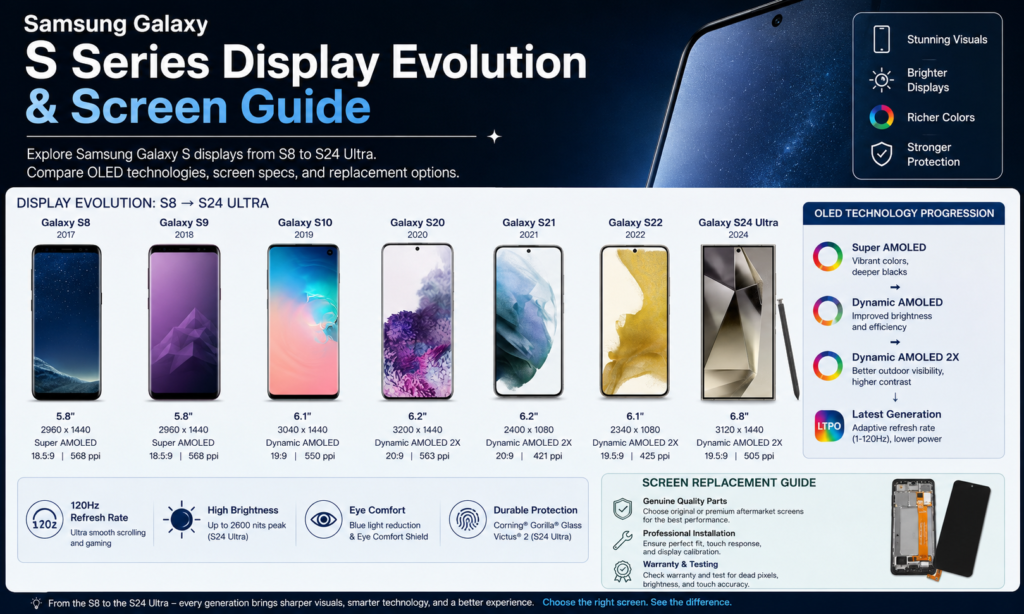
Ba bhuaicphointe mór é an Réaltra S8 i ndearadh na bhfón cliste. Thug a Infinity Display bezels ultra-tanaí isteach agus scáileán OLED cuartha iontach a tháinig chun bheith ina thagarmharc do fhóin chliste préimhe. Bhí taispeáint Super AMOLED 5.8-orlach ag an Réaltra S8 le rún de 2960 × 1440 picteilín agus dlús picteilín de thart 570 PPI. Ag an am, sheachaid sé ceann de na taispeántais is géire agus is bríomhaire atá ar fáil sa mhargadh fón cliste.
Ó shin i leith, Tá Samsung tar éis glúnta éagsúla de ghléasanna Réaltra S a scaoileadh, gach ceann acu ag feabhsú cáilíochta taispeána, marthanacht, gile, rátaí athnuachana, agus éifeachtacht cumhachta. Inniu, tá an-iarracht ar scáileáin bunaidh Samsung OLED sa tionscal deisiúcháin agus athchóirithe toisc go leanann siad ag tairiscint íogaireacht tadhaill níos fearr, atáirgeadh dath, agus marthanacht i gcomparáid le go leor roghanna eile iarmhargadh.
Comhlánaigh Liosta Samhail Sraith Samsung Galaxy S Tar éis Réaltra S8
Réaltra S9 agus S10 Sraith
Tar éis rath an Réaltra S8, Sheol Samsung an Réaltra S9 agus S9 Plus isteach 2018. Choinnigh na samhlacha seo an coincheap Infinity Display agus iad ag feabhsú gile, feidhmíocht ceamara, agus cumais fuaime steirió.
Thug teaghlach an Réaltra S10 isteach roinnt samhlacha nua:
- Réaltra S10e
- Réaltra S10
- Réaltra S10 Plus
- Réaltra S10 5G
Sa tsraith S10 bhí an chéad ghlúin de Samsung Dinimiciúla AMOLED taispeántais agus tugadh isteach braiteoirí méarloirg ultrasonaic leabaithe faoin scáileán. Ba chéim mhór chun cinn é seo i dteicneolaíocht taispeána agus i dtaithí an úsáideora.
Réaltra S20 agus S21 Sraith
I 2020, D’athbhrandáil Samsung an línelíne ó S11 go S20, ainmneacha táirgí a ailíniú leis an mbliain eisithe.
Áiríodh leis an teaghlach Galaxy S20:
| Múnla | Cineál Taispeána | Ráta Athnuachan |
|---|---|---|
| Réaltra S20 | Dinimiciúla AMOLED 2X | 120Hz |
| Réaltra S20+ | Dinimiciúla AMOLED 2X | 120Hz |
| Réaltra S20 Ultra | Dinimiciúla AMOLED 2X | 120Hz |
Tá tabhairt isteach na 120Rátaí athnuachana Hz feabhas mór ar réidh na scrollaithe, feidhmíocht cluichíochta, agus freagrúlacht fhoriomlán.
Lean an líne S21 ag scagadh teicneolaíocht Dinimiciúla AMOLED 2X agus ag an am céanna feabhsaigh sé éifeachtacht chumhachta agus leibhéil gile.
Réaltra S22 agus S23 Sraith
Tháinig teicneolaíocht LTPO fheabhsaithe leis an tsraith S22, ag cur ar chumas taispeántais rátaí athnuachana a choigeartú go dinimiciúil agus cumhacht ceallraí a shábháil.
Bhí an línelíne S23 le feiceáil:
- Réaltra S23
- Réaltra S23+
- Réaltra S23 Ultra
Samsung gile taispeána optamaithe, infheictheacht lasmuigh, agus calabrú dathanna. Tháinig an-tóir ar an S23 Ultra go háirithe i measc úsáideoirí gairmiúla mar gheall ar a chomhcheangal de ghnéithe táirgiúlachta agus cáilíocht taispeána préimhe.
Sraith Réaltra S24 agus Thall
Tá teaghlach an Réaltra S24 mar cheann de na glúnta smartphone is mó chun cinn ag Samsung.
Gnéithe an Réaltra S24 Ultra:
| Sonraíocht | Réaltra S24 Ultra |
|---|---|
| Méid Taispeána | 6.8-orinte |
| Cineál Taispeána | Dinimiciúla AMOLED 2X |
| Réiteach | 3120 × 1440 |
| Ráta Athnuachan | 1-120Hz Oiriúnaitheach |
| Buaic Gile | Suas go dtí 2600 nits |
| Tacaíocht HDR | HDR10+ |
Leagann sonraíochtaí oifigiúla Samsung béim ar phainéal Dinimiciúla AMOLED 2X S24 Ultra, ráta athnuachana oiriúnaitheach 120Hz, agus taifeach Quad HD+.
Forbairt Teicneolaíochta Taispeána Smartphone Samsung
Teicneolaíocht Super AMOLED
Samsung Super AMOLED bhí cáil ar thaispeántais mar gheall ar dhubh dubha a sheachadadh, dathanna beoga, agus éifeachtacht chumhachta den scoth. Murab ionann agus scáileáin LCD traidisiúnta a éilíonn backlight, Ceadaíonn teicneolaíocht OLED do gach picteilín a solas féin a astú.
D'úsáid an Réaltra S8 painéal Super AMOLED tomhais 5.8 orlach le tacaíocht HDR agus rún de 2960 × 1440 picteilíní. Chuir an teicneolaíocht seo cóimheasa codarsnachta den scoth ar fáil agus chabhraigh sé le Samsung a bhunú mar cheannaire ar nuálaíocht taispeáint soghluaiste.
Buntáiste mór amháin a bhaineann le teicneolaíocht Super AMOLED ná tomhaltas cumhachta níos ísle nuair a bhíonn ábhar dorcha á thaispeáint. Toisc go bhfanann picteilíní dubha múchta go hiomlán, feabhsaítear éifeachtacht ceallraí go suntasach.
Teicneolaíocht AMOLED Dinimiciúla
Thug Samsung isteach Dinimiciúla AMOLED leis an tsraith Galaxy S10. Chuir an teicneolaíocht seo feabhas ar chruinneas datha, laghdaítear astuithe díobhálacha solais gorma, agus feidhmíocht HDR feabhsaithe.
Taispeántais AMOLED dinimiciúla seachadta:
- Cruinneas dath níos fearr
- Leibhéil gile níos airde
- Compord súl feabhsaithe
- Tacaíocht ábhar HDR feabhsaithe
Le haghaidh úsáideoirí a thógann físeáin, ábhar cluichíochta, agus na meáin shóisialta, Chuir scáileáin dinimiciúla AMOLED eispéireas féachana níos réadúla ar fáil.
Teicneolaíocht Dinimiciúla AMOLED 2X
Léiríonn Dinimiciúla AMOLED 2X an teicneolaíocht taispeána suaitheanta is déanaí de chuid Samsung.
Úsáideann feistí nua-aimseartha an Réaltra S24 painéil Dinimiciúla AMOLED 2X le feiceáil:
- Rátaí athnuachana oiriúnaitheacha ó 1Hz go 120Hz
- Sroicheann gile buaic 2600 nits
- Tacaíocht HDR10+
- Teicneolaíocht LTPO
- Infheictheacht fheabhsaithe lasmuigh
Leanann príomhthaispeántais Samsung ag socrú caighdeáin tionscail maidir le gile agus éifeachtúlacht. Baineann taispeáint Dinimiciúla AMOLED 2X an Réaltra S24 Ultra amach gile i bhfad níos airde ná na glúnta roimhe seo agus bainistíocht cumhachta den scoth á chothabháil..
Comparáid Sonraíocht Scáileán Sraith Samsung Galaxy S
Taispeáint Méid Éabhlóid
Tá méadú seasta ar mhéideanna scáileáin thar na blianta.
| Múnla | Méid an scáileáin |
|---|---|
| Réaltra S8 | 5.8″ |
| Réaltra S10 | 6.1″ |
| Réaltra S20 Ultra | 6.9″ |
| Réaltra S23 Ultra | 6.8″ |
| Réaltra S24 Ultra | 6.8″ |
Tá tomhaltóirí ag súil anois le taispeántais níos mó le haghaidh sruthú, cearrbhachas, agus iltascáil. D'éirigh le Samsung méid an scáileáin a mhéadú agus eirgeanamaíocht chompordach á chothabháil trí bezels níos tanaí.
Taifeach agus Dlús Picteilín
Tá Samsung tar éis taispeántais QHD + a sheachadadh go seasta thar go leor gléasanna suaitheanta.
Bhí gné shuntasach ag an Réaltra S8 570 Dlús PPI, agus coinníonn gléasanna nua-aimseartha Réaltra Ultra géire eisceachtúil thart ar 500 PPI. In ainneoin dlús picteilín beagán níos ísle, soláthraíonn scáileáin níos nuaí gile níos fearr, rátaí athnuachana, agus cáilíocht íomhá iomlán.
Feabhsuithe Ráta Athnuaigh
Ar cheann de na dul chun cinn taispeána is mó tá teicneolaíocht an ráta athnuachana.
| Giniúint | Ráta Athnuachan |
|---|---|
| Réaltra S8 | 60Hz |
| Réaltra S20 | 120Hz |
| Réaltra S24 Ultra | 1-120Hz Oiriúnaitheach |
Is dóigh leis an difríocht idir 60Hz agus 120Hz gur mhaith leat uasghrádú a dhéanamh ó bhóthar rialta go dtí mórbhealaigh nua-phábháilte. Dealraíonn sé go bhfuil gach rud níos réidhe agus níos freagraí.
Ligeann teicneolaíocht LTPO Samsung rátaí athnuachana a choigeartú go dinimiciúil bunaithe ar ábhar, saol na ceallraí a fheabhsú gan taithí úsáideora a íobairt.
Gile agus Feidhmíocht HDR
Tá feabhas mór tagtha ar ghile ón Réaltra S8.
| Múnla | Buaic Gile |
|---|---|
| Réaltra S8 | Timpeall 540 nits |
| Réaltra S24 Ultra | Suas go dtí 2600 nits |
Déanann an méadú seo fóin Réaltra nua-aimseartha i bhfad níos éasca le húsáid faoi sholas díreach na gréine. Baineann ábhar HDR leas freisin as codarsnacht níos airde agus raon dinimiciúil níos mó.
Míníodh na Bunchineálacha Taispeána Samsung
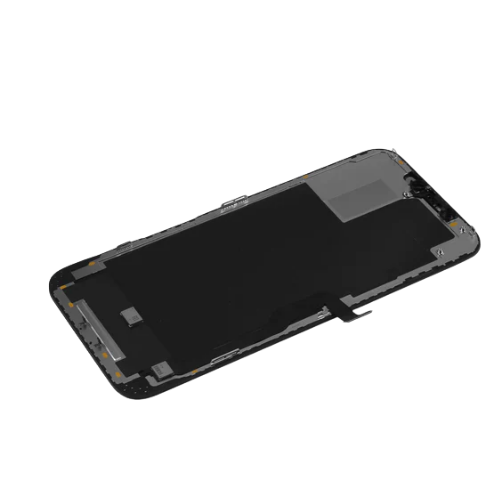
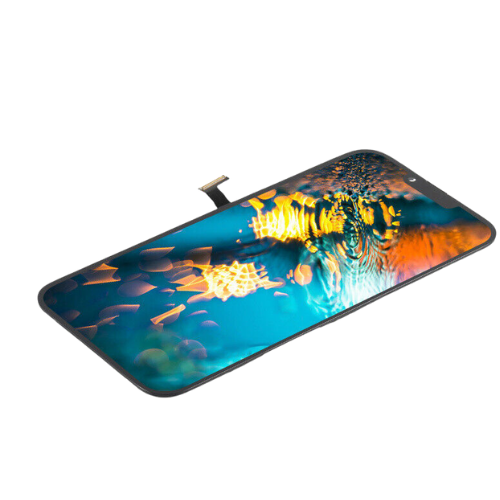
Scáileáin Bunaidh Pacáiste Seirbhíse
Scáileáin Bunaidh Pacáiste Seirbhíse is taispeántais Samsung a mhonaraítear sa mhonarcha iad a dháiltear trí bhealaí deisiúcháin údaraithe.
Áirítear ar shaintréithe:
- Painéal bunaidh OLED
- Ciseal dteagmháil bunaidh
- Tionól fráma bunaidh
- Calabrú dath monarchan
Soláthraíonn na scáileáin seo feidhmíocht is gaire do fheiste úrnua agus meastar go ginearálta gurb iad an rogha athsholáthair cáilíochta is airde.
Scáileáin Tarraingthe Bunaidh
Tagann na scáileáin tharraingthe bunaidh ó fheistí a úsáidtear.
Baineann teicneoirí taispeántais oibre go cúramach ó ghutháin deontóra agus athúsáidfidh siad iad i ndeisiúcháin.
Áirítear ar na buntáistí:
- Painéal OLED Samsung fíor
- Íogaireacht dteagmháil bunaidh
- Praghas níos ísle ná scáileáin Pacáiste Seirbhíse
Braitheann cáilíocht ar riocht an fheiste deontóra.
Scáileáin OLED Athchóirithe
Úsáideann scáileáin athchóirithe painéil bunaidh Samsung OLED le gloine athsholáthair.
Le linn athchóirithe:
- Baintear gloine briste amach.
- Tá an OLED bunaidh fós slán.
- Tá gloine nua lannaithe.
- Athchóiríonn nascáil folúis an chuma.
Is minic a thairgeann na taispeántais seo luach iontach nuair a dhéantar iad a athchóiriú ag monarchana a bhfuil taithí acu.
Scáileáin OLED iarmhargadh
Déanann soláthraithe tríú páirtí scáileáin OLED iarmhargadh a mhonarú.
Áirítear ar na buntáistí:
- Costas níos ísle
- Infhaighteacht níos leithne
Áirítear ar na míbhuntáistí féideartha:
- Gile níos ísle
- Calabrú dathanna éagsúla
- Marthanacht laghdaithe
- Feidhmíocht dteagmháil inathraithe
Is minic a thairgeann siopaí deisiúcháin OLEDanna iarmhargadh mar roghanna buiséid.
Scáileáin Athsholáthair LCD Incell
I gcás roinnt samhlacha Samsung, thairiscint soláthraithe Scáileáin LCD Incell.
Cé go suntasach níos saoire, Tá roinnt míbhuntáistí ag baint le hathsholáthar LCD:
- Cóimheas codarsnachta níos ísle
- Gile laghdaithe
- Tomhaltas cumhachta níos airde
- Struchtúr taispeáint thicker
- Leibhéil dubh níos ísle
Molann go leor gnólachtaí deisiúcháin gairmiúla athsholáthar OLED nuair is féidir chun an t-eispéireas úsáideora bunaidh a chaomhnú.
Treoir Aitheantais Scáileáin Bunaidh Samsung
Modhanna Cigireachta Fisiceacha
Ní mór iniúchadh cúramach a dhéanamh chun taispeáint bunaidh Samsung a aithint.
I measc na bpríomhtháscairí:
- Leibhéil chomhsheasmhacha OLED dubh
- Gile aonfhoirmeach
- Atáirgeadh dath cruinn
- Feidhmíocht dteagmháil sofhreagrach
- Comhoiriúnacht ceart braiteoir méarloirg
De ghnáth léiríonn taispeántais bunaidh Samsung OLED aonfhoirmeacht imeall níos fearr agus beochan níos míne.
Is minic a úsáideann teicneoirí deisiúcháin bogearraí tástála speisialaithe chun barántúlacht taispeána a fhíorú agus chun stair athsholáthair a aithint.
Taispeáin Táscairí Cáilíochta
Cuidíonn roinnt fachtóirí feidhmíochta le cáilíocht an scáileáin a chinneadh:
| Táscaire | OLED bunaidh | OLED iarmhargadh | LCD |
|---|---|---|---|
| Leibhéil Dubha | foirfe | An-mhaith | Teoranta |
| Gile | Ar fheabhas | Measartha | Íochtarach |
| Freagra Tadhaill | Ar fheabhas | Maith | Measartha |
| Éifeachtúlacht cumhachta | Ar fheabhas | Maith | Íochtarach |
| Tacaíocht Méarloirg | Iomlán | Páirteach | Go minic Teoranta |
Nuair a dhéantar comparáid idir scáileáin taobh le taobh, taispeántais bunaidh Samsung OLED de ghnáth a tháirgeadh dathanna níos saibhre, blacks níos doimhne, agus rindreáil íomhá níos nádúrtha.
Treochtaí Margaidh Athsholáthair Scáileáin i 2026
Leanann an tionscal deisithe fón cliste ag leathnú de réir mar a choinníonn tomhaltóirí feistí níos faide.
Go leor Réaltra S8, S9, S10, S20, S21, S22, agus feistí S23 fós gníomhach i margaí domhanda, éileamh láidir ar scáileáin athsholáthair a chruthú. Tá an-tóir ar thaispeántais OLED athchóirithe go háirithe mar go bhfuil siad cothrom le hinacmhainneacht agus feidhmíocht.
Is fearr le gairmithe tionscail athchóiriú bunaidh OLED níos mó ná athsholáthar painéil iomlán. Laghdaíonn an cur chuige seo dramhaíl leictreonach agus caomhnaíonn sé ardcháilíocht taispeána Samsung.
Tá éileamh an mhargaidh láidir go háirithe i measc:
- Siopaí deisiúcháin soghluaiste
- Monarcha athchóirithe
- Dáileoirí mórdhíola
- Soláthraithe deisiúcháin árachais
- Athchúrsálaithe leictreonaic
De réir mar a leanann praghsanna fón cliste ag ardú, tá athchóiriú scáileáin ghairmiúil tar éis éirí ina chuid thábhachtach den éiceachóras gléas soghluaiste.
Roghnú an ceart Samsung Scáileán Athsholáthair
Braitheann roghnú an scáileáin athsholáthair ceart ar do bhuiséad agus ar ionchais cháilíochta.
Más é an fheidhmíocht uasta do sprioc, an Taispeáint Bunaidh Pacáiste Seirbhíse Samsung fós ar an rogha is fearr. Seachadann na scáileáin seo gile ar leibhéal na monarchan, cruinneas dath, íogaireacht dteagmháil, agus marthanacht.
Le haghaidh siopaí deisiúcháin ag lorg cothromaíocht idir costas agus cáilíocht, scáileáin OLED bunaidh athchóirithe a chur ar fáil go minic ar an luach is airde. Coinníonn siad fíorphainéal OLED Samsung agus laghdaítear costais athsholáthair go suntasach.
Féadfaidh tomhaltóirí a bhfuil buiséid theoranta acu taispeántais OLED iarmhargadh a bhreithniú. Cé go bhfeidhmíonn siad go maith go ginearálta le húsáid laethúil, ní fhéadfaidh siad an gile a mheaitseáil go hiomlán, comhsheasmhacht dath, nó fad saoil na bpainéal bunaidh Samsung.
Go hiondúil ba cheart athsholáthar LCD a chur in áirithe le haghaidh deisiúcháin bhuiséid toisc go n-athraíonn siad go bunúsach an t-eispéireas OLED den scoth a bhfuil aithne ar fhóin chliste Réaltra S air.
Deireadh
Tá éabhlóid shuntasach tagtha ar an tsraith Samsung Galaxy S ó seoladh an Réaltra S8. Ón Taispeántas Infinity Super AMOLED bunaidh go teicneolaíocht Dinimiciúla AMOLED 2X an lae inniu, Tá Samsung tar éis teorainneacha nuálaíochta taispeáint na bhfón cliste a bhrú go seasta.
Thug an Réaltra S8 dearadh réabhlóideach isteach le painéal Super AMOLED 5.8-orlach, agus is féidir le feistí nua-aimseartha ar nós an Réaltra S24 Ultra taispeántais oiriúnaitheacha 120Hz Dinimiciúla AMOLED 2X a bhaint amach 2600 nits na gile. D'athraigh na dul chun cinn seo an chaoi a n-idirghníomhaíonn úsáideoirí le fóin chliste le haghaidh oibre, siamsaíocht, grianghrafadóireacht, agus cearrbhachas.
Do ghnólachtaí deisiúcháin, mórdhíoltóirí, agus athchóiritheoirí, tuiscint a fháil ar na difríochtaí idir scáileáin Pacáiste Seirbhíse bunaidh, ceirteacha OLEDs, OLEDs athchóirithe, OLEDs iarmhargadh, agus tá athsholáthar LCD riachtanach. Ní hamháin go gcuireann roghnú an taispeántais cheart isteach ar cháilíocht deisiúcháin ach bíonn tionchar díreach aige freisin ar shástacht na gcustaiméirí agus ar fhad saoil gléas.
Ceisteanna Coitianta
1. Cén cineál taispeána a úsáideann an Samsung Galaxy S8?
Úsáideann an Samsung Galaxy S8 5.8-orlach Super AMOLED taispeáint le taifeach de 2960 × 1440 picteilín agus tacaíocht HDR.
2. Cad é an difríocht idir Super AMOLED agus Dinimiciúla AMOLED?
Feabhsaíonn AMOLED dinimiciúil cruinneas dath, Feidhmíocht HDR, laghdú solas gorm, agus éifeachtúlacht taispeána foriomlán i gcomparáid le teicneolaíocht Super AMOLED níos luaithe.
3. An bhfuil scáileán OLED athchóirithe bunaidh?
Tá. De ghnáth coinníonn scáileán OLED athchóirithe an painéal bunaidh Samsung OLED agus é ag athsholáthar gloine damáiste agus feidhmiúlacht a athchóiriú.
4. Cén tsamhail Samsung Galaxy ag a bhfuil an taispeáint is gile?
Is féidir leis an Réaltra S24 Ultra buaicleibhéil gile suas le 2600 nits, rud a fhágann go bhfuil sé ar cheann de na taispeántais smartphone is gile ag Samsung.
5. An fiú scáileáin OLED iarmhargadh a cheannach?
Is féidir le scáileáin OLED iarmhargadh a bheith ina réiteach éifeachtach ó thaobh costais, ach ní fhéadfaidh siad a mheaitseáil go hiomlán leis an gile, cruinneas dath, freagrúlacht dteagmháil, agus marthanacht na taispeántais Samsung bunaidh.