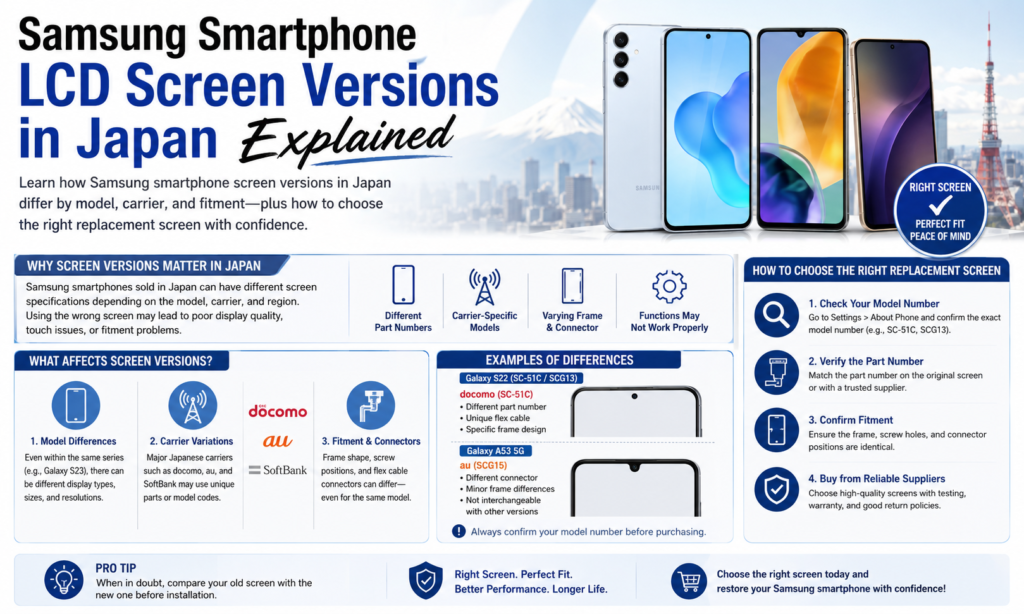
Perché le versioni degli schermi Samsung in Giappone sono diverse
Se lavori nella riparazione di dispositivi mobili, ristrutturazione del telefono, o vendita all'ingrosso di schermi, Mercato giapponese Display degli smartphone Samsung può sembrare una scatola di puzzle. A prima vista, un Galaxy S23 venduto in Giappone sembra quasi identico a uno venduto in Corea, Europa, o gli Stati Uniti. Stesso bellissimo display. Stessa dimensione. Stessa sensazione premium nella mano. Ma una volta aperto il telefono o iniziato a procurarsi parti di ricambio, le differenze iniziano a manifestarsi rapidamente.
È qui che le cose si fanno interessanti.
Il Giappone ha sempre avuto un ecosistema di smartphone unico. Ai vettori piace NTT Docomo, au (KDDI), e occasionalmente SoftBank ha storicamente personalizzato i dispositivi Samsung Galaxy appositamente per il mercato locale. Ciò significa numeri di modello, firmware, marchio dell'operatore, e talvolta i componenti interni differiscono dalle versioni globali. Per le imprese di riparazione, soprattutto i fornitori di schermi, questo conta più di quanto la maggior parte delle persone creda.
Le pagine di supporto ufficiali di Samsung in Giappone continuano a elencare i prezzi di riparazione in base al modello esatto del mercato giapponese, con gestione separata a seconda che il telefono sia in versione operatore o senza SIM del produttore. Solo questo ti dice qualcosa di importante: Samsung tratta molte varianti Galaxy giapponesi in modo indipendente all'interno dell'ecosistema del servizio.
Quindi, se stai ordinando schermi basati solo sul “display Galaxy S23,"potresti già giocare d'azzardo.
E a nessuno piace giocare d'azzardo con l'inventario.
Il mercato degli smartphone giapponese gestito dai carrier
A differenza di molte regioni in cui dominano i telefoni sbloccati, Il Giappone si è sviluppato attorno a hardware specifico dell'operatore. Per anni, acquistare un telefono Galaxy spesso significava acquistarlo direttamente Docomo O au.
Quella relazione con l'operatore ha creato versioni localizzate del dispositivo come:
- SC-51D
- SCG19
- SC-53B
- SCV42
Ad un consumatore, sembrano lettere casuali.
A un tecnico riparatore, quelle lettere decidono se lo schermo si adatterà o se diventerà una costosa scorta esaurita.
Le versioni del corriere giapponese spesso includono:
- firmware unico
- schermate di avvio del corriere
- ottimizzazione della rete specifica
- marchi di certificazione regionale
- assemblaggi del telaio leggermente diversi
A volte il pannello dello schermo stesso è identico.
A volte solo l'OLED è identico ma la cornice è diversa.
A volte la disposizione del cavo flessibile si sposta quanto basta per causare problemi di installazione.
Quel piccolo dettaglio può trasformare una riparazione di 30 minuti in un mal di testa di tre ore.
Numeri di modello regionali e variazioni hardware
Il sistema di denominazione di Samsung diventa molto più semplice una volta che sai come leggerlo.
Esempi:
| Dispositivo | Modello globale | Docomo Giappone | in Giappone |
|---|---|---|---|
| Galassia S23 | SM-S911B | SC-51D | SCG19 |
| Galassia S24 | SM-S921B | SC-51E | SCG25 |
| Galaxy Z Fold5 | SM-F946B | SC-55D | SCG22 |
| Galassia S10 | SM-G973F | SC-03l | SCV41 |
Stessa famiglia di telefoni.
Riferimento interno diverso.
Inventario di servizi diverso.
Questo è più importante quando si effettua l'approvvigionamento:
- assemblaggi espositivi
- schermi collegati al telaio centrale
- digitalizzatori tattili
- connettori flessibili per display
Acquistare solo in base al nome della serie Galaxy non è sufficiente.
Il codice del modello è importante.
Sempre.
Comprendere la tecnologia dei display Samsung
Le persone spesso cercano "Sostituzione schermo LCD Samsung".,” ma ecco la parte divertente:
La maggior parte dei moderni telefoni Samsung, soprattutto in Giappone, in realtà non utilizzano il tradizionale display LCD.
Usano AMOLED.
E sì, questa distinzione conta molto.
Spiegazione di AMOLED, OLED e LCD
Manteniamolo semplice.
Pensa alla tecnologia dello schermo come all'illuminazione di una stanza.
schermo LCD è come puntare una torcia attraverso un vetro colorato.
Hai sempre una retroilluminazione.
I pixel stessi non creano luce.
OLED funziona diversamente.
Ogni pixel si illumina individualmente.
Nessuna torcia dietro.
Solo milioni di minuscole luci indipendenti.
AMOLED è la versione avanzata di OLED di Samsung.
Offre:
- neri più profondi
- contrasto più elevato
- costruzione più sottile
- minore consumo energetico
- riproduzione dei colori più ricca
Quel caratteristico look Galaxy?
Quel nero super nero quando lo schermo è spento?
Questo è AMOLED.
Le discussioni della community sulle riparazioni Samsung continuano a sottolineare che i display sostitutivi Samsung originali rimangono AMOLED anziché LCD, mentre molti sostituti a basso costo utilizzano sostituti LCD di qualità inferiore e prestazioni ridotte.
Perché Samsung utilizza principalmente pannelli AMOLED
Samsung Display è uno dei maggiori produttori di OLED al mondo.
Quindi naturalmente, I telefoni Samsung mostrano questa forza.
La maggior parte dei dispositivi Galaxy del mercato giapponese, dalla serie S di punta ai modelli Fold e Flip, utilizzano:
- AMOLED dinamico
- AMOLED dinamico 2X
- SuperAMOLED
Le recenti pagine ufficiali dei prezzi di riparazione giapponesi elencano la sostituzione del display per dispositivi come Galassia S24, S25, E S26 famiglie, tutto costruito attorno alla tecnologia di visualizzazione Samsung AMOLED.
Per officine riparazioni, ciò significa che le sostituzioni dello schermo originali tendono a rimanere a un prezzo premium rispetto alle sostituzioni LCD dell'iPhone.
È normale.
È la tecnologia.
Principali versioni di telefoni Samsung vendute in Giappone
Ora analizziamo le versioni effettive che vedrai più spesso nei canali di riparazione e all'ingrosso.
Versioni di Docomo
Docomo è storicamente il più forte partner telefonico di Samsung in Giappone.
Questi sono estremamente comuni nel mercato dell'usato.
Gli esempi includono:
- SC-02H
- SC-03l
- SC-51A
- SC-51D
- SC-53E
Esempi comuni di denominazione di modelli
Galaxy S7 Bordo:
- Globale: SM-G935
- Docomo Giappone: SC-02H
Galassia S23:
- Globale: SM-S911
- Docomo Giappone: SC-51D
Queste versioni possono condividere la stessa dimensione del display ma differire nella codifica del telaio o del gruppo di servizio.
alle versioni
Anche il mercato au/KDDI è ampio.
Esempi comuni:
- SCV33
- SCV41
- SCG19
- SCG25
La compatibilità delle riparazioni è spesso vicina a Docomo, ma non dare mai per scontato.
Verifica sempre:
- posizione del connettore del display
- fori di montaggio del telaio
- posizionamento del sensore
- disposizione adesiva
Considerazioni sulla compatibilità
Uno schermo potrebbe:
- accendere correttamente
- mostrare l'immagine correttamente
…ma continuano a fallire perché:
- il sensore di prossimità non si allinea
- il sensore di impronte digitali non si calibra
- le clip della cornice non corrispondono
- il posizionamento della guarnizione impermeabile è diverso
Ecco perché i fornitori di riparazioni professionali in genere ordinano l'inventario in base al codice esatto del modello giapponese anziché semplicemente "Galaxy S24".
Versioni giapponesi senza SIM
Samsung Japan vende anche dispositivi sbloccati in fabbrica.
Questi di solito portano numeri di modello come:
- SM-S918Q
- SM-S921Q
- SM-F946Q
Le attuali pagine di supporto di Samsung in Giappone elencano separatamente questi modelli senza SIM del marchio del produttore per i prezzi di riparazione.
Questi sono sempre più importanti perché il mercato della telefonia sbloccata del Giappone continua a crescere.
Differenze tra gli schermi Samsung giapponesi
Questa è la sezione a cui tengono di più le officine di riparazione.
Perché è qui che si verificano i profitti, o i rendimenti.
Differenze di flessibilità del connettore
Le differenze flessibili possono includere:
- diversa lunghezza del connettore
- passaggio cavi piegato
- diverso posizionamento dei cuscinetti
- schermatura aggiuntiva
La mancata corrispondenza di un connettore rende l'intero assieme inutilizzabile.
Anche se il pannello stesso va bene.
Ecco perché molti grossisti elencano:
- Solo OLED
- OLED + tocco
- OLED con cornice
- OLED assemblaggio completo
come SKU separati.
Differenze di assemblaggio del telaio
Questo è il più grande problema nascosto.
L'OLED stesso potrebbe essere universale.
La cornice potrebbe non esserlo.
Le differenze comuni includono:
- posizione del foro della vite
- ritagli della staffa dell'antenna
- posizionamento dei pulsanti laterali
- allineamento della mesh degli altoparlanti
- Posizionamento dei componenti NFC
L'acquisto di assiemi incorniciati senza controllare il codice della versione è il luogo in cui si verificano molti errori.
Differenze di luminosità e velocità di aggiornamento
Generalmente, le specifiche di visualizzazione rimangono molto simili tra le regioni.
Ad esempio, i recenti modelli giapponesi della serie Galaxy S continuano a essere spediti con:
- 120Frequenza di aggiornamento Hz
- Supporto HDR
- elevata luminosità di picco
- Risoluzione QHD o FHD+ a seconda del modello
Le informazioni sul lancio di Galaxy S23 in Giappone hanno confermato le stesse specifiche AMOLED a 120 Hz trovate a livello globale.
Quindi le prestazioni di solito rimangono costanti.
La compatibilità meccanica è il problema più grande.
Scegliere lo schermo sostitutivo giusto per i telefoni Samsung del mercato giapponese
L'acquisto di un display Samsung per i dispositivi del mercato giapponese non è solo una questione di prezzo.
Riguarda la gestione del rischio.
OEM vs estratto vs ricondizionato vs aftermarket
Ecco il rapido confronto.
| Tipo | Qualità | Prezzo | Raccomandato |
|---|---|---|---|
| Originale dell'OEM | Eccellente | Alto | Migliore |
| Schermo tirato | Eccellente | Medio-Alto | Molto bene |
| OLED ricondizionato | Bene | Medio | Bene |
| LCD aftermarket | Inferiore | Basso | Solo budget |
OEM: Nuovo originale Samsung.
Tirato: Rimosso dai telefoni originali.
Ristrutturato: OLED originale con vetro sostituito.
Aftermarket: Schermata di copia di terze parti.
Per i dispositivi Galaxy destinati al mercato giapponese, tirato e OEM rimangono solitamente le scelte più sicure.
Errori comuni che le officine di riparazione dovrebbero evitare
Gli errori più comuni?
Acquisto solo tramite nominativo telefonico.
Ignorando i codici suffisso.
Supponendo che tutti gli schermi della serie S siano identici.
Ordinazione di gruppi incorniciati senza controllo.
Mescolare Docomo con azioni globali senza test.
Il flusso di lavoro più sicuro assomiglia a questo:
- Conferma il numero del modello in Impostazioni o nell'etichetta posteriore
- Conferma la versione esatta dell'operatore
- Corrisponde al codice di servizio
- Abbina la versione frame/no-frame
- Testare prima dell'installazione completa
Cinque minuti in più qui possono risparmiare settimane di resi più tardi.
Conclusione
Gli schermi degli smartphone Samsung del mercato giapponese sono abbastanza simili da creare fiducia, e abbastanza diversi da creare errori costosi.
Questo è ciò che li rende complicati.
Se sei un'officina di riparazione mobili, rivenditore di ricambi, restauratore, o acquirente all'ingrosso, la chiave è semplice:
Non acquistare mai basandosi solo sul nome Galaxy.
Verifica sempre:
- numero di modello completo
- versione portante
- configurazione del telaio
- Tipo OLED
- disposizione dei connettori
Il mercato giapponese di Samsung continua a crescere con i dispositivi Galaxy sia con operatore che senza SIM, il che significa che la richiesta di un accurato approvvigionamento di display sostitutivi continuerà ad aumentare.
E nel settore delle riparazioni, la precisione batte sempre la velocità.
Uno schermo corretto guadagna profitto.
Lo schermo sbagliato diventa un inventario che nessuno vuole.
Questo è l'intero gioco.
FAQ
1. Gli schermi Samsung Galaxy giapponesi sono diversi dalle versioni globali?
A volte sì. Il pannello OLED potrebbe essere lo stesso, ma assemblaggio del telaio, disposizione dei cavi flessibili, o i componenti specifici dell'operatore possono differire a seconda del modello esatto.
2. I telefoni Samsung in Giappone utilizzano LCD o AMOLED?
La maggior parte dei moderni telefoni Samsung venduti in Giappone utilizzano AMOLED, non LCD.
3. Gli schermi Docomo e au Galaxy possono essere intercambiabili?
A volte, ma non sempre. Verificare sempre il codice esatto del modello prima di ordinare.
4. Qual è lo schermo sostitutivo più sicuro per i telefoni Samsung giapponesi?
Gli schermi originali OEM o tirati originali sono generalmente i più sicuri e affidabili.
5. Perché gli schermi sostitutivi Samsung sono costosi in Giappone?
Perché i pannelli AMOLED Samsung originali sono componenti premium con gruppi touch e display integrati, spesso venduti come moduli completi.