Réamhrá le Rialú Cáilíochta Isteach Isteach LCD Smartphone
Tá sé cosúil le ceannach scáileáin LCD d’fhón cliste ar an mórchóir gan iniúchadh ceart a dhéanamh ar thorthaí a cheannach sa dorchadas – ní bheidh a fhios agat cad a gheobhaidh tú go dtí go mbeidh sé ró-dhéanach. Is é an t-iniúchadh ag teacht isteach an chéad gheata cáilíochta agus is tábhachtaí a chinntíonn go gcomhlíonann gach scáileán LCD a gheobhaidh tú do riachtanais ordaithe sula dtéann sé isteach i do stóras nó do líne táirgeachta.
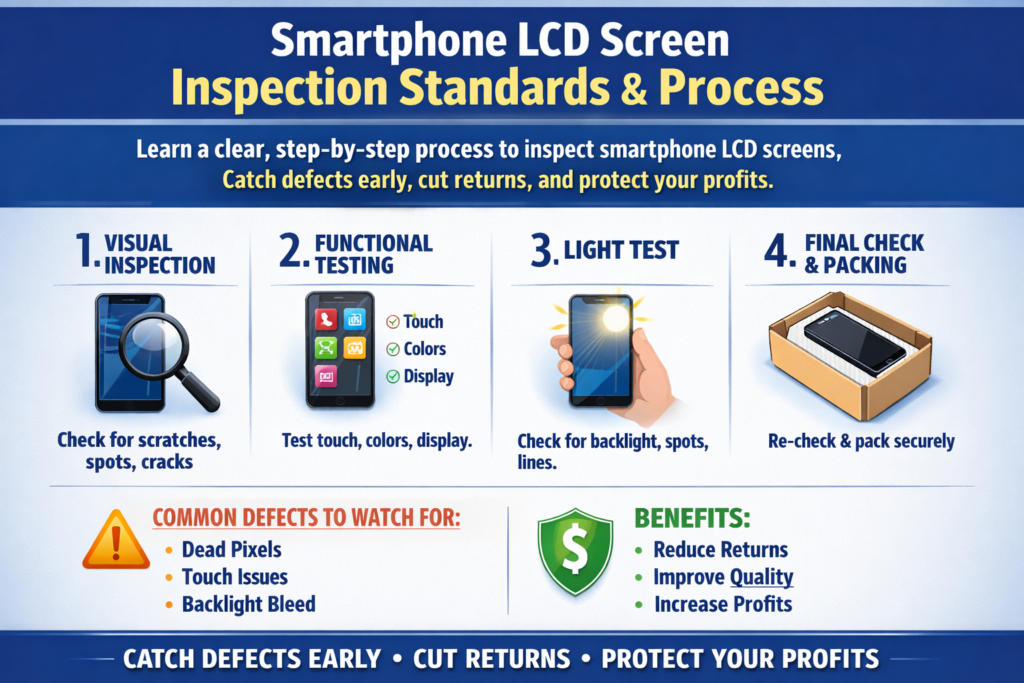
Sa treoir seo, siúlfaimid tríd an iomlán, praiticiúil, agus caighdeán agus próiseas iniúchta éasca le leanúint le haghaidh scáileáin LCD smartphone. Cibé an mórdhíoltóir tú, úinéir siopa deisiúcháin, dáileoir, nó ceannaitheoir OEM, cabhróidh an t-alt seo leat caillteanais a laghdú, díospóidí a sheachaint, agus do chlú a chosaint.
Cén fáth a bhfuil Cigireacht Isteach Ríthábhachtach maidir le Soláthar Scáileáin LCD
Tá scáileáin LCD leochaileach, comhpháirteanna ardluacha. Is féidir le fabht amháin ordú brabúsach a iompú ina tinneas cinn costasach. Cuidíonn iniúchadh isteach leat:
- Gabháil lochtanna roimh athdhíol nó suiteáil
- Cosc a chur ar mhúnlaí mícheart a mheascadh san fhardal
- Rátaí fillte agus gearáin iar-díola a laghdú
- Fianaise dhaingean a sholáthar agus tú i mbun caibidlíochta le soláthraithe
Smaoinigh ar chigireacht ag teacht isteach mar sheicphointe slándála. Má shleamhnaíonn fadhbanna tríd anseo, iolraíonn siad le sruth.
Rioscaí Coiteann Agus Cigireacht Isteach LCD á Scipeáil
D'fhéadfadh go sábhálfadh cigireacht gan bacadh le ham inniu, ach cosnaíonn sé i bhfad níos mó amárach. Áirítear le rioscaí coitianta:
- Ag fáil scáileáin athchóirithe nó bréige
- Scoilteanna ceilte nó damáiste inmheánach
- Méid mícheart, cónascaire, nó samhail
- Rátaí arda picteilín marbh aimsithe ró-dhéanach
Nuair a bheidh scáileáin suiteáilte nó athdhíol, éiríonn níos deacra díospóidí a réiteach.
Ullmhú Roimh Chigireacht Scáileáin LCD
Orduithe Ceannaigh agus Sonraíochtaí a Thuiscint
Roimh oscailt aon bhosca, déan athbhreithniú cúramach ar d'ordú ceannaigh. Seiceáil:
- Uimhreacha samhail
- Cineál scáileáin (Ollainn / LCD / Inchill)
- Grád (Bunaigh, OEM, Athchóirithe)
- Cainníocht agus ceanglais phacáistithe
Ní mór do chaighdeán iniúchta a bheith bunaithe i gcónaí ar an méid a comhaontaíodh i scríbhinn.
Uirlisí Cigireachta agus Trealamh Tástála a Ullmhú
I measc na n-uirlisí bunúsacha a bheidh uait:
- motherboard tástála LCD nó cábla tástála
- Foinse solais geal
- Caliper nó micriméadar
- Lámhainní frith-statacha
- Éadach microfiber glan
Gan uirlisí cearta, éiríonn cigireacht guesswork.
Timpeallacht Chigireachta Ghlan Shábháilte a Bhunú
deannach, leictreachas statach, agus is féidir le droch-soilsiú damáiste a dhéanamh do scáileáin nó lochtanna a cheilt. Déan iniúchadh i gcónaí i glan, dea-shoilsithe, Limistéar sábháilte ESD.
Sreabhadh Oibre Cigireachta Isteach Foriomlán
Fáil agus Fíorú Cainníochta
Tosaigh simplí. Déan cartáin agus aonaid a chomhaireamh chun cainníochtaí a mheaitseáil leis an liosta pacála agus leis an sonrasc a dhearbhú. Ba cheart aonaid in easnamh nó aonaid bhreise a thaifeadadh láithreach.
Aithint agus Inrianaitheacht Baisc
Cuir lipéad ar gach baisc le:
- Ainm an tsoláthraí
- Dáta faighte
- Uimhir ordaithe
Cuidíonn sé seo le fadhbanna a rianú níos déanaí má thagann lochtanna chun cinn.
Caighdeáin Samplála do Bhulcorduithe
Le haghaidh lastais mhóra, b'fhéidir nach mbeadh cigireacht iomlán réadúil. Bain úsáid as sampláil randamach (mar chaighdeáin AQL) agus méid an tsampla á mhéadú do sholáthróirí nua nó neamhiontaofa.
Caighdeáin um Chigireacht Amhairc
Dromchla Scáileáin agus Coinníoll Gloine
Déan iniúchadh ar an ghloine tosaigh faoi sholas láidir:
- Scríobha
- Scoilteanna
- Sceallóga
- Feannadh sciath
Is féidir fiú scoilteanna hairline scaipeadh le linn na suiteála.
Fráma, Bezel, agus Cigireacht Backplate
Seiceáil le haghaidh:
- Frámaí lúbtha
- Dífhoirmiúchán
- Gliú thar maoil
- Comhpháirteanna scaoilte
Is féidir le fráma warped a bheith ina chúis le fadhbanna oiriúnachta agus tadhaill.
Polarizer agus Seiceáil Scannán Cosanta
A chinntiú go bhfuil an polarizer:
- Glan
- Saor ó mboilgeog
- Ailínithe i gceart
Ba chóir go mbeadh scannáin chosanta slán agus éasca le baint.
Cigireacht Toiseach agus Struchtúrtha
Méid Scáileán LCD agus Tomhas Tiús
Bain úsáid as calipers chun a fhíorú:
- Fad agus leithead
- Comhsheasmhacht tiús
Is féidir le diallais bheaga difear a dhéanamh ar thionól.
Riachtanais Ailínithe agus Maoile
Cuir na scáileáin ar dhromchla réidh chun an warping a sheiceáil. Féadfaidh scáileáin míchothrom a bheith ina chúis le sceitheadh éadrom nó strus suiteála.
Caighdeáin Caoinfhulaingt do Scáileáin LCD Smartphone
Lean caighdeáin lamháltais an tionscail, laistigh de ±0.1mm go hiondúil mura sonraítear a mhalairt.
Cigireacht nascóirí agus Comhéadain
Seiceáil Sláine Chónascaire FPC
Déan iniúchadh ar an gciorcad clóite solúbtha (FPC):
- Gan scoilteanna
- Uimh rianta briste
- Gan aon éilliú
Is ionann FPC damáiste agus scáileán marbh.
Comhaireamh Bioráin agus Fíorú Leagan Amach
Déan comparáid idir leagan amach an chónascaire le sampla maith deimhnithe. Cruthaíonn leagan amach mícheart bioráin fadhbanna comhoiriúnachta.
Lochtanna Cónascaire Coitianta le Breathnú orthu
- Bioráin lúbtha
- Ocsaídiú
- Sádráil lag
Is minic go mbíonn teipeanna taispeána eatramhacha mar thoradh ar na lochtanna seo.
Tástáil Feidhme agus Cumhacht-Ar
Tástáil Taispeána Gile agus Datha
Cumhacht ar an scáileán agus seiceáil:
- Leibhéal gile
- Cruinneas dath
- Cothromaíocht bán
Ba chóir go mbeadh cuma nádúrtha ar dhathanna, ní buí ná gorm.
Feidhm Tadhaill agus Tástáil Freagartha
Feidhmiúlacht il-dteagmháil a thástáil:
- Freagra réidh
- Uimh criosanna marbh
- Gan teagmháil taibhse
Tá saincheisteanna tadhaill i measc na bpríomhchúiseanna le tuairisceáin.
Picteilín marbh, Spota Geal, agus Cigireacht Spota Dorcha
Taispeáin dathanna soladacha le brath:
- Picteilíni marbh
- Spotaí geala
- Spotaí dorcha
Sainmhínigh teorainneacha inghlactha roimh ré le soláthraithe.
Backlight agus Measúnú Feidhmíochta Taispeána
Tástáil Aonfhoirmeachta agus Sceitheadh Éadrom
Seiceáil le haghaidh:
- Gile míchothrom
- Imeall sceitheadh solais
Cuireann droch-aonfhoirmeacht isteach ar thaithí an úsáideora.
Flicker agus Brath Scáth
Breathnaigh ar an scáileán ag leibhéil gile éagsúla. Féadfaidh caochaíl saincheisteanna cumhachta nó backlight a léiriú.
Comhoiriúnacht agus Fíorú Meaitseála Múnla
Uimhir Mhúnla agus Fíorú Lipéad
Déan na lipéid a chros-seiceáil le sonraí an ordaithe. Ná glac leis go bhfuil lipéid phacáistithe i gceart.
Comhoiriúnacht le Sprioc Mhúnlaí Smartphone
Feistigh scáileáin tástála isteach i bhfeistí iarbhír más féidir. Deimhníonn sé seo comhoiriúnacht mheicniúil agus feidhmiúil.
Cigireacht ar Bhail Phacáistithe agus Iompair
Seiceáil Pacáistiú Frithstatach agus Shockproof
Ba cheart go n-áireofaí pacáistiú cuí:
- Málaí ESD
- Cosaint cúr
- Sliotáin aonair
Is minic go mbíonn droch-phacáistiú ina chúis le damáiste folaithe.
Damáiste de bharr Lóistíochta Míchuí
Cuardaigh boscaí brúite nó nochtadh taise. Déan gach rud a dhoiciméadú láithreach.
Doiciméadú Cigireachta agus Tuairisciú
Torthaí Cigireachta a Thaifeadadh
Úsáid foirmeacha iniúchta caighdeánaithe chun taifead a dhéanamh:
- Cineálacha lochtanna
- Cainníochtaí
- Uimhreacha bhaisc
Feabhsaíonn comhsheasmhacht cuntasacht soláthraithe.
Bailiúchán Fianaise Grianghraf agus Físeáin
Neartaíonn grianghraif agus físeáin éilimh le linn díospóidí agus cuireann siad dlús le réitigh.
Déileáil le Scáileáin LCD Neamhchomhlíonta
Sórtáil, Lipéadú, agus Leithlisiú
Scáileáin lochtach a scaradh láithreach. Ná measc iad le stoc maith.
Próiseas Cumarsáide agus Tuairisceáin le Soláthraí
Déan teagmháil le soláthraithe le fianaise shoiléir agus lean nósanna imeachta RMA comhaontaithe chun moill a sheachaint.
Cleachtais is Fearr le haghaidh Cigireachta Isteach Bulc LCD
- Déan iniúchadh láithreach ar theacht
- Coinnigh caighdeáin iniúchta comhsheasmhach
- Foireann a oiliúint go rialta
- Taifid iniúchta a choinneáil
Sábhálann smacht anseo airgead níos déanaí.
Botúin Choitianta a Dhéanann Ceannaitheoirí Le linn Cigireachta LCD
- Cigireacht rushing
- Neamhaird a thabhairt ar mhionlochtanna
- Gan bacadh le tástálacha cumhachta
- Cáipéisíocht lag
Bíonn caillteanais mhóra mar thoradh ar bhotúin bheaga.
Mar a Laghdaíonn Cigireacht Isteach Tuairisceáin agus Eisiúintí Tar éis Díolacháin
Gabhann iniúchadh cuí fadhbanna go luath, ag cinntiú nach sroicheann ach scáileáin cháilithe custaiméirí. Bíonn níos lú gearán ann dá bharr, rátaí aischuir níos ísle, agus muinín custaiméirí níos láidre.
Deireadh
Níl cigireacht isteach Smartphone LCD roghnach - tá sé riachtanach. Trí chaighdeán iniúchta struchtúrtha a leanúint agus próiseas a chlúdaíonn cuma, toisí, chónaisc, feidhmiúlacht, agus pacáistiú, cosnaíonn tú do ghnó ó bhotúin chostasacha. Smaoinigh ar chigireacht mar do líontán sábhála. Dá láidre é, an níos sábháilte a bheidh do bhrabúis.
Ceisteanna Coitianta
1. Ar cheart tástáil cumhachta a dhéanamh ar gach scáileán LCD?
Tá, go háirithe maidir le horduithe ardluacha nó íogaire. Gabhann tástáil chumhacht-ar lochtanna folaithe.
2. Cad é an locht LCD is coitianta a aimsíodh le linn iniúchta?
Picteilíni marbh, saincheisteanna tadhaill, agus damáiste cónascaire na fadhbanna is minice.
3. Cé mhéad sampla ba chóir a iniúchadh le haghaidh orduithe mórchóir?
Braitheann sé seo ar mhéid an ordaithe agus ar iontaofacht an tsoláthraí, ach teastaíonn samplaí níos mó le haghaidh orduithe ardriosca.
4. An féidir le lochtanna pacáistithe difear a dhéanamh do chaighdeán LCD?
Cinnte. Is minic go mbíonn droch-phacáistiú ina chúis le damáiste inmheánach le linn iompair.
5. An bhfuil cigireacht isteach riachtanach do sholáthróirí iontaofa?
Tá. Féadann fadhbanna ócáideacha a bheith ag fiú soláthraithe iontaofa. Cosnaíonn cigireacht an dá thaobh.