Почему характеристики экрана смартфона важны как никогда 2026 Характеристики экрана имеют большее значение, чем когда-либо 2026
Если ты думаешь об этом, тот экран это душа смартфона. Это та часть, к которой вы прикасаетесь сотни раз каждый день.. Вы читаете сообщения на нем, посмотри видео на нем, прокрутите на нем социальные сети, редактировать фотографии на нем, и, возможно, даже работать с этим. Неважно, насколько мощный процессор или сколько мегапикселей предлагает камера., если экран кажется тусклым, размытый, или неудобно смотреть, все впечатления от телефона кажутся слабее. Вот почему понимание характеристик дисплея смартфона имеет большее значение, чем многие думают..
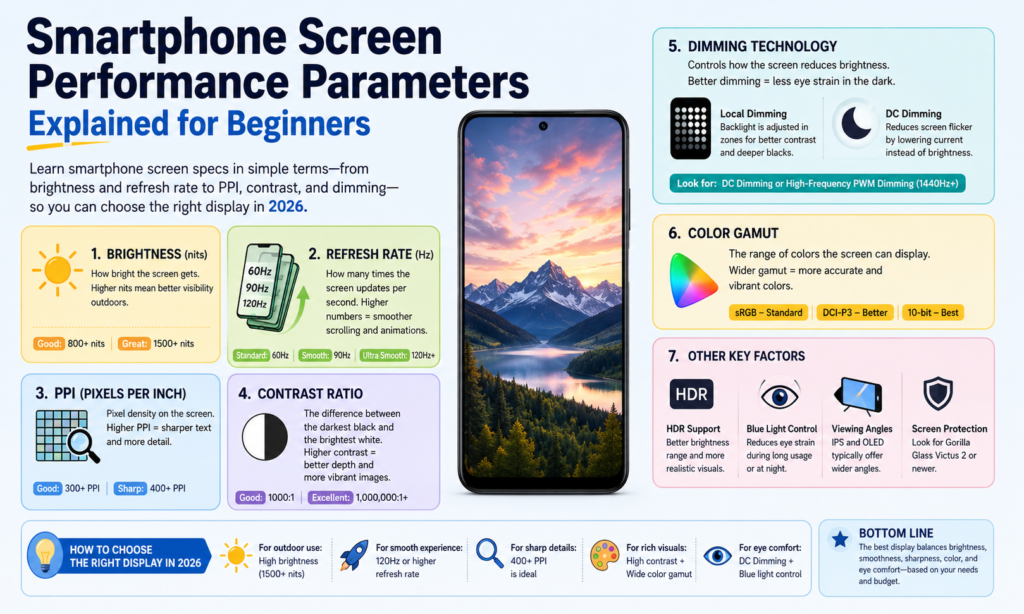
В 2026, Технология отображения продолжает развиваться быстро. Премиум-телефоны теперь регулярно достигают 3,000+ нит яркость, пока 120Адаптивная частота обновления Гц стали обычным явлением для устройств верхнего среднего уровня.. Высокочастотное затемнение ШИМ выше 2,160Гц также становится все более популярным, особенно во флагманском комфорте OLEDe. citeturn0search0turn0search2
Сложная часть? В большинстве спецификаций вам указывают цифры, не объясняя, что они на самом деле означают.. ИЦП, коэффициент контрастности, частота обновления, цветовая гамма — такое ощущение, будто читаешь на другом языке. В этом руководстве все изложено простым языком., так что если вы покупаете новый телефон, сравнение ЖК и OLED, или просто интересно узнать о технологии отображения, вы будете точно знать, что искать.
Технология затемнения
Что такое затемнение постоянного тока?
Затемнение постоянного тока регулирует яркость, напрямую изменяя электрический ток, подаваемый на дисплей. Думайте об этом как о медленном повороте ручки крана вниз — вода продолжает течь., просто с меньшей силой. Свет остается непрерывным, но яркость падает.
Для ЖК-экраны, яркость в основном зависит от подсветки, поэтому уменьшение напряжения или тока снижает яркость. Для OLED-экраны, каждый пиксель излучает свой собственный свет, поэтому яркость меняется за счет уменьшения тока, передаваемого на эти отдельные пиксели.
Многие пользователи предпочитают затемнение постоянным током, потому что оно визуально стабильно.. Поскольку свет не включается и не выключается быстро, для чувствительных глаз может быть проще. Это особенно важно для людей, которые часами смотрят на свои телефоны в темноте..
Компромисс заключается в том, что затемнение постоянного тока может иногда влиять на согласованность цвета при очень низкой яркости на OLED-панелях.. Черные могут оставаться отличными, но калибровка цвета может немного меняться в зависимости от конструкции панели. Здесь производители часто стараются сбалансировать комфорт для глаз и точность цветопередачи..
Что такое ШИМ-регулирование яркости?
ШИМ означает Широтно-импульсная модуляция. Вместо постоянного снижения мощности, дисплей быстро переключается между вкл → выкл → вкл → выкл на высокой скорости.
Представьте, что вы щелкаете выключателем сотни или тысячи раз в секунду.. Ваши глаза обычно не могут непосредственно обнаружить мерцание., поэтому он кажется тусклее, а не мигает.
Количество времени, в течение которого свет остается включенным во время каждого цикла, определяет яркость.:
- Длительное время включения = более яркий экран
- Более короткое время включения = затемнение экрана
ШИМ чрезвычайно распространен на OLED-смартфонах..
В 2026, Флагманские телефоны Android все чаще рекламируются 2,160ШИМ-регулирование яркости от Гц до 3840 Гц, что намного выше, чем у старых реализаций с частотой 240–480 Гц.. Пользователи Тенденции с более высокой частотой ШИМ. citeturn0search8turn0search6
Какой из них лучше для комфорта глаз?
Универсального ответа не существует, потому что человеческие глаза удивительно сложны..
Некоторые пользователи вообще не замечают мерцания ШИМ.. Другие чувствуют головные боли после 10 минуты.
В целом:
| Технология | Основное преимущество | Главный недостаток |
|---|---|---|
| Затемнение постоянного тока | Менее заметное мерцание, часто легче для глаз | Может незначительно повлиять на цветопередачу OLED |
| ШИМ затемнение | Улучшенный контроль яркости и постоянство цвета | Может вызвать напряжение глаз у чувствительных пользователей. |
Если вы чувствительны к мерцанию экрана, Затемнение постоянного тока или высокочастотный ШИМ стоит расставить приоритеты.
Цветопередача
Насыщенность
Насыщенность описывает, насколько насыщенным или чистым выглядит цвет.
Насыщенные цвета кажутся яркими и выразительными. Низкая насыщенность выглядит приглушенной или размытой.
Подумайте о спелой красной клубнике и выцветшей розовой рубашке, слишком долго оставленной на солнце.. Одна и та же цветовая гамма — совершенно разная интенсивность.
OLED-панели часто кажутся более насыщенными, поскольку каждый пиксель независимо излучает собственный свет..
Некоторым людям нравится этот «вау» эффект.. Другие предпочитают более естественные цвета для редактирования фотографий..
Цветовая гамма
Цветовая гамма относится к общему диапазону цветов, который может отображать экран.
Более широкая гамма означает, что дисплей может воспроизводить больше оттенков..
Общие стандарты включают в себя:
- sRGB
- DCI-P3
- Adobe RGB
- БТ.2020
В смартфонах, DCI-P3 теперь очень распространено в дисплеях премиум-класса.
Новейшие концепции дисплеев Samsung, представленные на SID Display Week 2026 продемонстрировано до 96% Покрытие BT.2020, пока отображается. citeturn0news16turn0news17
Точность цвета
Точность цветопередачи измеряет, насколько близок отображаемый цвет к предполагаемому исходному цвету.
Это имеет большое значение для:
- фотографы
- видеоредакторы
- дизайнеры
- Интернет-продавцы показывают цвета товара
Если белое изображение кажется желтоватым, а красная фотография продукта выглядит оранжевой, точность цветопередачи плохая.
Обычное измерение здесь Дельта Е.
Меньшая Delta E = более точная цветопередача.
Серая шкала
Шкала серого относится к уровням яркости между черным и белым..
Хорошая производительность шкалы серого означает плавные переходы.
Плохая шкала серого создает видимые полосы или неравномерное затенение..
Это становится очень заметно при просмотре темных фильмов или просмотре фотографий при слабом освещении..
Яркость и контрастность
Объяснение яркости
Яркость измеряется в гниды.
Больше нит = ярче дисплей.
Почему это имеет значение?
Потому что солнечный свет существует.
Телефон может выглядеть идеально в помещении, но становиться нечитаемым на улице.
Флагманские смартфоны в 2026 обычно достигают 3,000–3500 нит пиковая яркость. Например, OnePlus 15 сообщается вокруг 3,500 гниды, пока Пикс рядом 3,300 гниды. citeturn0search2
Объяснение коэффициента контрастности
Коэффициент контрастности – это разница между:
самый яркий белый ÷ самый темный черный
Более высокий контраст создает:
- более глубокий черный цвет
- более сильные блики
- лучший HDR
- более богатая глубина изображения
Здесь доминирует OLED, потому что пиксели могут полностью отключаться.
Это создает настоящий черный цвет.
ЖК-дисплей не может полностью отключить подсветку таким же способом.
Вот почему при использовании черных OLED-дисплеев часто возникает ощущение, будто они смотрят в темное ночное небо..
Ясность и резкость
Разрешение (ДПИ)
Разрешение относится к количеству пикселей по горизонтали и вертикали..
Примеры:
- 1080 × 2400
- 1440 × 3200
Больше пикселей = больше деталей.
Хотя за пределами определенной точки, разницу становится труднее заметить на нормальном расстоянии просмотра.
Плотность пикселей (ИЦП)
ИЦП означает пикселей на дюйм.
Он говорит вам, насколько плотно упакованы пиксели..
Более высокий PPI = более четкий текст и более чистые края.
Примеры:
| Тип дисплея | Типичный индекс цен производителей |
|---|---|
| Бюджетный ЖК | 300–400 |
| OLED среднего класса | 400–460 |
| Флагманский OLED | 450–550+ |
Выше примерно 450 ИЦП, текст обычно выглядит очень четким.
Шаг пикселя
Шаг пикселя — это расстояние между соседними пикселями..
Меньший шаг пикселя = выше резкость.
Меньшие промежутки между пикселями делают изображения более цельными и полированными..
Движение и отзывчивость
Время ответа
Время отклика измеряет, насколько быстро пиксель переходит из одного состояния в другое..
Часто описывается как:
Черный → Белый → Черный
Меньшее время отклика помогает сократить:
- ореолы
- размытие
- размазывание
Особенно заметно во время игр или быстрого воспроизведения видео..
Частота обновления
Частота обновления = сколько раз дисплей обновляется каждую секунду..
Измеряется в Гц.
Примеры:
- 60Гц
- 90Гц
- 120Гц
- 144Гц
А 120HZ -дисплей обновляется в два раза чаще, чем 60 Гц.
Это делает прокрутку более плавной, а анимацию — более плавной..
Если вы регулярно используете частоту 120 Гц, возвращение к частоте 60 Гц может ощущаться как прогулка по мокрому песку.
Другие важные факторы отображения
Угол обзора
Угол обзора означает, насколько хорошо вы можете видеть дисплей сбоку..
Хорошие углы обзора сохраняются:
- яркость
- цвет
- контраст
OLED здесь обычно работает лучше, чем LCD.
Потребляемая мощность
Дисплеи потребляют большую часть времени автономной работы смартфона.
OLED может быть более эффективным в темном режиме, поскольку черные пиксели могут полностью отключиться..
Подсветка ЖК-дисплея горит постоянно.
Вот почему темный режим может сэкономить заряд батареи на OLED-устройствах..
Электромагнитное излучение
Дисплеи излучают энергию посредством электрических и магнитных полей, а также видимого света и тепла..
Для обычного использования смартфона, это остается в рамках стандартов безопасности бытовой электроники.
Что пользователи обычно замечают более практично, так это:
- воздействие синего света
- усталость глаз
- выделение тепла
а не само электромагнитное излучение.
Как выбрать правильный экран смартфона в соответствии с вашими потребностями
Выбор дисплея для смартфона похож на выбор очков.. «Лучший» зависит от вас.
Если вас больше всего волнует смотреть фильмы, расставить приоритеты:
- Олинг
- высокая контрастность
- HDR
- Высокая яркость
Если вы мобильный геймер, сосредоточиться на:
- 120Гц+
- быстрое время отклика
- выборка с высокой степенью касания
Если вы чувствительны к перенапряжению глаз:
- Затемнение постоянного тока
- высокочастотный ШИМ
- настройки комфорта для глаз
Если батарея важнее всего:
- ЛТПО ТЫ
- адаптивная частота обновления
- эффективное управление яркостью
Не гонитесь за каждой цифрой.
Найдите цифры, которые соответствуют тому, как вы на самом деле используете свой телефон..
Заключение
Дисплеи смартфонов больше не представляют собой просто светящиеся прямоугольники. Они — входная дверь во всю вашу цифровую жизнь.
Понимание Затемнение постоянного тока, ШИМ, насыщенность, коэффициент контрастности, разрешение, ИЦП, частота обновления, время ответа, цветовая гамма, и энергопотребление помогает вам читать за пределами маркетинга.
Более яркий экран не всегда лучше.
Более высокая частота обновления не всегда необходима.
Более широкая цветовая гамма бесполезна, если точность цветопередачи низкая..
Лучший экран смартфона — тот, на котором легко разблокировать телефон каждый раз, когда вы его разблокируете..
И как только вы поймете, что на самом деле означают эти характеристики, выбрать этот экран становится намного проще.
Часто задаваемые вопросы
1. Что лучше для глаз: Затемнение постоянного тока или затемнение ШИМ?
Для многих пользователей, чувствительных к мерцанию, Затемнение постоянного тока чувствует себя более комфортно. Высокочастотная ШИМ также может быть комфортной в зависимости от чувствительности..
2. Всегда ли более высокий PPI лучше??
Не всегда. За пределами 450–500 PPI, различия становится труднее заметить при обычном использовании.
3. OLED лучше, чем LCD?
OLED обычно обеспечивает лучшую контрастность, более глубокий черный цвет, и более насыщенный цвет. ЖК-дисплей по-прежнему может обеспечивать отличную яркость и часто позволяет избежать проблем с мерцанием OLED..
4. Стоит ли 120Гц на смартфоне?
Да, особенно если вы часто играете или прокручиваете. Более плавное движение очень заметно..
5. Какая характеристика экрана имеет наибольшее значение?
Нет одного единственного ответа. Для большинства людей, самый большой ежедневный эффект исходит от:
- яркость
- частота обновления
- контраст
- комфорт для глаз