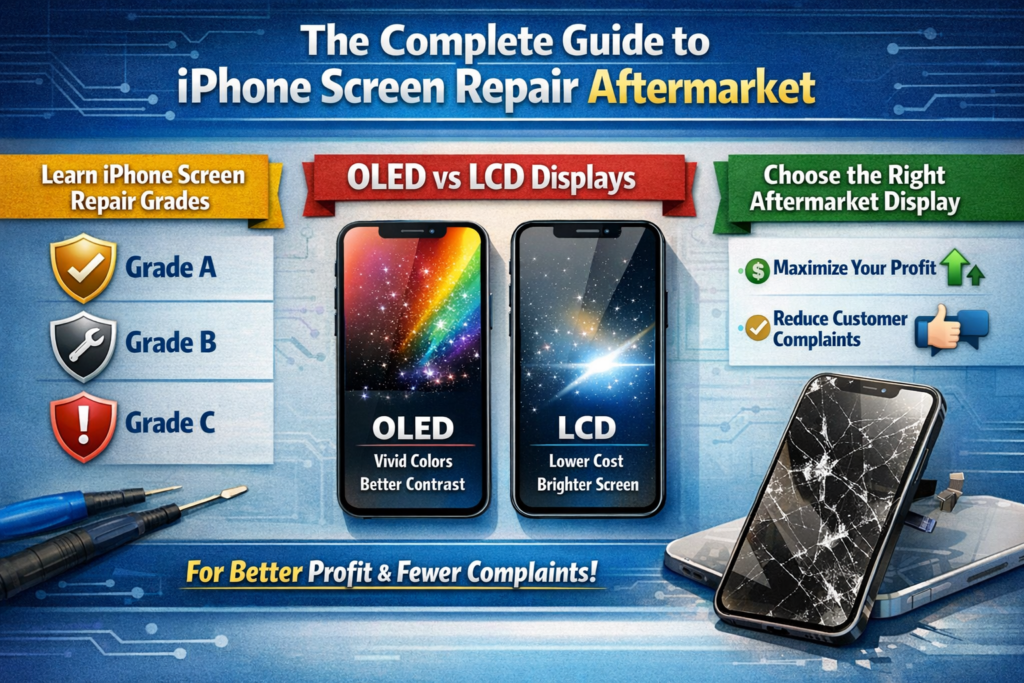
Tá margadh deisiúcháin scáileáin iPhone ollmhór. Ní hamháin mór - casta, cisealta, agus uaireanta mearbhall. Le haghaidh siopaí deisiúcháin agus mórdhíoltóirí, níl tuiscint ar shonraíochtaí scáileáin iarmhargadh roghnach. Sin é an difríocht idir brabúis láidre agus gearáin leanúnacha ó chustaiméirí.
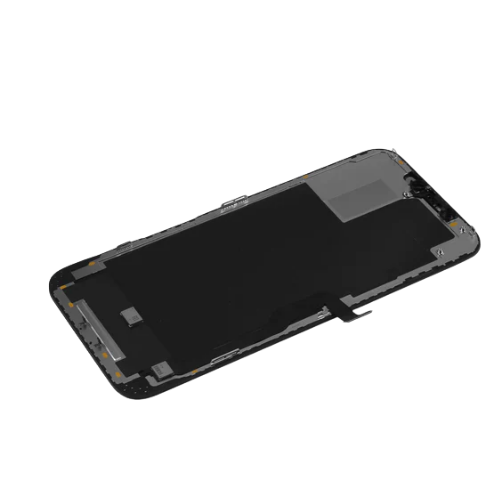
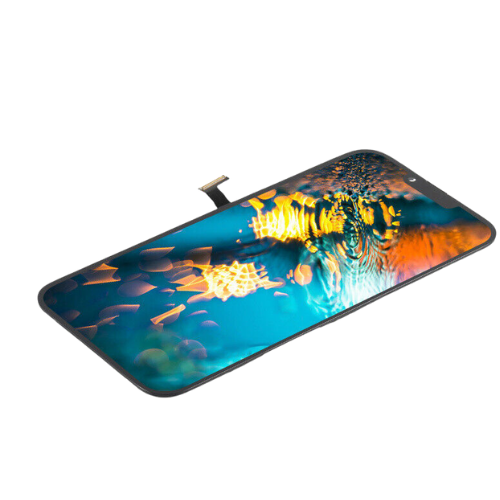
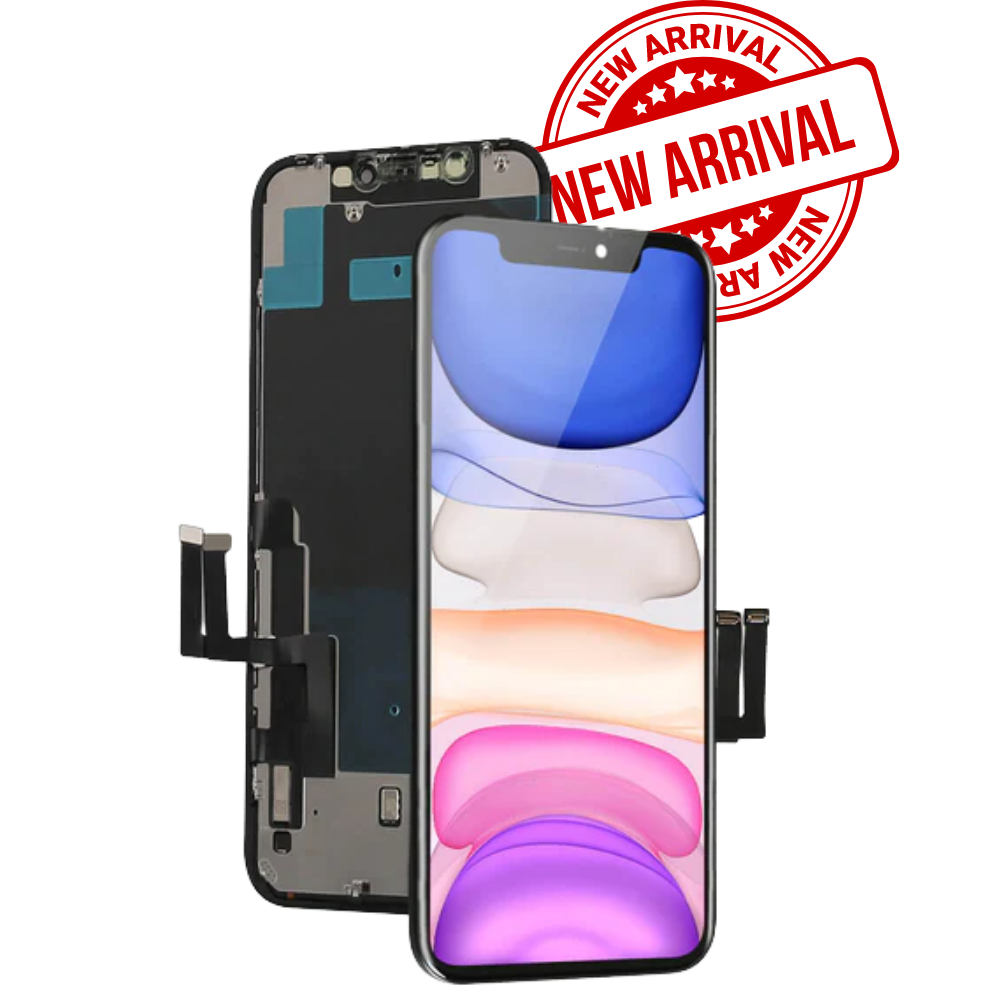
Smaoinigh ar scáileán iPhone cosúil le croí an fhóin. Ní hamháin píosa gloine é. Is modúl lán-chomhtháite é a chomhcheanglaíonn taispeáint, digiteoir dteagmháil, Comhpháirteanna ID Aghaidh, braiteoirí cóngarachta, cluas, Agus níos mó. Déan é a ionadú go mícheart, agus athraíonn an taithí ar fad.
Mar sin, conas a roghnaíonn tú an scáileán ceart? Déanaimis é a bhriseadh síos céim ar chéim.
Cén fáth go bhfuil tionchar an-mhór ag Scáileáin iPhone ar an Tionscal Deisiúcháin
Is é damáiste scáileáin an chéad deisiúchán iPhone ar fud an domhain. Tarlaíonn titeann. Scoilteanna gloine. Téann taispeántais dubh. Agus nuair a tharlaíonn sé sin, ní theastaíonn mínithe ar chustaiméirí - teastaíonn réitigh uathu.
Ach seo an chuid casta: níl gach scáileán athsholáthair mar an gcéanna.
Is féidir leat scáileán a cheannach le haghaidh $15 nó $150. Tá an dá "oiriúnach." Ach an ndéanann siad mar an gcéanna? Cinnte nach bhfuil.
Sin an áit a dtiocfaidh tuiscint ar shonraíochtaí mar bhuntáiste iomaíoch duit.
An Fhondúireacht - Dhá Theicneolaíocht Scáileáin Chroí
Sula ndéanaimid fiú labhairt faoi ghráid iarmhargadh, caithfimid fírinne bhunúsach amháin a thuiscint:
Níl ach dhá chroí-theicneolaíocht taispeána i iPhones.
Teicneolaíocht LCD Mínithe
LCD (Taispeántas criostail leachtach) baineadh úsáid as scáileáin i múnlaí mar:
- iWord 6 / 7 / 8
- iPhone XR
- iWord 11
- Sraith iPhone SE
Teastaíonn backlight ó scáileáin LCD chun picteilíní a shoilsiú. Sin an fáth go bhfuil cuma beagán liath ar dhubh - bíonn an backlight ar siúl i gcónaí.
Buntáistí:
- Costas níos ísle
- Soláthar iarmhargadh aibí
- Feidhmíocht chobhsaí
Teorainneacha:
- Codarsnacht níos ísle
- Dathanna níos lú bríomhar
- Struchtúr beagán níos tiús
Teicneolaíocht OLED Mínithe
Ag tosú ón iPhone X, D'aistrigh Apple go OLED don chuid is mó de na samhlacha préimhe.
Úsáidtear painéil OLED i:
- iPhone X
- iWord 12 / 13 / 14 / 15 / 16 sraith (seachas SE)
Astaíonn gach picteilín a sholas féin. Ciallaíonn sé sin blacks fíor, codarsnacht gan teorainn, agus éifeachtacht cumhachta níos fearr.
Tá OLED níos tanaí, gile, agus níos beoga - ach freisin i bhfad níos costasaí a tháirgeadh.
Príomhdhifríochtaí idir LCD agus OLED
| Gné | LCD | Ollainn |
|---|---|---|
| Cúlsolas | Ag teastáil | Ní gá |
| Dath Dubh | Liathais | Fíor dubh |
| Codarsnacht | Teoranta | gan teorainn |
| Tiús | Níos tiús | Níos tanaí |
| Costas | Íochtarach | Níos airde |
Sainmhíníonn an difríocht teicneolaíochta seo gach rud san iarmhargadh.
Cúig Grád Scáileáin Mhóra Iarmhargadh iPhone
Anois cuirimis isteach an fíor-chatha - an t-aicmiú iarmhargadh.
1. Scáileáin Tarraingthe Bunaidh (OEM Díchumtha)
Is fíorscáileáin Apple iad seo a bhaintear as gléasanna a úsáidtear.
Uimh déantúsaíochta tríú páirtí. Gan aon bhabhtálacha comhpháirte.
Cén fáth go bhfuil siad préimhe:
- Cruinneas dath foirfe
- Leibhéil gile bunaidh
- Ton Fíor & ProMotion tacaíocht iomlán
- Comhoiriúnacht Aghaidh ID caomhnaithe
Soláthraíonn siad feidhmíocht ar leibhéal na monarchan.
Buntáiste? Ardchostas agus soláthar teoranta.
2. Scáileáin Bunaidh Athchóirithe (Gloine Athchurtha)
Seo áit a bhfuil sé suimiúil.
Baineann teicneoirí gloine briste as an bpainéal bunaidh agus lannaíonn siad ciseal nua gloine.
Tá an painéal inmheánach OLED nó LCD fós bunaidh.
Feidhmíocht:
- Cáilíocht taispeántais beagnach comhionann le OEM
- Braitheann feidhmíocht dteagmháil ar chaighdeán gloine
- Fíor Ton coinnithe de ghnáth
Smaoinigh air mar dheisiú na “fuinneog” agus an t-inneall bunaidh a choinneáil.
Praghas: Níos ísle ná OEM ceirteacha tarraingthe, ach fós préimh.
3. Scáileáin Bhunaidh Thástáil Diagnóiseacha
Is scáileáin bhunaidh iad seo a ndearnadh tástáil agus grádú gairmiúil orthu.
Féadfaidh siad teacht ó chláir seirbhíse oifigiúla nó ó ionaid athchóirithe ar mhórscála.
Tá an fheidhmíocht comhsheasmhach agus iontaofa, cé go bhféadfadh mionfhoirfeachtaí cosmaideacha a bheith ann.
Tugann an chatagóir seo cothromaíocht idir praghas agus iontaofacht.
4. Scáileáin OLED Tríú Páirtí
Is é seo an earnáil is iomaíche i margadh an lae inniu.
Arna tháirgeadh go hiomlán ag monarchana tríú páirtí.
Tá dhá phríomhchineál ann:
OLED crua
Úsáideann foshraitheanna dochta.
Tréithe:
- Beagán níos tibhe
- Bezel bun níos leithne ("smig")
- Níos inacmhainne
Feidhmíocht:
- Dath réasúnta
- Gile measartha
- Marthanacht níos ísle i gcomparáid leis an mbunaidh
Solúbtha (bog) Ollainn
Úsáideann sé foshraitheanna solúbtha cosúil le painéil bhunaidh Apple.
Buntáistí:
- Dearadh caol
- Bezel caol
- Atáirgeadh dath níos fearr
- Gile níos airde
Is féidir le scáileáin OLED bog ard-deireadh tacú le True Tone fiú tar éis aistriú sonraí.
Ach d'fhéadfadh fiú scáileáin OLED bog barr-sraith a thaispeáint:
- Athrú beag dath ar uillinneacha foircneacha
- Riosca dóite níos airde
- aonfhoirmeacht íseal-gile níos ísle
Rabhadh córais? Sea - is dócha go léireoidh iPhone "Ní féidir a fhíorú go bhfuil fíorthaispeántas Apple ag an iPhone seo."
5. LCD Tríú Páirtí (Inchill / Tft) le haghaidh Múnlaí OLED
Is é seo an rogha buiséid.
Cuireann roinnt margaí deisiúcháin ionad scáileáin OLED le roghanna eile LCD chun costas a ghearradh.
Comhréiteach feidhmíochta:
- Gile níos ísle
- Dathanna nite amach
- Drochuillinneacha féachana
- Uimh Ton Fíor
Oibríonn sé - ach tá sé cosúil le boinn eacnamaíocha a chur ar charr spóirt.
Le haghaidh samhlacha LCD dúchais (cosúil le iPhone 11), tá cáilíocht LCD tríú páirtí níos aibí agus inghlactha, cé go bhfuil sé fós níos lú ná an bunleagan.
Comparáid Croífheidhmíochta
Déanaimis a shimpliú.
| Grád | Dath | Gile | Ton Fíor | Marthanacht | Praghas |
|---|---|---|---|---|---|
| OEM ceirteacha tarraingthe | Ar fheabhas | Ar fheabhas | Tá | Ar fheabhas | $$$$ |
| OEM athchóirithe | Ar fheabhas | Ar fheabhas | Tá | An-mhaith | $$$ |
| OLED bog | An-mhaith | An-mhaith | Páirteach | Maith | $$ |
| OLED crua | Measartha | Measartha | Níl | Measartha | $$ |
| Incell LCD | Bunúsach | Íseal | Níl | Bunúsach | $ |
Tá rud amháin soiléir: Léiríonn praghas feidhmíocht.
Téarmaí Teicniúla Tábhachtacha a Chaithfidh A bheith ar Eolas Agat
Teicneolaíocht Incell
Comhtháthaíonn Incell teagmháil isteach sa chiseal LCD.
I dteanga iarmhargadh, de ghnáth tagraíonn sé d'athsholáthairtí LCD ar chostas níos ísle.
Feidhmiúlacht Fíor Ton
Coigeartaíonn True Tone teocht an dath bunaithe ar solas comhthimpeallach.
Gan uirlisí aistrithe sonraí bunaidh, ní oibreoidh an ghné seo ar fhormhór na scáileáin tríú páirtí.
Comhoiriúnacht sliseanna IC
Rialaíonn an tiománaí taispeána IC gile agus freagra tadhaill.
Féadfaidh scáileáin deiridh níos airde aistriú IC ó phainéil bhunaidh a cheadú, cobhsaíocht a fheabhsú.
OLED crua vs OLED Solúbtha
Is ionann OLED solúbtha agus sraith níos airde.
Mura féidir le soláthraí é seo a shonrú go soiléir - sin bratach dhearg.
Straitéis Praghsála do Shiopaí Deisiúcháin
Ní thairgeann siopaí cliste rogha amháin. Tairgeann siad triúr.
- Buiséad
- Caighdeán
- Priofa
Mínigh na difríochtaí go soiléir.
Is fuath le custaiméirí iontas níos mó ná praghsanna arda.
Cothaíonn an trédhearcacht muinín.
Gaistí ar Phraghas Íseal a Sheachaint
Má fhuaimeann an praghas ró-mhaith le bheith fíor - tá.
Cuireann roinnt soláthraithe lipéad crua ar OLED mar “chaighdeán bunaidh.”
Cuir ceisteanna díreacha:
- An bhfuil sé solúbtha OLED?
- An dtacaíonn sé le True Tone tar éis aistrithe?
- Cad é an leibhéal gile?
Déanann sonraí gairmithe a scaradh ó amaitéaraigh.
Comhairle Soláthair do Mhórdhíoltóirí
Tá múnlaí OLED i gceannas ar an margadh anois.
Tá an t-éileamh ar athsholáthar LCD íseal-deireadh le haghaidh feistí OLED ag laghdú.
Ba chóir díriú ar straitéis fardail:
- OLED solúbtha
- OEM athchóirithe
- Roghnaigh stoc tarraingthe OEM
Is féidir le hathsholáthraithe Incell saor an toirt a bhogadh, ach tá corrlaigh tanaí agus gearáin níos airde.
Smaointe Deiridh ar Chinntí Níos Cliste a Dhéanamh
Ní bhaineann iarmhargadh scáileáin an iPhone amháin le páirteanna níos saoire a cheannach.
Is éard atá i gceist leis an teicneolaíocht a thuiscint, grádú, léiriú, agus ionchais na gcustaiméirí.
Smaoinigh air cosúil le fíon. Tá buidéil boird agus roghanna seanré ann. Tá an dá cheann inólta. Ach freastalaíonn siad ar lucht féachana éagsúla.
Do phost? Meaitseáil an táirge leis an gcustaiméir.
Buiséad comhardaithe agus feidhmíocht.
Agus cuimhnigh - i athsholáthair scáileán, gheobhaidh tú an méid a íocann tú as i ndáiríre.
Deireadh
Tá margadh deisiúcháin scáileáin iPhone ollmhór, iomaíoch, agus an-teicniúil. Ó thaispeántais tharraingthe bunaidh go roghanna solúbtha OLED agus buiséid Incell LCD, feidhmíonn gach catagóir cuspóir difriúil. Le haghaidh siopaí deisiúcháin, cinntíonn roghanna srathach sásamh níos fearr do chustaiméirí. Do mhórdhíoltóirí, Cinntíonn tuiscint ar dhifríochtaí gráid corrlaigh níos sláintiúla agus níos lú torthaí. Sa deireadh, ní hamháin eolas teicniúil é máistreacht a dhéanamh ar shonraíochtaí scáileáin - is straitéis ghnó é.
Ceisteanna Coitianta
1. An bhfuil OLED solúbtha i gcónaí níos fearr ná OLED crua?
Tá, i bhformhór na gcásanna. Tugann OLED solúbtha cáilíocht taispeána níos fearr, dearadh níos tanaí, agus feidhmíocht níos gaire do scáileáin bhunaidh.
2. An féidir le scáileáin tríú páirtí tacú le True Tone?
Is féidir le roinnt scáileáin OLED solúbtha ard-deireadh tacú le True Tone tar éis sonraí taispeána bunaidh a aistriú ag baint úsáide as uirlisí speisialaithe.
3. Cén fáth a léiríonn iPhone rabhadh “taispeáint neamhfhíor”.?
Toisc go bhfíoraíonn Apple sraithuimhreacha scáileáin. Cuireann an chuid is mó de scáileáin tríú páirtí tús leis an bhfógra seo.
4. An bhfuil scáileáin bunaidh athchóirithe iontaofa?
Má dhéantar athchóiriú gairmiúil, coinníonn siad painéil taispeána bunaidh agus tairgeann siad feidhmíocht gar-OEM.
5. Ba cheart do shiopaí a dheisiú stoc Incell LCD le haghaidh samhlacha OLED?
I gcás margaí atá thar a bheith íogair ó thaobh praghsanna amháin. D'fhéadfadh sásamh na gcustaiméirí a bheith níos ísle i gcomparáid le hathsholáthar OLED.