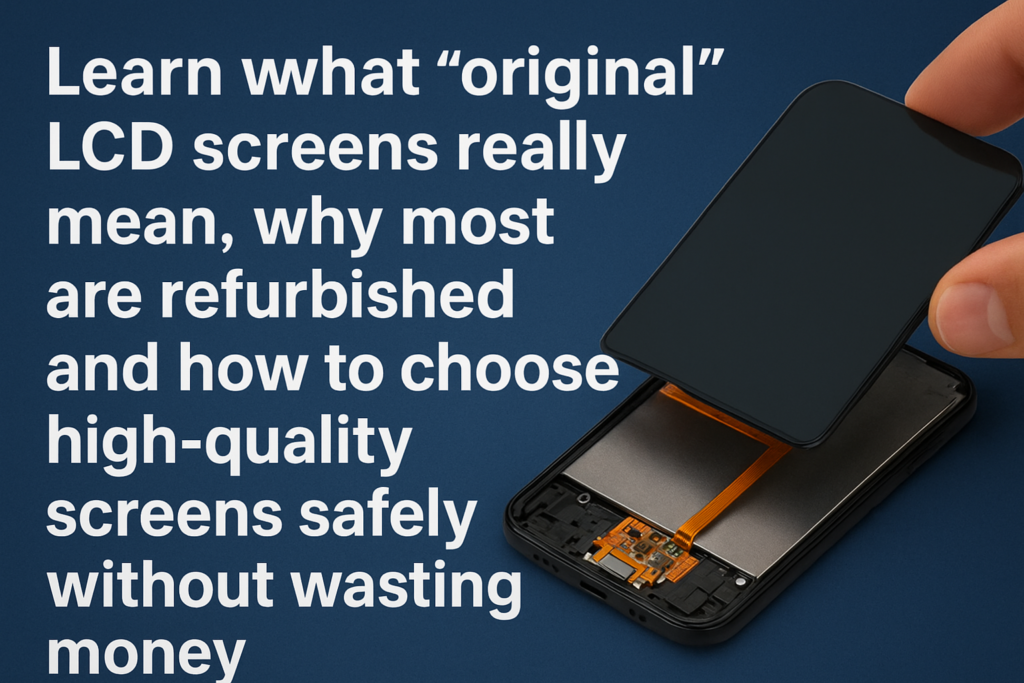
Quando si tratta di sostituire lo schermo LCD di uno smartphone, la parola "originale" viene gettato molto in giro. Ma ecco la verità: nel mercato di oggi, la maggior parte di ciò che viene pubblicizzato come “originale” non lo è affatto. Che tu sia il proprietario di un'officina di riparazione, un agente di approvvigionamento, o un nuovo acquirente, capire cosa stai realmente ottenendo è la chiave per evitare perdite inutili.
Analizziamo tutto in modo chiaro, onesto, e modo pratico.
Comprendere il mercato degli schermi
Perché 90% degli "schermi originali" sono in realtà schermi riassemblati
Entra in qualsiasi mercato all'ingrosso, e sentirai la stessa frase ancora e ancora:
"Questo è originale."
Ma la realtà? Sopra 90% di questi cosiddetti schermi originali vengono effettivamente rimontati (Contropressione) schermi.
Questi schermi riassemblati utilizzano:
- Pannelli display originali di telefoni rotti
- Nuovo vetro esterno
- Strati tattili rilaminati
Sono cattivi?? Non necessariamente. Ma loro non lo sono i venditori di schermi originali puri affermano.
Ciò che conta come un vero schermo smontato originale
Un vero schermo originale è:
- Preso direttamente da un dispositivo funzionante
- Mai ristrutturato
- Mai rilaminato o riparato
Tali schermi sono estremamente rari, soprattutto per i telefoni di fascia alta come iPhone 14/15 serie o i modelli di punta di Samsung.
Perché gli schermi originali di fascia alta sono rari e costosi
I modelli di fascia alta raramente entrano nei canali di riciclaggio, e quando lo fanno, il danno allo schermo è comune. Fondamentalmente è uno schermo smontato originale impeccabile un unicorno-possibile, ma estremamente difficile da trovare.
La realtà degli schermi riassemblati di alta qualità
Perché accettare schermi riassemblati di alta qualità è più pratico
Invece di andare a caccia di un impossibile “originale," è più realistico da cercare schermi ricondizionati di prima qualità. Uno schermo adeguatamente riassemblato può fornire risultati:
- 95%+ prestazione originale
- Eccellente risposta al tocco
- Riproduzione accurata dei colori
- Lunga durata
La chiave? Trovare un restauratore esperto.
Come identificare i riparatori di schermi affidabili
Un grande restauratore conta più di un’etichetta “originale”..
Competenze tecniche
Le competenze avanzate includono:
- Laminazione OCA senza bolle
- Sostituzione del polarizzatore
- Allineamento accurato
Materiali utilizzati
Materiali di qualità = migliore durata.
Un buon restauratore utilizza:
- OCA premium
- Circuiti integrati touch di alta qualità
- Vetro resistente ai graffi
Test e controllo qualità
I migliori fornitori corrono:
- Test di funzionalità multiple
- Prove di invecchiamento
- Luminosità e calibrazione del colore
Se un venditore può dirlo con sicurezza, “Testiamo ogni schermo,"è un buon segno.
Comprendere il "True Tone" dell'iPhone / “Display a colori originale”
Perché il True Tone viene perso dopo la sostituzione dello schermo
Vero tono (colore originale) fa affidamento su crittografia tra il display e la scheda logica del telefono.
Una volta sostituito lo schermo:anche con una parte originale—True Tone scompare a meno che i dati del chip non vengano trasferiti.
Spiegazione dell'accoppiamento e della crittografia dei chip
Apple memorizza i dati del profilo colore/luminosità in un piccolo chip del display. Senza abbinare questi dati, il telefono non può abilitare True Tone.
In che modo i venditori aggiungono True Tone agli schermi non originali
I buoni fornitori utilizzano le apparecchiature per ripristinare True Tone in due modi:
Scrittura di chip
Copia dei dati dalla vecchia schermata a quella nuova.
Trapianto di chip
Saldatura fisica del chip originale sul nuovo schermo.
Entrambi i metodi richiedono abilità e aumentano i costi.
Perché uno schermo “With True Tone” costa di più
Se un venditore offre uno schermo non originale con True Tone, significa:
- Lavoro extra
- Attrezzatura extra
- Difficoltà tecnica maggiore
Ciò indica che il venditore è senza tagliare gli angoli.
OLED vs LCD: scegliere il tipo giusto
Perché non dovresti sostituire un OLED con un LCD
Passare da OLED a LCD potrebbe sembrare un’idea per risparmiare sui costi, ma comporta dei compromessi:
Spessore aumentato
I moduli LCD sono più spessi: il telefono potrebbe non adattarsi più perfettamente.
Maggiore consumo della batteria
Il display LCD utilizza più energia, soprattutto a luminosità più elevata.
Qualità di visualizzazione inferiore
Lo noterai:
- Colori spenti
- Contrasto inferiore
- Angoli di visione peggiori
Nessun display sempre attivo
Il display LCD non supporta l'AOD (visualizzazione sullo schermo), un importante downgrade per i telefoni modello OLED.
Quando il display LCD è accettabile e quando non lo è
Il display LCD va bene:
- Modelli più vecchi
- Riparazioni economiche
- Esigenze di funzionalità semplici
Ma per i dispositivi OLED di fascia alta?
Scegli OLED: la tua esperienza dipende da questo.
Il significato nascosto dietro le promesse di “garanzia”.
Cosa intendono veramente i venditori per “Garanzia inclusa”
La “garanzia” di un venditore spesso suona bene, ma ciò che realmente significa lo è:
Sostituzione solo con qualità simile
Non ottieni un nuovo schermo, solo un altro rinnovato.
Nuovo non garantito
Il tuo sostituto potrebbe avere:
- Luminosità inferiore
- Difetti minori
- Risposta al tocco peggiore
Rischi nascosti
Alcuni venditori utilizzano le garanzie per mascherare una qualità incoerente.
Perché è meglio acquistare la qualità perfetta la prima volta
Invece di fare affidamento sugli scambi di garanzia, è molto meglio farlo:
- Spendi leggermente di più
- Ottieni una qualità di alto livello
- Evita controversie e tempi di inattività
Uno schermo buono > tre sostituzioni di bassa qualità.
Come acquistare lo schermo migliore al primo tentativo
Domande chiave da porre al tuo fornitore
- Questo schermo è ricondizionato o originale smontato?
- Che materiali usi per la laminazione??
- Potete fornire video di prova?
- Supporti la scrittura True Tone?
Passaggi di test prima dell'installazione
Prova sempre:
- Funzione tocco
- Punti luminosi / pixel morti
- Uniformità della luminosità
- ID viso / sensori
- Tinta del colore della fotocamera attraverso lo schermo
Suggerimenti per evitare le trappole comuni
- Non acquistare schermi “troppo economici per essere veri”.
- Evita i venditori che non sanno spiegare il loro voto sullo schermo
- Preferire i fornitori che offrono test prima della spedizione
Conclusione
Il mercato degli schermi LCD è pieno di etichette: “originale,"Di prima categoria.","" premio,""con True Tone"-ma capendo cosa loro davvero cattivo ti aiuta a evitare errori costosi. Gli schermi riassemblati di alta qualità sono spesso la scelta più intelligente e pratica, purché provengano da professionisti qualificati che utilizzano materiali adeguati.
Ricordare, l’obiettivo non è cercare un mitico “originale perfetto”, ma trovarlo la migliore qualità dello schermo per le tue esigenze, da un fornitore di cui ti puoi fidare.
FAQ
1. Tutti gli schermi ricondizionati sono difettosi?
Affatto. Gli schermi ricondizionati di alta qualità possono essere estremamente vicini alle prestazioni originali.
2. Perché True Tone scompare dopo aver sostituito lo schermo di un iPhone?
Perché i dati del chip dello schermo originale non corrispondono alla scheda madre del telefono.
3. È sicuro scegliere un LCD economico per un telefono OLED?
Puoi, ma l’esperienza sarà significativamente peggiore.
4. Qual è la differenza tra “originale” e “originale smontato”?
Originale significa intatto; originale smontato significa rimosso da un telefono funzionante.
5. Perché i venditori offrono lunghe garanzie per schermi economici?
Le garanzie spesso coprono la sostituzione con una parte simile usata/ricondizionata, non uno nuovo perfetto.