Proč je důležité porozumět LCD obrazovkám
Když si lidé koupí smartphone, obvykle věnují pozornost procesoru, fotoaparát, baterie, nebo skladovací kapacity. Překvapivě, jedna z nejdůležitějších součástí – displej – je často přehlížena. Přesto je obrazovka součástí, se kterou komunikujete každý den. Ať už čtete e-maily, sledování videí, procházení sociálních sítí, nebo hraní her, váš displej určuje, jak příjemný a pohodlný bude váš zážitek.
I když jsou OLED displeje stále populárnější u vlajkových smartphonů, LCD obrazovky nadále dominují mnoha cenově dostupným zařízením a zařízením střední třídy protože poskytují spolehlivý výkon, nižší výrobní náklady, a vynikající trvanlivost. Průmysloví analytici hlásí, že OLED překonal 60% zásilek smartphonů, ale levné telefony LCn a globální trh oprav.
Pojďme prozkoumat 10 fascinující fakta o LCD obrazovkách smartphonů které by měl znát každý uživatel.
Skutečnost #1 – LCD neprodukuje světlo samo o sobě
Mnoho lidí věří, že barevné obrázky na LCD obrazovce pocházejí přímo ze samotných pixelů. Vlastně, to není pravda.
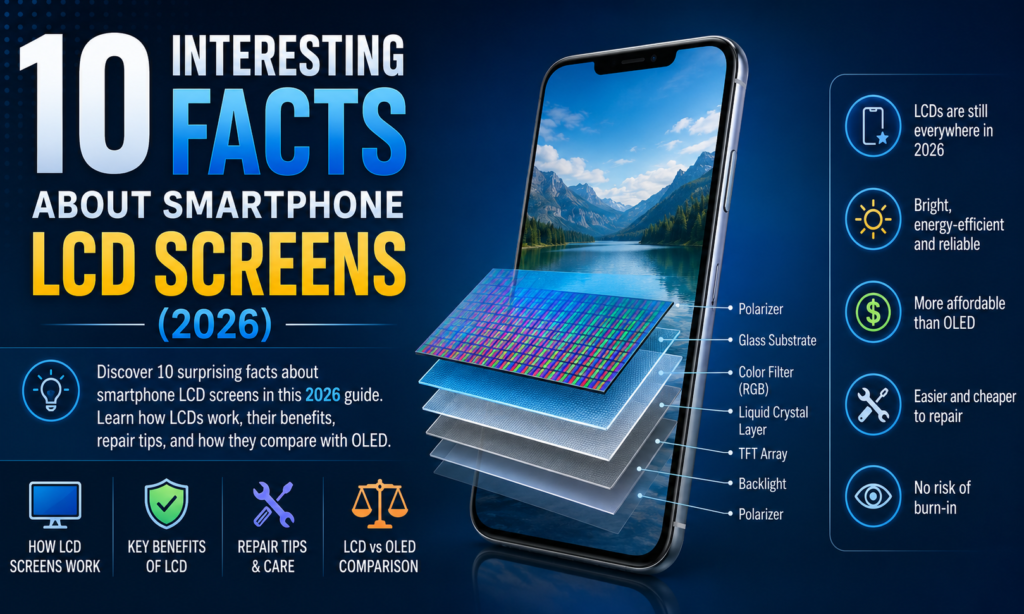
LCD znamená Displej z tekutých krystalů. Na rozdíl od technologie OLED, LCD pixely nemohou vydávat světlo nezávisle. Místo toho, výkonné LED podsvícení je umístěno za displejem a svítí skrz miliony buněk tekutých krystalů. Tyto krystaly se otáčejí a otáčejí, aby řídily, kolik světla prochází každým pixelem, vytváření obrázků, které vidíte.
Jak funguje podsvícení
Představte si LCD jako okno s nastavitelnými žaluziemi. Podsvícení funguje jako sluneční světlo venku, zatímco tekuté krystaly fungují jako malé okenní žaluzie, které se otevírají a zavírají pro ovládání jasu a barvy.
Protože LCD se vždy spoléhá na podsvícení, černé plochy nejsou nikdy úplně černé. To je jeden z důvodů, proč OLED poskytuje hluboký jas a nižší výrobní náklady.
Skutečnost #2 – IPS LCD je mnohem lepší než tradiční TFT LCD
Ne všechny LCD obrazovky jsou stejné.
Běžně používané starší smartphony TFT LCD panely, které byly levné, ale trpěly úzkými pozorovacími úhly a vybledlými barvami. Moderní smartphony běžně používají IPS LCD (Přepínání v rovině) technologie, což výrazně zlepšuje kvalitu obrazu.
Pozorovací úhly a přesnost barev
IPS LCD panely umožňují uživatelům sledovat obrazovku téměř z jakéhokoli úhlu bez výrazného zkreslení barev. Poskytují také přesnější reprodukci barev, pořizování fotografií, videa, a webové stránky vypadají mnohem přirozeněji.
Dnes, IPS LCD se stal standardní LCD technologií pro spolehlivost smartphonů, a cenová dostupnost velmi dobrá.
Skutečnost #3 – Vyšší rozlišení neznamená vždy lepší zobrazení
Mnoho kupujících automaticky předpokládá, že vyšší rozlišení rovná se lepší obrazovka.
Zatímco Full HD+, 2K, a dokonce i rozlišení 4K zní působivě, hustota pixelů (PPI) často záleží více než na hrubém rozlišení. Jednou smartphone dosáhne zhruba 400– 500 pixelů na palec, Při běžném používání je pro lidské oko téměř nemožné rozlišit jednotlivé pixely.
Místo honby za nejvyšším rozlišením, spotřebitelé by také měli hodnotit:
| Funkce | Proč na tom záleží |
|---|---|
| Jas | Lepší venkovní viditelnost |
| Přesnost barev | Přirozenější obrázky |
| Kontrast | Vylepšený zážitek ze sledování |
| Obnovovací frekvence | Hladší rolování |
| Klepněte na Odezva | Lepší herní zážitek |
Vyvážený displej nabízí zážitek, než jen mít více pixelů. citeotočte0hledejte5otočte0hledejte2
Skutečnost #4 – Jas je důležitější, než si mnoho lidí uvědomuje
Už jste někdy měli problémy se čtením telefonu na jasném slunci??
Problémem často není řešení – je jas obrazovky.
Porozumění Nits
Jas se měří v hnidy.
Obvykle:
- 400–500 nits = přijatelné v interiéru
- 500–700 nitů = dobrá venkovní viditelnost
- 800+ hnidy = vynikající sluneční záření
Moderní IPS LCD displeje mohou dosáhnout působivého trvalého jasu, což je činí zvláště praktickými pro pracovníky venku, Delivery drive často používá svůj telefon na přímém slunci.
Skutečnost #5 – U LCD obrazovek nedochází k trvalému vypalování
Jednou z největších výhod LCD je jeho odolnost vypálení obrazovky.
K vypálení dochází, když statické obrázky zůstanou viditelné i po dlouhém zobrazení. Protože pixely LCD se spoléhají spíše na sdílené podsvícení než na samovyzařující světlo, trvalé vypálení je extrémně vzácné.
Díky tomu jsou LCD displeje vynikající volbou pro uživatele, kteří často zobrazují:
- GPS navigace
- Statické palubní desky
- Obchodní aplikace
- Bezpečnostní monitorování
- Systémy v místě prodeje
Displeje OLED poskytují za určitých podmínek bohatší zachování obrazu.
Skutečnost #6 – Rozbité sklo nemusí vždy znamenat rozbití LCD
Mnoho majitelů chytrých telefonů po pádu svých telefonů zpanikaří.
Naštěstí, přední sklo, dotykový digitizér, a LCD panel jsou různé součásti.
Sklo vs LCD vs dotykový panel
Může mít poškozený telefon:
| Komponent | Příznaky |
|---|---|
| Přední sklo | Pouze praskliny |
| Touch Digitizer | Dotyk přestane fungovat |
| Panel LCD | Černé skvrny, barevné čáry, žádný displej |
Pokud je prasklé pouze sklo, zatímco displej a dotyk zůstávají normální, opravy mohou stát výrazně méně než výměna kompletní sestavy displeje.
Profesionální technici vždy před doporučením opravy diagnostikují, která vrstva selhala.
Skutečnost #7 – Levné náhradní LCD obrazovky se mohou velmi lišit v kvalitě
Ne každá náhradní obrazovka nabízí stejný výkon.
Nízkonákladové displeje s náhradními díly mohou trpět:
- Nižší jas
- Špatná kalibrace barev
- Pomalejší odezva na dotyk
- Vyšší spotřeba energie
- Kratší životnost
Prémiové náhradní obrazovky nebo náhradní obrazovky v kvalitě OEM obecně poskytují lepší odolnost a uživatelský zážitek mnohem blíže původnímu displeji. Profesionálové v oblasti oprav důsledně doporučují zaměřit se pouze na cenu.
Skutečnost #8 – Poškození vodou nemusí LCD okamžitě zabít
Mnoho uživatelů se domnívá, že pokud telefon po namočení stále funguje, vše je v pořádku.
Vlastně, vlhkost může pomalu korodovat konektory displeje, integrované obvody, a podsvícení komponent během dnů nebo dokonce týdnů.
Mezi běžné varovné signály patří:
- Blikající displej
- Náhodné černé skvrny
- Svislé čáry
- Nerovnoměrný jas
- Selhání dotyku
Okamžité vysušení a odborná kontrola výrazně zvyšují šanci zabránit trvalému poškození.
Skutečnost #9 – Chrániče obrazovky zabraňují především poškrábání
Ochranné tvrzené sklo je velmi užitečné, ale má svá omezení.
Chrání před:
- Klíče
- mince
- Částice písku
- Každodenní škrábance
Však, to nemůže zaručit ochranu před silnými nárazy. Silný pád může stále prasknout vnitřní panel LCD, i když chránič obrazovky zůstane neporušený.
Kombinuje nejlepší ochranu:
- Tvrzené sklo
- Nárazuvzdorné pouzdro na telefon
- Opatrné zacházení
Skutečnost #10 – Dobré denní návyky mohou prodloužit životnost LCD
LCD obrazovky jsou při správné údržbě překvapivě odolné.
Mezi jednoduché návyky patří:
- Nevystavujte telefon extrémnímu teplu.
- Udržujte nabíjecí port suchý.
- Displej čistěte hadříkem z mikrovlákna.
- Vyhněte se sezení na telefonu.
- Používejte kvalitní nabíječky, abyste předešli elektrické nestabilitě.
- Zařízení skladujte v ochranném pouzdře.
Tyto malé návyky mohou výrazně snížit náhodné poškození a prodloužit životnost displeje vašeho smartphonu.
LCD vs OLED: Rychlé srovnání
| Funkce | IPS LCD | OLED |
|---|---|---|
| Světelný zdroj | LED podsvícení | Samovyzařující pixely |
| Úroveň černé | Dobrý | Vynikající |
| Venkovní jas | Vynikající | Vynikající |
| Riziko popálení | Žádný | možné |
| Náklady na opravu | Spodní | Vyšší |
| Výrobní náklady | Spodní | Vyšší |
| Účinnost baterie | Stabilní | Závisí na obsahu |
| Tloušťka | Tlustější | Ředidlo |
Zatímco OLED dominuje prémiovým smartphonům, IPS LCD zůstává vynikajícím každodenním výkonem. citeotočte0hledejte0otočte0hledejte1otočte0hledejte3
Závěr
Technologie LCD pro chytré telefony se za poslední dvě desetiletí dramaticky vyvinula. Dnešní IPS LCD displeje nabízejí živé barvy, široké pozorovací úhly, vynikající jas, a spolehlivý výkon, který uspokojí miliony uživatelů po celém světě. I když OLED nadále expanduje do vlajkových zařízení, LCD zůstává základní technologií pro levné smartphony, vzdělávací zařízení, obchodní vybavení, a globální opravárenský průmysl.
Pochopení těchto deseti faktů pomáhá spotřebitelům činit chytřejší nákupní rozhodnutí, vyberte si kvalitnější náhradní obrazovky, a lépe chránit svá zařízení. Ať už kupujete nový telefon nebo opravujete starý, znalost, jak technologie LCD funguje, vám umožňuje vyvážit výkon, trvanlivost, a náklady s jistotou.
Často kladené otázky
1. Je IPS LCD lepší než TFT LCD?
Ano. IPS LCD poskytuje širší pozorovací úhly, lepší přesnost barev, a zlepšenou kvalitu obrazu ve srovnání s tradičními TFT LCD.
2. Mohou LCD obrazovky utrpět vypálení?
Trvalé vypálení je u LCD displejů extrémně neobvyklé, protože používají samostatné podsvícení namísto samovyzařujících pixelů.
3. Proč jsou LCD náhradní obrazovky levnější než OLED?
Výroba LCD je vyspělejší a levnější, opravy výrazně zlevní.
4. Může mít prasklý displej stále funkční LCD?
Ano. Někdy praskne pouze přední sklo, zatímco LCD a dotykové funkce zůstávají plně funkční.
5. Jak mohu prodloužit životnost obrazovky LCD?
Používejte kvalitní pouzdro na telefon, nainstalujte ochranu z tvrzeného skla, vyvarujte se působení vody a extrémních teplot, a pravidelně čistěte displej hadříkem z mikrovlákna.