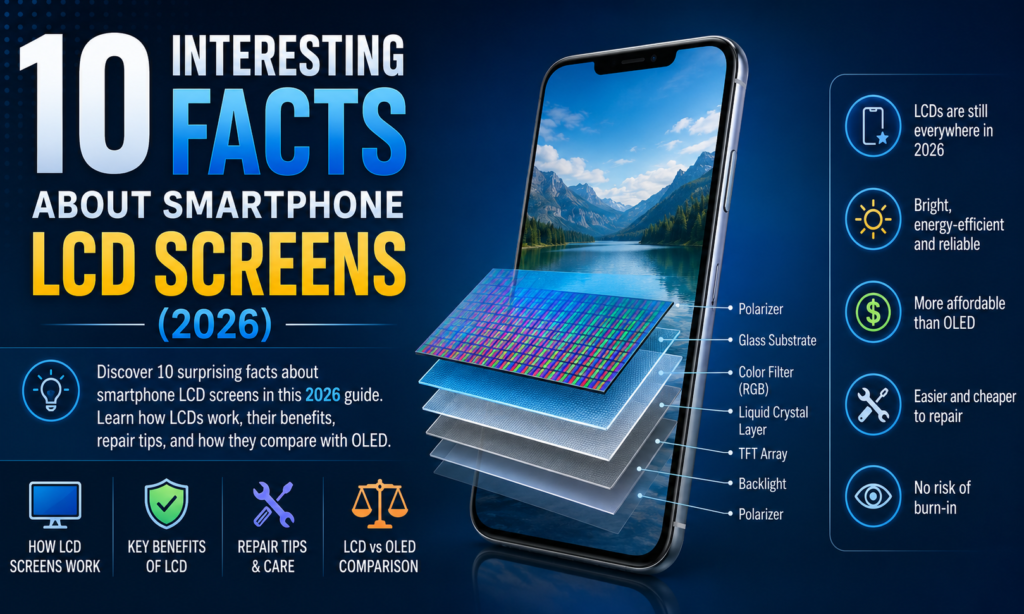
Cén Fáth Tá Tuiscint ar Scáileáin LCD
Nuair a cheannaíonn daoine smartphone, de ghnáth tugann siad aird ar an bpróiseálaí, ceamara, ceallraí, nó toilleadh stórála. Ionadh, Is minic nach dtugtar aird ar cheann de na comhpháirteanna is tábhachtaí - an taispeáint. Ach is é an scáileán an chuid a idirghníomhaíonn tú leis gach lá. Cibé an bhfuil ríomhphoist á léamh agat, ag breathnú físeáin, ag brabhsáil na meáin shóisialta, nó ag imirt cluichí, cinneann do thaispeántas cé chomh taitneamhach agus compordach a bheidh do thaithí.
Cé go bhfuil taispeántais OLED ag éirí níos coitianta i bhfóin chliste príomhthionscadal, Leanann scáileáin LCD chun tosaigh ar go leor feistí inacmhainne agus lár-raoin toisc go soláthraíonn siad feidhmíocht iontaofa, costais déantúsaíochta níos ísle, agus marthanacht den scoth. Tuairiscíonn anailísithe tionscail go bhfuil dul thar OLED 60% de lastais smartphone, ach fóin bhuiséad LCn agus an margadh deisiúcháin domhanda.
Déanaimis iniúchadh 10 fíricí spéisiúla faoi scáileáin LCD smartphone gur chóir go mbeadh a fhios ag gach úsáideoir.
Fíric #1 – Ní Táirgeann LCD Solas leis féin
Creideann go leor daoine go dtagann na híomhánna ildaite ar scáileán LCD go díreach ó na picteilíní féin. I ndáiríre, níl sé sin fíor.
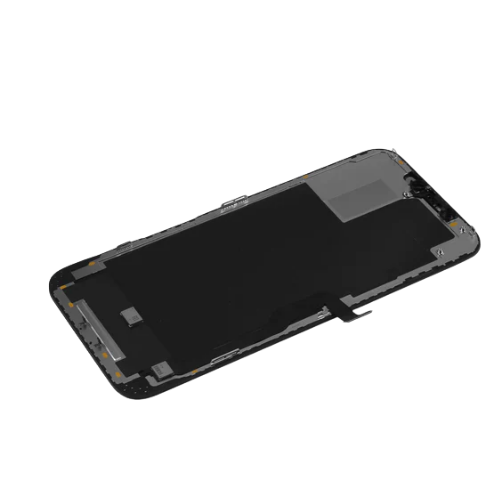
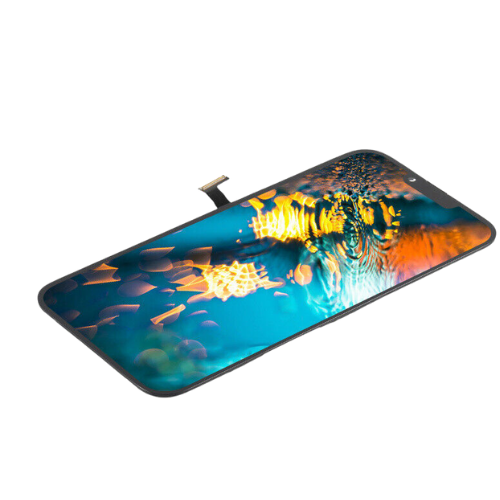
Seasann LCD do Taispeántas criostail leachtach. Murab ionann agus teicneolaíocht OLED, Ní féidir le picteilíní LCD solas a astú go neamhspleách. Ina áit sin, suíonn backlight LED cumhachtach taobh thiar den taispeáint agus shines trí na milliúin cealla criostail leachtacha. Casann agus rothlaíonn na criostail seo chun an méid solais a théann trí gach picteilín a rialú, ag cruthú na n-íomhánna a fheiceann tú.
Conas a Oibríonn an Backlight
Smaoinigh ar an LCD mar fhuinneog le dallóga inchoigeartaithe. Feidhmíonn an backlight cosúil le solas na gréine lasmuigh, agus feidhmíonn na criostail leachtacha cosúil le dallóga fuinneoige bídeacha a osclaíonn agus a dhúnann chun gile agus dath a rialú.
Toisc go mbraitheann LCD i gcónaí ar backlight, ní bhíonn limistéir dhubha riamh go hiomlán dubh. Is cúis amháin é seo a sheachadann OLED gile domhain agus costais táirgthe níos ísle.
Fíric #2 – Tá IPS LCD i bhfad níos fearr ná TFT LCD Traidisiúnta
Ní chruthaítear gach scáileán LCD cothrom.
Fóin chliste níos sine a úsáidtear go coitianta TFT LCD painéil, a bhí saor ach a d’fhulaing ó uillinneacha caola féachana agus dathanna nite. Is gnách go n-úsáideann fóin chliste nua-aimseartha IPS LCD (Aistriú In-Plána) teicneolaíochta, a fheabhsaíonn cáilíocht íomhá go mór.
Uillinneacha Amharc agus Cruinneas Datha
Ceadaíonn painéil IPS LCD d'úsáideoirí an scáileán a fheiceáil ó beagnach aon uillinn gan saobhadh dath suntasach. Soláthraíonn siad atáirgeadh dath níos cruinne freisin, ag déanamh grianghraif, físeáin, agus láithreáin ghréasáin le feiceáil i bhfad níos nádúrtha.
Inniu, IPS LCD tar éis éirí an teicneolaíocht LCD caighdeánach le haghaidh inchreidteacht smartphones, agus inacmhainneacht thar a bheith maith.
Fíric #3 – Ní chiallaíonn Taispeántas Níos Fearr i gcónaí
Glacann go leor ceannaitheoirí leis go huathoibríoch go bhfuil réiteach níos airde comhionann le scáileán níos fearr.
Cé Iomlán HD+, 2K, agus fiú rúin 4K fuaime go hiontach, dlús picteilín (PPI) is minic a bhaineann níos mó ná réiteach amh. Chomh luath agus a shroicheann smartphone garbh 400-500 picteilín in aghaidh an orlach, éiríonn picteilíní aonair beagnach dodhéanta don tsúil dhaonna idirdhealú a dhéanamh le linn gnáthúsáide.
In ionad chasing an rún is airde, ba cheart do thomhaltóirí meastóireacht a dhéanamh freisin:
| Gné | Cén Fáth a bhfuil Tábhacht ag baint leis |
|---|---|
| Gile | Infheictheacht níos fearr lasmuigh |
| Cruinneas Datha | Íomhánna níos nádúrtha |
| Codarsnacht | Taithí féachana feabhsaithe |
| Ráta Athnuachan | Scrollaigh níos moille |
| Freagra Tadhaill | Taithí cluichíochta níos fearr |
Taispeántas cothromaithe usld ná go simplí níos mó picteilín a bheith agat. citeturn0search5turn0search2
Fíric #4 – Tá Gile Níos Tábhachtaí ná mar a Thuigeann go leor Daoine
An raibh deacracht agat riamh do ghuthán a léamh faoi sholas geal na gréine?
Is minic nach é an fhadhb an réiteach - is é gile scáileáin.
Nits a thuiscint
Déantar gile a thomhas i nits.
Go ginearálta:
- 400–500 nits = inghlactha laistigh
- 500–700 nits = infheictheacht mhaith lasmuigh
- 800+ nits = feidhmíocht solas na gréine den scoth
Is féidir le taispeántais IPS LCD nua-aimseartha gile mórthaibhseach marthanach a bhaint amach, rud a fhágann go bhfuil siad praiticiúil go háirithe d'oibrithe lasmuigh, Úsáideann tiomántán seachadta a nguthán i solas díreach.
Fíric #5 – Scáileáin LCD Ná Taithí Buan-dhó
Ceann de na buntáistí is mó atá ag LCD ná a fhriotaíocht scáileán sruthán-i.
Tarlaíonn dóiteán nuair a fhanann íomhánna statacha le feiceáil tar éis iad a bheith ar taispeáint ar feadh tréimhsí fada. Toisc go mbíonn picteilíní LCD ag brath ar backlight roinnte seachas solas féin-astaíoch, is fíor-annamh é buandhó isteach.
Déanann sé seo taispeántais LCD rogha iontach d'úsáideoirí a thaispeánann go minic:
- Nascleanúint GPS
- Deais statacha
- Feidhmchláir ghnó
- Monatóireacht slándála
- Córais pointe-díola
Soláthraíonn taispeántais OLED comhoibriú níos saibhre le coinneáil íomhá faoi choinníollacha áirithe.
Fíric #6 – Ní chiallaíonn Gloine Broken i gcónaí go bhfuil an LCD briste
Scaoileann go leor úinéirí fón cliste tar éis dóibh a bhfóin a scaoileadh.
Ar ámharaí an tsaoil, an ghloine tosaigh, digiteoir dteagmháil, agus tá painéal LCD comhpháirteanna éagsúla.
Gloine vs LCD vs Painéal Tadhaill
D'fhéadfadh go mbeadh fón damáiste:
| Comhpháirt | Comharthaí |
|---|---|
| Gloine Tosaigh | Scoilteanna amháin |
| Digitizer dteagmháil | Stopann an teagmháil ag obair |
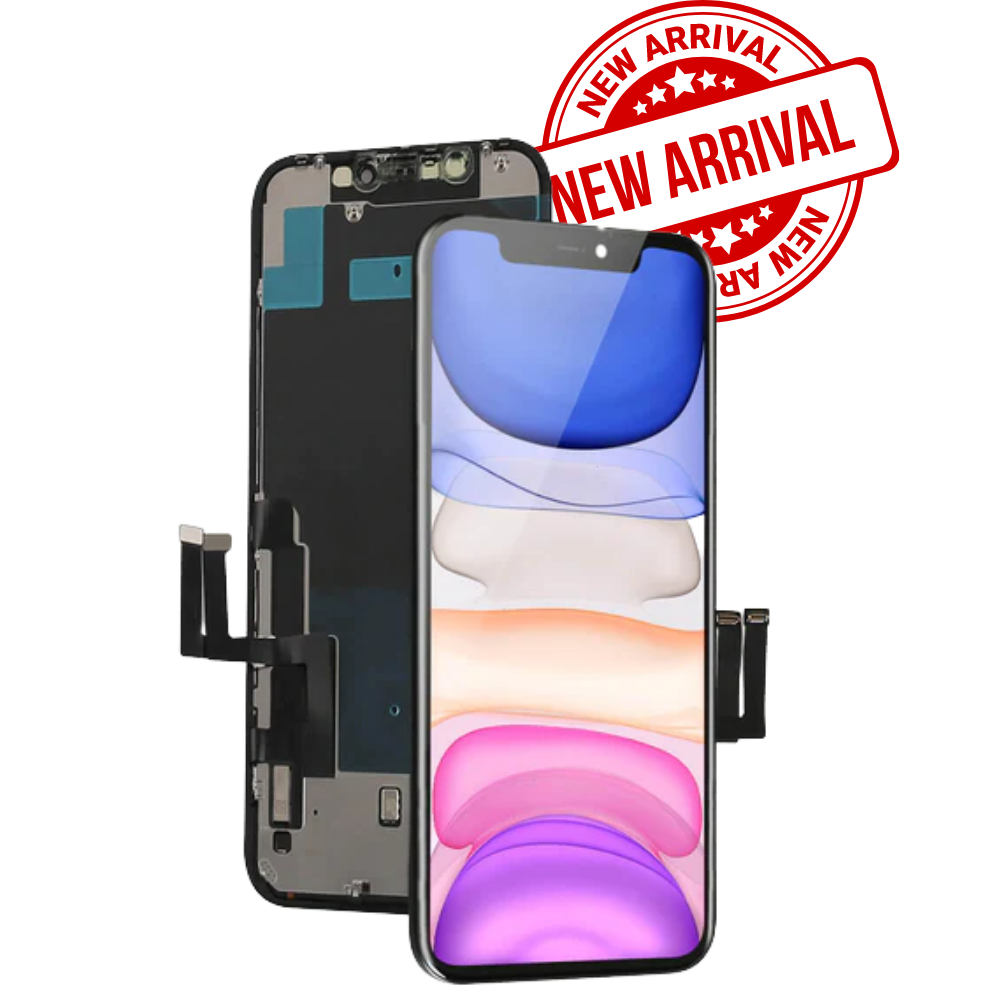
| Painéal LCD | Spotaí dubha, línte daite, gan taispeáint |
Mura bhfuil ach an ghloine scáinte agus fanann an taispeáint agus an teagmháil gnáth, d'fhéadfadh go gcosnódh deisiúcháin i bhfad níos lú ná athsholáthar an chomhthionóil taispeána iomlán.
Déanann teicneoirí gairmiúla diagnóis i gcónaí cén ciseal ar theip uirthi sula moltar deisiúcháin.
Fíric #7 – Is féidir le Scáileáin LCD Athsholáthair Cheap a bheith Difriúil i gCáilíocht
Ní thairgeann gach scáileán athsholáthair an fheidhmíocht chéanna.
D’fhéadfadh go mbeadh fulaingt ó thaispeántais iarmhargadh ar chostas íseal:
- Gile níos ísle
- Calabrú dath lag
- Freagra dteagmháil níos moille
- Tomhaltas cumhachta níos airde
- Saolré níos giorra
Go ginearálta, soláthraíonn scáileáin iarmhargadh préimhe nó scáileáin athsholáthair cáilíochta OEM marthanacht níos fearr agus eispéireas úsáideora i bhfad níos gaire don taispeáint bhunaidh. Molann gairmithe deisiúcháin go seasta díriú ar phraghas amháin.
Fíric #8 – Ní fhéadfaidh Damáiste Uisce LCD a Mharú Láithreach
Creideann go leor úsáideoirí má oibríonn fón fós tar éis dul fliuch, tá gach rud go breá.
I ndáiríre, is féidir le taise chónaisc taispeána a chreimeadh go mall, ciorcaid chomhtháite, agus comhpháirteanna backlight thar laethanta nó fiú seachtainí.
Áirítear ar chomharthaí rabhaidh coitianta:
- Taispeántas flickering
- Spotaí dubha randamacha
- Línte ingearacha
- Gile míchothrom
- Teip dteagmháil
Méadaíonn triomú láithreach agus iniúchadh gairmiúil go mór an seans damáiste buan a chosc.
Fíric #9 – Cosc ar Chosantóirí Scáileáin go príomha scratches
Tá cosantóir gloine tempered thar a bheith úsáideach - ach tá teorainneacha leis.
Cosnaíonn sé i gcoinne:
- Eochracha
- Boinn
- Cáithníní gainimh
- Scratuithe laethúla
Cén dóigh faoin spéir a ...?, é ní féidir leo cosaint a ráthú ar thionchair láidre. Is féidir le titim mhór fós an painéal LCD inmheánach a bhriseadh fiú má fhanann an cosantóir scáileáin slán.
Comhcheanglaíonn an chosaint is fearr:
- Gloine tempered
- Cás fón turraing-resistant
- Láimhseáil cúramach
Fíric #10 – Is féidir le Dea-nósanna Laethúla Fad Saoil LCD a Shíneadh
Tá scáileáin LCD thar a bheith buan nuair a chothaítear iad i gceart.
I measc na nósanna simplí:
- Seachain an fón a nochtadh do theas foircneach.
- Coinnigh an calafort muirir tirim.
- Glan an taispeáint le éadach microfiber.
- Seachain suí ar an bhfón.
- Bain úsáid as chargers cáilíochta chun éagobhsaíocht leictreach a chosc.
- Déan an gléas a stóráil i gcás cosanta.
Is féidir leis na nósanna beaga seo damáiste de thaisme a laghdú go suntasach agus fad a chur le saol taispeáint do ghutháin chliste.
LCD vs Oled: Comparáid Thapa
| Gné | IPS LCD | Ollainn |
|---|---|---|
| Foinse Solais | Backlight faoi stiúir | Picteilíní féin-astaíoch |
| Leibhéal Dubh | Maith | Ar fheabhas |
| Gile Lasmuigh | Ar fheabhas | Ar fheabhas |
| Riosca Dóite Isteach | Dada | Is féidir |
| Costas Deisiúchán | Íochtarach | Níos airde |
| Costas Déantúsaíochta | Íochtarach | Níos airde |
| Éifeachtúlacht Battery | Cobhsaí | Ag brath ar Ábhar |
| Tiús | Níos tiús | Níos tanaí |
Cé go bhfuil ceannas ag OLED ar fhóin chliste préimhe, Is feidhmíocht laethúil thar a bheith iontaofa é IPS LCD. cuardach
Deireadh
Tá forbairt mhór tagtha ar theicneolaíocht Smartphone LCD le fiche bliain anuas. Tairgeann taispeántais IPS LCD an lae inniu dathanna bríomhara, uillinneacha féachana leathan, gile den scoth, agus feidhmíocht iontaofa a shásaíonn na milliúin úsáideoirí ar fud an domhain. Cé go leanann OLED ag leathnú isteach i bhfeistí príomhthionscadal, Tá LCD fós ina theicneolaíocht riachtanach le haghaidh fóin chliste buiséid, gléasanna oideachais, trealamh gnó, agus an tionscal deisithe domhanda.
Cuidíonn sé le tomhaltóirí cinntí ceannaigh níos cliste a dhéanamh trí na deich bhfíoras seo a thuiscint, roghnaigh scáileáin athsholáthair ar chaighdeán níos airde, agus a gcuid feistí a chosaint níos fearr. Cibé an bhfuil guthán nua á cheannach agat nó seancheann a dheisiú, Ligeann a fhios agat conas a oibríonn teicneolaíocht LCD duit feidhmíocht a chothromú, marthanacht, agus costas le muinín.
Ceisteanna Coitianta
1. An bhfuil IPS LCD níos fearr ná TFT LCD?
Tá. Soláthraíonn IPS LCD uillinneacha féachana níos leithne, cruinneas dath níos fearr, agus cáilíocht íomhá feabhsaithe i gcomparáid le TFT LCD traidisiúnta.
2. An féidir le scáileáin LCD dóite isteach?
Is fíor-neamhchoitianta é dó isteach buan ar thaispeántais LCD toisc go n-úsáideann siad cúlsolas ar leith in ionad picteilíní féin-astaíoch.
3. Cén fáth a bhfuil scáileáin athsholáthair LCD níos saoire ná OLED?
Tá déantúsaíocht LCD níos aibí agus níos saoire, deisiúcháin a dhéanamh i bhfad níos inacmhainne.
4. An féidir LCD oibre a bheith fós ag scáileán scáinte?
Tá. Uaireanta ní bhriseann ach an ghloine tosaigh agus na feidhmeanna LCD agus tadhaill fós ag feidhmiú go hiomlán.
5. Conas is féidir liom mo scáileán LCD a mhair níos faide?
Bain úsáid as cás teileafóin ardchaighdeáin, shuiteáil cosaint gloine tempered, nochtadh uisce agus teochtaí foircneacha a sheachaint, agus glan an taispeáint go rialta le éadach microfiber.