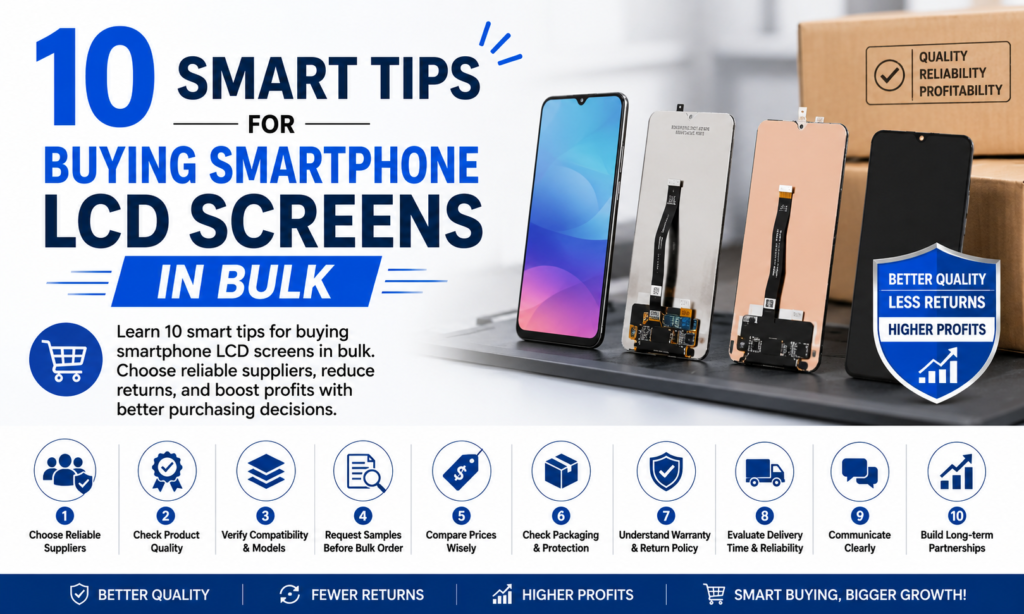
Ag ceannach scáileáin LCD smartphone ar an mórchóir d'fhéadfadh cosúil go simplí ar an gcéad amharc, ach tá a fhios ag mórdhíoltóirí a bhfuil taithí acu go bhfuil gá le pleanáil chúramach. D’fhéadfadh go gcosnódh soláthraí a thairgeann praghas thar a bheith íseal i bhfad níos mó trí tháirgí lochtacha, éilimh bharántas, seachadadh moillithe, agus custaiméirí míshásta. Cibé an bhfuil siopa deisiúcháin á oibriú agat, páirteanna athsholáthair a dháileadh, nó smartphones a athchóiriú le hathdhíol, bíonn tionchar ag gach cinneadh ceannaigh ar do bhrabúsacht.
Tá margadh deisiúcháin fón cliste an lae inniu an-iomaíoch. Tá custaiméirí ag súil go bhfeidhmeoidh scáileáin athsholáthair beagnach cosúil leis an taispeáint bunaidh, agus teastaíonn corrlaigh bhrabúis shláintiúla ó ghnólachtaí deisiúcháin chun fanacht iomaíoch. Ciallaíonn sé sin go bhfuil sé chomh tábhachtach céanna an soláthraí ceart a roghnú agus an táirge ceart a roghnú. In ionad díriú ach ar lascainí, déanann ceannaitheoirí rathúla comhsheasmhacht cáilíochta a mheas, nósanna imeachta tástála, cumas táirgthe, agus seirbhís iar-díola sula ndéantar orduithe móra. Léiríonn taighde tionscail le déanaí go bhfuil gnólachtaí ag brath go fadtéarmach, is gnách go mbíonn níos lú fáltas agus costais oibriúcháin níos ísle ag soláthraithe iontaofa ná mar a bhíonn cuideachtaí i gcónaí sa tóir ar an tairiscint is saoire.
Cén Fáth a bhfuil Buntáistí Mórcheannacháin
Soláthraíonn ceannach mórchóir buntáistí suntasacha. De ghnáth laghdaíonn orduithe níos mó an praghas aonaid, fardal a chobhsú, loighistic a shimpliú, agus caidreamh soláthraithe a neartú. Tugann ceannach i méid freisin níos mó cumhachta caibidlíochta do ghnólachtaí maidir le barántas, saincheaptha pacáistiú, agus sceidil seachadta.
Cén dóigh faoin spéir a ...?, is féidir go n-éireoidh costasach go tapa le ceannach na céadta nó na mílte scáileán gan meastóireacht cheart. D’fhéadfadh caillteanais mhóra airgeadais a bheith mar thoradh ar fiú ráta beag lochtanna nuair a bhíonn tú ag obair, seolta, agus meastar costais seirbhíse do chustaiméirí. Sin é an fáth go ndéanann ceannaitheoirí gairmiúla gach gné den slabhra soláthair a fhíorú go cúramach sula ngeallann siad ceannacháin mhóra.
Margadh Mórdhíola LCD an Lae Inniu a Thuiscint
Leanann an tionscal taispeána fóin chliste ag fás mar go dteastaíonn athsholáthar ar na milliúin scáileáin scoilte gach bliain. Cé go bhfuil teicneolaíocht OLED chun tosaigh i go leor smartphones suaitheanta, Is iad scáileáin LCD an rogha is fearr fós le haghaidh feistí lár-raoin iomadúla agus deisiúcháin cost-éifeachtach mar gheall ar a gcostas táirgthe níos ísle agus infhaighteacht iontaofa.. Measann réamhaisnéisí tionscail go bhfuil painéil LCD fós ina gcuid mhór de lastais taispeána athsholáthair ar fud an domhain.
Éileamh Méadaithe ó Shiopaí Deisiúcháin
Siopaí deisiúcháin neamhspleácha, cuideachtaí athchóirithe, soláthraithe árachais, agus cuireann dáileoirí leictreonaice go léir leis an éileamh méadaitheach ar scáileáin LCD athsholáthair. Mar tomhaltóirí a choinneáil smartphones níos faide, éiríonn deisiúcháin níos eacnamaí ná feistí nua a cheannach.
LCD vs OLED sa Mhargadh Athsholáthair
Cé go soláthraíonn taispeántais OLED blacks níos doimhne agus codarsnacht níos fearr, Fanann scáileáin LCD tarraingteach mar go bhfuil siad níos inacmhainne, níos éasca le foinse, agus oiriúnach do go leor cásanna deisiúcháin ina dtugann custaiméirí tosaíocht do luach thar sonraíochtaí préimhe.
| Gné | LCD | Ollainn |
|---|---|---|
| Costas | Íochtarach | Níos airde |
| Praghas Athsholáthair | Inacmhainne | Priofa |
| Éileamh Margaidh Deisiúchán | An-Ard | Ard |
| Gile | Ar fheabhas | Ar fheabhas |
| Marthanacht le haghaidh Deisiúcháin Buiséid | Maith | Maith |
Leid 1: Bíodh a fhios agat go beacht Cad iad na Múnlaí a Theastóidh uait
Ná cuir ordú mórchóir bunaithe ar shamhailainmneacha amháin. Is minic a scaoileann monaróirí fón cliste leaganacha réigiúnacha le nascóirí éagsúla, Tiománaithe taispeáint, nó dearaí fráma. D’fhéadfadh go mbeadh tionóil athsholáthair go hiomlán difriúil de dhíth ar fheistí a roinneann ainmneacha beagnach comhionann.
Déan staidéar ar do thaifid díolacháin stairiúla chun samhlacha atá ag gluaiseacht go tapa a aithint. Dírigh d’fhardal ar fheistí a ghineann éileamh comhsheasmhach seachas do stóras a líonadh le táirgí a dhíolann go mall. Feabhsaítear láimhdeachas fardail leis an gcur chuige seo agus laghdaítear caipiteal atá ceangailte i stoc as feidhm.
Leid 2: Roghnaigh an Grád Cáilíochta Scáileáin Ceart
Coscann tuiscint gráid scáileáin botúin chostasacha. Na téarmaí OEM, Bunaigh, Athchóirithe, Grád A, is Iarmhargadh ní bhíonn siad caighdeánaithe i gcónaí ar fud na soláthróirí.
OEM vs Iarmhargadh vs Athchóirithe
| Grád | Cur síos | Is Fearr Le haghaidh |
| Bunaidh/OEM | Caighdeán is airde | Deisiúcháin préimhe |
| OEM Coibhéis | Cothromaíocht den scoth | An chuid is mó siopaí deisiúcháin |
| Athchóirithe | Painéal bunaidh athchóirithe | Ceannaitheoirí atá feasach ar chostais |
| Iarmhargadh Grád A | Dea-chaighdeán | Deisiúcháin ghinearálta |
| Cóip Buiséid | Praghas is ísle | Margaí leibhéal iontrála |
Iarr ar sholáthróirí i gcónaí a gcaighdeáin grádaithe a mhíniú seachas téarmaíocht chomhionann a ghlacadh ar fud na monarchana.
Leid 3: Ná Ceannaigh Bunaithe ar Phraghas Aonair
Is é ceann de na botúin is mó a dhéanann mórdhíoltóirí dul sa tóir ar an luachan is saoire. Is minic a cheiltíonn praghsanna ísle comhréiteach i gile taispeána, freagrúlacht dteagmháil, cáilíocht cónascaire, adhesive performance, or long-term durability.
A screen may pass a five-minute inspection but develop flickering, Teagmháil Ghost, or backlight issues after several weeks of normal use. Industry experts consistently advise buyers to evaluate total ownership cost instead of purchase price alone. A slightly higher-priced screen with lower return rates often produces much better long-term profitability.
Leid 4: Evaluate the Supplier Carefully
Selecting the right supplier is arguably the most important decision in wholesale purchasing.
Production Capacity
Reliable factories should demonstrate:
- Stable monthly production
- Multiple quality inspections
- Batch traceability
- Professional export experience
- Consistent lead times
Suppliers with mature production systems generally deliver more consistent quality across multiple shipments.
Leid 5: Always Request Samples
Ná cuir ordú mór riamh gan samplaí a thástáil ar dtús.
Ba cheart go gcuimseodh meastóireacht iomlán:
- Taispeáin gile
- Cruinneas dath
- Sofhreagracht il-dteagmháil
- Ailíniú fráma
- Marthanacht cábla flex
- Infheictheacht lasmuigh
- Iniúchadh picteilín marbh
Níos fearr fós, samplaí tástála ar feadh roinnt seachtainí faoi choinníollacha oibriúcháin fíor-domhan roimh gealltanas a cheannach toirte.
Leid 6: Fíoraigh Nósanna Imeachta Rialaithe Cáilíochta
Déanann monaróirí gairmiúla iniúchtaí iomadúla roimh an loingsiú, scrúdú amhairc san áireamh, tástáil tadhaill, calabrú gile, iniúchadh cónascaire, agus fíorú pacáistithe.
Cuir ceisteanna ar sholáthróirí mar:
- Cé mhéad cigireacht QC a dhéantar?
- An ndéantar tástáil ar gach scáileán?
- An bhfuil tuarascálacha tástála ar fáil?
- An gcuirtear grianghraif ar fáil roimh an loingsiú?
Laghdaíonn rialú cáilíochta láidir go mór éilimh bharántas agus gearáin ó chustaiméirí.
Leid 7: Beartais Bharántas agus Fhilleadh a thuiscint
Tá difríocht mhór idir téarmaí barántas idir soláthraithe. Sula gcuirfidh tú d'ordú, soiléiriú:
- Tréimhse bharántas
- Beartas marbh ar theacht
- Freagracht loingseoireachta ar ais
- Nósanna imeachta athsholáthair
- Tacaíocht theicniúil
Laghdaíonn comhaontuithe baránta soiléire díospóidí sa todhchaí agus cabhraíonn siad le caidreamh gnó sláintiúil a choinneáil.
Leid 8: Iniúchadh a dhéanamh ar Chaighdeáin Phacáistithe agus Loingseoireachta
Tá scáileáin LCD i measc na gcomhpháirteanna fón cliste is leochailí. Is féidir fiú táirgí foirfe a bheith millte mura bhfuil an pacáistiú leordhóthanach.
Is gnách go n-úsáideann soláthraithe gairmiúla:
- Málaí frith-statacha
- Cúr cosanta
- Cushioning mboilgeog
- Urranna aonair
- Cartáin onnmhairithe láidre
Laghdaíonn pacáistiú cuí damáiste iompair agus laghdaítear costais athsholáthair.
Leid 9: Bainistigh an Fhardal go Straitéiseach
Seachain cainníochtaí iomarcacha de mhúnlaí a ghluaiseann go mall a cheannach go simplí toisc go ndealraíonn sé nach bhfuil siad saor. Laghdaíonn praghsanna fóin chliste go tapa, agus aistríonn éileamh páirteanna athsholáthair de réir mar a théann feistí nua isteach sa mhargadh.
Ina áit sin, anailís a dhéanamh ar threochtaí deisiúcháin agus leibhéil fardail níos airde a choinneáil do mhúnlaí móréilimh a bhfuil éileamh cobhsaí athsholáthair orthu amháin. Cuidíonn athbhreithnithe rialta fardail le stoc as feidhm a laghdú agus ag an am céanna feabhas a chur ar shreabhadh airgid.
Leid 10: Comhpháirtíochtaí Soláthraithe Fadtéarmacha a thógáil
Is annamh a athraíonn na mórdhíoltóirí is rathúla soláthraithe gach cúpla mí. Is minic a sholáthraíonn comhpháirtíochtaí fadtéarmacha praghsáil níos fearr, tosaíocht táirgthe, cumarsáid níos tapúla, pacáistiú saincheaptha, agus tacaíocht theicniúil fheabhsaithe.
Is féidir le soláthraithe a thuigeann do riachtanais ghnó pleanáil fardail a mholadh freisin, fógra a thabhairt duit faoi nuashonruithe táirge, agus cabhrú le saincheisteanna cáilíochta a réiteach ar bhealach níos éifeachtaí ná soláthróirí nua nach bhfuil cur amach acu ar d'oibríochtaí.
Deireadh
Tá i bhfad níos mó i gceist le mórchóir scáileáin LCD do chliste a cheannach ná an praghas is ísle is féidir a idirbheartú. Measann ceannaitheoirí rathúla comhoiriúnacht, gráid cháilíochta, iontaofacht soláthraí, nósanna imeachta tástála, caighdeáin phacáistithe, tacaíocht bharántas, agus comhsheasmhacht fadtéarmach sula ndéantar infheistíocht in orduithe móra. Éiríonn soláthraí a roghnaítear go cúramach ina chomhpháirtí gnó luachmhar seachas díoltóir eile.
Trí na deich leid phraiticiúla seo a leanúint, siopaí deisiúcháin, mórdhíoltóirí, dáileoirí, agus is féidir le cuideachtaí athchóirithe rátaí fillte a laghdú, feabhas a chur ar shástacht na gcustaiméirí, corrlaigh bhrabúis a neartú, agus slabhra soláthair níos inbhuanaithe a thógáil i margadh deisithe fón cliste an-iomaíoch an lae inniu.
Ceisteanna Coitianta
1. Cad é an scáileán LCD cáilíochta is fearr le haghaidh ceannach mórdhíola?
De ghnáth soláthraíonn scáileáin OEM nó ard-chaighdeán OEM-coibhéis an chothromaíocht is fearr idir feidhmíocht, iontaofacht, agus costas.
2. Ar cheart dom na scáileáin LCD is saoire a cheannach i gcónaí?
Níl. Is minic go mbíonn éilimh bharánta níos airde agus gearáin ó chustaiméirí mar thoradh ar scáileáin ar phraghas an-íseal.
3. Cé mhéad sampla ba chóir dom a thástáil sula ndéantar mór-ordú?
Trí shamplaí iolracha a thástáil ó bhaisceanna táirgthe éagsúla tugtar léiriú i bhfad níos fearr ar chomhsheasmhacht fhadtéarmach.
4. Cad iad na samhlacha fón cliste ar cheart do mhórdhíoltóirí tosaíocht a thabhairt dóibh?
Fócas ar mhúnlaí deisiúcháin ard-toirte le héileamh seasta ar an margadh seachas ar fheistí atá imithe i léig nó a dhíolann go mall.
5. Cén fáth a bhfuil comhsheasmhacht soláthraithe níos tábhachtaí ná praghas?
Laghdaíonn cáilíocht chomhsheasmhach tuairisceáin, feabhsaíonn sé sástacht na gcustaiméirí, chosnaíonn do chlú, agus íslíonn sé do chostais oibriúcháin iomlána le himeacht ama.