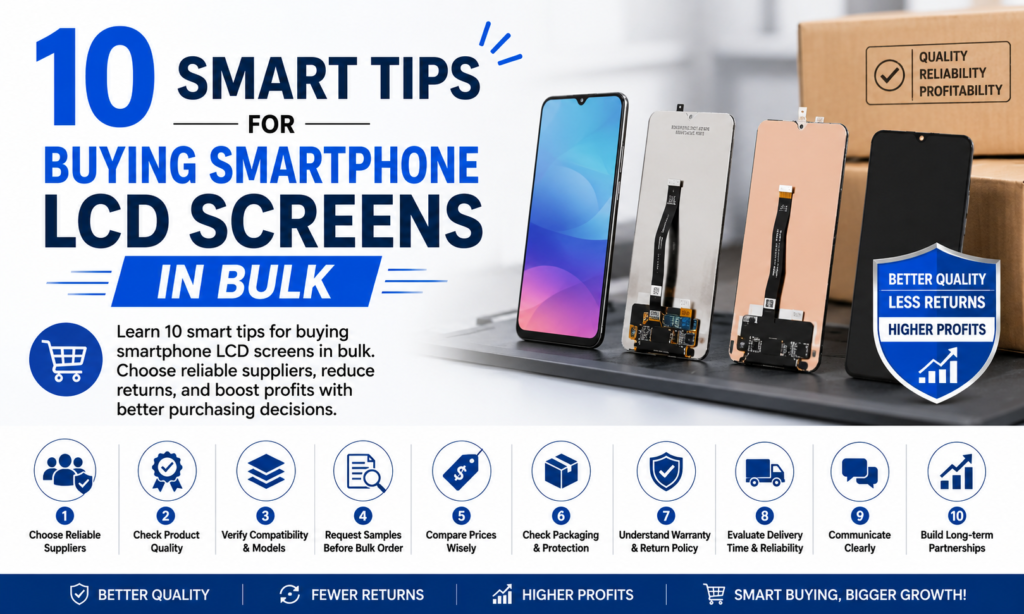
Køber smartphone LCD-skærme i løs vægt kan virke simpelt ved første øjekast, men erfarne grossister ved, at det kræver omhyggelig planlægning. En leverandør, der tilbyder en utrolig lav pris, kan ende med at koste langt mere på grund af defekte produkter, garantikrav, forsinkede leverancer, og utilfredse kunder. Uanset om du driver et værksted, distribuere reservedele, eller renovere smartphones til videresalg, hver købsbeslutning påvirker din rentabilitet.
Dagens smartphonereparationsmarked er meget konkurrencepræget. Kunder forventer, at erstatningsskærme fungerer næsten som den originale skærm, mens reparationsvirksomheder har brug for sunde fortjenstmargener for at forblive konkurrencedygtige. Det betyder, at det er lige så vigtigt at vælge den rigtige leverandør som at vælge det rigtige produkt. I stedet for kun at fokusere på rabatter, succesrige købere vurderer kvalitetskonsistens, testprocedurer, produktionskapacitet, og eftersalgsservice, før du afgiver store ordrer. Nyere industriundersøgelser viser, at virksomheder er afhængige af langsigtet, pålidelige leverandører oplever generelt færre afkast og lavere driftsomkostninger, end virksomheder, der konstant jagter det billigste tilbud.
Hvorfor masseindkøb er vigtige
Masseindkøb giver betydelige fordele. Større ordrer reducerer normalt enhedsprisen, stabilisere lagerbeholdningen, forenkle logistikken, og styrke leverandørrelationer. Køb i mængde giver også virksomheder større forhandlingsstyrke for garantier, emballagetilpasning, og leveringsplaner.
Imidlertid, at købe hundredvis eller tusindvis af skærme uden ordentlig vurdering kan hurtigt blive dyrt. Selv en lille defektrate kan føre til betydelige økonomiske tab, når du først har arbejdet, forsendelse, og kundeservice omkostninger tages i betragtning. Det er grunden til, at professionelle købere omhyggeligt verificerer alle aspekter af forsyningskæden, før de forpligter sig til indkøb af store mængder.
Forstå dagens LCD-engrosmarked
Smartphone-skærmindustrien fortsætter med at vokse, fordi millioner af revnede skærme skal udskiftes hvert år. Mens OLED-teknologi dominerer mange flagskibssmartphones, LCD-skærme forbliver det foretrukne valg til adskillige enheder i mellemklassen og omkostningseffektive reparationer på grund af deres lavere produktionsomkostninger og pålidelige tilgængelighed. Industriprognoser anslår, at LCD-paneler stadig repræsenterer en stor del af forsendelser af erstatningsskærme på verdensplan.
Stigende efterspørgsel fra værksteder
Uafhængige værksteder, renoveringsfirmaer, forsikringsudbydere, og elektronikdistributører bidrager alle til den voksende efterspørgsel efter udskiftning af LCD-skærme. Som forbrugere holder smartphones længere, reparationer bliver mere økonomiske end at købe nye enheder.
LCD vs OLED på erstatningsmarkedet
Selvom OLED-skærme giver dybere sorte farver og bedre kontrast, LCD-skærme forbliver attraktive, fordi de er mere overkommelige, nemmere at kilde, og velegnet til mange reparationsscenarier, hvor kunderne prioriterer værdi frem for premium-specifikationer.
| Feature | LCD | OLED |
|---|---|---|
| Koste | Sænke | Højere |
| Erstatningspris | Overkommelig | Præmie |
| Efterspørgsel efter reparation | Meget høj | Høj |
| Lysstyrke | Fremragende | Fremragende |
| Holdbarhed til budgetreparationer | God | God |
Tip 1: Ved præcis, hvilke modeller du har brug for
Afgiv aldrig en massebestilling udelukkende baseret på modelnavne. Smartphone-producenter udgiver ofte regionale versioner med forskellige stik, skærmdrivere, eller rammedesign. Selv enheder, der deler næsten identiske navne, kan kræve helt andre udskiftningsenheder.
Undersøg dine historiske salgsoptegnelser for at identificere hurtige modeller. Koncentrer dit lager om enheder, der genererer en ensartet efterspørgsel i stedet for at fylde dit lager med langsomt sælgende produkter. Denne tilgang forbedrer lageromsætningen og reducerer kapitalbindingen i forældede lagre.
Tip 2: Vælg den rigtige skærmkvalitet
Forståelse af skærmkarakterer forhindrer dyre fejl. Vilkårene OEM, Original, Renoveret, Klasse A, og Eftermarked er ikke altid standardiseret på tværs af leverandører.
OEM vs eftermarked vs renoveret
| Grad | Beskrivelse | Bedst til |
| Original/OEM | Højeste kvalitet | Premium reparationer |
| OEM-ækvivalent | Fremragende balance | De fleste værksteder |
| Renoveret | Originalt panel restaureret | Omkostningsbevidste købere |
| Eftermarkedsklasse A | God kvalitet | Generelle reparationer |
| Budgetkopi | Laveste pris | Entry-level markeder |
Bed altid leverandører om at forklare deres klassificeringsstandarder i stedet for at antage identisk terminologi på tværs af fabrikker.
Tip 3: Køb aldrig baseret på pris alene
En af de største fejl, grossister begår, er at jagte det billigste tilbud. Lave priser skjuler ofte kompromiser i skærmens lysstyrke, berøringsfølsomhed, stikkvalitet, klæbende ydeevne, eller langtidsholdbarhed.
En skærm kan bestå en fem minutters inspektion, men udvikle flimren, spøgelsesberøring, eller problemer med baggrundsbelysning efter flere ugers normal brug. Brancheeksperter råder konsekvent købere til at vurdere de samlede ejeromkostninger i stedet for købsprisen alene. En lidt dyrere skærm med lavere afkastrater giver ofte meget bedre langsigtet rentabilitet.
Tip 4: Evaluer leverandøren omhyggeligt
At vælge den rigtige leverandør er uden tvivl den vigtigste beslutning i engrosindkøb.
Produktionskapacitet
Pålidelige fabrikker bør demonstrere:
- Stabil månedlig produktion
- Flere kvalitetsinspektioner
- Batch sporbarhed
- Professionel eksporterfaring
- Konsekvente leveringstider
Suppliers with mature production systems generally deliver more consistent quality across multiple shipments.
Tip 5: Always Request Samples
Never place a large order without testing samples first.
A complete evaluation should include:
- Skærmens lysstyrke
- Farvenøjagtighed
- Multi-touch responsiveness
- Rammejustering
- Flex kabel holdbarhed
- Udendørs synlighed
- Inspektion af døde pixel
Better still, test samples for several weeks under real-world operating conditions before committing to volume purchases.
Tip 6: Verify Quality Control Procedures
Professional manufacturers perform numerous inspections before shipment, including visual examination, berøringstest, lysstyrke kalibrering, connector inspection, and packaging verification.
Ask suppliers questions such as:
- How many QC inspections are performed?
- Is every screen tested?
- Are testing reports available?
- Are photos provided before shipment?
Strong quality control dramatically reduces warranty claims and customer complaints.
Tip 7: Forstå garanti- og returpolitikker
Garantibetingelserne varierer meget mellem leverandører. Før du afgiver din ordre, afklare:
- Garantiperiode
- Død ved ankomst politik
- Returforsendelsesansvar
- Udskiftningsprocedurer
- Teknisk support
Tydelige garantiaftaler reducerer fremtidige tvister og hjælper med at opretholde sunde forretningsforbindelser.
Tip 8: Undersøg emballage- og forsendelsesstandarder
LCD-skærme er blandt de mest skrøbelige smartphone-komponenter. Selv perfekte produkter kan ankomme beskadigede, hvis emballagen er utilstrækkelig.
Professionelle leverandører bruger typisk:
- Antistatiske poser
- Beskyttende skum
- Boble dæmpning
- Individuelle rum
- Stærke eksportkartoner
Korrekt emballering reducerer transportskader og sænker udskiftningsomkostningerne.
Tip 9: Administrer inventar strategisk
Undgå at købe for store mængder af langsomtkørende modeller, simpelthen fordi de virker billige. Smartphonepriserne falder hurtigt, og efterspørgslen efter reservedele skifter, efterhånden som nye enheder kommer på markedet.
I stedet, analysere reparationstendenser og opretholde højere lagerniveauer kun for populære modeller med stabil udskiftningsefterspørgsel. Regelmæssige lagergennemgange hjælper med at reducere forældede lagre og forbedrer samtidig likviditeten.
Tip 10: Opbyg langsigtede leverandørpartnerskaber
De mest succesrige grossister skifter sjældent leverandør med få måneders mellemrum. Langsigtede partnerskaber giver ofte bedre priser, produktionsprioritet, hurtigere kommunikation, tilpasset emballage, og forbedret teknisk support.
Leverandører, der forstår dine forretningskrav, kan også anbefale lagerplanlægning, underrette dig om produktopdateringer, og hjælpe med at løse kvalitetsproblemer mere effektivt end nye leverandører, der ikke er bekendt med din drift.
Konklusion
Massekøb af smartphone LCD-skærme er meget mere end at forhandle den lavest mulige pris. Succesfulde købere vurderer kompatibilitet, kvalitetskarakterer, leverandørens pålidelighed, testprocedurer, emballagestandarder, garanti support, og langsigtet konsistens før investering i store ordrer. En nøje udvalgt leverandør bliver en værdifuld samarbejdspartner frem for blot endnu en leverandør.
Ved at følge disse ti praktiske råd, værksteder, grossister, distributører, og renoveringsfirmaer kan reducere retursatserne, forbedre kundetilfredsheden, styrke overskudsgraden, og opbygge en mere bæredygtig forsyningskæde på nutidens stærkt konkurrenceprægede smartphonereparationsmarked.
Ofte stillede spørgsmål
1. Hvad er den bedste kvalitet LCD-skærm til engroskøb?
OEM eller højkvalitets OEM-ækvivalente skærme giver normalt den bedste balance mellem ydeevne, pålidelighed, og omkostninger.
2. Skal jeg altid købe de billigste LCD-skærme?
Ingen. Ekstremt billige skærme resulterer ofte i højere garantikrav og kundeklager.
3. Hvor mange prøver skal jeg teste, før jeg afgiver en masseordre?
Test af flere prøver fra forskellige produktionsbatcher giver en meget bedre indikation af langsigtet konsistens.
4. Hvilke smartphone-modeller bør grossisterne prioritere?
Fokuser på højvolumen reparationsmodeller med konstant markedsefterspørgsel frem for forældede eller langsomt sælgende enheder.
5. Hvorfor er leverandørkonsistens vigtigere end pris?
Ensartet kvalitet reducerer afkast, forbedrer kundetilfredsheden, beskytter dit omdømme, og sænker dine samlede driftsomkostninger over tid.