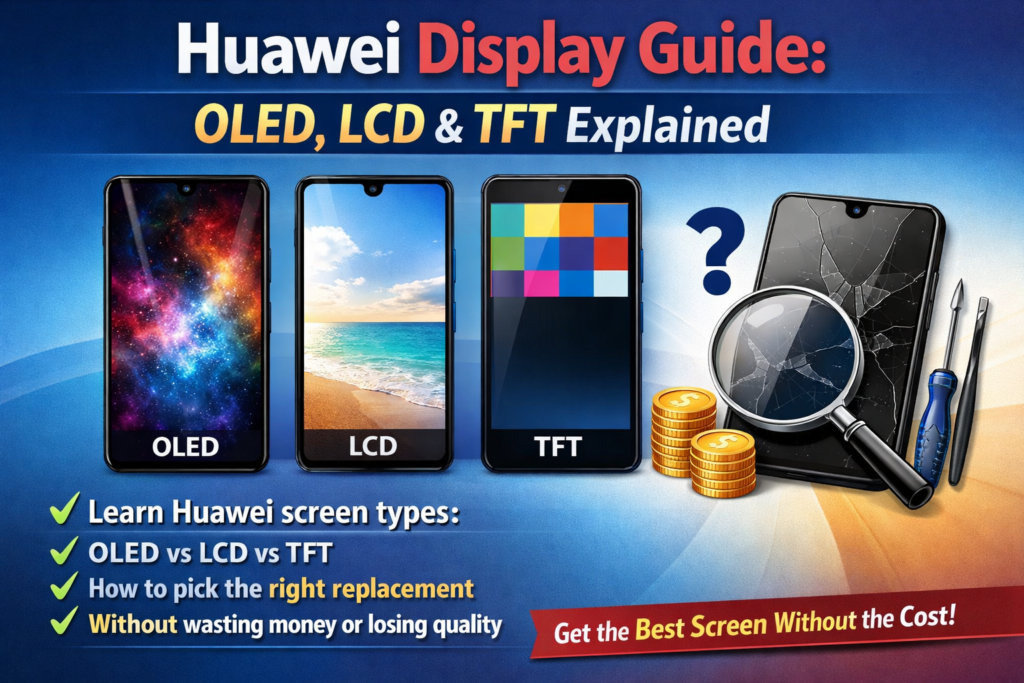
Introduction to Huawei Smartphone Display Technologies
Why Screen Quality Matters More Than You Think
When you pick up your Huawei phone, what’s the very first thing you interact with? The screen. It’s not just a display—it’s your window into everything: messages, videos, games, and even work. Yet many users don’t realize how much the type of screen affects their daily experience. A poor-quality display can lead to dull colors, eye strain, laggy touch response, and even faster battery drain. On the flip side, a high-quality screen makes everything feel smooth, vibrant, and premium.
In the repair and replacement market, things get even more confusing. Terms like “original LCD,” “original pressed,” “OLED,” and “TFT” are thrown around everywhere. But what do they actually mean? And more importantly, how do they impact your Huawei phone’s performance?
Here’s something surprising: industry insights show that over 70% of replacement screens in the market are not truly original but refurbished or aftermarket variants . That means if you don’t understand the differences, you might end up paying for something that doesn’t match your expectations.
Let’s break everything down in a simple, practical way—no jargon, no confusion.
Overview of Huawei Display Types
Huawei smartphones use a mix of display technologies depending on the model and price segment. High-end devices like the P and Mate series typically use OLED panels, while mid-range or older models rely on LCD-based technologies like TFT . In the replacement market, these original displays are often substituted with alternatives such as original pressed screens or aftermarket TFT panels.
Think of it like buying a car part. You can get:
- A brand-new original part
- A refurbished original part
- Or a cheap compatible replacement
Each option comes with trade-offs in price, quality, and durability. The same logic applies to Huawei phone screens.
What Is an Original Huawei LCD Screen?
Definition and Manufacturing Source
An original Huawei LCD screen refers to a display manufactured by Huawei’s official suppliers, such as BOE or other authorized OEM partners. These are the same screens used when the phone was first assembled in the factory. They meet strict quality standards, including brightness calibration, touch sensitivity, and color accuracy.
In simple terms, this is the closest you can get to factory condition. Everything—from the display panel to the touch digitizer—is designed to work perfectly with Huawei’s hardware and software. There’s no guesswork, no compatibility issues, and no compromise in performance.
Key Features and Performance Benefits
Using an original LCD screen ensures that your phone behaves exactly as it did before the damage. You’ll notice:
- Accurate colors and brightness
- Smooth and responsive touch
- Stable viewing angles
- Optimal battery efficiency
Original screens are also more reliable in the long run. They are tested for durability and compatibility, reducing the chances of issues like ghost touch, screen flickering, or sensor malfunction.
However, this quality comes at a cost. Original screens are typically the most expensive option in the market, and availability can sometimes be limited, especially for older models.
What Is an Original Pressed (Refurbished OEM) Screen?
How Original Pressed Screens Are Made
An original pressed screen (also called refurbished OEM or “glass-only replacement”) is created by reusing the original display panel while replacing only the broken outer glass. This process involves separating the cracked glass from the intact LCD or OLED panel and bonding a new glass layer using specialized equipment.
In fact, studies suggest that around 90% of so-called “original screens” in the market are actually reassembled or pressed screens . That’s how common they are.
Pros and Cons of Pressed Screens
Original pressed screens strike a balance between cost and quality. Since the core display panel is still original, you retain most of the visual performance. Colors, brightness, and touch sensitivity remain close to factory standards.
But there’s a catch. The quality depends heavily on the refurbishment process. If the bonding isn’t done properly, you might experience:
- Dust or bubbles under the glass
- Reduced durability
- Slight touch inconsistencies
Think of it like repairing a cracked windshield instead of replacing the whole thing. It works well—but it’s not exactly brand new.
Understanding OLED Screens in Huawei Phones
How OLED Technology Works
OLED stands for Organic Light-Emitting Diode, and it’s fundamentally different from LCD technology. Instead of relying on a backlight, each pixel in an OLED display emits its own light. This allows for deeper blacks, higher contrast, and thinner designs.
Huawei flagship models often use OLED screens because of their premium visual performance. These displays can even support advanced features like HDR and wide color gamuts .
Advantages of OLED Displays
OLED screens are known for their stunning visuals. You get:
- True blacks (pixels turn completely off)
- Higher contrast ratios
- Better color vibrancy
- Lower power consumption in dark mode
They also enable modern smartphone designs, such as curved edges and under-display fingerprint sensors.
However, OLED screens are more expensive and can be more fragile. They may also suffer from burn-in over time if not used properly.
Understanding TFT LCD Screens
What TFT Technology Means
TFT stands for Thin-Film Transistor, and it’s a type of LCD technology. It improves traditional LCDs by adding a transistor to each pixel, allowing for better control and faster response times .
TFT screens are widely used in budget and mid-range Huawei devices, as well as in aftermarket replacements due to their lower cost.
Limitations Compared to OLED
While TFT screens are affordable, they come with noticeable drawbacks:
- Lower contrast and washed-out colors
- Narrower viewing angles
- Higher power consumption due to backlight
Compared to OLED, TFT displays feel less vibrant and less premium. But for basic usage—like calls, messaging, and light apps—they still get the job done.
Key Differences Between Original LCD, Pressed LCD, OLED, and TFT
Display Quality Comparison
When it comes to visual experience, OLED leads the pack. Its ability to produce deep blacks and vivid colors makes everything look more lifelike. Original LCD screens come next, offering balanced performance with good color accuracy. Pressed screens are slightly behind, depending on refurbishment quality, while TFT screens sit at the bottom with basic visuals.
Power Consumption and Battery Impact
OLED displays are generally more energy-efficient, especially when displaying dark content. Original LCDs are optimized for balanced power usage, while TFT screens tend to consume more energy due to constant backlighting .
Price and Market Positioning
Price is where things really differ:
- OLED: Premium pricing
- Original LCD: High cost
- Pressed LCD: Mid-range
- TFT: Budget-friendly
This price difference is why many repair shops recommend TFT or pressed screens—they’re cheaper, even if they compromise on quality.
Comparison Table of Huawei Screen Types
| Screen Type | Quality | Price | Durability | Battery Efficiency | Best For |
|---|---|---|---|---|---|
| Original LCD | High | High | High | Good | Long-term use |
| Original Pressed | Medium-High | Medium | Medium | Good | Cost-saving with quality |
| OLED | Excellent | Very High | Medium | Excellent | Premium experience |
| TFT LCD | Basic | Low | Low-Medium | Low | Budget repairs |
How to Choose the Right Screen for Your Huawei Phone
Based on Budget
If budget is your main concern, TFT screens are the cheapest option. They’re widely available and get your phone working again quickly. But if you can spend a bit more, an original pressed screen offers much better value, giving you near-original quality without the high price.
Based on Performance Needs
If you care about display quality—maybe you watch videos, play games, or work on your phone—then OLED or original LCD is the way to go. These options ensure smooth performance, accurate colors, and a better overall experience.
Common Myths About Huawei Phone Screens
One of the biggest myths is that all “original” screens are truly original. In reality, many are refurbished or aftermarket versions. Another misconception is that all screens look the same. In practice, even small differences in technology can significantly affect brightness, touch response, and battery life.
Conclusion
Choosing the right Huawei phone screen isn’t just about price—it’s about understanding what you’re actually getting. Original LCD and OLED screens deliver the best performance, while original pressed screens offer a smart balance between cost and quality. TFT screens, on the other hand, are best suited for temporary or budget repairs.
The key takeaway? Always match your screen choice to your needs. If you want your phone to feel like new, go original. If you’re looking to save money, a pressed screen might be the sweet spot. And if you just need a quick fix, TFT will do the job.
FAQs
1. What is the difference between original LCD and original pressed screen?
An original LCD is brand new from the manufacturer, while an original pressed screen reuses the original panel with new glass.
2. Is OLED better than LCD for Huawei phones?
Yes, OLED offers better colors, contrast, and power efficiency compared to LCD.
3. Why are original screens more expensive?
They are made by official suppliers and undergo strict quality testing, ensuring perfect compatibility and performance.
4. Can I replace an OLED screen with a TFT screen?
Technically yes, but it may reduce display quality and affect performance or compatibility.
5. Which screen type is best for long-term use?
Original LCD or OLED screens are the best choices for durability and overall experience.