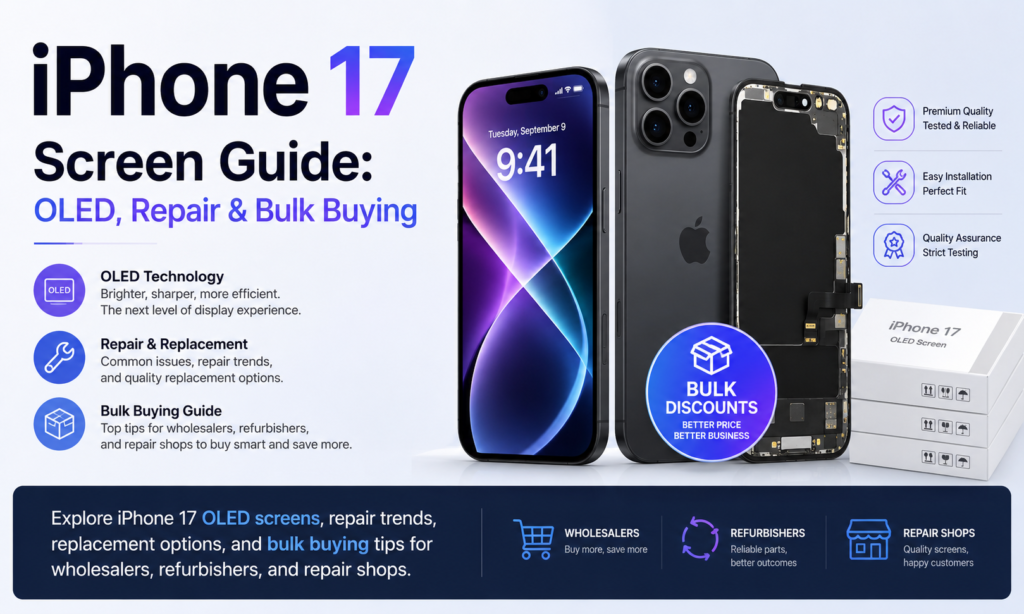
Introduction to the iPhone 17 Series
The Apple iPhone 17 series has become one of the most discussed smartphone lineups in the global mobile industry. Apple continues to push the boundaries of smartphone design, display technology, performance, and artificial intelligence integration. For distributors, wholesalers, repair shops, refurbishers, and mobile parts suppliers, the launch of a new iPhone generation is more than just a consumer event—it represents a significant business opportunity.
According to recent industry reports and supply-chain leaks, the iPhone 17 lineup includes the iPhone 17, iPhone 17 Air, iPhone 17 Pro, and iPhone 17 Pro Max. Apple is reportedly replacing the Plus model with a slimmer Air version while introducing display upgrades across the entire lineup. Many reports indicate that all models may receive high-refresh-rate displays and upgraded front cameras, making the devices more attractive to consumers worldwide.
For companies involved in smartphone repair and refurbishment, understanding the iPhone 17 ecosystem is essential. Every new iPhone generation creates strong demand for replacement screens, refurbished displays, OEM components, and aftermarket repair solutions. As millions of units enter the market, screen replacement becomes one of the most common repair services. This makes bulk procurement of iPhone 17 screens an important business strategy for wholesalers and repair centers.
Why the iPhone 17 Matters to the Mobile Industry
The smartphone industry has evolved beyond simply selling new devices. Today, a large ecosystem revolves around repairs, refurbishment, recycling, and component distribution. Apple devices dominate much of this aftermarket industry because of their long product lifespan and strong resale value.
Industry analysts expect the iPhone 17 family to attract significant global demand thanks to its upgraded display technology, enhanced AI functions, improved camera systems, and refreshed design language. Reports suggest that Apple is expanding advanced display features such as 120Hz ProMotion technology to more models within the lineup, a move that could dramatically improve the user experience.
For repair businesses, this means future demand for replacement displays will likely remain strong for many years. Consumers who accidentally damage their screens often choose repairs rather than replacing the entire phone. In many regions, especially Africa, Southeast Asia, South America, and the Middle East, screen replacement is often the most cost-effective solution. As a result, wholesalers capable of securing reliable supplies of iPhone 17 replacement screens can position themselves for long-term growth.
Apple iPhone 17 Series Models
iPhone 17
The standard iPhone 17 is expected to receive a larger display than previous generations. Industry sources suggest Apple may increase the screen size from approximately 6.1 inches to around 6.3 inches, bringing it closer to the dimensions previously reserved for Pro models. This change could improve multimedia consumption, gaming experiences, and productivity applications.
Apple is also expected to improve the front-facing camera and potentially introduce smoother refresh rates across the display. These upgrades may help the standard iPhone 17 appeal to users seeking premium features without purchasing a Pro model. For screen suppliers, this larger panel size introduces new opportunities for replacement screen manufacturing and distribution.
iPhone 17 Air
One of the most exciting additions to the lineup is the iPhone 17 Air. This model is expected to replace the Plus version and feature an ultra-thin design. Reports indicate that Apple aims to create a lighter and slimmer smartphone while maintaining premium performance and display quality.
The Air model could become popular among consumers who prioritize portability and aesthetics. Since new designs often require unique screen assemblies, demand for replacement screens specific to the iPhone 17 Air may increase rapidly once the device gains market traction.
iPhone 17 Pro
The iPhone 17 Pro continues Apple’s strategy of targeting professional users and technology enthusiasts. Expected upgrades include advanced camera systems, more powerful processors, improved thermal management, and premium display performance. Reports suggest the Pro model will retain a 6.3-inch display while introducing additional AI capabilities.
For repair businesses, Pro models generally command higher repair costs, which often translates into better profit margins on screen replacements and refurbishment services.
iPhone 17 Pro Max
The iPhone 17 Pro Max remains Apple’s flagship smartphone. Industry leaks point toward a display size approaching 6.9 inches, maintaining its status as the largest iPhone in the lineup. Premium camera technology, larger batteries, and advanced performance enhancements are expected to make it one of the most sought-after devices in the market.
Historically, Pro Max devices generate strong demand in both the new and used smartphone markets. Consequently, replacement screens for these devices often become high-volume products within the repair industry.
Display Technology in the iPhone 17 Series
OLED Technology Across the Lineup
OLED technology has become Apple’s preferred display solution because it delivers deeper blacks, improved contrast ratios, and lower power consumption. Reports indicate that the iPhone 17 series will continue utilizing advanced OLED panels throughout the lineup.
OLED displays provide vibrant colors and superior image quality compared to traditional LCD panels. For consumers, this means a better viewing experience. For repair businesses, it means replacement screens require advanced manufacturing processes and strict quality control standards.
ProMotion and 120Hz Refresh Rate
One of the most anticipated upgrades is the expansion of 120Hz ProMotion technology. Previously limited to Pro models, several industry reports suggest Apple may introduce this feature to the broader iPhone 17 lineup.
Higher refresh rates create smoother scrolling, improved gaming performance, and more responsive touch interactions. These benefits significantly enhance user satisfaction and increase the value of the device.
Display Size Comparison
| Model | Expected Display Size |
|---|---|
| iPhone 17 | 6.3 Inches |
| iPhone 17 Air | 6.6 Inches |
| iPhone 17 Pro | 6.3 Inches |
| iPhone 17 Pro Max | 6.9 Inches |
These display sizes reflect the latest industry reports and analyst expectations.
iPhone 17 Screen Specifications Table
| Feature | iPhone 17 Series |
|---|---|
| Display Type | OLED |
| Refresh Rate | Up to 120Hz (Rumored) |
| Touch Technology | Multi-Touch Capacitive |
| Resolution | High-Resolution Retina OLED |
| Face ID Support | Yes |
| Always-On Display | Expected on More Models |
| Front Camera Upgrade | 24MP Rumored |
| Screen Protection | Enhanced Ceramic Shield |
Sources from industry analysts suggest improvements in front camera quality and display responsiveness throughout the lineup.
Global Demand for iPhone 17 Replacement Screens
Growth of the Repair Market
The smartphone repair market continues to expand worldwide. As smartphone prices rise, consumers increasingly choose repairs rather than purchasing new devices. Screen damage remains the most common smartphone issue, accounting for a large percentage of repair requests globally.
Apple devices particularly benefit from strong repair demand because they maintain their value over time. Even after several years, many iPhones remain active in the secondary market. This creates continuous demand for replacement screens, batteries, and other components.
For distributors and wholesalers, stocking high-quality iPhone 17 screens early can provide a competitive advantage. Repair centers often seek reliable suppliers capable of delivering consistent quality, fast shipping, and stable inventory levels.
Refurbishment and Second-Hand Device Industry
The refurbishment sector has become a major driver of screen demand. Millions of used iPhones are refurbished annually and resold in international markets. A damaged display is often the primary obstacle preventing a used device from being resold at full value.
Refurbishers commonly purchase screens in bulk quantities to reduce costs and maintain operational efficiency. As the iPhone 17 enters global circulation, demand for original, refurbished, and aftermarket displays will likely increase significantly.
Types of iPhone 17 Replacement Screens Available
Original OEM Screens
Original OEM screens offer the highest quality and closest performance to factory-installed displays. They provide excellent color accuracy, brightness, and touch responsiveness.
Service Pack Screens
Service Pack screens are generally sourced through authorized repair channels. These displays often include complete assemblies and maintain premium performance standards.
Pulled Screens
Pulled screens originate from used devices that remain functional. They provide a cost-effective solution while maintaining original Apple display characteristics.
Refurbished Screens
Refurbished screens involve replacing damaged glass while preserving the original OLED panel. This option balances quality and affordability, making it popular among professional repair businesses.
Aftermarket OLED Screens
Aftermarket OLED screens continue improving each year. High-quality aftermarket manufacturers now produce displays with impressive brightness, touch sensitivity, and durability. These products often provide attractive pricing for wholesalers purchasing large quantities.
Bulk Procurement of iPhone 17 Screens
Key Factors When Choosing a Supplier
Selecting the right supplier is one of the most important decisions in screen procurement. Businesses should evaluate:
- Product consistency
- Quality control standards
- Warranty policies
- Manufacturing capabilities
- Export experience
- Inventory stability
- Technical support
A reliable supplier functions like the foundation of a building. Without a strong foundation, long-term growth becomes difficult.
Quality Testing Requirements
Every bulk order should undergo comprehensive testing before shipment. Standard testing procedures include:
- Display brightness testing
- Touch sensitivity testing
- Dead pixel inspection
- Face ID compatibility verification
- Flex cable inspection
- Color calibration testing
- Durability assessment
Quality testing helps minimize return rates and protects business reputation.
Logistics and International Shipping
Efficient logistics are critical when sourcing smartphone screens internationally. Proper packaging prevents transit damage, while reliable freight partners ensure timely delivery.
Businesses should verify supplier capabilities regarding export documentation, customs compliance, and international shipping options. Fast and secure delivery can significantly improve customer satisfaction and operational efficiency.
Future Opportunities for Fast and secure delivery can significantly improve customer satisfaction and operational efficiency.
Future Opportunities for Wholesalers and Repair Businesses
The future of the iPhone repair industry remains promising. Apple’s continued focus on premium devices ensures strong demand for repair services and replacement compo that newer iPhone models continue attracting consumers while maintaining excellent resale value. citeturn0reddit28turn0news16
For wholesalers, the iPhone 17 presents opportunities across multiple segments, including OEM screens, refurbished displays, aftermarket OLED assemblies, and repair toolkits. Businesses capable of maintaining high-quality inventory and reliable supply chains will likely benefit from growing global demand.
As smartphone ownership continues expanding worldwide, screen replacement services will remain a vital component of the mobile industry. Companies investing early in iPhone 17 screen procurement strategies may gain significant advantages in both emerging and established markets.
Conclusion
The iPhone 17 series represents another important milestone in Apple’s smartphone evolution. With larger displays, potential 120Hz refresh rates, improved OLED technology, enhanced cameras, and the introduction of the ultra-thin iPhone 17 Air, the lineup is expected to attract strong global demand. For wholesalers, distributors, repair shops, and refurbishers, these devices create substantial opportunities in the replacement screen market.
Bulk procurement of iPhone 17 screens requires careful supplier selection, rigorous quality control, and efficient logistics management. Whether sourcing OEM displays, service pack screens, pulled screens, refurbished assemblies, or aftermarket OLED panels, businesses that prioritize quality and reliability will be best positioned to succeed in the rapidly growing mobile repair industry.
FAQs
1. Does the iPhone 17 use LCD Report indicate that the entire iPhone 17 lineup is expected to use OLED display technology.
2. Which iPhone?
The iPhone 17 Pro Max is expected to feature the largest display at approximately 6.9 inches. citeturn0search0turn0search1
3. What is the best screen option for repair businesses?
The ideal choice depends on budget and customer requirements. OEM and Service Pack screens offer premium quality, while refurbished and aftermarket OLED screens provide cost-effective alternatives.
4. Why is bulk purchasing beneficial?
Bulk procurement reduces per-unit costs, improves inventory availability, and increases profit margins for repair shops and distributors.
5. How can buyers ensure screen quality before shipment?
Buyers should work with suppliers that conduct touch testing, display inspections, brightness verification, Face ID testing, and comprehensive quality control procedures before shipment.