Il rimodellamento del settore globale dei display
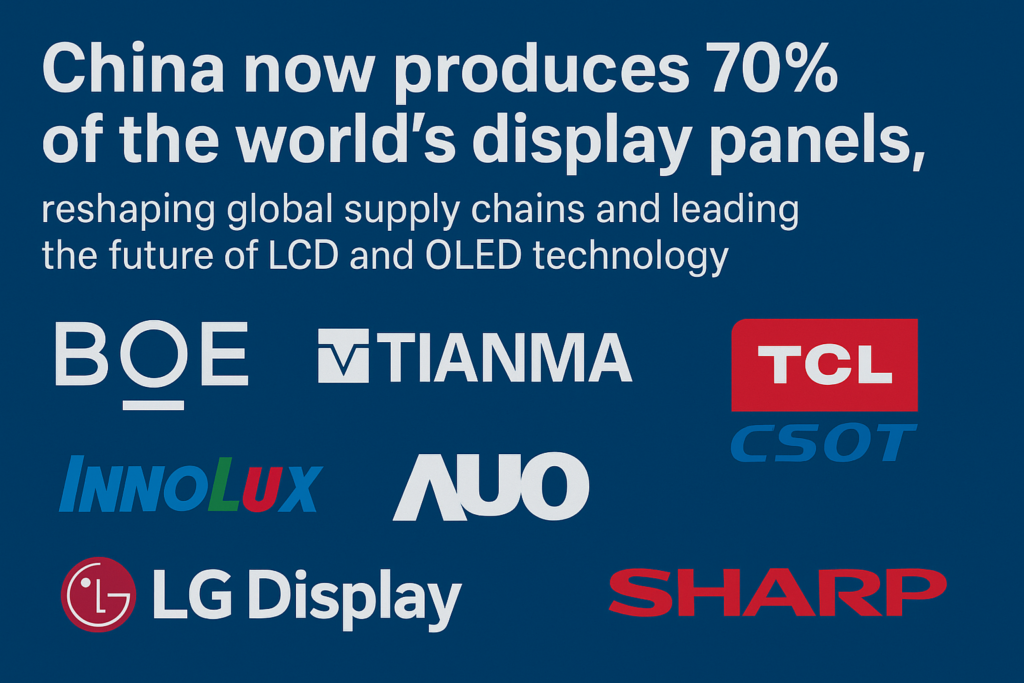
In 2025, il panorama display globale è stato ufficialmente ridisegnato. Per la prima volta nella storia, La Cina tiene 70% della produzione globale di pannelli per display, secondo l’ultimo rapporto di Omdia. Questo significa questo sette pannelli espositivi su dieci utilizzati in tutto il mondo provengono da fabbriche cinesi: un cambiamento epocale che consolida la posizione della Cina come potenza mondiale dei display.
Cosa significa “quota di mercato del 70%” per le catene di fornitura globali?
Questa posizione dominante non riguarda solo i numeri: rappresenta un massiccio riallineamento nella produzione globale e nell’influenza della tecnologia. Dagli smartphone alle TV, dagli schermi automobilistici ai monitor da gioco, L’industria cinese dei display costituisce oggi la spina dorsale della catena di fornitura mondiale della tecnologia visiva.
Panorama globale del settore display 2025
L’enorme vantaggio produttivo della Cina
La produzione display della Cina in 2024 raggiunto una stima ¥ 1,3 trilioni, catturare oltre metà del mercato globale dei display. Due tecnologie fondamentali: schermo LCD (56.25%) E OLED (14.51%) — dominano la produzione, mentre la quota dell'area di esportazione supera 74% in tutto il mondo.
Dominanza dei display degli smartphone
Secondo TrendForce, Catturati produttori di pannelli cinesi 68.8% del mercato dei display per smartphone in 2024, e ci si aspetta che lo facciano superare 70% In 2025. BOE guida il gruppo 610 milioni di spedizioni di pannelli per smartphone previsto quest'anno.
Leadership del pannello TV e statistiche di spedizione
Nel segmento dei pannelli TV LCD, La presenza della Cina è altrettanto forte. Nel primo trimestre 2025, raggiunte le spedizioni globali di pannelli TV di grandi dimensioni 63 milioni di unità, con partecipazione BOE 25.9%, CSOT 20.2%, e Hong Kong 14.4%.
Dimensioni del mercato e forza delle esportazioni
La vasta scala manifatturiera della Cina le consente di dominare anche le esportazioni, mantenendola Sopra 74% dell’area mondiale di esportazione di display, riaffermando il suo controllo sull’offerta globale.
L’ascesa dei produttori cinesi di display
BOE – Il leader del settore
BOE Technology Group è diventato un simbolo della forza industriale della Cina. Nell'H1 2025, Lo ha riferito la BOE ¥ 101,28 miliardi di entrate, UN 8.45% aumento anno su anno, E ¥ 3,247 miliardi di utile netto, su 42.15% dall'anno precedente.
Leadership globale nelle spedizioni su tutti i dispositivi
BOE mantiene la leadership globale in cinque aree applicative chiave: gli smartphone, compresse, computer portatili, monitor, e TV: garantire il #1 posizione a livello mondiale nelle spedizioni complessive di display.
La rivoluzione OLED guidata da BOE
OLED è il nuovo motore di crescita di BOE. Nell'H1 2025, Le spedizioni di OLED sono state superate 71 milioni di unità, crescente 7.5% anno su anno, superando la media globale.
8.6-linea di produzione AMOLED di nuova generazione
La linea di produzione AMOLED 8.6G di BOE è entrata in fase di installazione anticipata delle apparecchiature a maggio 2025 — quattro mesi prima del previsto. Una volta operativo entro la fine del 2026, consentirà a BOE di farlo competere frontalmente con Samsung e LG nel segmento OLED di fascia alta.
La crescita di CSOT e Tianma
In crescita anche TCL CSOT e Tianma Microelectronics. Si prevede che le spedizioni di pannelli per smartphone di CSOT raggiungeranno 192 milioni di unità 2025, mentre Tianma resta in giro 188 milioni di unità, supportato dalla crescente domanda di AMOLED.
La strategia del doppio binario: Coesistenza LCD e OLED
Come la Cina mantiene in vita il display LCD in una nuova era
Mentre OLED è il futuro, Il display LCD rimane la base. aziende cinesi, sfruttando le economie di scala e il perfezionamento tecnologico, dominare la produzione di LCD con a 64% condividere 2024, previsto di raggiungere 69% In 2025.
Il presidente della BOE, Chen Yanshun, notato che LCD è entrato in a “fase di crescita a bassa volatilità”, rimanendo un pilastro fondamentale della tecnologia di visualizzazione per il prossimo decennio.
Lo sprint dell'OLED per il riconoscimento globale
Nel frattempo, Lo slancio degli OLED in Cina continua ad aumentare. 2024 ho visto un 27% aumento nelle spedizioni di pannelli per smartphone AMOLED, con una proiezione 5.2% crescita In 2025. Boe, Visionox, e Tianma sono ora entrati La catena di fornitura di Apple, dimostrando la convalida globale per la tecnologia OLED cinese.
Di 2024, Tenuti i produttori cinesi di OLED 46% del mercato, avvicinandosi a quello della Corea del Sud 54%. In OLED flessibile, La quota della Cina è già presente superato 57%, segnando un cambiamento storico nella leadership del settore.
Applicazioni emergenti che guidano nuove curve di crescita
Display automobilistici: La prossima frontiera della Cina
Con gli smartphone prossimi alla saturazione, I produttori di pannelli cinesi stanno prendendo di mira nuove curve di crescita e i display automobilistici sono in cima alla lista. In 2024, colpite le spedizioni globali di display automobilistici 232 milioni di unità, su 6.3% anno dopo anno.
BOE è leader in questo segmento 17.6% quota di mercato, fornendo marchi come Zeekr, Changan, Chery, e Dongfeng. Ha anche co-sviluppato a 30-doppio schermo da pollici per il modello G9 di XPeng e a 10.25-display dello strumento in pollici per il G6.
L’espansione automobilistica di Tianma
Tianma è al secondo posto con 36.9 milioni di spedizioni, su 25% anno dopo anno, fornitura BYD, BMW, Guado, e Honda su più dimensioni di visualizzazione.
Display per giochi ed eSport: Il prossimo campo di battaglia
Le manifestazioni legate agli eSport sono un’altra frontiera in forte espansione. 2024 sega 32.4 milioni di monitor da gioco LCD spedito in tutto il mondo, su 12% dall'anno prima. Il successo di Mito Nero: Wukong in ritardo 2024 ha ulteriormente stimolato la domanda interna cinese.
E COMPUTEX 2025, Presentati ASUS e MSI 27-monitor QD-OLED da 500 Hz, segnalando un nuovo standard ad alte prestazioni. Si prevede che la domanda di display OLED di ASUS cambierà raddoppiare per superare 500,000 unità dentro 2025.
Le sfide future
Colli di bottiglia nei materiali e nelle apparecchiature OLED
Nonostante il successo, le sfide rimangono, in particolare negli OLED materiali di base e attrezzature di produzione. La Cina fa ancora molto affidamento sulle importazioni materiali organici che emettono luce E maschere di metallo pregiato (FMM), dominato dal Giappone Idemitsu Kosan e gli Stati Uniti UDC.
Debolezze nella collaborazione a monte-a valle
Secondo la ricerca CINNO, coprono solo i fornitori nazionali 39% dei processi delle apparecchiature OLED, con aree chiave come strumenti di evaporazione ed esposizione avendo meno di 20% localizzazione. Del Giappone Toc, Canone, E Nikon dominano ancora questi passaggi critici.
Ciò si traduce in cicli di adozione lenti, a volte duraturi due anni dalla verifica alla produzione di massa, ostacolando l’innovazione a monte e i rendimenti su R&D.
Il dilemma della redditività
Mentre la quota di mercato cresce, la redditività rimane scarsa. La produzione OLED richiede alta R&D, cicli lunghi, e ingenti investimenti di capitale, portando a una pressione finanziaria sostenuta.
Visionox, Il secondo produttore AMOLED della Cina, esemplifica questo paradosso: rapida espansione del mercato ma perdite persistenti. Da 2021 A 2024, ha registrato quattro anni consecutivi di perdite nette, per un totale di quasi 10 miliardi di yen.
La strada verso la leadership globale
Dieci anni fa, L’industria cinese dei display stava ancora recuperando terreno. Oggi, suo stabilire il ritmo globale. Con BOE, TCL CSOT, e Tianma tra i i cinque principali fornitori di OLED al mondo, Il “Made in China” si è evoluto da seguace ad innovatore.
I primi spostamenti di apparecchiature per le linee OLED 8.6G e l’aumento dell’incapsulamento a base di vetro mostrano quanto velocemente l’ecosistema sta avanzando. L’industria cinese dei display non solo è competitiva, ma è anche leader.
Conclusione: L'alba di una nuova era
Catturando 70% della produzione globale di display, La Cina ha riscritto le regole del gioco. Dall'LCD all'OLED, dagli smartphone alle automobili, la sua tecnologia, scala, e l’innovazione stanno ora modellando il modo in cui il mondo vede il proprio futuro digitale.
Come piacciono alle nuove frontiere display flessibili, microLED, e pannelli automobilistici emergere, La Cina è ben posizionata per continuare a essere leader, non solo nella produzione, ma nel definire il prossimo capitolo dell’innovazione globale dei display.
FAQ
1. Perché la Cina produce 70% dei pannelli espositivi del mondo?
A causa della sua scala senza eguali, forte sostegno del governo, capacità produttive avanzate, e investimenti continui in R&Tecnologia D e OLED.
2. Chi sono i principali produttori di display in Cina 2025?
Le aziende leader includono Gruppo tecnologico BOE, TCL CSOT, Tianma Microelectronics, Visionox, E Hong Kong.
3. Quali tecnologie stanno guidando l’industria dei display in Cina?
Principalmente schermo LCD E OLED, con una rapida crescita in AMOLED, MiniLED, E OLED flessibile per smartphone e applicazioni automobilistiche.
4. Quali sfide deve affrontare la Cina nella produzione di OLED??
Dipendenza da materiali e attrezzature importati, bassi tassi di localizzazione, e un lento ciclo di adozione dell’innovazione lungo tutta la catena di fornitura.
5. Come si evolverà il mercato globale dei display in seguito? 2025?
Aspettatevi più velocemente Adozione dell'OLED, innovazioni microLED, e la Cina che consolida la propria leadership mentre la concorrenza globale si concentra sulla differenziazione di fascia alta.