Problemas de retroiluminación
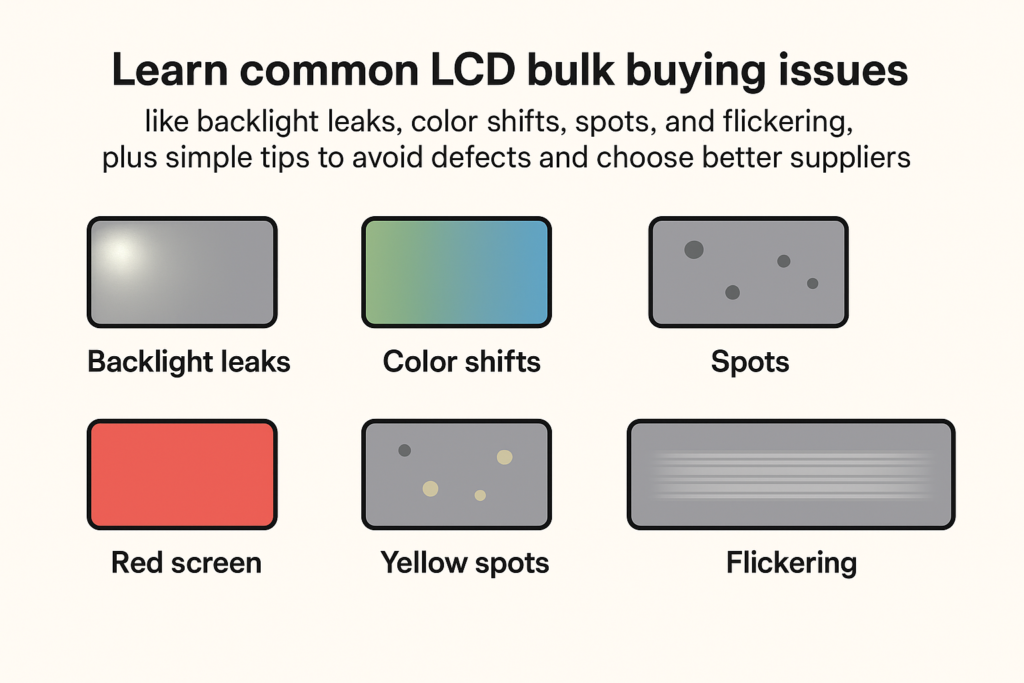
Luz de fondo desigual
Ocurre cuando la película de retroiluminación no está alineada correctamente o los chips LED se degradan de manera desigual.
Los usuarios notan áreas más brillantes o más oscuras en la pantalla.
Fuga de retroiluminación
Esto sucede cuando la luz se escapa por los bordes debido a un sellado deficiente o problemas de presión durante el montaje..
Desviación de color (Diferencia de color)
Causas de la inconsistencia del color
Los cambios de color ocurren cuando la pantalla LCD y la luz de fondo provienen de lotes diferentes. Las pantallas reacondicionadas suelen utilizar unidades de retroiluminación no originales, causando diferencias visibles.
Cómo afecta a los usuarios finales
Una pantalla que parece demasiado azul., demasiado caliente, o descolorido reduce la satisfacción del cliente y aumenta las tasas de devolución.
Marcas de agua (Patrones de ondas de agua)
Marcas de presión
La presión durante el montaje provoca el desplazamiento del cristal líquido., dando como resultado patrones similares a marcas de agua.
Problemas de montaje
La laminación inadecuada o el prensado del marco pueden provocar efectos de ondas en el agua..
Problemas con la pantalla roja
IC o controlador de pantalla defectuoso
Un controlador IC defectuoso puede causar un tinte rojo en la pantalla.
Mala calidad de renovación
La restauración de baja calidad puede utilizar componentes que no coinciden o están dañados., resultando en defectos de pantalla roja.
Manchas negras
Contaminación por polvo
El polvo atrapado dentro de la pantalla durante el proceso de renovación aparece como puntos negros.
Píxeles dañados
El daño a los píxeles suele deberse a la presión, doblando, o problemas de electricidad estática durante la reparación.
Manchas amarillas
Calor excesivo
Aparecen zonas amarillas cuando la pantalla sufre altas temperaturas prolongadas, generalmente cerca del área de la CPU.
Mala calidad del adhesivo
El adhesivo óptico débil puede envejecer rápidamente, formando halos o manchas amarillas.
Problemas de parpadeo
Cable flexible de baja calidad
Los cables flexibles baratos provocan una transmisión de señal inestable, llevando al parpadeo.
IC Instability
Poor-quality IC chips or cold solder joints also trigger intermittent flashing.
Root Causes of These Problems
Most issues come from:
- Inconsistent supplier quality
- Low-quality refurbishment process
- Lack of strict factory-level QC
- Improper transportation and handling
- Poor storage conditions (humedad, temperatura)
Bulk orders magnify these issues, especially when mixing different LCD grades.
How to Prevent These Problems
Elija proveedores confiables
Work with long-term, stable suppliers who provide consistent batches and transparent product grading.
Request Quality Reports and Testing Videos
Siempre pide:
- Aging test videos
- Brightness comparison
- IC stability proof
Conduct Your Own QC Before Shipment
Set your QC checklist including:
- Brillo
- Sensibilidad táctil
- Uniformidad de color
- Píxeles muertos
Use Professional Testing Tools
Tools like multibrand screen testers help identify flickering, color differences, or IC instability.
Understand Refurbished vs. Pantallas originales
Sepa lo que está comprando: las pantallas reacondicionadas pueden tener más problemas a menos que provengan de fábricas de alta calidad..
Cómo manejar y resolver estos problemas
Sugerencias para reparar la luz de fondo
Reemplace la hoja de retroiluminación, realinear capas, o mejorar el sellado.
Corregir la desviación del color
Utilice módulos de retroiluminación de primera calidad y evite lotes mixtos.
Manejo de marcas de agua
Vuelva a laminar el panel y evite una presión excesiva durante el montaje..
Manejo de problemas de pantalla roja
Reemplace la pantalla IC o verifique los puntos de conexión de la señal.
Lidiar con las manchas negras/amarillas
Compruebe si hay contaminación por polvo; Vuelva a aplicar adhesivo OCA de alta calidad si es necesario..
Reducir los problemas de parpadeo
Reemplace el cable flexible o verifique los puntos de soldadura del IC.
Mejores prácticas para la adquisición de LCD a granel
- Pruebe varias muestras antes de realizar pedidos grandes
- Mantener relaciones de largo plazo con proveedores confiables.
- Evite mezclar calidades o modelos de diferentes fábricas.
- Mejorar los métodos de embalaje y almacenamiento para reducir los daños.
- Realice un seguimiento de cada lote para identificar las fuentes de problemas
Conclusión
La compra al por mayor de pantallas LCD móviles puede ahorrar costes, pero sólo si se hace con el conocimiento y las precauciones adecuadas. Al comprender los problemas comunes, como las fugas de retroiluminación, parpadeo, desviación de color, marcas de agua, puntos negros/amarillos y aplicar un control de calidad y una gestión de proveedores adecuados, puede reducir significativamente los defectos y proteger sus márgenes de beneficio.
La calidad nunca es accidental. Viene de las pruebas, comunicación, y elegir los socios adecuados.
Preguntas frecuentes
1. ¿Por qué las pantallas LCD tienen diferencias de color en pedidos al por mayor??
Porque la luz de fondo o los materiales del panel a menudo provienen de lotes diferentes, especialmente en mamparas reacondicionadas.
2. ¿Cómo puedo reducir los problemas de parpadeo en las pantallas LCD??
Utilice pantallas estables y flexibles, Evite chips IC de baja calidad., y realizar pruebas de envejecimiento antes del envío.
3. ¿Qué causa las manchas amarillas en las pantallas LCD??
La exposición al calor y la mala calidad del adhesivo son las causas más comunes..
4. ¿Cómo evito las marcas de agua en las pantallas LCD??
Asegure una laminación adecuada y evite ejercer presión durante la instalación..
5. ¿Son fiables las pantallas LCD reacondicionadas??
Sí, si proviene de fábricas de reacondicionamiento de alta calidad con estricto control de calidad..