An Slabhra Soláthair Taispeána Soghluaiste a thuiscint
Príomh-chomhpháirteanna i Scáileán Smartphone
Má rinne tú iarracht riamh scáileáin fón póca a aimsiú, is dócha gur thug tú faoi deara cé chomh mearbhall is féidir leis an téarmaíocht a fháil. Deir soláthraí amháin “modúl LCD,” a deir duine eile “teagmháil tionól,” agus caitheann duine éigin eile “gloine sheachtrach” nó “digiteoir” isteach. Tá sé cosúil go bhfuil gach duine ag labhairt na teanga céanna - ach le canúintí go hiomlán difriúil.
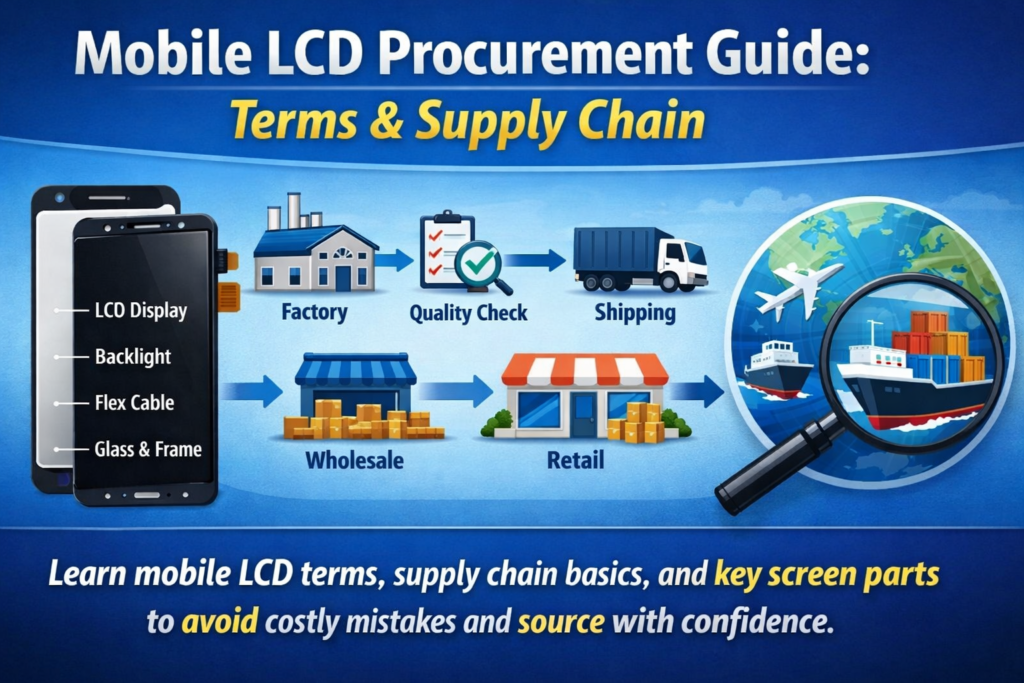
Ina chroílár, ní píosa amháin é taispeáint fón cliste. Is cruach de chomhpháirteanna é a ndearnadh innealtóireacht chúramach air agus iad ag obair le chéile chun amhairc agus freagra tadhaill a sheachadadh. Tá an Painéal LCD Táirgeann an íomhá, an ciseal tadhaill a bhraitheann gluaiseachtaí do mhéar, agus an gloine chlúdaigh chosnaíonn gach rud thíos. Is féidir na heilimintí seo a dhíol ar leithligh nó mar mhodúl lán-chomhtháite, ag brath ar an gcineál táirge agus riachtanais deisiúcháin.
Tá sé riachtanach a thuiscint conas a idirghníomhaíonn na codanna seo, go háirithe má tá tú i mbun soláthair. Is féidir botúin chostasacha a bheith mar thoradh ar mhíthuiscint bheag - cosúil le mearbhall a chur ar thionól iomlán agus gan ach lionsa gloine ann, moill, nó gearáin ó chustaiméirí. Sin an fáth nach bhfuil sé cabhrach ach eolas a chur ar na téarmaí seo - tá sé fíor-riachtanach más mian leat oibriú go héifeachtach sa tionscal seo.
An Fáth a Bhfuil Tábhacht ag Téarmaíocht sa Soláthar
Bímis macánta: sa ghnó páirteanna soghluaiste, is ionann soiléireacht agus brabús. Mura sainíonn tú go soiléir cad atá á cheannach agat, b'fhéidir go n-íocfaidh tú as rud éigin nach raibh sé ar intinn agat a cheannach - nó rud níos measa, ag fáil comhpháirteanna neamh-chomhoiriúnach.
Mar shampla, “scáileán” a ordú gan a shonrú cé acu a modúl LCD iomlán nó díreach an Gloine Seachtrach is féidir mearbhall mór a bheith mar thoradh air. D'fhéadfadh soláthraithe glacadh le rudaí éagsúla bunaithe ar a gcaighdeáin féin. Agus toisc go bhfuil trádáil idirnáisiúnta i gceist, ní neartaíonn bacainní teanga ach an cheist.
Cuidíonn téarmaíocht chruinn le cumarsáid a shruthlíniú, laghdaíonn sé díospóidí, agus cinntíonn sé comhsheasmhacht trasna orduithe. Déanann sé níos éasca freisin luachana ó sholáthraithe éagsúla a chur i gcomparáid. Nuair a bhíonn gach duine ailínithe ar shainmhínithe, éiríonn praghsáil trédhearcach, agus éiríonn idirbheartaíocht i bhfad níos míne.
I mbeagán focal, ní hamháin eolas teicniúil é máistreacht a fháil ar na téarmaí seo - is buntáiste straitéiseach é.
Cad is Modúl Scáileáin Soghluaiste LCD ann?
Sainmhíniú ar Mhodúl LCD (LCM)
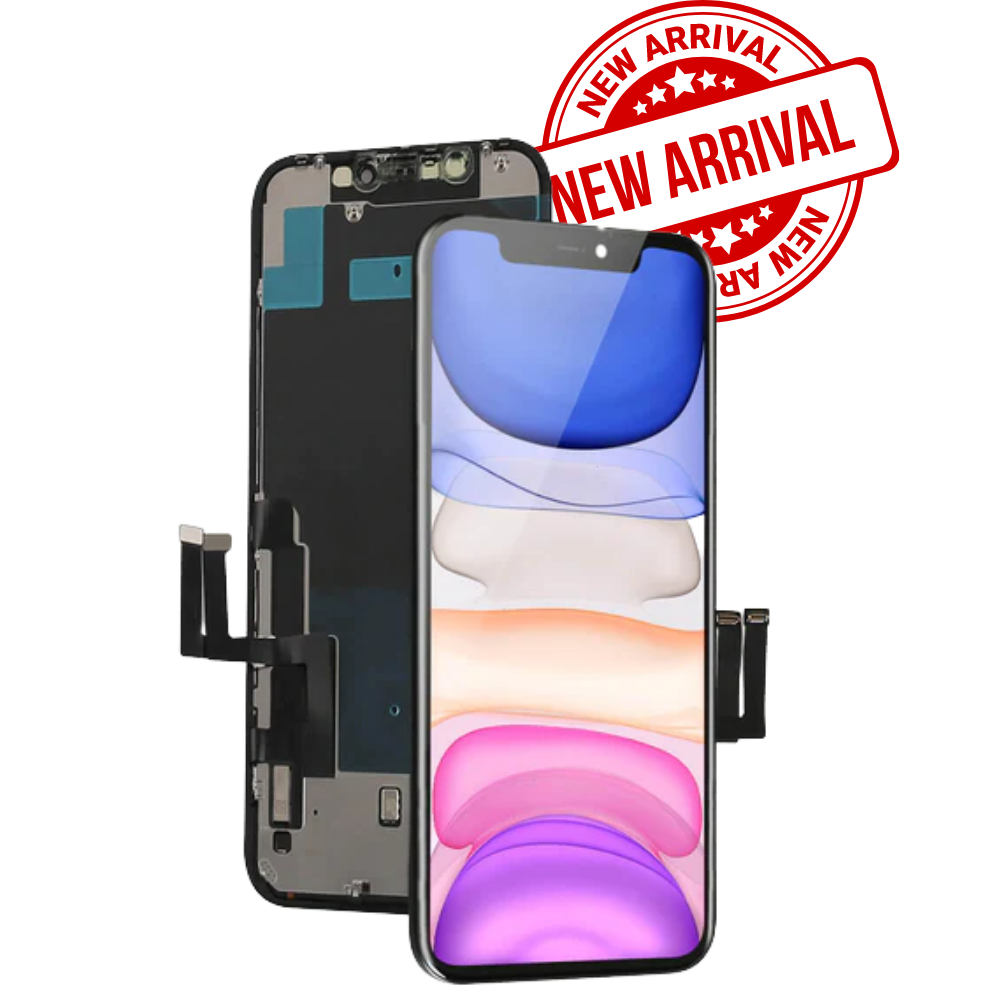
An téarma Modúl LCD (LCM) ar cheann de na frásaí is coitianta a úsáidtear sa tionscal taispeáint soghluaiste. Níl ort ach a chur, is LCM a aonad taispeána iomlán go n-áirítear an painéal LCD agus de ghnáth an fheidhmiúlacht dteagmháil, go léir réamh-chéile ina chomhpháirt amháin.
Smaoinigh air mar phacáiste réidh le suiteáil. In ionad déileáil le sraitheanna iolracha ar leithligh, gheobhaidh tú gach rud nasctha le chéile. Laghdaíonn sé seo am suiteála agus laghdaítear an baol damáiste le linn deisiúcháin nó cóimeála.
I soláthar, ciallaíonn sonrú “LCM” de ghnáth go dteastaíonn uait a aonad taispeána ag feidhmiú go hiomlán, ní hamháin páirteanna aonair. Cén dóigh faoin spéir a ...?, tá sé fós tábhachtach a shoiléiriú an bhfuil comhpháirteanna breise cosúil leis an bhfráma sa mhodúl, cúlsolas, nó sceallóga IC.
Comhpháirteanna Croí Laistigh de LCM
Is gnách go mbíonn roinnt sraitheanna i modúl caighdeánach LCD:
- Painéal LCD (Taispeántas criostail leachtach) – freagrach as giniúint íomhá
- Aonad Backlight – soláthraíonn sé soilsiú
- Digitizer dteagmháil – a bhraitheann ionchur tadhaill
- Gloine Clúdaigh - a chosnaíonn an scáileán
- FPC (Ciorcad Clóbhuailte Solúbtha) – nascann sé an modúl leis an máthairchlár
Is minic a nasctar na sraitheanna seo ag baint úsáide as teicnící lamination chun cinn mar OCA (Greamachán Optúil Glan). Feabhsaíonn an comhtháthú soiléireacht taispeána agus íogaireacht dteagmháil agus laghdaítear machnamh.
Do cheannaitheoirí, Cuidíonn tuiscint ar na comhpháirteanna seo leat cáilíocht agus praghsáil an táirge a mheas. Cosnóidh modúl le lannú níos fearr agus ábhair de ghrád níos airde go nádúrtha níos mó - ach seachadfaidh sé feidhmíocht agus marthanacht níos fearr freisin.
Teicneolaíocht Tadhaill Scáileáin Soghluaiste arna Mhíniú
Teagmháil Capacitive vs dteagmháil Resistive
Is é teicneolaíocht dteagmháil an draíocht dofheicthe taobh thiar de gach svaidhp, sconna, agus pinch. Inniu, úsáideann beagnach gach fón cliste scáileáin tadhaill capacitive, ach d’fhéadfadh go mbeadh feistí níos sine nó speisialaithe fós ag brath ar teicneolaíocht dteagmháil resistive.
Aimsíonn scáileáin tadhaill capacitive comharthaí leictreacha ó do mhéar, ag tairiscint amanna freagartha níos tapúla agus cumais il-dteagmháil. Sin an fáth go bhfuil siad i gceannas ar mhargadh na dtomhaltóirí. Scáileáin frithsheasmhacha, ar an láimh eile, ag brath ar bhrú agus nach bhfuil chomh íogair ach níos marthanaí i dtimpeallachtaí tionsclaíocha áirithe.
Ó thaobh soláthair, tá painéil tadhaill capacitive an caighdeán. Cén dóigh faoin spéir a ...?, níl gach scáileán capacitive comhionann. Athruithe ar íogaireacht, marthanacht, agus is féidir le ICanna rialaitheora tionchar suntasach a imirt ar thaithí an úsáideora.
Ról an Phainéil Tadhaill i bhFóin Chliste Nua-Aimseartha
Tá an painéal tadhaill, ar a dtugtar freisin mar an digití, suíonn os cionn an ciseal taispeána agus aistríonn teagmháil fhisiciúil go comharthaí digiteacha. I dearaí nua-aimseartha, is minic a dhéantar an ciseal seo a chomhtháthú go díreach isteach sa LCD nó gloine ag baint úsáide as teicneolaíochtaí cosúil le Inchill nó Uairill.
Laghdaíonn an comhtháthú seo tiús agus feabhsaíonn sé freagrúlacht. Déanann sé an slabhra soláthair a shimpliú freisin, toisc go bhfuil gá le níos lú comhpháirteanna ar leith. Cén dóigh faoin spéir a ...?, féadfaidh sé deisiúcháin a dhéanamh níos costasaí ós rud é go bhféadfadh go mbeadh gá leis an modúl iomlán a athsholáthar má theipeann ar shraith amháin.
Do cheannaitheoirí, braitheann roghnú idir painéil tadhaill leithleacha agus réitigh chomhtháite ar an spriocmhargadh — bíodh sé ina tháirgí atá dírithe ar dheisiúchán nó ina dtáirgí don úsáideoir deiridh.
Scáileán Amuigh (Gloine) vs Scáileán Istigh (Taispeáint)
Cad é an Scáileán Amuigh (Gloine Clúdaigh)?
Tá an scáileán seachtrach, go minic dá ngairtear gloine chlúdaigh, is é an ciseal is airde a dhéanann úsáideoirí teagmháil fhisiciúil. Is é an príomhról atá aige ná cosaint. Sciathaíonn sé na comhpháirteanna inmheánacha íogair ó scratches, tionchair, agus damáiste don chomhshaol.
De ghnáth déantar gloine clúdaigh ardchaighdeáin as ábhair neartaithe cosúil le gloine tempered. Gné áirithe fiú bratuithe le haghaidh frith-mhéarloirg nó frith-glare maoine.
I soláthar, is minic a dhíoltar gloine seachtrach ar leithligh chun críocha deisiúcháin. Tá sé níos saoire ná modúl iomlán ach teastaíonn teicneoirí oilte lena shuiteáil. Tá an-tóir ar an rogha seo i margaí inar fearr deisiúcháin a shábhálann costais.
Cad é an Scáileán Istigh (Painéal LCD)?
Tá an scáileán istigh Tagraíonn sé don phainéal taispeána iarbhír - an chuid a ghineann íomhánna. Áirítear leis seo an ciseal criostail leachtach, scagairí datha, agus córas backlight.
Murab ionann agus an ghloine seachtrach, tá an scáileán istigh an-íogair agus costasach. Is gnách go mbíonn fadhbanna taispeána cosúil le picteilíní marbha mar thoradh ar dhamáiste don chomhpháirt seo, líneáil, nó aon íomhá ar chor ar bith.
Is féidir an scáileán istigh a scaradh ón ghloine sheachtrach ach tá sé dúshlánach go teicniúil. Sin an fáth a roghnaíonn go leor ceannaitheoirí modúil iomlána ina ionad sin - tá sé níos simplí agus níos iontaofa.
Difríochtaí idir Comhthionól Iomlán agus Codanna ar Leith
Lamination Iomlán vs Scaradh Fráma
A tionól iomlán (ar a dtugtar freisin lamination iomlán) ciallaíonn sé gach sraith - gloine, teagmháil, agus taispeáint - nasctha in aonad amháin. Soláthraíonn sé seo soiléireacht agus marthanacht optúil níos fearr.
I gcodarsnacht leis sin, páirteanna ar leith cead a thabhairt do gach ciseal a chur in ionad ina n-aonar. Cé go laghdaíonn sé seo costais ábhartha, méadaíonn sé castacht saothair agus riosca le linn na suiteála.
Buntáistí agus Míbhuntáistí do Cheannaitheoirí
| Rogha | Buntáistí | Míbhuntáistí |
|---|---|---|
| Tionól Iomlán | suiteáil éasca, caighdeán níos fearr | Costas níos airde |
| Páirteanna ar Leith | Costas níos ísle, deisiú solúbtha | Riosca saothair níos airde |
Braitheann roghnú an rogha ceart ar do mhúnla gnó. Má thugann tú tosaíocht do luas agus iontaofacht, is é tionóil iomlána an bealach le dul. Más é coigilt costais do phríomhsprioc, d'fhéadfadh páirteanna ar leith a bheith níos oiriúnaí.
Téarmaí Coiteann Tionscail nach mór duit a bheith ar eolas agat
OEM, Iarmhargadh, Athchóirithe Mínithe
- OEM (Monaróir Trealaimh Bunaidh): Páirteanna bunaidh de dhéantús an mhonarcha
- Iarmhargadh: Comhpháirteanna monaraithe tríú páirtí
- Athchóirithe: Páirteanna a úsáidtear a athchóiriú chun riocht oibre
Tá a leibhéal praghsála agus cáilíochta féin ag gach catagóir. Is iad páirteanna OEM an ceann is daoire ach cuireann siad an iontaofacht is airde.
Inchill, Uairill, agus Teicneolaíochtaí TFT
- Inchill: Dteagmháil comhtháite i gciseal LCD
- Uairill: Ciseal tadhaill ar bharr LCD
- Tft: Teicneolaíocht traidisiúnta LCD
Cuidíonn tuiscint na dtéarmaí seo leat táirgí a chur i gcomparáid ar bhealach níos éifeachtaí.
Gráid Cháilíochta agus Caighdeáin Tástála
Scáileáin Grád A vs Grád B
Tá grádú cáilíochta ríthábhachtach i soláthar. Scáileáin grád A atá gar-foirfe, in ainneoin go Scáileáin grád B d’fhéadfadh lochtanna beaga a bheith ann.
Príomhnósanna Imeachta Tástála Roimh Loingseoireacht
Feidhmíonn soláthraithe de ghnáth:
- Tástáil gile
- Tástáil íogaireachta dteagmháil
- Iniúchadh picteilín marbh
Cinntíonn na tástálacha seo iontaofacht an táirge sula seachadadh.
Fachtóirí Praghsála i Soláthar Scáileáin LCD
Costas Ábhar agus Tionchar Teicneolaíochta
Méadaíonn ardteicneolaíochtaí mar Incell costais táirgthe ach feabhsaítear feidhmíocht.
Breithnithe MOQ agus Slabhra Soláthair
Cainníocht Ordú Íosta (MOQ) tionchar suntasach a bheith aige ar phraghsáil. Is gnách go mbíonn lascainí ag baint le mórorduithe.
Roghnú an Soláthraí Ceart
Príomhchritéir Mheasúnaithe
Cuardaigh:
- Caighdeán comhsheasmhach
- Cumarsáid thrédhearcach
- Seachadadh iontaofa
Bratacha Dearga le Seachain
Seachain soláthraithe a:
- Easpa deimhnithe
- Sonraíochtaí doiléir a sholáthar
- Tairiscint praghsanna neamhghnách íseal
Treochtaí sa Todhchaí i Soláthar Taispeána Soghluaiste
Shift I dtreo OLED agus Scáileáin Solúbtha
Cé go bhfuil ceannas ag LCD fós ar fheistí buiséid, Tá tóir ag OLED mar gheall ar dhath agus solúbthacht níos fearr.
Éileamh ar Mhodúil Chomhtháite a Mhéadú
Leanfaidh réitigh chomhtháite ag fás, déantúsaíocht agus deisiúcháin a shimpliú.
Deireadh
Is féidir le loingseoireacht ar fud an domhain soláthair scáileán soghluaiste LCD a bhraitheann ró-mhór ar dtús, ach nuair a thuigeann tú an téarmaíocht, tosaíonn gach rud ciall a bhaint as. Ó modúil LCD chuig painéil tadhaill, ó Gloine Seachtrach chuig taispeántais istigh, Léiríonn gach téarma comhpháirt ar leith a bhfuil a ról féin aige sa phictiúr mór.
Nuair a thuigeann tú go soiléir cad atá á cheannach agat, laghdaíonn tú rioscaí, feabhas a chur ar chumarsáid le soláthraithe, agus cinntí ceannaigh níos cliste a dhéanamh ar deireadh. Cibé an bhfuil tú ag teacht ar shiopaí deisiúcháin, dáileadh mórdhíola, nó déantúsaíocht, tugann máistreacht na gcoincheapa seo fíor-iomaíocht duit.
Ceisteanna Coitianta
1. Cad é an difríocht idir modúl LCD agus scáileán tadhaill?
Cuimsíonn modúl LCD na comhpháirteanna taispeána agus tadhaill araon, cé nach dtagraíonn an scáileán tadhaill ach don chiseal dteagmháil-íogair.
2. An féidir liom ach an ghloine sheachtrach de scáileán fón a athsholáthar?
Tá, ach éilíonn sé trealamh speisialaithe agus teicneoirí oilte.
3. Cad a chiallaíonn teicneolaíocht Incell?
Comhtháthaíonn Incell an fheidhm dteagmháil go díreach isteach sa chiseal LCD, scáileáin a dhéanamh níos tanaí agus níos freagraí.
4. An bhfuil scáileáin iarmhargadh iontaofa?
Is féidir leo a bheith, ach athraíonn cáilíocht ag brath ar an monaróir.
5. Cén fáth a bhfuil tionóil iomlána níos costasaí?
Toisc go gcomhcheanglaíonn siad ilchodanna in aonad amháin, ag tairiscint feidhmíocht níos fearr agus suiteáil níos éasca.