Zavedení
Od 2018, Řada iPhonů společnosti Apple důsledně předefinovala design smartphonů a inovaci displeje. Od zavedení Super Retina HD panelů v iPhone XS na Dynamický ostrov a Displeje ProMotion 120Hz na moderních modelech, Apple ukázal svůj závazek k vyvažování stylu, funkčnost, a vizuální dokonalost.
Pojďme se ponořit hluboko do toho, jak se mezitím vyvíjely iPhony 2018 a 2025, včetně některých budoucí předpovědi které odrážejí trendy v oboru a trajektorii společnosti Apple.
iPhone Evolution: Z 2018 na 2025
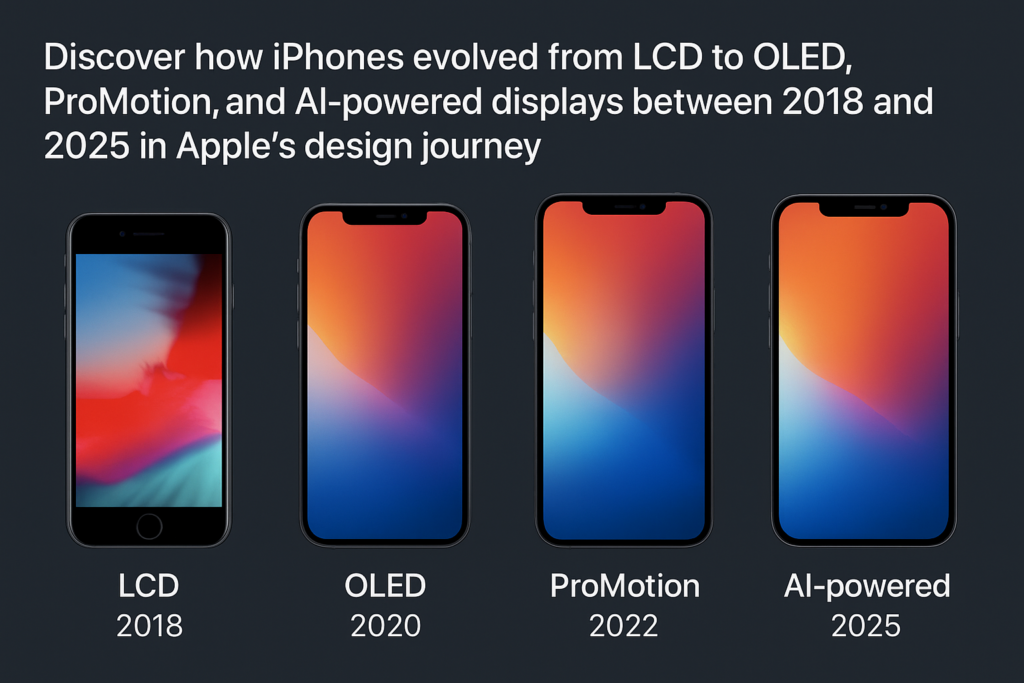
Mezi 2018 a 2025, Apple téměř u všech modelů přešel z LCD na OLED. The Liquid Retina HD LCD ustoupil Super Retina XDR OLED, které nyní dominují sestavě. Součástí cesty jsou také významné milníky — např 5G, Podpora, Vždy zapnutý displej, a přepnout na USB-C.
Podle 2025, Očekává se, že řada iPhone dosáhne úrovně zdokonalení, která bude integrovat Kamerové systémy s umělou inteligencí, chytřejší displeje, a ultra výkonné čipové sady.
Pochopení zobrazovacích technologií společnosti Apple
LCD vs OLED
LCD (Displej z tekutých krystalů) byl použit v dřívějších modelech jako iPhone XR a SE. OLED (Organická světelná dioda), však, poskytuje hlubší černou, lepší kontrast, a vylepšenou efektivitu – nyní standard ve vlajkových modelech společnosti Apple.
Super Retina HD a XDR
Apple představil Super Retina HD v 2018 a Super Retina XDR v 2019, nabízí vynikající jas a kontrast. The XDR (Extrémní dynamický rozsah) technologie vylepšuje zobrazování obsahu HDR, poskytující živou reprodukci barev.
ProMotion a Always-On Display
Technologie ProMotion, poprvé se objeví v iPhone 13 Pro, umožňuje a 120Hz obnovovací frekvence—vytváření plynulejších animací a posouvání. Později, a Vždy zapnutý displej v iPhone 14 Řada Pro udržovala informace viditelné, i když byla obrazovka nečinná.
Přehled modelů iPhone (2018–2023)
2018: Rozdělení OLED a LCD
The iPhone XS, XS Max, a XR označil dvojí přístup společnosti Apple – prémiové OLED a cenově dostupné možnosti LCD. XR Liquid Retina LCD oslovil uživatele, kteří dbají na rozpočet.
2019: Tři fotoaparáty a zvýšení výkonu
The iPhone 11 Pro série přinesla trojité kamery a Bionický čip A13, prodlužuje jak fotografování, tak výdrž baterie.
2020: 5G a Flat-Edge Design
Apple se vrátil k plochým hranám s iPhone 12 série, přináší a osvěžený design, Keramický štít, a 5G konektivita. OLED displeje se staly standardem v celé řadě.
2021: ProMotion přichází na iPhone
The iPhone 13 Pro a Pro Max uváděný Zobrazí se ProMotion, podpora obnovovací frekvence 120 Hz – ideální pro hráče a tvůrce obsahu.
2022: Dynamická ostrovní revoluce
The iPhone 14 Pro série představila Dynamický ostrov, nahrazení zářezu a nabídkou interaktivních upozornění. The Vždy zapnutý displej a Bionický čip A16 definoval novou éru.
2023: Titanový design a integrace USB-C
The iPhone 15 Pro série představena titanové rámy, USB-C porty, a a přizpůsobitelné akční tlačítko—významný designový a funkční skok.
Předpokládané modely (2024–2025)
2024: iPhone 16 Vylepšení řady
Průmysloví analytici předpovídají, že iPhone 16 Pro doroste do 6.3 palce, zatímco Pro Max expanduje na 6.9 palce. Apple může také přidat a vyhrazené tlačítko snímání a zlepšit obnovovací frekvence u modelů, které nejsou Pro.
2025: iPhone 17 Series and Beyond
The iPhone 17 sestava Očekává se, že zdokonalí technologii displeje energeticky úsporné OLED a možná displeje s mikročočkami. Apple může také debutovat Kalibrace displeje za pomoci AI pro lepší vizuální věrnost.
Kompletní tabulka specifikací iPhone (2018–2025)
Níže je uvedeno komplexní tabulka ve stylu Excelu shrnující všechny modely iPhone od 2018 na 2025:
| Model | Rok vydání | Typ displeje & Specifikace | Rozměry (mm) | Poznámky |
|---|---|---|---|---|
| iPhone XS | 2018 | 5.8″ OLED, Super Retina HD, 2436×1125, 458 ppi | 143.6 X 70.9 X 7.7 | Přerušeno |
| iPhone XS Max | 2018 | 6.5″ OLED, Super Retina HD, 2688×1242, 458 ppi | 157.5 X 77.4 X 7.7 | Přerušeno |
| iPhone XR | 2018 | 6.1″ LCD, Liquid Retina HD, 1792×828, 326 ppi | 150.9 X 75.7 X 8.3 | Přerušeno |
| iPhone 11 | 2019 | 6.1″ LCD, Liquid Retina HD, 1792×828, 326 ppi | 150.9 X 75.7 X 8.3 | Přerušeno |
| iPhone 11 Pro | 2019 | 5.8″ OLED, Super Retina XDR, 2436×1125, 458 ppi | 144 X 71.4 X 8.1 | Přerušeno |
| iPhone 11 Pro Max | 2019 | 6.5″ OLED, Super Retina XDR, 2688×1242, 458 ppi | 158 X 77.8 X 8.1 | Přerušeno |
| iPhone SE (2d Gen) | 2020 | 4.7″ LCD, Retina HD, 1334×750, 326 ppi | 138.4 X 67.3 X 7.3 | |
| iPhone 12 Mini | 2020 | 5.4″ OLED, Super Retina XDR, 2340×1080, 476 ppi | 131.5 X 64.2 X 7.4 | Přerušeno |
| iPhone 12 | 2020 | 6.1″ OLED, Super Retina XDR, 2532×1170, 460 ppi | 146.7 X 71.5 X 7.4 | |
| iPhone 13 Pro Max | 2021 | 6.7″ OLED, XDR, ProMotion 120Hz | 160.8 X 78.1 X 7.65 | Přerušeno |
| iPhone 14 Pro | 2022 | 6.1″ OLED, XDR, Vždy zapnuto, 2556×1179 | 147.5 X 71.5 X 7.85 | Dynamický ostrov |
| iPhone 15 Pro | 2023 | 6.1″ OLED, XDR, Podpora, 2556×1179 | 146.6 X 70.6 X 8.25 | Titan, USB-C |
| iPhone 16 Pro | 2024* | 6.3″ OLED, XDR, Podpora | TBD | Předpovězeno |
| iPhone 17 Pro Max | 2025* | 6.9″ OLED, XDR nové generace | TBD | Předpovězeno |
(*Předpokládané modely se mohou změnit)
Trendy a hlavní pozorování
Evoluce velikosti
Apple postupně zvětšoval velikost obrazovky, stěhování z 5.8″ (iPhone XS) k předpovídanému 6.9″ (iPhone 17 Pro Max). Kompaktní modely, jako je řada „mini“, byly vyřazeny z důvodu nízké poptávky.
Aktualizace displeje
Z LCD na OLED, Zaměření Applu se přesunulo k lepšímu jasu, kontrast, a energetická účinnost. The 120Hz obnovovací frekvence a Funkce Always-On odrážejí snahu společnosti Apple o bezproblémovou interaktivitu.
Změny materiálu a designu
Titanové rámy, tenčí rámečky, a zlepšenou odolností 15 Pro série. U budoucích modelů se očekává další snížení tloušťky při zachování životnosti baterie.
Předpovědi pro budoucí iPhony
Pohled dopředu, Apple může:
- Přijmout microLED displeje pro bezkonkurenční jas.
- Integrovat Kalibrace displeje napájená umělou inteligencí.
- Představit adaptivní obnovovací frekvence nad 120 Hz.
- Pohybujte se směrem bezportové designy podle 2026.
Vývoj iPhonu jasně odráží ambice Applu sloučit se technologie, umění, a udržitelnost v jednom kompaktním zařízení.
Závěr
Od roku 2018 Premiéra Super Retina k nadcházejícímu řízený AI, ultra výkonné modely z 2025, iPhone se proměnil ve výkladní skříň technické dokonalosti. Každý model staví na posledním, nabízí uživatelům chytřejší, uhlazenější, a udržitelnější technologie.
Časté časté
1. Který iPhone jako první použil technologii OLED?
The iPhone X. (2017) představil OLED, a podle 2020, stalo se standardem u většiny modelů.
2. Kdy Apple představil ProMotion displeje?
V 2021 s iPhone 13 Pro série.
3. Co dělá iPhone 15 Jedinečný displej Pro?
Vyznačuje se a Super Retina XDR OLED, 120Hz ProMotion, a titanový rám pro lepší hospodaření s teplem.
4. Jsou potvrzeny specifikace iPhone 2024–2025?
Zatím ne – jsou založeny na průmyslová analýza a věrohodné úniky.
5. Přinese Apple zpět menší iPhony?
Nepravděpodobné. Údaje o trhu ukazují, že uživatelé preferují větší displeje pro média a produktivitu.