Indledning
Siden 2018, Apples iPhone-serie har konsekvent redefineret smartphone-design og skærminnovation. Fra introduktionen af Super Retina HD paneler i iPhone XS til Dynamisk ø og ProMotion 120Hz skærme på moderne modeller, Apple har vist sit engagement i at balancere stil, funktionalitet, og visuel ekspertise.
Lad os dykke dybt ned i, hvordan iPhones har udviklet sig imellem 2018 og 2025, herunder nogle fremtidige forudsigelser der afspejler branchetendenser og Apples bane.
iPhone Evolution: Fra 2018 til 2025
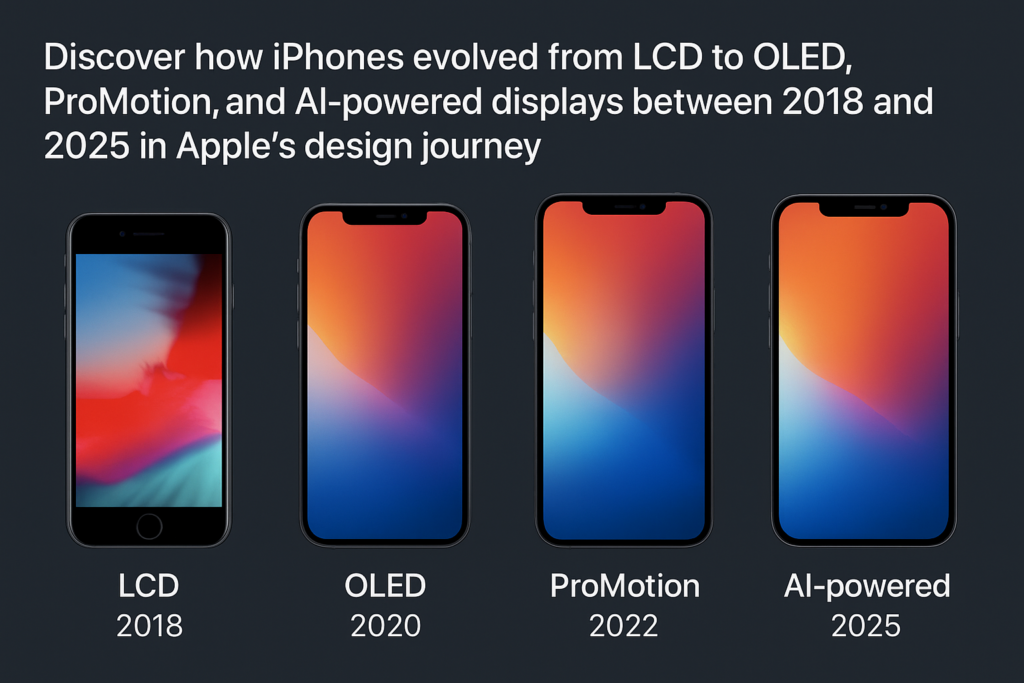
Mellem 2018 og 2025, Apple gik fra LCD til OLED på tværs af næsten alle modeller. De Liquid Retina HD LCD'er gav plads til Super Retina XDR OLED'er, som nu dominerer rækken. Rejsen omfatter også væsentlige milepæle — som f.eks 5G, Forfremmelse, Altid tændt skærm, og den skifte til USB-C.
Ved 2025, iPhone-serien forventes at nå et niveau af raffinement, der integrerer AI-drevne kamerasystemer, smartere skærme, og ultraeffektive chipsæt.
Forståelse af Apples skærmteknologier
LCD vs OLED
LCD (Liquid Crystal Display) blev brugt i tidligere modeller som iPhone XR og SE. OLED (Organisk lysemitterende diode), imidlertid, giver dybere sorte, bedre kontrast, og forbedret effektivitet - nu standard i Apples flagskibsmodeller.
Super Retina HD og XDR
Apple introducerede Super Retina HD i 2018 og Super Retina XDR i 2019, giver overlegen lysstyrke og kontrast. De XDR (Ekstremt dynamisk rækkevidde) teknologi forbedrer visning af HDR-indhold, leverer levende farvegengivelse.
ProMotion og Always-On Display
ProMotion teknologi, optræder første gang i iPhone 13 Pro, muliggør en 120Hz opdateringshastighed— at skabe jævnere animationer og rulle. Senere, de Altid tændt skærm i iPhone 14 Pro-serien holdt information synlig, selv når skærmen var inaktiv.
Oversigt over iPhone-modeller (2018–2023)
2018: OLED og LCD-skillet
De iPhone XS, XS Max, og XR markerede Apples dobbelte tilgang – premium OLED og prisvenlige LCD-muligheder. XR'erne Flydende Retina LCD appellerede til budgetbevidste brugere.
2019: Tredobbelte kameraer og præstationsboost
De iPhone 11 Pro serie bragt tredobbelte kameraer og den A13 Bionic chip, forbedre både fotografering og batterilevetid.
2020: 5G og Flat-Edge Design
Apple vendte tilbage til flade kanter med iPhone 12 serie, medbringer en forfrisket design, Keramisk skjold, og 5G-forbindelse. OLED-skærme blev standard på tværs af udvalget.
2021: ProMotion kommer til iPhone
De iPhone 13 Pro og Pro Max fremhævede ProMotion-skærme, understøtter 120Hz opdateringshastigheder - ideel til spillere og indholdsskabere.
2022: Dynamisk ø-revolution
De iPhone 14 Pro serien introducerede Dynamisk ø, udskiftning af hakket og tilbyde interaktive meddelelser. De Altid tændt skærm og den A16 Bionic chip defineret en ny æra.
2023: Titanium Design og USB-C-integration
De iPhone 15 Pro serie introduceret titanium rammer, USB-C porte, og en tilpasselig handlingsknap— et markant design- og funktionsspring.
Forudsagte modeller (2024–2025)
2024: iPhone 16 Serieforbedringer
Brancheanalytikere forudser, at iPhone 16 Pro vil vokse til 6.3 tommer, mens Pro Max udvides til 6.9 tommer. Apple kan også tilføje en dedikeret optageknap og forbedre opdateringshastigheder for ikke-Pro-modeller.
2025: iPhone 17 Series and Beyond
De iPhone 17 opstilling forventes at forfine skærmteknologi med energieffektive OLED'er og evt mikro-linse array displays. Apple kan også debutere AI-assisteret skærmkalibrering for øget visuel troskab.
Komplet iPhone Specifikationstabel (2018–2025)
Nedenfor er omfattende tabel i Excel-stil opsummerer alle iPhone-modeller fra 2018 til 2025:
| Model | Udgivelsesår | Display Type & Specifikationer | Dimensioner (mm) | Noter |
|---|---|---|---|---|
| iPhone XS | 2018 | 5.8″ OLED, Super Retina HD, 2436×1125, 458 ppi | 143.6 x 70.9 x 7.7 | Udgået |
| iPhone XS Max | 2018 | 6.5″ OLED, Super Retina HD, 2688×1242, 458 ppi | 157.5 x 77.4 x 7.7 | Udgået |
| iPhone XR | 2018 | 6.1″ LCD, Flydende Retina HD, 1792×828, 326 ppi | 150.9 x 75.7 x 8.3 | Udgået |
| iPhone 11 | 2019 | 6.1″ LCD, Flydende Retina HD, 1792×828, 326 ppi | 150.9 x 75.7 x 8.3 | Udgået |
| iPhone 11 Pro | 2019 | 5.8″ OLED, Super Retina XDR, 2436×1125, 458 ppi | 144 x 71.4 x 8.1 | Udgået |
| iPhone 11 Pro Max | 2019 | 6.5″ OLED, Super Retina XDR, 2688×1242, 458 ppi | 158 x 77.8 x 8.1 | Udgået |
| iPhone SE (2d Gen) | 2020 | 4.7″ LCD, Retina HD, 1334×750, 326 ppi | 138.4 x 67.3 x 7.3 | |
| iPhone 12 Mini | 2020 | 5.4″ OLED, Super Retina XDR, 2340×1080, 476 ppi | 131.5 x 64.2 x 7.4 | Udgået |
| iPhone 12 | 2020 | 6.1″ OLED, Super Retina XDR, 2532×1170, 460 ppi | 146.7 x 71.5 x 7.4 | |
| iPhone 13 Pro Max | 2021 | 6.7″ OLED, XDR, ProMotion 120Hz | 160.8 x 78.1 x 7.65 | Udgået |
| iPhone 14 Pro | 2022 | 6.1″ OLED, XDR, Altid-på, 2556×1179 | 147.5 x 71.5 x 7.85 | Dynamisk ø |
| iPhone 15 Pro | 2023 | 6.1″ OLED, XDR, Forfremmelse, 2556×1179 | 146.6 x 70.6 x 8.25 | Titanium, USB-C |
| iPhone 16 Pro | 2024* | 6.3″ OLED, XDR, Forfremmelse | TBD | Forudsagt |
| iPhone 17 Pro Max | 2025* | 6.9″ OLED, Næste generation af XDR | TBD | Forudsagt |
(*Forudsagte modeller kan ændres)
Tendenser og nøgleobservationer
Størrelse Evolution
Apple har gradvist øget skærmstørrelserne, flytter fra 5.8″ (iPhone XS) til en forudsagt 6.9″ (iPhone 17 Pro Max). Kompakte modeller som "mini"-linjen er blevet udfaset på grund af lav efterspørgsel.
Skærmopgraderinger
Fra LCD til OLED, Apples fokus skiftede til bedre lysstyrke, kontrast, og energieffektivitet. De 120Hz opdateringshastighed og Always-On-funktion afspejler Apples fremstød for sømløs interaktivitet.
Materiale- og designændringer
Titanium rammer, tyndere rammer, og forbedret holdbarhed markerer 15 Pro serie. Fremtidige modeller forventes at reducere tykkelsen yderligere og samtidig bevare batteriets levetid.
Forudsigelser for fremtidens iPhones
Ser fremad, Apple kan evt:
- Adoptere microLED-skærme for uovertruffen lysstyrke.
- Integrere AI-drevet skærmkalibrering.
- Indføre adaptive opdateringshastigheder over 120Hz.
- Bevæg dig mod portløse designs ved 2026.
iPhones udvikling afspejler klart Apples ambition om at fusionere teknologi, kunstnerskab, og bæredygtighed i én kompakt enhed.
Konklusion
Fra 2018 Super Retina debut til det kommende AI-drevet, ultraeffektive modeller af 2025, iPhone har forvandlet sig til et udstillingsvindue for teknisk ekspertise. Hver model bygger på den sidste, tilbyder brugerne smartere, slankere, og mere bæredygtig teknologi.
FAQS
1. Hvilken iPhone brugte først OLED-teknologi?
De iPhone X (2017) introducerede OLED, og af 2020, det blev standard på tværs af de fleste modeller.
2. Hvornår introducerede Apple ProMotion-skærme?
I 2021 med iPhone 13 Pro serie.
3. Hvad gør iPhone 15 Pros skærm unik?
Den har en Super Retina XDR OLED, 120Hz ProMotion, og titanium ramme for bedre varmestyring.
4. Er 2024-2025 iPhone-specifikationer bekræftet?
Ikke endnu - de er baseret på brancheanalyser og troværdige lækager.
5. Vil Apple bringe mindre iPhones tilbage?
Usandsynlig. Markedsdata viser, at brugerne foretrækker større skærme for medier og produktivitet.