Zavedenie
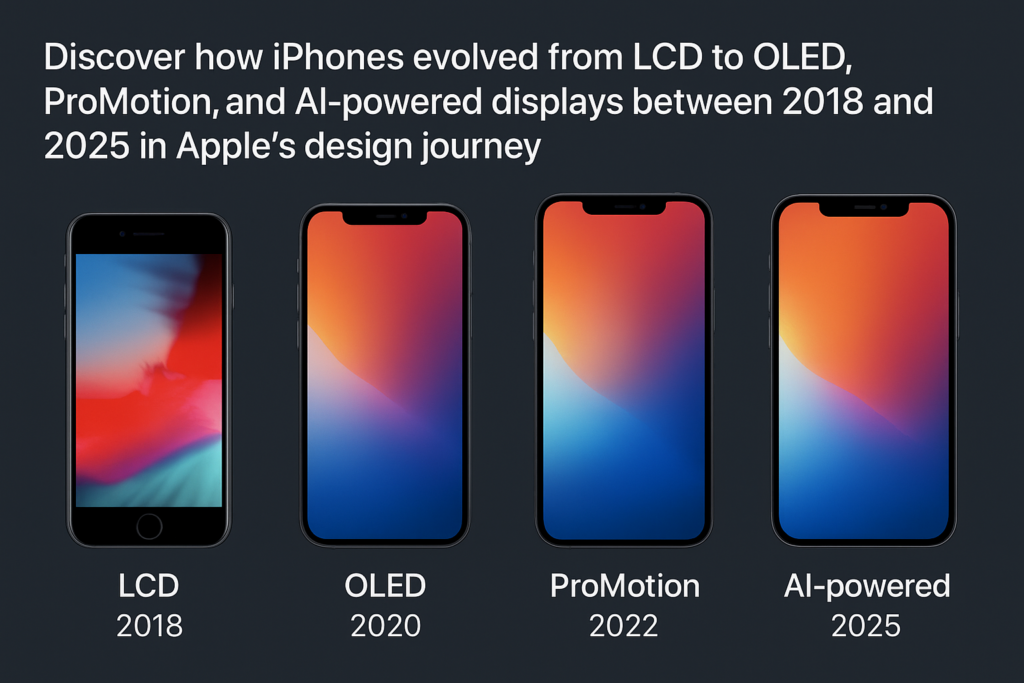
Od r 2018, Rad iPhonov od Apple dôsledne predefinoval dizajn smartfónov a inováciu displeja. Od zavedenia Super Retina HD panelov v iPhone XS na Dynamický ostrov a Displeje ProMotion 120Hz na moderných modeloch, Apple ukázal svoj záväzok k vyváženému štýlu, funkčnosť, a vizuálna dokonalosť.
Poďme sa ponoriť hlboko do toho, ako sa medzi sebou vyvíjali telefóny iPhone 2018 a 2025, vrátane niektorých budúce predpovede ktoré odrážajú trendy v odvetví a trajektóriu spoločnosti Apple.
iPhone Evolution: Od 2018 do 2025
Medzi 2018 a 2025, Apple prešiel z LCD na OLED takmer vo všetkých modeloch. Ten Liquid Retina HD LCD ustúpil Super Retina XDR OLED, ktoré teraz dominujú zostave. Súčasťou cesty sú aj významné míľniky — ako napr 5G, ProMotion, Vždy zapnutý displej, a prepnite na USB-C.
Autor: 2025, Očakáva sa, že zostava iPhone dosiahne úroveň zdokonalenia, ktorá sa integruje Kamerové systémy poháňané AI, inteligentnejšie displeje, a ultra efektívne čipsety.
Pochopenie zobrazovacích technológií spoločnosti Apple
LCD vs OLED
LCD (Kvapalina) bol použitý v skorších modeloch ako iPhone XR a SE. OLED (Organická dióda vyžarujúca svetlo), však, poskytuje hlbšiu čiernu, lepší kontrast, a vylepšená efektivita – teraz štandardná vo vlajkových modeloch Apple.
Super Retina HD a XDR
Apple predstavil Super Retina HD v 2018 a Super Retina XDR v 2019, ponúka vynikajúci jas a kontrast. Ten XDR (Extrémny dynamický rozsah) technológia zlepšuje zobrazovanie obsahu HDR, poskytuje živú reprodukciu farieb.
ProMotion a Always-On Display
Technológia ProMotion, prvýkrát sa objaví v iPhone 13 Protest, umožňuje a 120Hz obnovovacia frekvencia—vytváranie plynulejších animácií a posúvania. Neskôr, ten Vždy zapnutý displej v iPhone 14 Séria Pro udržovala informácie viditeľné aj vtedy, keď bola obrazovka nečinná.
Prehľad modelov iPhone (2018–2023)
2018: Rozdelenie OLED a LCD
Ten iPhone XS, XS Max, a XR označili dvojitý prístup spoločnosti Apple – prémiové OLED a cenovo dostupné možnosti LCD. XR Liquid Retina LCD oslovili používateľov, ktorí dbajú na rozpočet.
2019: Trojité fotoaparáty a zvýšenie výkonu
Ten iPhone 11 Protest séria priniesla trojité kamery a Bionický čip A13, predĺži fotografovanie aj výdrž batérie.
2020: 5G a Flat-Edge Design
Apple sa vrátil k plochým okrajom s iPhone 12 séria, prinášanie a osviežený dizajn, Keramický štít, a 5G konektivita. OLED displeje sa stali štandardom v celej zostave.
2021: ProMotion prichádza na iPhone
Ten iPhone 13 Protest a Pro Max uvádzaný Zobrazí sa ProMotion, podpora obnovovacej frekvencie 120 Hz – ideálne pre hráčov a tvorcov obsahu.
2022: Dynamická ostrovná revolúcia
Ten iPhone 14 Protest séria predstavila Dynamický ostrov, nahradenie zárezu a ponúknutie interaktívnych upozornení. Ten Vždy zapnutý displej a Bionický čip A16 definoval novú éru.
2023: Titánový dizajn a integrácia USB-C
Ten iPhone 15 Protest predstavená séria titánové rámy, USB-C porty, a a prispôsobiteľné akčné tlačidlo-významný dizajnový a funkčný skok.
Predpovedané modely (2024–2025)
2024: iPhone 16 Vylepšenia série
Priemyselní analytici predpovedajú, že iPhone 16 Protest dorastie do 6.3 palcov, zatiaľ čo Pro Max rozširuje na 6.9 palcov. Apple môže tiež pridať a vyhradené tlačidlo snímania a zlepšiť obnovovacie frekvencie pre modely, ktoré nie sú Pro.
2025: iPhone 17 Séria a ďalšie
Ten iPhone 17 zostava Očakáva sa, že vylepší zobrazovaciu technológiu energeticky úsporné OLED a prípadne displeje s mikrošošovkami. Apple môže tiež debutovať Kalibrácia displeja s pomocou AI pre zvýšenú vizuálnu vernosť.
Kompletná tabuľka špecifikácií iPhone (2018–2025)
Nižšie je uvedený komplexná tabuľka v štýle Excelu zhrnutie všetkých modelov iPhone od 2018 do 2025:
| Model | Rok vydania | Typ zobrazenia & Špecifikácie | Rozmery (mm) | Poznámky |
|---|---|---|---|---|
| iPhone XS | 2018 | 5.8″ OLED, Super Retina HD, 2436×1125, 458 ppi | 143.6 x 70.9 x 7.7 | Prerušené |
| iPhone XS Max | 2018 | 6.5″ OLED, Super Retina HD, 2688×1242, 458 ppi | 157.5 x 77.4 x 7.7 | Prerušené |
| iPhone XR | 2018 | 6.1″ LCD, Liquid Retina HD, 1792×828, 326 ppi | 150.9 x 75.7 x 8.3 | Prerušené |
| iPhone 11 | 2019 | 6.1″ LCD, Liquid Retina HD, 1792×828, 326 ppi | 150.9 x 75.7 x 8.3 | Prerušené |
| iPhone 11 Protest | 2019 | 5.8″ OLED, Super Retina XDR, 2436×1125, 458 ppi | 144 x 71.4 x 8.1 | Prerušené |
| iPhone 11 Pro Max | 2019 | 6.5″ OLED, Super Retina XDR, 2688×1242, 458 ppi | 158 x 77.8 x 8.1 | Prerušené |
| iPhone SE (2nd Gen) | 2020 | 4.7″ LCD, Retina HD, 1334×750, 326 ppi | 138.4 x 67.3 x 7.3 | |
| iPhone 12 Mini | 2020 | 5.4″ OLED, Super Retina XDR, 2340×1080, 476 ppi | 131.5 x 64.2 x 7.4 | Prerušené |
| iPhone 12 | 2020 | 6.1″ OLED, Super Retina XDR, 2532×1170, 460 ppi | 146.7 x 71.5 x 7.4 | |
| iPhone 13 Pro Max | 2021 | 6.7″ OLED, XDR, ProMotion 120 Hz | 160.8 x 78.1 x 7.65 | Prerušené |
| iPhone 14 Protest | 2022 | 6.1″ OLED, XDR, Vždy zapnuté, 2556×1179 | 147.5 x 71.5 x 7.85 | Dynamický ostrov |
| iPhone 15 Protest | 2023 | 6.1″ OLED, XDR, ProMotion, 2556×1179 | 146.6 x 70.6 x 8.25 | titán, USB-C |
| iPhone 16 Protest | 2024* | 6.3″ OLED, XDR, ProMotion | TBD | Predpovedané |
| iPhone 17 Pro Max | 2025* | 6.9″ OLED, XDR novej generácie | TBD | Predpovedané |
(*Predpokladané modely sa môžu zmeniť)
Trendy a kľúčové postrehy
Evolúcia veľkosti
Apple postupne zväčšuje veľkosť obrazovky, sťahovanie z 5.8″ (iPhone XS) k predpovedanému 6.9″ (iPhone 17 Pro Max). Kompaktné modely ako „mini“ rad boli vyradené z dôvodu nízkeho dopytu.
Inovácie displeja
Od LCD na OLED, Zameranie spoločnosti Apple sa presunulo na lepší jas, kontrast, a energetickú účinnosť. Ten 120Hz obnovovacia frekvencia a Funkcia Always-On odráža snahu spoločnosti Apple o bezproblémovú interaktivitu.
Zmeny materiálu a dizajnu
Titánové rámy, tenšie rámiky, a zlepšená odolnosť značí 15 Protest séria. Očakáva sa, že budúce modely budú ďalej znižovať hrúbku pri zachovaní životnosti batérie.
Predpovede pre budúce iPhony
Pohľad dopredu, Apple môže:
- Prijať microLED displeje pre bezkonkurenčný jas.
- Integrovať Kalibrácia displeja poháňaná AI.
- Predstaviť adaptívne obnovovacie frekvencie nad 120 Hz.
- Presuňte sa smerom k bezportové dizajny podľa 2026.
Vývoj iPhonu jasne odzrkadľuje ambíciu spoločnosti Apple spojiť sa technológie, umenie, a udržateľnosť v jednom kompaktnom zariadení.
Záver
Od roku 2018 Debut Super Retina k nadchádzajúcemu Poháňané AI, ultra efektívne modely z 2025, iPhone sa premenil na výkladnú skriňu inžinierskej dokonalosti. Každý model stavia na poslednom, ponúka používateľom inteligentnejších, uhladenejší, a udržateľnejšie technológie.
Časté otázky
1. Ktorý iPhone prvýkrát použil technológiu OLED?
Ten iPhone X (2017) predstavil OLED, a podľa 2020, stal sa štandardom pre väčšinu modelov.
2. Kedy spoločnosť Apple predstavila displeje ProMotion?
In 2021 s iPhone 13 Protest séria.
3. Čo robí iPhone 15 Jedinečný displej Pro?
Vyznačuje sa a Super Retina XDR OLED, 120Hz ProMotion, a titánový rám pre lepšie hospodárenie s teplom.
4. Sú potvrdené špecifikácie iPhone 2024-2025?
Zatiaľ nie – sú založené na priemyselnú analýzu a dôveryhodné úniky.
5. Apple prinesie späť menšie iPhony?
Nepravdepodobné. Údaje o trhu ukazujú, že používatelia preferujú väčšie displeje pre médiá a produktivitu.