
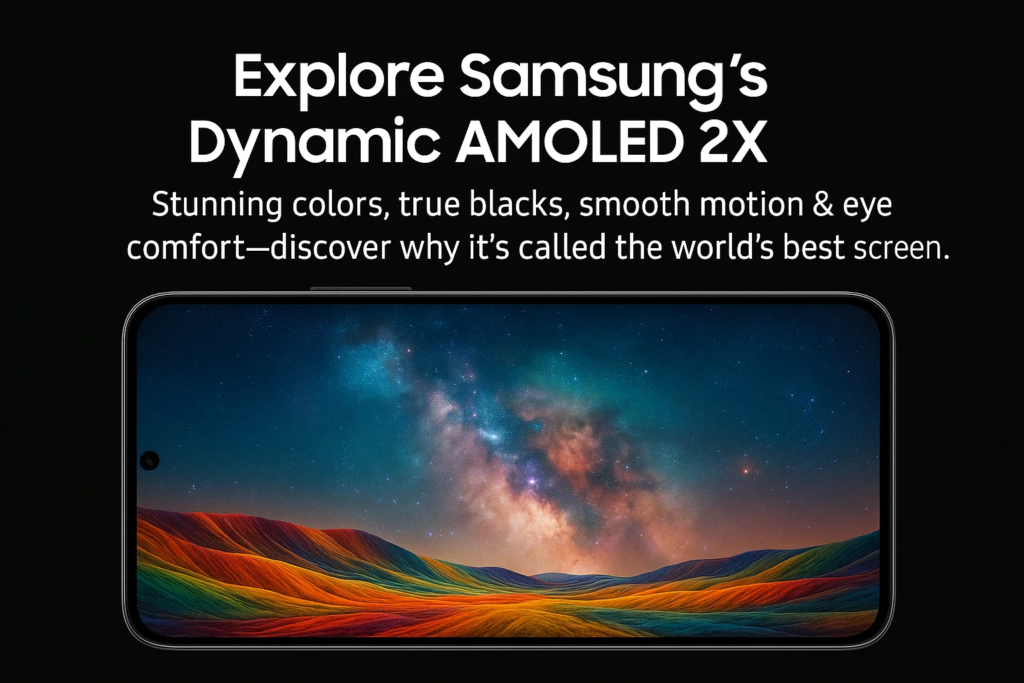
Indledning: Hvorfor Dynamic AMOLED 2X betyder noget
Da Samsung afslørede Dynamisk AMOLED 2X, anmeldere og fagfolk var hurtige til at overøse den med ros. DisplayMate, en af de mest betroede autoriteter inden for displaytest, tildelt den en A+ karakter, markerer den som en af de fineste skærme, der nogensinde er bygget til smartphones. Men her er det større spørgsmål - omsættes disse tal og vurderinger faktisk til en bedre daglig oplevelse? Lad os se nærmere.
Kernefunktion 1 – farve og kontrast
100% DCI-P3 bred farveskala forklaret
Hvis du nogensinde har undret dig over, hvorfor farver dukker op på Samsungs flagskibsskærme, hemmeligheden ligger i DCI-P3 farveskala. Afdækning 100% af dette filmiske spektrum betyder, at du ser farver, som instruktøren havde til hensigt – rigere røde farver, dybere greens, og mere naturtro toner.
Forskellen mellem DCI-P3 og sRGB
De fleste ældre skærme er afhængige af SRGB, hvilket er fint til webindhold, men begrænset i vitalitet. DCI-P3 tilbyder ca 25% mere farverum, få solnedgange til at se brændende ud, og billeder til at se tættere på det virkelige liv.
Lyskontrol på pixelniveau og million-til-en kontrastforhold
I modsætning til LCD-skærme, der er afhængige af baggrundsbelysning, AMOLED-paneler giver hver pixel uafhængig kontrol. Det er sådan Samsung opnår kontrastforhold overstiger 1,000,000:1- perfekte sorte sammen med blændende hvide. Ser en sci-fi-film med rumscener? Du vil se ægte mørke i stedet for en udvasket grå.
Kernefunktion to – lysstyrke og HDR
Højeste lysstyrke (HDR) vs Global lysstyrke (SDR)
Lysstyrke handler ikke kun om "hvor højt den går." Maksimal lysstyrke kommer i spil for højdepunkter i HDR-indhold – tænk på eksplosioner eller sollysrefleksioner. Global lysstyrke (SDR) handler om, hvor lys hele skærmen kan forblive under daglig brug. Samsung balancerer begge uden besvær.
Real-World-scenarier for lysstyrkehåndtering
Forestil dig at tjekke din telefon på en solrig strand – Dynamic AMOLED 2X kan skubbe lysstyrken højt nok til at forblive læsbar selv under hårdt lys. Indendørs, den ringer smart tilbage for at undgå anstrengte øjne og spare energi.
HDR10+ adaptiv teknologi i aktion
HDR10+ Adaptive finjusterer lysstyrke og tonekortlægning afhængigt af dit miljø. Ser en mørk thriller i dit soveværelse? Displayet tilpasser sig for at holde skyggedetaljer skarpe uden blændende højlys.
Kernefunktion tre - Glathed
Adaptiv opdateringshastighed 1-120Hz med LTPO
Samsung bruger LTPO (Lavtemperatur polykrystallinsk oxid) teknologi for at lade skærmen skifte dynamisk mellem 1Hz og 120 Hz opdateringshastigheder. Rulning føles smørblødt ved 120Hz, mens statisk indhold som at læse en PDF kan falde til 1Hz for at spare strøm.
Strømeffektivitet gennem dynamisk opdatering
I modsætning til ældre skærme med fast opdatering, LTPOs adaptive mekanisme skaber balancen mellem flydende og batteriudholdenhed. Du får glathed, når du har brug for det, effektivitet, når du ikke gør det.
Touch Sampling Rate og Gaming Responsibility
Spillere elsker hurtig berøringsrespons. Med høje berøringssamplingsfrekvenser, hvert tryk, swipe, eller svirp registreres med det samme. Den mikrosekunds kant kan gøre forskellen mellem sejr og nederlag i konkurrencespil.
Visual Enhancement Suite
Blåt lysfiltrering og øjenkomforttilstand
Stirrer på din telefon sent om aftenen? Samsungs Øjenkomfortskjold filtrerer skadeligt blåt lys uden at forvrænge farver. I modsætning til rå gule filtre, det bevarer naturlige toner og beskytter samtidig dine øjne.
AI-baserede visuelle klarhedsforbedringer
Brug af AI-algoritmer, skærmen kan opskalere lavopløsningsvideoer og gøre billeder skarpere. Tænk på det som at give ældre indhold et ansigtsløft, få YouTube-klip eller opslag på sociale medier til at se glattere og tydeligere ud.
Balancerer øjensikkerhed med visuel kvalitet
Udfordringen med blåt lysfiltre er ofte farveforvrængning. Samsungs algoritmer får hvide til at se hvide ud, ikke gullig, rammer en sjælden balance mellem komfort og troskab.
Praktisk test og erfaring fra den virkelige verden
Instrumentbaserede laboratorietests
Laboratoriemålinger viser, at Dynamic AMOLED 2X opnår rekordhøje lysstyrkeniveauer, brancheførende farvenøjagtighed, og næsten uendelig kontrast. Tal lyver ikke - det er objektivt set blandt de bedste.
Subjektive brugerindtryk
Specs til side, de fleste brugere beskriver oplevelsen som simpel fordybende. Film ser filmiske ud, spil føles flydende, og selv læsning af almindelig tekst bliver lettere for øjnene.
Sammenligninger med konkurrerende skærme
Apples Super Retina XDR og Googles OLED-paneler er fremragende, men Samsungs fordel ligger i intern displayproduktion. De er ofte leverandør til konkurrenter, giver dem en ubestridelig kant.
Hvorfor Dynamic AMOLED 2X skiller sig ud
Kombinationen af hardware- og softwaresynergi
Det er ikke kun hardwarespecifikationer - det er hvordan Samsung integrerer softwarefunktioner som HDR10+ Adaptive, Vision Booster, og Eye Comfort Shield for at løfte hele oplevelsen.
Samsungs R&D Edge in Display Innovation
Samsung følger ikke bare med konkurrenterne – de sætter tempoet. Fra at opfinde AMOLED til at raffinere LTPO, deres R&D sikrer, at flagskibsskærme forbliver et skridt foran alle andre.
Konklusion: En skærm bygget til fremtiden
De Dynamisk AMOLED 2X er ikke kun et markedsføringsnavn - det er kulminationen på mange års forskning, afprøvning, og raffinement. Ved at skubbe grænserne ind Farvenøjagtighed, Lysstyrke, kontrast, glathed, og øjenkomfort, Samsung har bygget en skærm, der ikke bare er topbedømt, men virkelig transformerende i den virkelige verden. Uanset om du spiller, binge-watching, eller blot scrolle gennem e-mails, det er så tæt på, som det kan komme den perfekte skærmoplevelse i dag.
FAQS
1. Hvad gør Dynamic AMOLED 2X anderledes end OLED?
Det er en avanceret version af OLED med højere lysstyrke, bedre farvenøjagtighed, adaptive opdateringshastigheder, og HDR10+ understøttelse.
2. Er Dynamic AMOLED 2X bedre til spil?
Ja. Med 120Hz opdateringshastighed og høj berøringssampling, det leverer ultra-glat og responsivt gameplay.
3. Påvirker højere lysstyrke batteriets levetid?
Ikke væsentligt. Takket være LTPO adaptiv opdatering og smart strømstyring, det balancerer ydeevne og effektivitet.
4. Hvordan sammenligner Samsung med Apples skærme?
Begge er fremragende, men Samsung leverer ofte OLED-paneler til Apple – så på mange måder, Samsung er på forkant med innovation.
5. Vil Dynamic AMOLED 2X udvikle sig yderligere i fremtidige smartphones?
Absolut. Forvent justeringer i lysstyrken, opdateringshastighedseffektivitet, og AI-drevne visuelle forbedringer i kommende modeller.



