
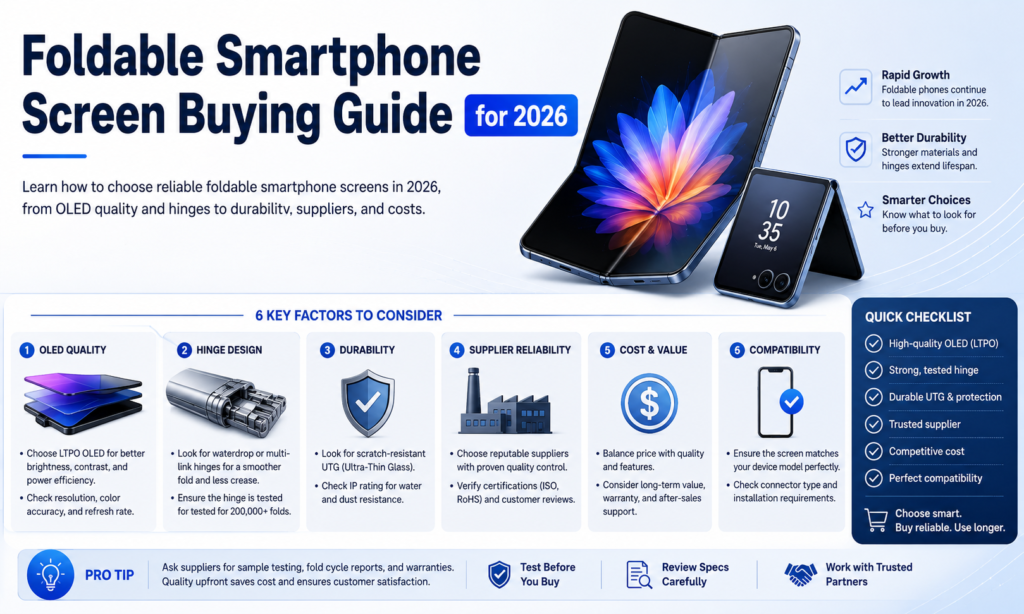
Складные смартфоны больше не являются экспериментальными гаджетами, стоящими за стеклянными витринами на выставках.. В 2026, они быстро становятся массовыми продуктами, которые привлекают как потребителей премиум-класса, так и бренды, ориентированные на технологии.. Рынок превратился из «интересных инноваций» в высококонкурентное поле битвы, где долговечность, качество дисплея, проектирование петель, и надежность цепочки поставок определяют, будет ли продукт успешным или неудачным.. Согласно последним отраслевым отчетам, Ожидается, что спрос на складные смартфоны значительно вырастет в 2026, особенно с учетом ожидаемого выхода Apple на рынок складных устройств.
Для менеджеров по закупкам, производители смартфонов, оптовики, и OEM-покупатели, поиск гибкий складной экран гораздо сложнее, чем покупка традиционной OLED-панели.. Складной дисплей — это не просто экран. Это сложный набор материалов, включающий слои OLED., ультратонкое стекло, клеи, системы координации шарниров, сенсорные датчики, и гибкие подложки. Одно слабое место в этом стеке может разрушить весь пользовательский опыт.. Думайте об этом как о создании роскошного спортивного автомобиля — двигатель имеет значение., но и подвеска тоже, шины, и выравнивание шасси. Тот же принцип применим и к складным смартфонам..
Ставки также гораздо выше в 2026 потому что потребители становятся менее снисходительными. Первые пользователи когда-то соглашались с видимыми складками, хрупкие петли, и случайные сбои экрана как цена инноваций. Сегодня, покупатели ожидают, что складные устройства выдержат годы ежедневного использования, сохраняя при этом превосходный внешний вид.. Таким образом, решения о закупках напрямую влияют на гарантийные расходы., удовлетворенность клиентов, и репутация бренда. Некачественный складной дисплей может изначально сэкономить деньги, но долгосрочные претензии по ремонту могут очень быстро стереть прибыль.
В этом руководстве описано все, что покупателям необходимо знать перед покупкой складных экранов для смартфонов. 2026, включая технические характеристики, оценка поставщика, тестирование надежности, анализ затрат, и будущие тенденции рынка.
Почему закупка складных экранов стала более сложной
Быстрый рост складных смартфонов
За последние несколько лет индустрия складных смартфонов пережила резкий рост.. Samsung, Хуавей, Честь, Моторола, Google, и другие бренды превратили складные устройства из нишевых устройств в узнаваемые продукты премиум-класса.. Аналитики теперь прогнозируют ускоренное расширение рынка из-за более тонких конструкций., лучшие петли, и более мощная гибкая технология OLED. Прогнозы отрасли также предполагают, что Apple может захватить почти 20% рынка складных смартфонов после выхода в этот сегмент.
Этот рост создает огромное давление на всю цепочку поставок.. Производители теперь конкурируют за надежных поставщиков панелей, ультратонкая стеклянная емкость, и высокопроизводительные линии по производству OLED. Отделы закупок больше не делают выбор из обильных запасов. Вместо, они часто сталкиваются с нехваткой поставок, длительные сроки выполнения, и волатильность цен. В некоторых случаях, бренды смартфонов даже заключают эксклюзивные соглашения с поставщиками, поскольку альтернативные источники не могут соответствовать стандартам качества.. Отчеты показывают, что Apple может в течение нескольких лет закупать складные OLED-панели исключительно у Samsung Display из-за ограничений поставщиков..
В то же время, сама технология быстро развивается. Покупатели должны оценить не только сегодняшнюю производительность, но и будущую совместимость с будущими моделями, такими как складные смартфоны и ультратонкие складные устройства.. Решения о закупках, принятые сегодня, могут повлиять на конкурентоспособность продукции на долгие годы.. Выбор неправильного поставщика может привести к тому, что производители застрянут в устаревших конструкциях петель или видимых проблемах со складками, в то время как конкуренты выпустят более продвинутые модели..
Еще одна причина, по которой закупки усложнились, — это осведомленность клиентов.. Современные потребители понимают складные технологии гораздо лучше, чем несколько лет назад.. Интернет-обзоры, испытания на долговечность, и дискуссии в социальных сетях быстро выявляют слабые шарниры, битые пиксели, или проблемы со складками. Сбои в защите от вирусов могут серьезно повредить бренду смартфона за считанные дни. Поэтому командам по закупкам необходимо гораздо более глубокое понимание инженерной надежности, чем раньше..
Почему качество экрана определяет успех продукта
В складных смартфонах, экран - это продукт. Традиционные смартфоны иногда могут компенсировать средние дисплеи мощными камерами или процессорами.. Складные устройства не имеют такой роскоши.. Гибкий дисплей — основное преимущество, это означает, что любая слабость сразу становится заметной для пользователей.
Потребители постоянно взаимодействуют со складным экраном во время открытия., закрытие, игры, многозадачность, и воспроизведение видео. На плохо спроектированной гибкой OLED-панели могут появиться видимые складки., неравномерная яркость, трогать мертвые зоны, или микротрещины после многократного использования. Как только пользователи заметят эти проблемы, доверие к устройству быстро пропадает.
Последние рыночные отчеты показывают, что долговечность и уменьшение складок остаются крупнейшими инженерными приоритетами отрасли. 2026. Производители вкладывают значительные средства в системы управления стрессом., современные клеи, и ультратонкие стеклянные конструкции для повышения надежности. Поэтому команды по закупкам должны понимать, что поиск складных экранов больше не сводится к покупке «панели». Он включает в себя оценку всей механической и материальной экосистемы..
Хороший складной экран должен выполнять несколько задач одновременно.:
- Высокая долговечность
- Плавное складывание
- Минимальная видимость складок
- Стабильный отклик на прикосновение
- Высокая стабильность яркости
- Отличная цветопередача
- Надежная долгосрочная работа
Сбалансировать все эти факторы сложно, поскольку улучшение одной характеристики может отрицательно повлиять на другую.. Например, увеличение гибкости иногда может снизить устойчивость к царапинам. Улучшение натяжения шарниров может увеличить нагрузку на стек OLED.. Команды по закупкам должны тщательно оценивать эти компромиссы, а не сосредотачиваться только на цене..
Понимание технологии гибких складных OLED-дисплеев
Что отличает гибкий OLED
Гибкая технология OLED принципиально отличается от традиционных жестких дисплеев.. Вместо использования стеклянных подложек по всей конструкции, в складных OLED-панелях используются гибкие материалы, такие как полиимидные слои, которые позволяют сгибаться, не ломаясь сразу.. Эта гибкость позволяет смартфонам складываться внутрь., наружу, или даже несколько раз в зависимости от конструкции петли.
Самым большим преимуществом технологии OLED является то, что каждый пиксель излучает собственный свет.. В отличие от ЖК-экранов, OLED-панели не требуют громоздкой подсветки, позволяя производителям создавать более тонкие и легкие дисплеи в сборе. Это структурное преимущество делает OLED предпочтительным решением для складных смартфонов..
Однако, гибкость ставит серьезные инженерные задачи. Каждая складка создает механическое напряжение на нескольких слоях, включая стек OLED., сенсорные датчики, клеи, защитные покрытия, и ультратонкое стекло. Через некоторое время, повторяющийся стресс может привести к расслоению, битые пиксели, или видимые складки.
Представьте, что вы несколько раз сгибаете скрепку.. В конце концов, микроскопическое напряжение накапливается до тех пор, пока металл не ослабнет и не сломается.. Складные OLED-дисплеи сталкиваются с аналогичной проблемой, за исключением того, что структура содержит гораздо более тонкие слои. Вот почему отделы закупок должны уделять пристальное внимание циклическому тестированию., состав материала, и инженерные возможности поставщика.
Роль материалов UTG и CPI
Одним из наиболее важных вопросов при закупке является защитный слой над OLED-панелью.. В 2026, большинство складных смартфонов премиум-класса используют Ультратонкое стекло (ПУБЛИКАЦИЯ) а не старые системы защиты, состоящие только из пластика.
UTG предлагает несколько преимуществ:
- Лучшая устойчивость к царапинам
- Улучшенное ощущение премиум-класса
- Уменьшенная видимость складок
- Более высокая структурная стабильность
- Лучшая оптическая прозрачность
В то же время, UTG остается чрезвычайно сложным в производстве. Стекло должно быть достаточно тонким, чтобы многократно сгибаться, но при этом оставаться достаточно прочным, чтобы противостоять растрескиванию.. Поставщикам также необходимы передовые технологии химического упрочнения и резки, чтобы свести к минимуму изломы кромок..
Некоторые недорогие складные устройства по-прежнему используют CPI. (Бесцветный полиимид) защитные слои вместо УТГ. CPI обеспечивает большую гибкость, но обычно жертвует превосходным ощущением и устойчивостью к царапинам.. Покупатели, ориентированные на рынки высокого класса, должны тщательно оценить, соответствуют ли решения CPI ожиданиям потребителей..
Конкуренция между поставщиками UTG становится все более острой. В отчетах говорится, что такие компании, как Samsung Display, Корнинг, и Lens Technology инвестируют значительные средства в разработку ультратонких стекол нового поколения.. Отделы закупок должны следить за этими разработками, поскольку усовершенствованная технология UTG может значительно продлить срок службы продукта..
Почему петли так же важны, как и дисплей
Многие неопытные покупатели полностью сосредотачиваются на характеристиках панели, игнорируя систему петель.. Это большая ошибка. В складных смартфонах, шарнир и дисплей работают вместе как единая механическая экосистема.
Даже качественная OLED-панель может выйти из строя, если шарнир создает неравномерное распределение давления во время складывания.. Отчеты из 2026 надежность шарниров шоу остается одной из самых больших технических проблем в отрасли.
Хорошая шарнирная система должна:
- Поддерживайте постоянный радиус складывания
- Минимизируйте концентрацию стресса
- Предотвратить проникновение пыли
- Обеспечьте плавность движения
- Избегайте неравномерного крутящего момента
Современные складные изделия премиум-класса теперь имеют рейтинг прочности, превышающий 400,000 складки. Это звучит впечатляюще, но команды по закупкам никогда не должны принимать маркетинговые претензии без подробных отчетов об испытаниях.. Спросите у поставщиков:
- Характеристики радиуса складывания
- Условия температурных испытаний
- Данные испытаний на влажность
- Определения отказов
- Отчеты о стабильности крутящего момента
Без этой информации, показатели долговечности становятся практически бессмысленными.
Ключевые факторы закупок, которые должны оценить покупатели
Стандарты долговечности цикла складывания
Испытание на долговечность — один из наиболее важных этапов закупок складных экранов смартфонов.. Большинство поставщиков премиум-класса теперь рекламируют рейтинги между 200,000 и 500,000 складные циклы. Хотя эти цифры звучат обнадеживающе, методология тестирования имеет гораздо большее значение, чем сама цифра в заголовке.
Некоторые поставщики проводят испытания в идеальных лабораторных условиях с контролируемой температурой и влажностью.. Реальные пользователи, однако, подвергать устройства воздействию пыли, нагревать, холодная погода, давление, и случайные воздействия. Складной экран, который выживет 400,000 складки для чистых помещений могут выйти из строя гораздо раньше в повседневной работе.
Procurement teams should request complete reliability reports instead of simplified marketing brochures. Reliable suppliers usually provide:
- Environmental stress test data
- High-temperature bending results
- Low-temperature performance testing
- Impact resistance reports
- Touch functionality consistency analysis
It is also important to understand the failure criteria used during testing. Did the panel fail because of visible crease growth, brightness reduction, битые пиксели, or touch malfunction? Different suppliers define “failure” differently, which can create misleading comparisons.
Crease Visibility and Stress Management
Consumers hate visible creases. Even though the industry has improved significantly, crease reduction remains one of the biggest engineering battles in foldable smartphone development.
Современные поставщики теперь уделяют большое внимание системам управления стрессом, а не полагаются только на механику шарниров.. Современные клеи, оптимизированная толщина стекла, и улучшенное наслоение материала помогают уменьшить образование складок..
Некоторые важные вопросы закупок включают в себя:
- Насколько заметна складка под прямым светом?
- Углубляется ли складка со временем?
- Равномерна ли яркость по всей области складывания??
- Остается ли стабильной чувствительность к прикосновению в месте сгиба??
Премиальные бренды все чаще продвигают технологию «без складок» или «почти невидимых складок», поскольку потребители прочно связывают видимость складок с качеством продукции.. Команды по закупкам, нацеленные на рынки смартфонов премиум-класса, должны отдавать приоритет поставщикам с надежными решениями по управлению складками, даже если затраты выше..
Яркость, Точность цвета, и частота обновления
Foldable screens must deliver flagship-level visual performance. Consumers spending premium prices expect excellent brightness, яркие цвета, and smooth refresh rates.
Modern foldable OLED panels commonly support:
- 120Частота обновления Гц
- HDR compatibility
- High peak brightness
- Wide color gamut coverage
Однако, foldable displays face unique uniformity challenges because repeated bending can affect brightness consistency near the crease area. Procurement teams should therefore request long-term luminance stability data instead of evaluating only factory-new samples.
The best suppliers conduct accelerated aging tests to measure:
- Brightness degradation
- Color shift
- Устойчивость к выгоранию
- Touch response stability
Ignoring these factors can create serious warranty issues later.
Supplier Selection Strategy for Foldable Displays
Evaluating Manufacturing Yield Rates
Уровень доходности является одним из наиболее игнорируемых факторов закупок в индустрии складных дисплеев.. Гибкое производство OLED остается очень сложным, а низкая урожайность может привести к нестабильному качеству и задержке поставок..
Поставщик с низкой производительностью может столкнуться с трудностями:
- Частота битых пикселей
- Дефекты ламинации
- Непостоянная производительность складывания
- Риски расслоения
- Задержки доставки
Отчеты показывают, что некоторые производители все еще сталкиваются с проблемами урожайности при производстве складных OLED-дисплеев., что напрямую влияет на цену и доступность. Поэтому отделы закупок должны оценивать не только характеристики дисплея, но и зрелость производства..
Опытные поставщики обычно поддерживают:
- Стабильные производственные линии
- Лучшая последовательность
- Более строгий контроль качества
- Более быстрое время выполнения
Поставщики с низкими издержками поначалу могут показаться привлекательными, но впоследствии могут создать серьезные операционные проблемы..
Стабильность цепочки поставок и время выполнения заказа
Цепочки поставок складных смартфонов остаются хрупкими 2026. Высококачественные компоненты, такие как UTG, усовершенствованные петли, и гибкие OLED-материалы часто сталкиваются с ограниченными производственными мощностями..
Поэтому менеджеры по закупкам должны проанализировать:
- Производственные мощности поставщика
- Поиск сырья
- Геополитические риски
- Доступность резервного поставщика
- Сроки доставки
Недавние отраслевые отчеты подчеркивают растущую конкуренцию за складные OLED-емкости, поскольку на рынок выходит все больше брендов.. Задержка поставок может нарушить весь график выпуска смартфонов, сделать стабильность цепочки поставок столь же важной, как и техническое качество.
Сертификаты и отчеты о надежности
Надежные поставщики должны предоставить полную техническую документацию, включая:
- Сертификаты ИСО
- Environmental compliance reports
- Reliability test results
- RoHS certifications
- Water resistance evaluations
Procurement teams should also request third-party testing whenever possible. Independent validation often reveals issues that internal supplier reports may overlook.
Common Procurement Risks Buyers Often Ignore
Delamination and Adhesive Failure
Adhesives play a surprisingly important role in foldable display performance. Industry experts now consider OCA (Оптически прозрачный клей) technology one of the key factors in crease reduction and long-term reliability.
Poor adhesive quality can cause:
- Bubble formation
- Layer separation
- Touch instability
- Optical distortion
- Проникновение влаги
Because foldable smartphones constantly flex during use, adhesive stress becomes much more severe than in traditional devices. Procurement teams should therefore evaluate adhesive durability very carefully.
Проблемы с выравниванием шарниров
Слегка смещенный шарнир может привести к неравномерному распределению давления по OLED-панели.. Через некоторое время, это может привести к:
- Образование трещин
- Углубление складок
- Касайтесь мертвых зон
- Структурная деформация
Команды по закупкам всегда должны проверять согласованность шарниров на нескольких производственных образцах, а не оценивать только инженерные прототипы..
Проблемы водостойкости и защиты от пыли
Пыль остается одним из главных врагов складных смартфонов. Крошечные частицы, попадающие в область шарниров, могут повредить внутренние слои или создать точки давления под дисплеем..
Водостойкость не менее сложна, поскольку складные устройства содержат движущиеся механические части.. Команды по закупкам должны запросить:
- Документация по рейтингу IP
- Тестирование на пыленепроницаемость
- Анализ защиты от влаги
Без сильной защиты окружающей среды, стоимость ремонта может значительно возрасти.
Сравнение основных поставщиков складных дисплеев в 2026
| Поставщик | Ключевые сильные стороны | Слабые стороны | Рыночная позиция |
|---|---|---|---|
| Дисплей Samsung | Передовая технология OLED, сильная долговечность, премиум качество | Более высокие цены | Лидер отрасли |
| БОЭ Технологии | Конкурентоспособные цены, растущие производственные мощности | Проблемы с стабильностью доходности | Быстро растущий |
| LG Дисплей | Большой опыт работы с дисплеями, улучшение складных инвестиций | Меньшее присутствие складных устройств на рынке | Новый конкурент |
Samsung Display в настоящее время доминирует на рынке складных OLED-дисплеев премиум-класса благодаря своим передовым производственным возможностям и проверенной долговечности.. Отчеты предполагают, что даже Apple может в значительной степени полагаться на складные OLED-панели Samsung..
Банк Англии продолжает агрессивное расширение, особенно в Китае, предлагая конкурентоспособные цены и увеличивая складные производственные мощности. Однако, некоторые отраслевые обозреватели все еще сомневаются в долговечности по сравнению с Samsung.
LG Display также увеличивает инвестиции в разработку складных OLED-экранов., хотя складных смартфонов у него по-прежнему меньше, чем у Samsung.
Анализ затрат и планирование бюджета закупок
Почему складные панели стоят дороже
Складные OLED-дисплеи остаются значительно дороже традиционных экранов смартфонов, поскольку требуют:
- Сложные гибкие подложки
- обработка UTG
- Современные клеи
- Прецизионная интеграция петель
- Более низкая производительность производства
Складные дисплеи премиум-класса могут стоить в несколько раз дороже обычных OLED-панелей. Поэтому группам по закупкам необходимо тщательное планирование бюджета..
Скрытые затраты за пределами модуля дисплея
Многие покупатели недооценивают скрытые расходы, связанные со складыванием, такие как:
- Развитие шарнира
- Тестирование надежности
- Более высокие цены на ремонт
- Специализированное сборочное оборудование
- Замена защитной пленки
Эти вторичные затраты могут существенно повлиять на общую прибыльность..
Будущие тенденции в закупках складных дисплеев
Разработка дисплея без складок
Гонка за складными складными устройствами, которые действительно не мнутся, в мире стремительно ускоряется. 2026. Компании экспериментируют с:
- Новые структуры распределения напряжений
- Улучшенные клеи
- Петли из жидкого металла
- Двухслойные конструкции UTG
Отраслевые отчеты предполагают, что складные конструкции, практически не сминающиеся, вскоре могут стать коммерчески жизнеспособными..
Технология Tri-Fold и Multi-Fold
Индустрия уже выходит за рамки традиционных складных книжек.. Samsung и другие производители представляют тройные устройства с большими дисплеями и более сложными шарнирными системами..
Эта тенденция создаст совершенно новые проблемы в сфере закупок, включающие:
- Многоосный контроль напряжения
- Сложная синхронизация шарниров
- Более крупные гибкие OLED-структуры
- Повышенные требования к долговечности
Команды по закупкам, которые заранее поймут эти будущие тенденции, могут получить значительные конкурентные преимущества..
Заключение
Складные экраны смартфонов представляют собой одну из самых сложных категорий закупок в современной бытовой электронике.. Покупатели больше не покупают простую панель дисплея — они приобретают высокотехнологичную систему, сочетающую в себе технологию OLED., ультратонкое стекло, клеи, шарнирная механика, и долгосрочная долговечность.
В 2026, Рынок складных устройств быстро развивается, поскольку крупные бренды конкурируют за уменьшение складок., повысить надежность, и создавать более тонкие конструкции. Поэтому отделы закупок должны оценивать поставщиков не только по цене.. Испытание на долговечность, качество петли, стабильность урожайности, надежность клея, и стабильность цепочки поставок — все это играет решающую роль в успехе продукта..
Компании, добившиеся успеха в закупках складных смартфонов, будут теми, кто будет рассматривать гибкие дисплеи как полноценные инженерные экосистемы, а не как взаимозаменяемые компоненты.. На рынке, где одна видимая складка или поломка шарнира может нанести ущерб всей репутации бренда., тщательный выбор поставщика никогда не имел большего значения.
Часто задаваемые вопросы
1. Что является наиболее важным фактором при покупке складных экранов смартфонов?
Долговечность обычно является наиболее важным фактором, поскольку складные экраны испытывают постоянные механические нагрузки во время ежедневного использования.. Покупателям следует оценить отчеты о цикле складывания., надежность шарнира, и осторожно согните устойчивость.
2. Почему UTG лучше пластиковых защитных слоев?
Ультратонкое стекло обеспечивает лучшую устойчивость к царапинам, улучшенное оптическое качество, и более превосходное ощущение по сравнению со слоями CPI на пластиковой основе.. Это также помогает уменьшить видимую глубину складок..
3. Какая компания в настоящее время лидирует на рынке складных OLED-экранов??
Samsung Display остается лидером рынка благодаря своим передовым производственным возможностям., долговечность, и крупномасштабные складные производственные мощности OLED.
4. Почему складные экраны смартфонов такие дорогие?
Складные дисплеи требуют сложных производственных процессов, современные материалы, снижение выхода продукции, и высокоточная инженерия. Эти факторы существенно увеличивают затраты..
5. Возможны ли складные смартфоны без складок?
Отрасль приближается к дизайну, практически не имеющему складок, благодаря улучшенному управлению стрессом., современные клеи, оптимизированные структуры UTG, и лучшая конструкция шарниров. Несколько производителей уже тестируют эти технологии..



