Почему важно понимать параметры ЖК-экрана
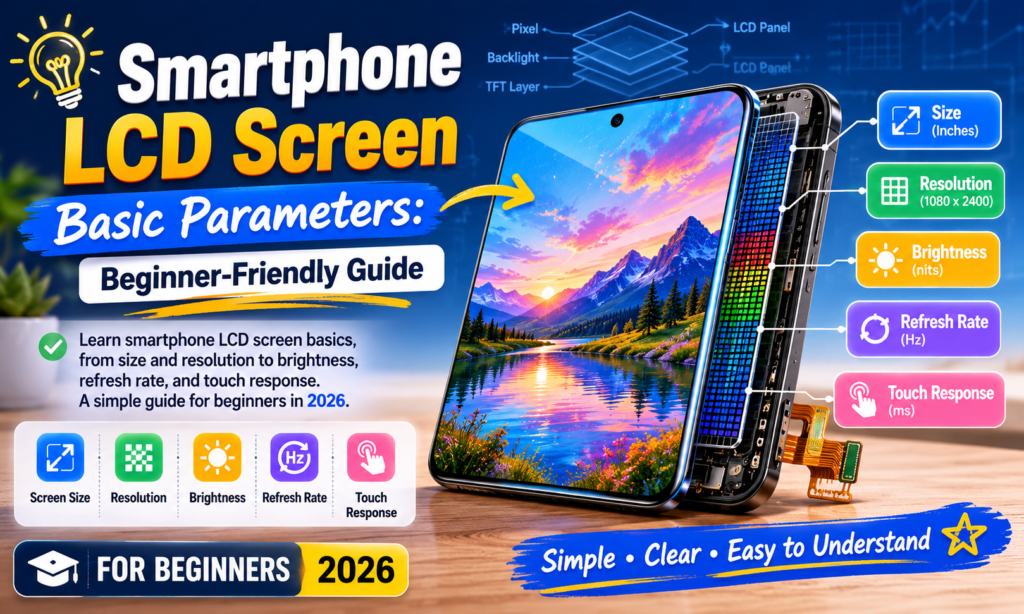
Если вы когда-нибудь смотрели на спецификацию экрана смартфона и думали, Что вообще означают все эти цифры? — ты точно не один. Такие термины, как FullHD+, 120Гц, 1000 гниды, и ИЦП тебя швыряют повсюду, но они часто больше похожи на маркетинговый язык, чем на полезную информацию.. Правда в том,, эти цифры имеют значение. Гораздо больше, чем думает большинство людей.
Экран вашего смартфона — это часть телефона, с которой вы взаимодействуете больше, чем что-либо еще.. Вы нажимаете на него сотни раз в день. Вы читаете сообщения на нем, смотреть видео, просматривать веб-сайты, редактировать фотографии, играть в игры, и, вероятно, пялишься на него перед сном больше, чем тебе хотелось бы признать. Это входная дверь вашего телефона ко всему. Если дисплей плохой, все впечатления кажутся плохими, даже если процессор быстрый и камера отличная.
Это особенно важно в сфере замены и ремонта ЖК-дисплеев смартфонов.. Покупаете ли вы замену ЖК-дисплея, поиск запчастей для перепродажи, или просто выбираем следующий телефон, понимание параметров ЖК-дисплея поможет вам принимать более обоснованные решения. Спецификация перестает быть стеной запутанных цифр и становится чем-то практичным.. Это становится контрольным списком.
Думайте об этом как о покупке автомобиля. Вам не нужно быть механиком, чтобы понять, что такое лошадиные силы., топливная экономичность, или рейтинги безопасности. Дисплеи смартфонов работают таким же образом. Вам не нужно быть инженером — вам просто нужно знать, что важно.
Что такое ЖК-экран смартфона?
ЖК означает Жидкокристаллический дисплей, и несмотря на то, что OLED доминирует во флагманских телефонных разговорах, ЖК-дисплеи остаются невероятно распространенными, особенно в бюджетных телефонах., устройства среднего класса, и сменные экраны послепродажного обслуживания.
ЖК-дисплей сам по себе не излучает свет. Вместо, оно опирается на подсветка за панелью. Затем жидкие кристаллы контролируют, сколько света проходит через цветные фильтры, создавая изображения, которые вы видите.. Вот почему ЖК-панели обычно кажутся яркими и чистыми, но не обеспечивают такого же «настоящего черного» контраста, который вы увидите на OLED..
OLED работает по-другому, поскольку каждый пиксель излучает собственный свет.. Черные пиксели могут полностью отключиться. ЖК-пиксели не могут. Даже черные области по-прежнему имеют подсветку., из-за чего черный цвет по сравнению с ним выглядит немного серым.
Все еще, ЖК-дисплей имеет ряд преимуществ:
- Более низкая стоимость
- Стабильная цветопередача
- Нет риска выгорания
- Часто проще и дешевле заменить
- Надежная долговечность
Многие пользователи по-прежнему предпочитают ЖК-дисплей по практическим соображениям.. На рынке автозапчастей, ЖК-дисплей особенно важен, поскольку затраты на замену ниже, а совместимость часто шире..
Размер экрана
Размер экрана обычно первое, на что обращают внимание люди..
Диагональ дисплея смартфона измеряется в дюймах — от одного угла до противоположного угла..
В 2026, общие размеры включают в себя:
| Размер дисплея | Типичный опыт | Лучшее для |
|---|---|---|
| 6.1″ | Компактный | Использование одной рукой |
| 6.4″ | Сбалансированный | Ежедневные пользователи |
| 6.6″ | Большой | Видео & социальные сети |
| 6.7–6,9″ | Очень большой | Игры & потоковая передача |
Большинство телефонов сейчас находятся где-то между 6.1 и 6.8 дюймы. Больше не всегда означает лучше.
Большой экран дает вам:
- Более захватывающее воспроизведение видео
- Большая клавиатура
- Улучшенная видимость игр
- Легче читать
Но это также означает:
- Сложнее работать одной рукой.
- Более тяжелое устройство
- Больше места в кармане
Выбор размера экрана является личным. Речь идет не столько о «лучшем», сколько о «лучшем для вас».
Разрешение
Разрешение показывает, сколько пикселей упаковано в дисплей..
Больше пикселей обычно означает больше деталей.
Распространенные разрешения ЖК-дисплеев смартфонов включают::
| Разрешение | Количество пикселей | Уровень качества |
|---|---|---|
| HD | 1280 × 720 | Начальный уровень |
| Full HD | 1920 × 1080 | Стандартный |
| FullHD+ | 2400 × 1080 | Современные стандарты |
| QHD | 2560 × 1440 | Премиум |
FHD+ останется лучшим вариантом в 2025–2026 годах., обеспечивает высокую резкость без дополнительного расхода заряда батареи, как в случае с QHD.
Разрешение влияет:
- Резкость текста
- Четкость фотографий
- Подробности видео
- Четкость пользовательского интерфейса приложения
Связанная метрика ИЦП (пикселей на дюйм).
Типичный PPI смартфона:
- 300 ИЦП = приемлемо
- 400 PPI = острый
- 450+ PPI = очень острый
- 500+ PPI = плотность премиум-уровня
За пределами вокруг 450 ИЦП, многие люди с трудом замечают огромную разницу при обычном использовании.
Яркость
Яркость измеряется в гниды.
Одна нит равна одной канделе на квадратный метр.. Звучит технически, но на самом деле все просто.
Больше нит = ярче дисплей.
Яркость — одна из наиболее важных характеристик ЖК-дисплея в реальном мире, поскольку от нее зависит, сможете ли вы действительно увидеть экран на открытом воздухе..
Типичное руководство по яркости:
| Яркость | Опыт |
|---|---|
| 400–500 нит | Только для внутреннего использования |
| 700–900 нит | Хороший |
| 1000+ гниды | Отличная видимость на открытом воздухе |
| 2000+ гниды | Пиковая яркость флагманского уровня |
Последние отчеты о дисплеях смартфонов рекомендуют 800–1000 нит или более для комфортной видимости солнечного света.
Яркость тоже влияет:
- HDR-воспроизведение
- читаемость при солнечном свете
- точность редактирования фотографий
- комфорт для глаз
Яркий дисплей сразу создает ощущение премиальности.. Это одна из тех характеристик, которые пользователи замечают, не зная почему..
Частота обновления
Частота обновления измеряется в Гц.
Он описывает, сколько раз в секунду обновляется дисплей..
Общие частоты обновления:
| Частота обновления | Пользовательский опыт |
|---|---|
| 60Гц | Стандартный |
| 90Гц | Гладкий |
| 120Гц | Очень гладкий |
| 144Гц+ | Ориентирован на игры |
60Гц означает 60 обновляется каждую секунду.
120Гц означает двойное значение.
Это влияет:
- плавность прокрутки
- анимация приложений
- игры
- прикосновение, ощущение
Если вы регулярно используете частоту 120 Гц, возвращение к частоте 60 Гц может показаться неожиданно прерывистым.
Но есть компромисс.
Более высокая частота обновления часто означает:
- больше использования батареи
- более высокая нагрузка на графический процессор
Вот почему дисплеи с адаптивным обновлением стали более распространенными..
К 2025, 120Гц теперь распространен даже на устройствах среднего класса..
Цветопередача
Резолюция привлекает внимание, но именно качество цвета делает дисплей живым.
Важные параметры цвета ЖК-дисплея включают в себя:
- Цветовая гамма
- Цветовая температура
- Точность цветопередачи
- Контраст
- Угол обзора
Цветовая гамма
Определяет, сколько цветов может воспроизвести дисплей..
Общие стандарты:
- sRGB
- DCI-P3
DCI-P3 шире и богаче, чем sRGB.
Точность цвета
Часто измеряется Дельта Е.
Ниже = лучше.
- Дельта Е < 3 = очень хорошо
- Дельта Е < 2 = отлично
Некоторые дисплеи премиум-класса теперь имеют калибровку почти профессионального уровня..
Точность цветопередачи имеет значение для:
- фотография
- видео
- интернет-шопинг
- воспроизведение тона кожи
Если цвета отключены, все кажется неправильным.
Сенсорное исполнение
Прикосновение больше не просто прикосновение.
Здесь есть два важных измерения.:
Сенсорная чувствительность
Насколько легко экран реагирует на касание пальца.
Плохой ЖК-дисплей может показаться запаздывающим или непоследовательным..
Сенсорная частота дискретизации
Вот как часто экран каждую секунду обнаруживает сенсорный ввод..
Измеряется в Гц.
Примеры:
- 120Гц
- 240Гц
- 360Гц
Более высокая сенсорная выборка означает:
- более быстрый ответ на нажатие
- более плавное игровое управление
- более высокая точность набора текста
Геймеры это сразу замечают.
Случайные пользователи могут не замечать этого сознательно, но они это чувствуют..
Это похоже на управление автомобилем с более жесткой управляемостью.. Вы можете это не объяснить технически, но ты чувствуешь отзывчивость.
Заключение
Понимание параметров ЖК-экрана смартфона не требует инженерных знаний.. Как только терминология станет знакомой, чтение спецификации дисплея становится намного проще.
Если ты помнишь только несколько вещей, сосредоточьтесь на этих:
- Размер экрана влияет на комфорт
- Разрешение влияет на резкость
- Яркость влияет на видимость
- Частота обновления влияет на плавность
- Цветовая производительность влияет на качество изображения
- Сенсорная выборка влияет на отзывчивость
Для большинства пользователей в 2026, отличный ЖК-дисплей обычно выглядит так:
- 6.4–6,7 дюймов
- FullHD+
- 450+ ИЦП
- 800+ нит яркость
- 120Частота обновления Гц
- сильная калибровка цвета
Эта комбинация обеспечивает золотую середину между ценой, удобство использования, и отображать производительность.
Экран — это место, где происходит вся ваша работа со смартфоном. Это сцена. Каждое приложение, каждая фотография, каждое видео сначала появляется там.
Выбирайте мудро.
Часто задаваемые вопросы
1. Какой самый важный параметр ЖК-дисплея в смартфоне?
Это зависит от использования, но яркость и разрешение обычно наиболее заметны при ежедневном использовании. Яркость влияет на читаемость на открытом воздухе, а разрешение влияет на резкость.
2. LCD лучше, чем OLED?
Не повсеместно. OLED имеет лучший черный цвет и контрастность. ЖК часто дешевле, долговечный, и без риска выгорания.
3. Стоит ли 120 Гц того??
Да, для большинства пользователей. Прокрутка стала более плавной, а телефон в целом работает быстрее..
4. Какое разрешение лучше всего подходит для ЖК-дисплеев смартфонов?
Для большинства людей, FullHD+ предлагает лучший баланс между резкостью и временем автономной работы.
5. Сколько нит хорошо для экрана смартфона?
Вокруг 800–1000 нит отлично подходит для повседневного использования, особенно на открытом воздухе. Чем выше, тем лучше под прямыми солнечными лучами..