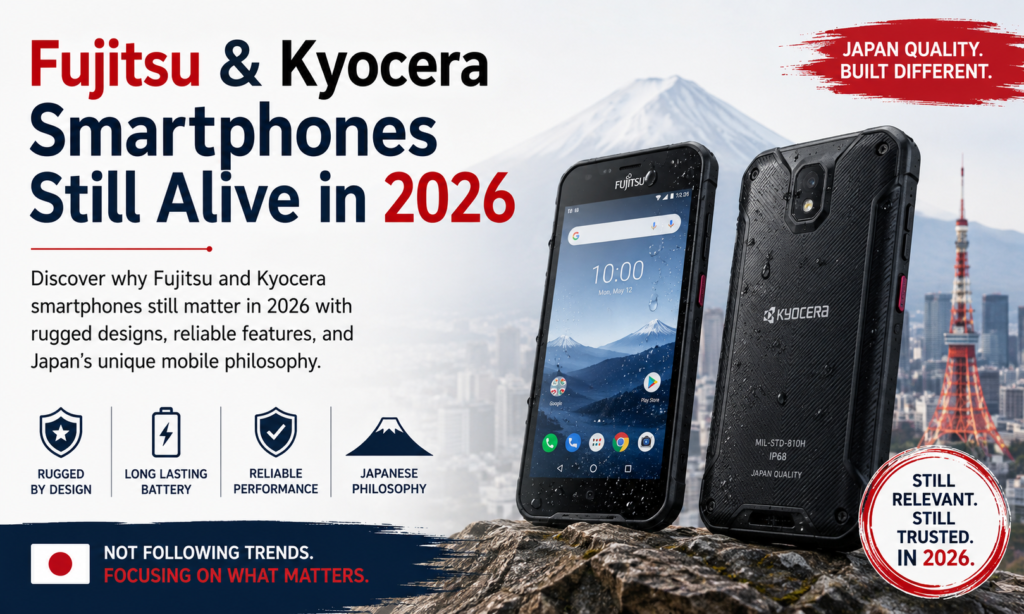
Když se dnes mluví o chytrých telefonech, konverzace se obvykle točí kolem Applu, Samsung, Xiaomi, nebo Google. Japonské značky smartphonů se už jen zřídka objevují na světových titulcích. Přesto uvnitř Japonska, jména jako Fujitsu a Kyocera stále mají silnou pověst spolehlivosti, trvanlivost, a praktické inovace. Tyto společnosti již nemohou dominovat na mezinárodním trhu, ale pokračují ve výrobě zařízení s filozofií, která působí osvěživě odlišně od těch okázalých, spec-heavy race se odehrává jinde.
Japonské smartphony jsou téměř jako klasické mechanické hodinky ve světě posedlém chytrými gadgety. Ne vždy se snaží být trendy. Místo toho, zaměřují se na dlouhodobou použitelnost, trvanlivost, a specializované funkce navržené pro skutečné situace. V 2026, Fujitsu i Kyocera mají stále věrné fanoušky, zejména mezi firemními uživateli, venkovní pracovníci, starší spotřebitelé, a lidé, kteří oceňují drsnost před humbukem na sociálních sítích.
Kyocera, zejména, získal novou pozornost díky své robustní řadě smartphonů, jako je např DuraForce EX2 a MOMENT G07, které se zaměřují na průmyslové pracovníky a outdoorové nadšence. Fujitsu, mezitím, I nadále si udržuje tišší přítomnost prostřednictvím mobilních zařízení zaměřených na podniky a pro seniory. Podle nedávných diskusí v japonském mobilním průmyslu a reakcí komunity, mnoho uživatelů stále obdivuje tyto značky spíše pro jejich filozofii praktického designu než čistě výkonnostní čísla.
Příběh smartphonů Fujitsu a Kyocera už ve skutečnosti není o dominanci na trhu. Jde o přežití, specializace, a zůstat věrný jedinečnému japonskému přístupu k technologii. Už jen díky tomu jsou v dnešním světě chytrých telefonů fascinující.
Vzestup japonských značek smartphonů
Jak Japonsko kdysi ovládalo mobilní inovace
Dávno předtím, než iPhone všechno změnil, Japonsko už žilo v budoucnosti. Japonské mobilní telefony na počátku 21. století mohly procházet internet, sledovat televizní vysílání, používat mobilní platby, posílat emaily, a dokonce podporují pokročilé herní funkce. Zatímco velká část světa stále mačkala numerické klávesnice na jednoduchých telefonech, Japonští spotřebitelé již používali vysoce pokročilá zařízení „keitai“..
Společnosti jako Fujitsu, Ostrý, NEC, Panasonic, a Kyocera během této éry prosperovaly, protože japonští telekomunikační operátoři agresivně prosazovali inovace. Telefony byly hluboce integrovány s japonským každodenním životem. Funkce jako mobilní platby, voděodolnost, a podpora veřejné dopravy existovaly roky předtím, než se staly celosvětově běžnými. Mnoho analytiků se domnívá, že raný úspěch Japonska se ironicky stal jedním z důvodů, proč se jeho značky později mezinárodně trápily.
Japonský trh se vyvíjel téměř jako izolovaný ekosystém. Domácí spotřebitelé byli spokojeni s jejich pokročilými místními zařízeními, takže výrobci měli jen malou potřebu expandovat globálně. Diskuse na Redditu o japonské historii smartphonů to často popisují jako „Galapagos efekt,“, kde se japonské telefony vyvíjely nezávisle na globálních trendech.
Když Apple a Android nakonec sjednotily globální trh smartphonů, Japonské značky čelily obtížnému přechodu. Jejich odborné znalosti byly hluboce spjaty s požadavky domácích operátorů spíše než s celosvětově konkurenčními softwarovými ekosystémy. V době, kdy se přizpůsobili, Samsung, Jablko, a čínští výrobci již převzali kontrolu nad mezinárodními trhy.
Proč se japonské telefony staly mezerou mimo Japonsko
Jedním z hlavních důvodů, proč Fujitsu a Kyocera bojovaly mezinárodně, byla jejich velká závislost na japonských letadlových lodích. Specifikace zařízení byly často přizpůsobeny pro místní sítě a služby namísto univerzální globální kompatibility. To znesnadnilo a prodražilo mezinárodní expanzi.
Dalším problémem byl software. Japonští výrobci vynikali v hardwarovém inženýrství, ale často postrádali leštěné softwarové ekosystémy, které spotřebitelé očekávali poté, co Android a iOS dospěly.. Zatímco Apple se zaměřil na jednoduchost a Samsung prosadil agresivní inovace, Japonské značky nadále upřednostňovaly praktickou odolnost a konzervativní výběr designu.
Ironicky, mnohé funkce, které japonské společnosti propagovaly, se nakonec staly průmyslovými standardy. Vodotěsné telefony, bezkontaktní platby, skládací flip designy, a vysoce kvalitní fotoaparáty byly všechny oblasti, kde japonské společnosti brzy inovovaly. Přesto nedokázali tuto inovaci přeměnit v dlouhodobou globální dominanci.
Stále, být „niche“ není vždy negativní. Dnes, Fujitsu a Kyocera velmi dobře obsluhují vysoce specifické skupiny uživatelů. Jejich telefony nejsou navrženy jako módní doplňky, ale spíše jako spolehlivé pracovní nástroje. V mnoha odvětvích, na čem záleží mnohem víc než na srovnávacích skóre.
Vysvětlení chytrých telefonů Fujitsu
Historie mobilních zařízení Fujitsu
Společnost Fujitsu se telekomunikacemi zabývá již desítky let. Společnost postavila vše od počítačů po síťové systémy, a mobilní telefony se staly přirozeným rozšířením jejího technologického portfolia. Smartphony Fujitsu byly obzvláště populární v Japonsku prostřednictvím ŠIPKY sestava, známý pro spolehlivost a funkce orientované na podnikání.
Na rozdíl od společností, které se honí globální uznání značky, Společnost Fujitsu se výrazně zaměřila na domácí uživatele. Jeho zařízení často vyhovovala starším spotřebitelům, firemní klienty, a lidé, kteří preferovali přímočarou funkčnost před okázalou estetikou. Tato strategie omezila mezinárodní popularitu, ale vybudovala silnou loajalitu zákazníků v Japonsku.
Chytré telefony Fujitsu si získaly pověst vynikající vodotěsnosti, odolná konstrukce, a snadno použitelná rozhraní. Mnoho zařízení také obsahovalo funkce zaměřené na bezpečnost dávno předtím, než se kybernetická bezpečnost stala hlavním problémem smartphonů. Autentizace pomocí otisku prstu, režimy zobrazení orientované na soukromí, a bezpečná podniková integrace byly oblasti, ve kterých společnost Fujitsu excelovala.
Přestože mobilní podnikání Fujitsu v průběhu let změnilo vlastnické struktury, vliv jeho designové filozofie zůstává viditelný na japonském mobilním trhu. I dnes, mnoho japonských uživatelů stále spojuje zařízení Fujitsu spíše s důvěryhodností a praktičností než funkcemi zaměřenými na zábavu.
Síla Fujitsu v podnikových a seniorských telefonech
Jedním z nejchytřejších kroků společnosti Fujitsu bylo zjištění, že ne každý uživatel smartphonu chce špičkový herní výkon nebo triky s fotoaparátem poháněné umělou inteligencí.. Mnoho lidí prostě chce telefon, který bude spolehlivě fungovat každý den. Fujitsu se do této reality opřel.
Zvláště důležitým segmentem trhu se staly telefony vhodné pro seniory. Japonsko má jednu z nejstarších populací na světě, a Fujitsu navrhla zařízení s většími ikonami, zjednodušená rozhraní, hlasité reproduktory, a funkce nouzové podpory. Tyto telefony upřednostňovaly dostupnost spíše než honbu za trendy specifikacemi.
Podnikoví uživatelé také ocenili konzervativní přístup Fujitsu. Firmy často oceňují dlouhodobou softwarovou podporu, stabilní výkon, a bezpečnost více než okázalé inovace. Zařízení Fujitsu se často zaměřovala přesně na tyto priority.
Tato strategie odráží, jak se některé automobilové značky zaměřují na spolehlivost namísto rychlosti. Toyota Corolla se nemusí otáčet jako Ferrari, ale miliony tomu věří každý den. Smartphony Fujitsu zaujímají podobný prostor v japonském mobilním ekosystému.
Oblíbené funkce smartphonu Fujitsu
| Funkce | Proč se to uživatelům líbí |
|---|---|
| Vodotěsné provedení | Spolehlivý v dešti a drsných podmínkách |
| Jednoduché rozhraní | Jednodušší pro starší uživatele |
| Bezpečnostní funkce | Lepší ochrana podniku |
| Dlouhá životnost baterie | Ideální pro každodenní praktické použití |
| Odolná konstrukce | Méně křehké než prémiové vlajkové lodě |
Mnoho zařízení Fujitsu se také silně zaměřilo na využitelnost zaměřená na člověka. Některé modely obsahovaly hlasovou asistenci poháněnou umělou inteligencí, která byla přizpůsobena speciálně pro starší uživatele. Jiné se vyznačovaly antibakteriálními povlaky a snadno uchopitelnými texturami pro lepší pohodlí.
Toto nejsou funkce, které generují virální recenze na YouTube, ale skutečně zlepšují každodenní použitelnost pro specifické skupiny lidí.
Smartphony Kyocera v 2026
Strategie pro robustní smartphony společnosti Kyocera
Kyocera se ve srovnání s Fujitsu vydala velmi odlišnou cestou. Místo toho, abychom se soustředili hlavně na jednoduchost přátelskou seniorům, Kyocera zdvojnásobila robustní smartphony určené do extrémních podmínek. Toto rozhodnutí pomohlo společnosti přežít, zatímco mnoho jiných japonských značek smartphonů úplně zmizelo.
Odolný trh se smartphony se může zdát malý, ale je to překvapivě cenné. Stavební dělníci, doručovací společnosti, logistické firmy, pohotovostní pracovníci, vojenští uživatelé, a outdooroví dobrodruzi potřebují zařízení schopná přežít drsná prostředí. Kyocera vybudovala svou pověst právě na tomto požadavku.
Nejnovější modely Kyocera nadále zdůrazňují standardy odolnosti na vojenské úrovni, dlouhodobá spolehlivost, a průmyslová využitelnost. Podle nejnovějších oznámení společnosti Kyocera, nové DuraForce EX2 zahrnuje podporu pro Wi-Fi HaLow, umožňující komunikaci na dálku v prostředích, kde tradiční sítě bojují.
Řada DuraForce
The DuraForce řada je určena především pro podnikové a průmyslové uživatele. Tato zařízení mají zesílené rámy, odolnost proti nárazům, vyměnitelné baterie, a podpora skenování čárových kódů.
Kyocera DuraForce EX2 údajně projde více MIL-STD-810H testuje odolnost a podporuje provoz v náročných prostředích, kde by běžné vlajkové telefony mohly snadno selhat.
Díky tomu je telefon méně luxusním gadgetem a více profesionálním bezpečnostním zařízením.
Řada TORQUE
The TOČIVÝ MOMENT série se zaměřuje na outdoorové nadšence a uživatele dobrodružství. nejnovější MOMENT G07 klade důraz na extrémní houževnatost, voděodolnost, a venkovní funkce. Kyocera uvádí, že zařízení prošlo rekordním počtem testů odolnosti pro sérii.
Představte si lezení po horách, jízda na kajaku, nebo práci na zabláceném staveništi bez neustálých obav z prasknutí obrazovky. To je přesně životní styl společnosti Kyocera.
Nejnovější modely smartphonů Kyocera
| Model | Hlavní zaměření | Klíčová funkce |
|---|---|---|
| DuraForce EX2 | Podnikové robustní použití | Podpora Wi-Fi HaLow |
| HODNÝ SX5 | Obchodní smartphone | Dlouhodobá podpora OS |
| MOMENT G07 | Venkovní dobrodružství | Extrémní odolnost |
The HODNÝ SX5 také zaslouží pozornost. Vydáno pro firemní uživatele, nabízí odolnost proti vodě a prachu IP69 spolu s dlouhodobou podporou Androidu a funkcemi zaměřenými na podniky.
Proč outdooroví pracovníci milují telefony Kyocera
Moderní vlajkové telefony jsou krásné, ale křehké. Pusťte jednu na beton, a náklady na opravu mohou být bolestivé. Telefony Kyocera mají opačný přístup. Jejich zařízení jsou záměrně postavena jako nástroje spíše než šperky.
Pracovníci v logistice, přeprava, konstrukce, a výroba často upřednostňuje trvanlivost před estetikou. Prasklá obrazovka během práce může narušit provoz a stát peníze. Kyocera toto riziko dramaticky snižuje.
Online diskuze komunity stále chválí odolná zařízení Kyocera za spolehlivost a dlouhodobé přežití v drsných podmínkách. Někteří uživatelé s nimi dokonce zacházejí jako s „digitálními detoxikačními“ zařízeními, protože některé modely Kyocera se vyhýbají nadměrnému rušení chytrými telefony a zároveň poskytují základní připojení..
Tato rovnováha mezi užitečností a jednoduchostí se v dnešním hyperpropojeném světě stala překvapivě atraktivní.
Smartphony Fujitsu vs Kyocera
Srovnání filozofie designu
Fujitsu a Kyocera představují dvě velmi odlišné interpretace japonské filozofie designu smartphonů.
Fujitsu klade důraz na pohodlí, použitelnost, jednoduchost, a dostupnost. Jeho zařízení se často zaměřují na kancelářské pracovníky, starší spotřebitelé, a praktické uživatele, kteří oceňují stabilitu. Kyocera, mezitím, se silně zaměřuje na fyzickou odolnost a průmyslovou funkčnost.
Je to skoro jako srovnávat pohodlnou kancelářskou židli s vojenskými botami. Obojí je užitečné, ale každá slouží úplně jinému účelu.
Trvanlivost a rozdíly v hardwaru
Kyocera jednoznačně dominuje, pokud jde o fyzickou odolnost. Mnoho modelů zahrnuje certifikace vojenské úrovně, odolnost proti nárazům, a průmyslové vlastnosti. Telefony Fujitsu jsou také odolné, ale obecně nejsou určeny pro extrémní prostředí.
Zde je jednoduché srovnání:
| Kategorie | Fujitsu | Kyocera |
|---|---|---|
| Cílové publikum | Senioři & podnik | Venkovní & průmyslový |
| Drsnost | Mírný | Extrémně vysoká |
| Styl designu | Jednoduchý & praktický | Tvrdý & robustní |
| Softwarové zaměření | Přístupnost | Produktivita v terénu |
| Pozice na trhu | Domácí výklenek | Robustní globální výklenek |
Software a uživatelská zkušenost
Zařízení Fujitsu obvykle upřednostňují intuitivní rozhraní a stabilitu. Zařízení Kyocera upřednostňují funkčnost pod zátěží. Žádná ze značek agresivně nepřizpůsobuje Android tak, jak to často dělá Samsung nebo Xiaomi.
Tento jednodušší softwarový přístup ve skutečnosti oslovuje mnoho uživatelů unavených nabubřelými zážitky z chytrých telefonů. Ne každý chce tapety generované umělou inteligencí nebo desítky předinstalovaných aplikací.
Proč jsou japonské smartphony jiné
Zaměřte se na spolehlivost nad trendy
Japonské značky smartphonů se často chovají jinak, protože upřednostňují spolehlivost před pronásledováním trendů. Zatímco mnoho globálních společností se výrazně zaměřuje na megapixely fotoaparátu nebo skládací displeje, Japonské značky často kladou praktičtější otázku: „Bude toto zařízení i po letech používání spolehlivě fungovat??“
Tato filozofie utváří vše od hardwarových materiálů po návrh softwaru.
V Japonsku, důvěra a spolehlivost zákazníků mají obrovský kulturní význam. Produkt, který často selhává, hluboce poškozuje pověst značky. Tento způsob myšlení ovlivňuje způsob, jakým Fujitsu a Kyocera přistupují k vývoji smartphonů.
Jedinečné japonské vlastnosti
Japonské smartphony historicky obsahovaly funkce roky předtím, než je přijali globální konkurenti:
- Hydroizolace
- Integrace mobilních plateb
- Odolné provedení flip-phone
- Režimy zobrazení soukromí
- Pokročilé možnosti usnadnění
I dnes, mnoho japonských zařízení si udržuje specializované funkce navržené pro místní spotřebitelské zvyky a pracovní prostředí.
Stále stojí za nákup telefonů Fujitsu a Kyocera? 2026?
Nejlepší uživatelé pro telefony Fujitsu
Telefony Fujitsu zůstávají skvělou volbou:
- Starší uživatelé
- Podniková prostředí
- Uživatelé upřednostňují jednoduchost
- Lidé, kteří nemají rádi příliš komplikovaný software
Tato zařízení nejsou postavena tak, aby konkurovala herním telefonům nebo vlajkovým lodím prémiových fotoaparátů. Jsou navrženy tak, aby fungovaly konzistentně bez zbytečného rozptylování.
Nejlepší uživatelé pro telefony Kyocera
Zařízení Kyocera jsou ideální pro:
- Stavební dělníci
- Outdooroví dobrodruzi
- Řidiči dodávky
- Pohotovostní personál
- Uživatelé, kteří chtějí ultra odolné telefony
Pokud váš smartphone pravidelně čelí pádům, prach, déšť, bláto, nebo drsném prostředí, Zařízení Kyocera dávají mnohem větší smysl než křehké prémiové vlajkové lodě.
Budoucnost japonských značek smartphonů
Mohou japonské značky znovu soutěžit?
Japonské smartphony pravděpodobně v dohledné době znovu nezískají hlavní světovou dominanci. Jablko, Samsung, a čínské značky již ovládají většinu světového trhu. Přesto Fujitsu a Kyocera nemusí potřebovat masivní podíl na trhu, aby úspěšně přežily.
Specializace může být mocná.
Obchod s odolnými smartphony Kyocera se nadále vyvíjí s novými podnikovými technologiemi a funkcemi průmyslové komunikace. Zaměření společnosti Fujitsu na dostupnost a spolehlivost stále slouží důležitým tržním segmentům v Japonsku.
V mnoha ohledech, tyto značky představují alternativní filozofii ve světě chytrých telefonů. Místo neustálého honění za trendy, zaměřují se na to, aby velmi dobře sloužili konkrétním uživatelům. Tato strategie nemůže nikdy vytvořit globální humbuk, ale i tak si dokáže vybudovat věrné dlouhodobé zákazníky.
Jak se smartphony stále více podobají, specializovaná specializace by se ve skutečnosti mohla časem stát cennější.
Závěr
Smartphony Fujitsu a Kyocera vyprávějí fascinující příběh o jedinečném vztahu Japonska k technologiím. Tyto značky již nemohou dominovat mezinárodním titulkům, ale nadále slouží uživatelům, kteří oceňují spolehlivost, trvanlivost, a praktičnost nad marketingovým humbukem.
Fujitsu se zaměřuje na dostupnost, podniková spolehlivost, a uživatelsky přívětivá jednoduchost. Kyocera posouvá konstrukci odolných smartphonů na působivou úroveň, stavět zařízení schopná přežít podmínky, které by zničily běžné telefony.
Ve světě posedlém okázalými vlajkovými loděmi, které jsou uváděny na trh každý rok, Japonské značky smartphonů se cítí osvěžující uzemnění. Jde jim méně o předvádění a více o odvedení práce.
Už jen kvůli tomu stojí za to si je zapamatovat 2026.
Časté časté
1. Jsou smartphony Fujitsu stále dostupné? 2026?
Ano. Produkty smartphonů související s Fujitsu stále existují hlavně v Japonsku, Zaměřuje se spíše na podnikové uživatele a zařízení vhodná pro seniory než na mezinárodní vlajkovou konkurenci.
2. Čím jsou chytré telefony Kyocera výjimečné?
Smartphony Kyocera jsou proslulé extrémní odolností, robustní provedení, testování na vojenské úrovni, a vhodnost pro průmyslové nebo venkovní prostředí.
3. Jsou telefony Kyocera vhodné pro venkovní práci?
Absolutně. Mnoho modelů Kyocera je speciálně navrženo pro staveniště, logistické práce, pohotovostní služby, a drsné venkovní podmínky.
4. Proč japonské značky smartphonů ztratily podíl na globálním trhu?
Japonské značky se výrazně soustředily na domácí trhy, zatímco Apple, Samsung, a čínské společnosti expandovaly mezinárodně se silnějšími softwarovými ekosystémy a širšími marketingovými strategiemi.
5. Pokud si dnes koupíte telefon Fujitsu nebo Kyocera?
Záleží na vašich potřebách. Fujitsu vyhovuje uživatelům požadujícím jednoduchost a spolehlivost, zatímco Kyocera je ideální pro uživatele, kteří potřebují maximální odolnost a robustní výkon.