Zavedení
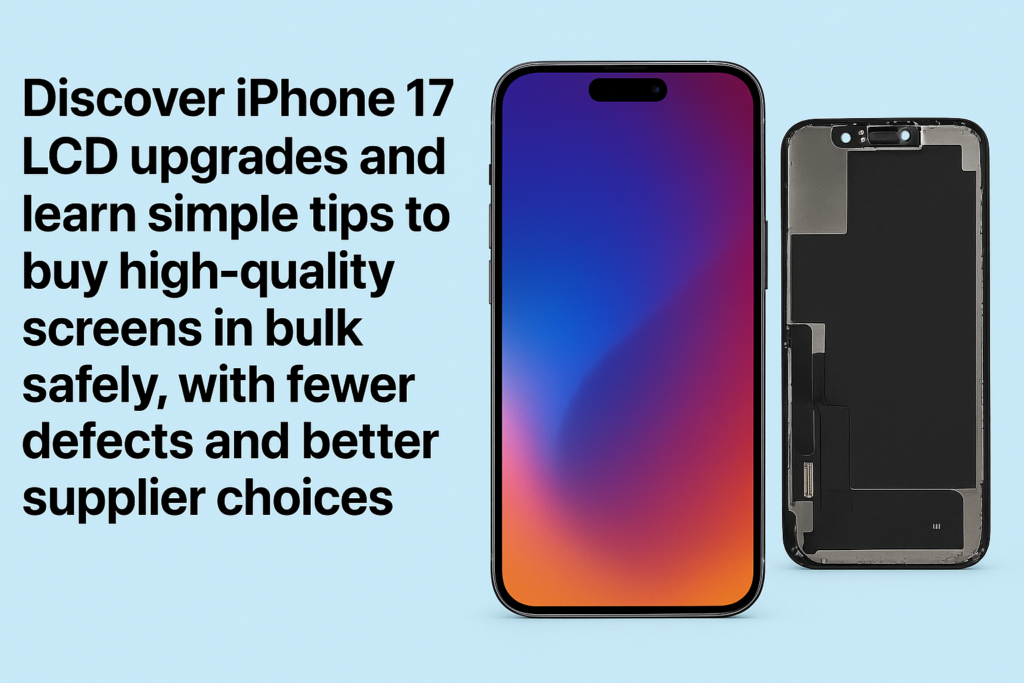
iPhone 17 Očekává se, že řada přinese další skok vpřed v technologii displeje, zvedání laťky pro jasnost, výkon, a trvanlivost. Pokud se zabýváte opravou mobilních telefonů, velkoobchod, nebo získávání dílů, udržet si náskok před těmito upgrady je zásadní. Pochopení toho, co se změnilo – a jak koupit správné obrazovky za správnou cenu – pomáhá předcházet nákladným chybám.
V tomto průvodci, se dozvíte klíčové aktualizace v iPhone 17 technologie displeje a praktická doporučení pro hromadný nákup LCD obrazovek iPhone bezpečně a efektivně.
Přehled iPhone 17 Technologie LCD/Display
Očekávaná vylepšení ve struktuře panelu
Apple neustále vylepšuje své zobrazovací technologie. Pro iPhone 17 série, dodavatelé očekávají kompaktnější sestavu panelů, čímž je obrazovka tenčí a zároveň pevnější.
Vylepšená obnovovací frekvence & Jas
Očekává se vyšší špičkový jas a plynulejší obnovovací výkon, nabízí lepší zážitek ze sledování zejména venku.
Přesnost barev & Kalibrace
Vylepšená kalibrace zajišťuje přesnější reprodukci barev, což je zásadní pro digitální designéry a tvůrce médií.
Lepší oční pohodlí
Apple nadále zlepšuje výkon proti blikání pomocí optimalizovaného stmívání PWM, snížení zrakové únavy.
Klíčové technické upgrady v iPhone 17 Zobrazit
Tenčí a odolnější skleněné vrstvy
Díky novým technikám laminace je displej flexibilnější a zároveň odolnější, zlepšení odolnosti proti prasklinám.
Pokročilé podsvícení & IC ovladače s nízkou spotřebou
S upgradovanými IC ovladačů, obrazovka spotřebovává méně energie a zároveň nabízí lepší stabilitu jasu.
Silnější dotyková citlivost
Očekávejte rychlejší odezvu a přesnější rozpoznání dotyku, zejména pro herní a kreslící aplikace.
Odolnost proti pádu & Ochrana proti poškrábání
Apple vylepšuje skleněné povrchy, aby omezil mikroškrábance a zvýšil životnost při náhodném pádu.
Vylepšení energetické účinnosti
Vylepšené materiály podsvícení vyžadují méně energie, prodloužení životnosti baterie – zejména u větších modelů.
Co dělá iPhone 17 Obrazovky se obtížněji vyměňují
Vyšší integrace komponent
Více komponent — senzory, dotykový IC, vrstvy — jsou zataveny přímo do modulu, snížení opravitelnosti.
Komplexní technologie lepení
Silnější lepidla OCA a lepení jemných pixelů ztěžují separaci a renovaci.
Vyšší náklady na opravy
Kvůli složité struktuře, náhradní obrazovky jsou dražší na výrobu, kontrolovat, a udržovat.
Porozumění originálu, Zrekonstruovaný & Poprodejní obrazovky
Co ve skutečnosti znamená „originál“.
Většina „originálních“ obrazovek na trhu není z výroby nová. Obvykle, jsou:
- Vytaženo z použitých telefonů
- Repasované s novým sklem
- Původní kvalita s originálním IC
OEM vs. Repasované vs. Kopie
- OEM = sestavené původními továrnami dodavatelského řetězce
- Zrekonstruovaný = originální vnitřní díly + vyměněné sklo
- Kopírování/Poprodejní servis = zcela vyrobené třetí stranou
Jak identifikovat každého
- Zkontrolujte výtisky flex kabelu
- Sledujte jas a tón
- Zkontrolujte podsvícení a kvalitu rámu
Tipy pro hromadný nákup iPhone 17 LCD obrazovky
Spolupracujte s ověřenými dodavateli
Dodavatele vždy vybírejte transparentně, zažít, a stabilní kvalitu výstupu.
Používejte profesionální testovací zařízení
Nezbytné jsou nástroje jako MIPI testery a stárnoucí stojany.
Vyváženost kvality a ceny
Vyhněte se nejlevnějším možnostem – často vedou k vyšší chybovosti a stížnostem zákazníků.
Kontrolní seznam kontroly kvality
Jas & Barva
Otestujte jednotnost pomocí standardních barevných panelů.
Klepněte na Testování
Zkontrolujte citlivost ve všech oblastech, včetně hran.
Mrtvý pixel & Testování netěsnosti světla
Používejte čistě barevné obrazovky (černý, bílý, červený, modrý, zelený).
Rám & Zarovnání skla
Zajistěte strukturální konzistenci pro snadnou instalaci.
Stabilita IC
Proveďte testy stárnutí a zkontrolujte, zda se IC přehřívá nebo nebliká.
Obal & Návrhy dopravy
Použijte antistatickou ochranu
Obrazovky jsou citlivé na statickou elektřinu.
Nárazuvzdorné vrstvení
Bublinková fólie, EVA pěna, a ochranné podnosy snižují poškození při přepravě.
Chraňte Flex kabely
Ohýbání nebo tlak může způsobit okamžité poruchy.
Běžné problémy při hromadném nákupu obrazovek
Rozdíly v barevných tónech
Každá šarže může vykazovat drobné barevné odchylky.
Klepněte na Problémy s IC
Nekvalitní integrované obvody způsobují zpoždění, dotek ducha, nebo mrtvých oblastech.
Chyby v kompatibilitě modelu
Pro iPhone 17 varianty, potvrdit přesná čísla modelů.
Nepravdivá tvrzení dodavatele
Mnoho prodejců označuje repasované výrobky jako originál.
Jak snížit míru vad
Kontrola vstupní kvality (IQ)
Otestujte každou dávku při příjezdu.
Audity dodavatelů
Pokud je to možné, navštivte továrny a zkontrolujte výrobní postupy.
Dávkové testování
Náhodně vyberte jednotky pro testy stárnutí a funkční testy.
Nejlepší postupy pro dlouhodobou spolupráci s dodavateli
Nastavte KPI
Definujte přijatelné míry vad a doby odezvy.
Dohodněte se na zásadách vrácení
Jasné postupy RMA chrání vaše podnikání.
Rozvíjejte dlouhodobá partnerství
Stabilní spolupráce přináší lepší ceny, prioritní dodávka, a vlastní kontrola kvality.
Závěr
iPhone 17 displej přináší výrazné zlepšení odolnosti, jasnost, a účinnost. Pro velkoobchodníky, opravny, a správci zdrojů, pochopení těchto upgradů vám pomůže činit chytřejší nákupní rozhodnutí. Při správném výběru dodavatele, kontrola kvality, a logistické plánování, můžete minimalizovat rizika a zajistit stálou kvalitu zásob.
Časté časté
1. Jsou iPhone 17 obrazovky snadno renovovatelné?
Žádný. Díky pevnějšímu spojení a tenčím vrstvám, renovace je náročnější než u starších modelů.
2. Jaký je nejbezpečnější typ obrazovky pro hromadné nakupování?
OEM nebo vysoce kvalitní repasované obrazovky nabízejí nejlepší rovnováhu mezi cenou a kvalitou.
3. Jak se vyhnout falešným „originálním“ obrazovkám?
Zkontrolujte kódy flex kabelů, porovnat tón displeje, a spolupracovat s ověřenými dodavateli.
4. Bude iPhone 17 obrazovky budou dražší?
Ano. Vyšší integrace a nové materiály zvyšují výrobní náklady.
5. Jaké testovací nástroje jsou nezbytné pro hromadnou kontrolu obrazovky?
MIPI testery, dotykový testovací software, a stárnoucí stojany jsou nezbytnými nástroji.