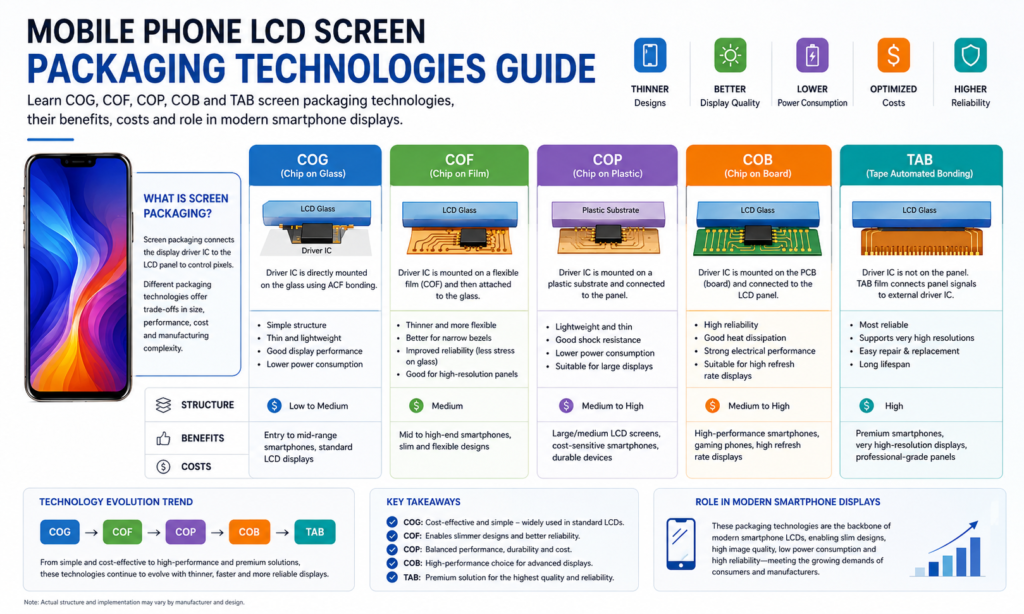
Porozumění balení LCD obrazovky v chytrých telefonech
Co je balení LCD obrazovky?
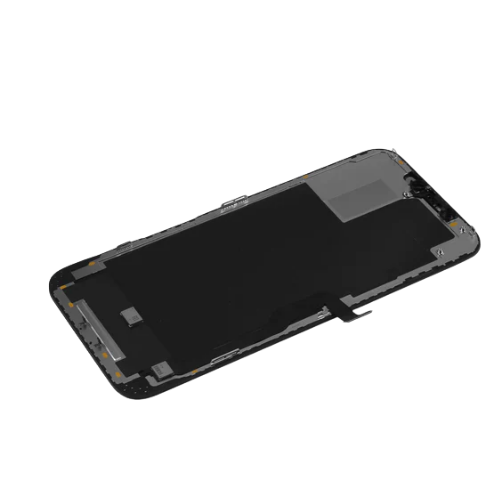
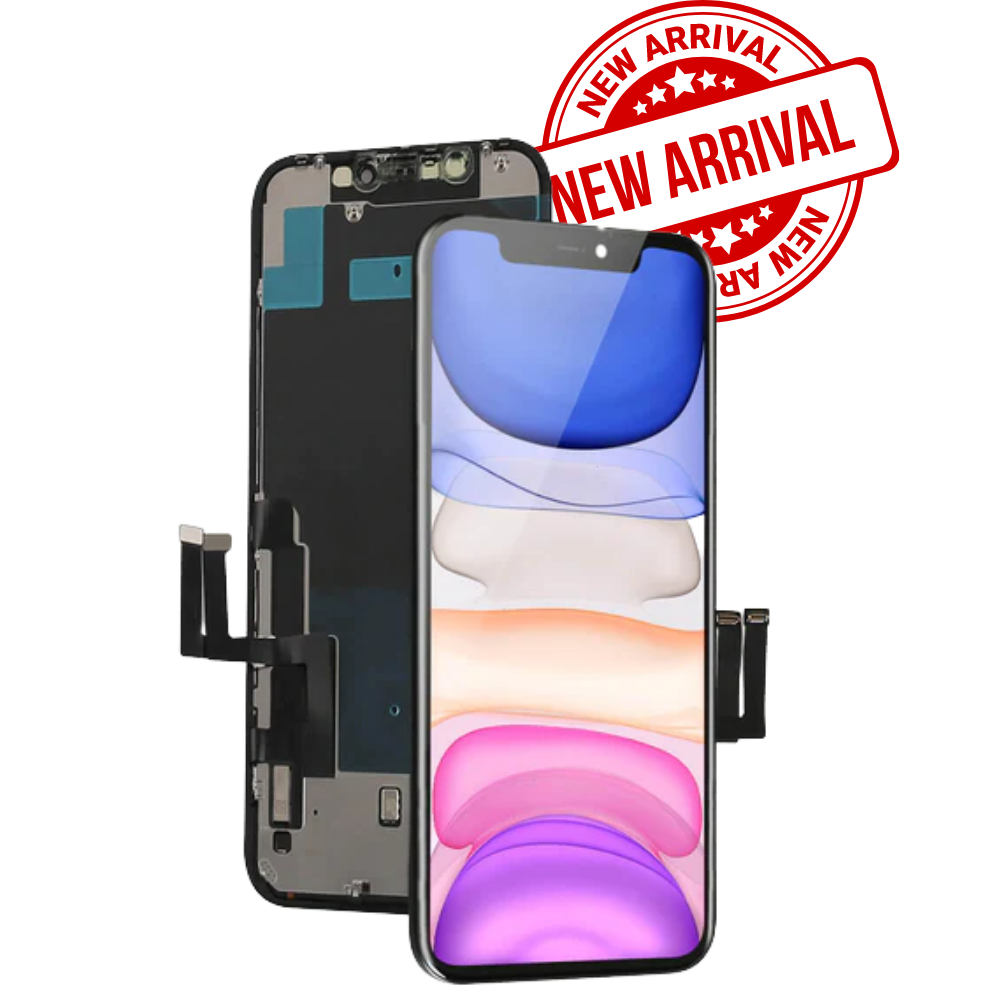
Když lidé mluví o displejích smartphonů, obvykle se zaměřují na velikost obrazovky, rezoluce, obnovovací frekvence, nebo jas. Přesto se za každým displejem skrývá vysoce sofistikovaný výrobní proces známý jako technologie balení obrazovky. Jednoduše řečeno, balení označuje metodu použitou k připojení integrovaných obvodů ovladače displeje (Integrované obvody) s LCD nebo OLED panelem. Toto připojení je zodpovědné za přenos obrazových dat, ovládání pixelů, a zajištění správné funkce displeje.
Představte si obalovou technologii jako nervový systém obrazovky chytrého telefonu. Bez ohledu na to, jak pokročilý může být zobrazovací panel, nemůže efektivně fungovat bez spolehlivého spojení mezi čipem ovladače a substrátem displeje. Způsoby balení určují nejen elektrický výkon obrazovky, ale také její tloušťku, trvanlivost, opravitelnost, a výrobní náklady.
Za poslední desetiletí, Výrobci smartphonů tlačí na tenčí zařízení, užší rámečky, a větší poměr obrazovky k tělu. K dosažení těchto cílů, výrobci displejů neustále vyvíjejí pokročilejší obalové technologie. Dnes, termíny jako např COG, COF, POLICAJT, COB, a TAB se staly běžnými v průmyslu výroby displejů.
Pochopení těchto technologií je důležité zejména pro opravny mobilních telefonů, velkoobchodníci, renovátoři, a distributory obrazovek. Různé způsoby balení přímo ovlivňují kvalitu produktu, kompatibilita, a stanovení cen. Znalost rozdílů může firmám pomoci lépe se rozhodovat o nákupu a zároveň pomoci spotřebitelům pochopit, proč některé obrazovky stojí výrazně více než jiné.
Proč na technologii balení záleží
Balení obrazovky je mnohem důležitější, než si většina uživatelů uvědomuje. Ovlivňuje několik aspektů výkonu a designu smartphonu. Například, moderní vlajkové telefony se často vyznačují extrémně úzkými rámečky, které se zdají být téměř neviditelné. Tohoto vizuálního efektu je do značné míry dosaženo pomocí pokročilých metod balení, jako je COF a COP.
Spolehlivost displeje ovlivňuje také balení. Špatně zabalená obrazovka může trpět nestabilitou signálu, dotykové poruchy, zkreslení obrazu, nebo předčasné selhání součásti. Na rozdíl od toho, vysoce kvalitní balení zvyšuje trvanlivost, zlepšuje odvod tepla, a prodlužuje životnost produktu.
Výrobci také využívají balicí technologii k optimalizaci efektivity výroby. Některé způsoby balení snižují spotřebu materiálu a složitost montáže, pomáhá snížit výrobní náklady. Jiní upřednostňují prémiový výkon, umožňující vyšší kvalitu zobrazení na úkor zvýšených výrobních nákladů.
Jak se smartphony neustále vyvíjejí směrem ke skládacím, rolovací, a ultratenké designy, balicí technologie se stala klíčovou konkurenční výhodou. Už to není jen výrobní proces – je to strategický faktor utvářející budoucnost inovací mobilních displejů.
Evoluce balení displeje mobilních telefonů
Od tlustých rámečků po celoobrazovkové návrhy
Smartphone průmysl prošel pozoruhodnou transformací. První mobilní telefony se vyznačovaly tlustými rámečky a relativně malými displeji. V těch dnech, tradiční balicí technologie byly dostatečné, protože prostorová omezení nepředstavovala velký problém.
Jak se poptávka spotřebitelů posunula směrem k větším obrazovkám, aniž by se zvětšila velikost zařízení, výrobci čelili obtížné výzvě. Potřebovali minimalizovat šířku rámečku při zachování výkonu a spolehlivosti displeje. Tato výzva urychlila vývoj pokročilých obalových technologií.
Zpočátku, Technologie COG dominovala na trhu LCD díky své jednoduchosti a nízké ceně. Však, jak se návrhy smartphonů stávaly sofistikovanějšími, Omezení COG byla stále zjevnější. Potřeba užších hranic vedla k širokému přijetí technologie COF, zejména u prémiových LCD displejů.
Zavedení flexibilních OLED panelů dále způsobilo revoluci v tomto odvětví. Flexibilní substráty umožnily vývoj technologie COP, umožňuje výrobcům skládat obvody displeje za samotný panel. Tato inovace dramaticky zmenšila spodní rámeček a vydláždila cestu moderním bezrámečkovým smartphonům.
Jak obal ovlivňuje moderní smartphony
Dnešní smartphony jsou technické zázraky, které kombinují estetiku s funkčností. Při dosahování této rovnováhy hraje ústřední roli obalová technologie. Ovlivňuje nejen vzhled, ale také vnitřní uspořádání komponent, kapacita baterie, a celkovou tloušťkou zařízení.
Například, chytrý telefon využívající technologii COP dokáže přidělit více místa na přední straně displeje a zároveň snížit zbytečné okrajové oblasti. To zlepšuje uživatelský dojem a zlepšuje vizuální pohlcení. Podobně, pokročilé balicí techniky podporují displeje s vysokou obnovovací frekvencí, Výkon HDR, a zlepšenou odezvu na dotek.
Vliv přesahuje spotřebitelská zařízení. Inovace obalů jsou pro tablety také zásadní, automobilové displeje, nositelná zařízení, a průmyslové obrazovky. Požadavky na zobrazení jsou stále náročnější, technologie balení se stále vyvíjí spolu s technologií panelů.
COG (čip Na Sklo) Technologie balení
Struktura a pracovní princip
COG (čip Na Sklo) je jednou z prvních a nejrozšířenějších technologií pro balení displejů. V této metodě, IC ovladače je namontován přímo na skleněný substrát LCD panelu pomocí vodivých lepicích materiálů.
Proces zahrnuje přesné vyrovnání čipu ovladače s elektrodami displeje. Po připojení, elektrická spojení jsou vytvořena prostřednictvím vodivých částic uložených ve spojovacím materiálu. To vytváří kompaktní a efektivní komunikační cestu mezi IC a zobrazovacím panelem.
Technologie COG si získala oblibu, protože zjednodušila výrobu a snížila výrobní náklady. Odstraněním dalších flexibilních obvodových vrstev, výrobci by mohli zefektivnit montáž při zachování přijatelného výkonu displeje.
Přímé spojení čip-sklo také snižuje vzdálenost přenosu signálu, což může zlepšit elektrickou účinnost. Díky tomu je COG vhodný pro mnoho aplikací LCD střední a základní úrovně, kde je primárním cílem optimalizace nákladů.
Výhody a omezení
Technologie COG nabízí několik významných výhod:
| Výhody | Popis |
|---|---|
| Nižší náklady | Zjednodušený výrobní proces |
| Kompaktní design | Je potřeba méně komponent |
| Dobrý výkon signálu | Krátká přenosová cesta |
| Vyspělá technologie | Široce dostupné a spolehlivé |
Však, COG má také omezení. IC ovladače zabírá místo přímo na skleněném substrátu, čímž je zmenšení rámečku náročnější. To omezuje jeho vhodnost pro moderní ultratenké designy smartphonů.
Problematická může být i opravitelnost. Protože čip je připevněn přímo ke sklu, poškození často vyžaduje výměnu celé sestavy displeje. V důsledku toho, mnoho výrobců prémiových smartphonů se posunulo k pokročilejším alternativám, jako jsou COF a COP.
COF (čip na filmu) Technologie balení
Jak technologie COF funguje
COF (čip na filmu) technologie představuje velký pokrok oproti COG. Místo montáže IC ovladače přímo na sklo displeje, čip je připevněn k pružnému polyimidovému filmu.
Tato flexibilní fólie slouží jako prostřední spojovací vrstva mezi zobrazovacím panelem a IC ovladače. Protože se fólie může ohýbat a skládat, výrobci získávají výrazně větší flexibilitu designu. Čip řidiče lze umístit mimo viditelnou oblast displeje, umožňující užší rámečky.
Proces lepení vyžaduje vysokou přesnost a specializované vybavení. Elektrické připojení musí zůstat stabilní navzdory mechanickému namáhání a změnám teploty. Moderní výrobní linky COF využívají pokročilé automatizační systémy k zajištění konzistence a spolehlivosti.
Aplikace v chytrých telefonech vyšší třídy
Technologie COF se stala preferovanou volbou pro mnoho prémiových LCD displejů smartphonů. Jeho schopnost minimalizovat šířku rámečku při zachování vynikajícího signálu je ideální pro moderní celoobrazovkové návrhy.
Mnoho vlajkových zařízení představených v posledních několika letech přijalo COF balení, aby bylo dosaženo působivých poměrů obrazovky k tělu. Technologie také podporuje vyšší rozlišení displeje a rychlejší obnovovací frekvence díky vylepšené integraci obvodů.
Z pohledu opravárenského průmyslu, Obrazovky COF často vyžadují vyšší ceny kvůli pokročilým výrobním požadavkům. Nicméně, poskytují vynikající vizuální estetiku a zvýšenou konkurenceschopnost produktů, což z nich činí pro prémiové značky smartphonů výhodnou investici.
POLICAJT (čip Na Plastu) Technologie balení
Proč COP umožňuje ultra-úzké rámečky
Mezi aktuální řešení balení displejů, POLICAJT (čip Na Plastu) je všeobecně považována za jednu z nejpokročilejších dostupných technologií. COP používá flexibilní plastové substráty spíše než tradiční struktury na bázi skla.
Nejvýznamnější výhodou je možnost ohnout obvod displeje pod panelem. To umožňuje výrobcům skrýt obvody ovladače za obrazovkou, dramaticky zmenší spodní rám.
Představte si, že se okraj plakátu stočí za rám, takže se stane neviditelným. COP dosahuje podobného efektu s elektronikou displeje. Výsledkem je elegantní, vzhled téměř bez okrajů, který se stal synonymem pro vlajkové smartphony.
Tato technologie sehrála klíčovou roli ve vývoji moderních bezrámečkových zařízení, umožňující elegantní design, který maximalizuje zobrazovací plochu bez zvětšení celkových rozměrů zařízení.
Výhody pro OLED a flexibilní displeje
Technologie COP funguje výjimečně dobře s flexibilními OLED displeji. Protože OLED panely se mohou ohýbat bez zlomení, výrobci mohou sestavu displeje složit během výroby, vytváření inovativních tvarových faktorů.
Mezi výhody patří:
- Ultratenké zobrazovací moduly
- Nejužší možnosti designu rámečku
- Zvýšená estetická přitažlivost
- Kompatibilita se zakřivenými displeji
- Podpora skládacích smartphonů
Hlavní nevýhodou je cena. Výroba COP vyžaduje pokročilé materiály, přesné vybavení, a přísné postupy kontroly kvality. V důsledku toho, Obrazovky COP se obvykle nacházejí v prémiových zařízeních spíše než v levných chytrých telefonech.
Jak skládací telefony získávají na popularitě, Očekává se, že technologie COP bude ještě důležitější. Jeho flexibilita se dokonale hodí k novým trendům zobrazování a architektuře zařízení nové generace.
COB (Čip Na palubě) Technologie balení
Výrobní proces
COB (Čip Na palubě) balení zahrnuje montáž polovodičových čipů přímo na desku s plošnými spoji. Techniky drátového spojování spojují čip se stopami obvodu před aplikací ochranného zapouzdření.
Tato metoda se běžně používá v elektronických zařízeních, kde je vyžadována kompaktní integrace a spolehlivý výkon. I když to není tak rozšířené u špičkových displejů smartphonů, COB zůstává důležitý v různých aplikacích souvisejících se zobrazením.
Výrobní proces zahrnuje umístění čipu, drátové spojení, elektrické testování, zapouzdření, a závěrečná kontrola. Každá fáze vyžaduje přesnou kontrolu kvality, aby byl zajištěn stabilní výkon a dlouhodobá spolehlivost.
Typické případy použití
Technologie COB se často vyskytuje v:
- Průmyslové displeje
- Malé LCD moduly
- Přístrojové desky
- Spotřební elektronika
- Automobilové zobrazovací systémy
Jeho síla spočívá v nákladové efektivitě a odolnosti. Přestože vlajkovým smartphonům dominují novější způsoby balení, COB nadále slouží mnoha praktickým aplikacím, kde ultratenké rámečky nejsou nezbytné.
TAB (Automatické lepení pásky) Technologie
Technické vlastnosti
TAB (Automatické lepení pásky) byla důležitou přechodnou technologií ve vývoji obalů. Využívá flexibilní páskové nosiče s předem vytvořenými vodivými stopami pro připojení čipu.
Technologie nabízí vyšší rychlost montáže a relativně vysokou efektivitu výroby. Než se COF rozšířilo, TAB byl běžně používán v různých LCD aplikacích kvůli jeho rovnováze mezi výkonem a cenou.
TAB podporuje automatizované výrobní procesy a poskytuje spolehlivé elektrické připojení. Však, díky svým fyzickým omezením je méně vhodný pro dnešní ultrakompaktní design smartphonů. V důsledku toho, TAB byl postupně nahrazen pokročilejšími řešeními v moderní spotřební elektronice.
I přes jeho klesající využití v chytrých telefonech, TAB zůstává důležitým milníkem v historii výroby displejů a nadále ovlivňuje současné metodologie balení.
Srovnání hlavních technologií balení LCD obrazovek
Srovnávací tabulka technologií
| Technologie | Náklady | Redukce rámečku | Spolehlivost | Flexibilita | Typická aplikace |
|---|---|---|---|---|---|
| COG | Nízký | Mírný | Vysoký | Nízký | LCD displeje základní úrovně |
| COF | Střední | Vysoký | Vysoký | Střední | Prémiové LCD telefony |
| POLICAJT | Vysoký | Vynikající | Velmi vysoká | Vynikající | Vlajkové lodě OLED |
| COB | Nízká až střední | Omezený | Vysoký | Nízký | Průmyslové displeje |
| TAB | Střední | Mírný | Dobrý | Střední | Starší LCD produkty |
Klíčové faktory ovlivňující výběr obalů
Náklady
Cena zůstává jedním z nejvlivnějších faktorů při výběru technologie balení. Levné chytré telefony upřednostňují cenovou dostupnost, díky čemuž je COG atraktivní volbou. Prémiová zařízení se zaměřují na dokonalost designu a uživatelskou zkušenost, často ospravedlňují vyšší náklady spojené s technologiemi COF a COP.
Výrobci musí pečlivě vyvážit výkon, efektivitu výroby, a postavení na trhu. Výběr špatné technologie balení může výrazně ovlivnit konkurenceschopnost a ziskovost produktu.
Spolehlivost
Spolehlivost je kritická, protože selhání displeje přímo ovlivňuje spokojenost uživatelů. Způsoby balení musí odolat mechanickému namáhání, kolísání teploty, vystavení vlhkosti, a dlouhodobý provoz.
Pokročilé technologie balení obvykle zahrnují pevnější spojovací materiály a vylepšené konstrukční návrhy. Tato vylepšení snižují poruchovost a prodlužují životnost produktu, což je činí atraktivními pro špičková zařízení.
Výkon displeje
Kvalita zobrazení silně závisí na integritě signálu. Způsoby balení ovlivňují účinnost přenosu, odolnost proti elektromagnetickému rušení, a rychlost odezvy.
Technologie vyšší třídy obecně podporují sofistikovanější funkce zobrazení, jako je vysoká obnovovací frekvence, HDR obsah, a pokročilé dotykové funkce. To vysvětluje, proč vlajkové smartphony často využívají prémiová obalová řešení navzdory vyšším výrobním nákladům.
Budoucí trendy v balení obrazovky smartphonu
Flexibilní displeje a skládací zařízení
Budoucnost zobrazovacích technologií je stále flexibilnější. Skládací smartphony, rolovací obrazovky, a zakřivené displeje zvyšují poptávku po inovativních obalových řešeních, která vydrží opakované ohýbání, aniž by došlo ke snížení výkonu.
Technologie COP v současnosti vede tento přechod, ale výzkumníci již zkoumají přístupy nové generace zahrnující pokročilé polymerní materiály, propojení v mikroměřítku, a architektury integrovaných obvodů.
Jak výrobní procesy dozrávají, očekává se pokles nákladů, zpřístupnění flexibilních obalových technologií pro širší škálu zařízení.
Pokročilé inovace balení
Mezi nově vznikající vývoj patří:
- Ultra tenké flexibilní substráty
- Integrovaný obal s dotykovým displejem
- Vylepšené struktury pro odvod tepla
- Výrobní kontrola za pomoci AI
- Zvýšená odolnost skládacích displejů
Odborníci z oboru předpokládají, že budoucí balení displejů se zaměří na snížení tloušťky modulu a zároveň na zvýšení spolehlivosti a energetické účinnosti. Tato vylepšení budou podporovat stále více pohlcující zážitky z chytrých telefonů a nové kategorie zařízení.
Závěr
Technologie balení displejů mobilních telefonů je jedním z nejdůležitějších, ale nejméně pochopených aspektů výroby smartphonů. Od tradičních COG řešení pro pokročilé POLICAJT architektury, každá technologie představuje jinou rovnováhu nákladů, výkon, flexibilita, a konstrukční schopnosti.
Výrobci smartphonů pokračují ve snaze o tenčí zařízení, větší displeje, a inovativní tvarové faktory, technologie balení zůstane jádrem evoluce displeje. COF a COP v současnosti dominují prémiovým aplikacím, zatímco COG a COB nadále obsluhují trhy citlivé na náklady a specializovaná odvětví.
Pro velkoobchodníky, opravny, renovátoři, a zobrazit kupující, porozumění těmto metodám balení je zásadní. Umožňuje lepší výběr produktů, přesnější hodnocení kvality, a chytřejší nákupní rozhodnutí. Jak se flexibilní displeje a skládací zařízení stávají stále běžnějšími, význam pokročilých obalových technologií bude nadále růst.
Časté časté
1. Jaká je dnes nejběžnější technologie balení LCD obrazovek?
COF je v současnosti jednou z nejpoužívanějších obalových technologií u prémiových LCD smartphonů, protože umožňuje úzké rámečky při zachování spolehlivého výkonu.
2. Která technologie balení poskytuje nejtenčí rámečky?
Technologie COP nabízí nejužší design rámečku tím, že umožňuje obvodům displeje složit se za obrazovku pomocí flexibilních substrátů.
3. COP se používá pouze pro OLED displeje?
COP je nejčastěji spojován s flexibilními OLED displeji, ačkoli podobné principy lze použít i v jiných pokročilých architekturách zobrazení.
4. Proč jsou obrazovky COF a COP dražší?
Vyžadují sofistikované materiály, přesné výrobní zařízení, a složité výrobní procesy, což má za následek vyšší výrobní náklady.
5. Která technologie balení je nejlepší pro výměny na trhu oprav?
Výběr závisí na cílovém zařízení. Obrazovky COF jsou oblíbené u prémiových náhrad LCD, zatímco COG obrazovky zůstávají běžné při opravách levných a středních smartphonů.