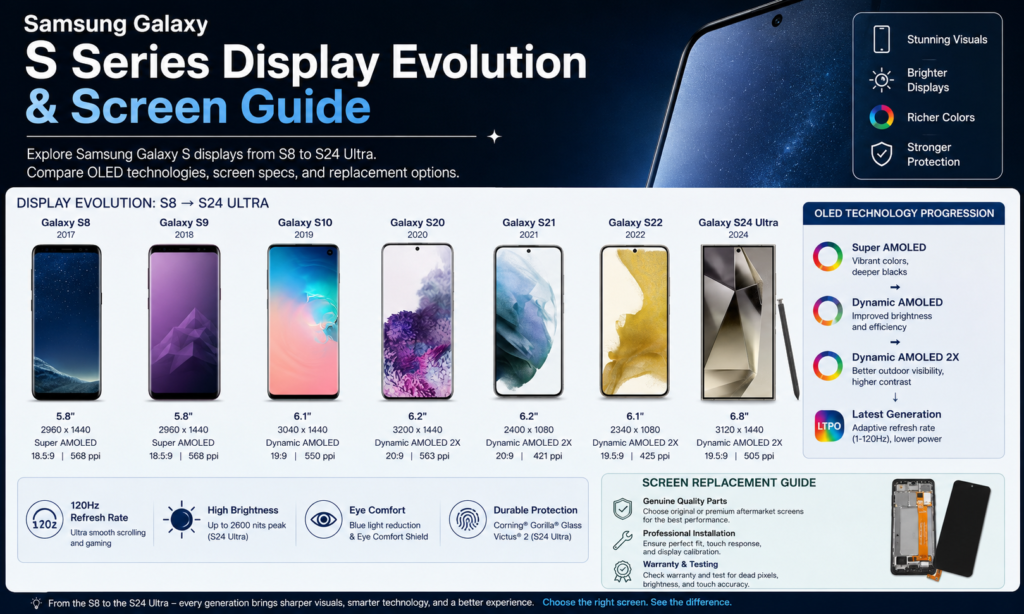
Samsung je dlhodobo jedným z popredných svetových výrobcov smartfónov, a Séria Galaxy S predstavuje vlajkovú loď radu smartfónov spoločnosti. Od uvedenia Galaxy S8 v r 2017, Samsung zmenil technológiu displeja smartfónov z tradičnej Super AMOLED panelov do vysoko pokročilých Dynamický AMOLED 2X displeje s adaptívnou obnovovacou frekvenciou, výnimočný jas, a špičkovú presnosť farieb.
Galaxy S8 znamenal veľký obrat v dizajne smartfónov. Jeho Infinity Display predstavil ultratenké rámy a ohromujúcu zakrivenú OLED obrazovku, ktorá sa rýchlo stala štandardom pre prémiové smartfóny.. Galaxy S8 mal 5,8-palcový Super AMOLED displej s rozlíšením 2960 × 1440 pixelov a hustota pixelov približne 570 PPI. V tom čase, priniesol jeden z najostrejších a najživších displejov dostupných na trhu smartfónov.
Odvtedy, Spoločnosť Samsung vydala niekoľko generácií zariadení Galaxy S, každý zlepšuje kvalitu zobrazenia, trvanlivosť, jas, obnovovacie frekvencie, a energetickú účinnosť. Dnes, Originálne obrazovky Samsung OLED sú veľmi žiadané v priemysle opráv a renovácií, pretože naďalej ponúkajú vynikajúcu citlivosť na dotyk, reprodukciu farieb, a odolnosť v porovnaní s mnohými alternatívami na trhu s náhradnými dielmi.
Kompletný zoznam modelov Samsung Galaxy S Series po Galaxy S8
Séria Galaxy S9 a S10
Po úspechu Galaxy S8, Spoločnosť Samsung spustila Galaxy S9 a S9 Plus v 2018. Tieto modely si zachovali koncept Infinity Display a zároveň zlepšili jas, výkon fotoaparátu, a stereo audio schopnosti.
Rodina Galaxy S10 predstavila niekoľko nových modelov:
- Galaxy S10e
- Galaxy S10
- Galaxy S10 Plus
- Galaxy S10 5G
Séria S10 obsahovala prvú generáciu Samsungu Dynamický AMOLED displejov a predstavil ultrazvukové snímače odtlačkov prstov zabudované pod obrazovkou. To predstavovalo významný skok vpred v technológii zobrazovania a používateľskej skúsenosti.
Séria Galaxy S20 a S21
In 2020, Samsung premenoval rad z S11 na S20, zosúladenie názvov produktov s rokom vydania.
Vrátane rodiny Galaxy S20:
| Model | Typ zobrazenia | Obnovovacia frekvencia |
|---|---|---|
| Galaxy S20 | Dynamický AMOLED 2X | 120Hz |
| Galaxy S20+ | Dynamický AMOLED 2X | 120Hz |
| Galaxy S20 Ultra | Dynamický AMOLED 2X | 120Hz |
Zavedenie 120Hz obnovovacie frekvencie výrazne zlepšila plynulosť posúvania, herný výkon, a celková odozva.
Rad S21 pokračoval vo vylepšovaní technológie Dynamic AMOLED 2X a zároveň zlepšoval energetickú účinnosť a úrovne jasu.
Séria Galaxy S22 a S23
Séria S22 priniesla vylepšenú technológiu LTPO, umožňuje displejom dynamicky upravovať obnovovacie frekvencie a šetriť energiu batérie.
Predstavila sa zostava S23:
- Galaxy S23
- Galaxy S23+
- Galaxy S23 Ultra
Samsung optimalizovaný jas displeja, vonkajšia viditeľnosť, a kalibrácia farieb. S23 Ultra sa stal obzvlášť populárnym medzi profesionálnymi používateľmi vďaka kombinácii funkcií produktivity a prémiovej kvality displeja.
Séria Galaxy S24 a ďalšie
Rodina Galaxy S24 v súčasnosti predstavuje jednu z najpokročilejších generácií smartfónov Samsung.
Funkcie Galaxy S24 Ultra:
| Špecifikácia | Galaxy S24 Ultra |
|---|---|
| Veľkosť displeja | 6.8-palec |
| Typ zobrazenia | Dynamický AMOLED 2X |
| Rozlíšenie | 3120 × 1440 |
| Obnovovacia frekvencia | 1-120Hz adaptívne |
| Špičkový jas | Až do 2600 hnidy |
| Podpora HDR | HDR10+ |
Oficiálne špecifikácie spoločnosti Samsung zdôrazňujú dynamický AMOLED 2X panel S24 Ultra, adaptívna obnovovacia frekvencia 120 Hz, a rozlíšením Quad HD+.
Vývoj technológie displeja pre smartfóny Samsung
Technológia Super AMOLED
Samsung Super AMOLED displeje sa preslávili poskytovaním hlbokej čiernej, žiarivé farby, a vynikajúca energetická účinnosť. Na rozdiel od tradičných LCD obrazoviek, ktoré vyžadujú podsvietenie, Technológia OLED umožňuje každému pixelu vyžarovať vlastné svetlo.
Galaxy S8 používal na meranie Super AMOLED panel 5.8 palcov s podporou HDR a rozlíšením 2960 × 1440 pixelov. Táto technológia poskytla vynikajúce kontrastné pomery a pomohla Samsungu stať sa lídrom v inováciách mobilných displejov.
Jednou z hlavných výhod technológie Super AMOLED je nižšia spotreba energie pri zobrazovaní tmavého obsahu. Pretože čierne pixely zostávajú úplne vypnuté, účinnosť batérie sa výrazne zlepšuje.
Dynamická technológia AMOLED
Samsung predstavil Dynamický AMOLED so sériou Galaxy S10. Táto technológia zvyšuje presnosť farieb, zníženie škodlivých emisií modrého svetla, a vylepšený výkon HDR.
Dodané dynamické AMOLED displeje:
- Lepšia presnosť farieb
- Vyššie úrovne jasu
- Zlepšený komfort očí
- Vylepšená podpora obsahu HDR
Pre používateľov, ktorí sledujú videá, herný obsah, a sociálne médiá, Dynamické AMOLED obrazovky poskytovali realistickejší zážitok zo sledovania.
Dynamická technológia AMOLED 2X
Dynamic AMOLED 2X predstavuje najnovšiu vlajkovú loď zobrazovacej technológie spoločnosti Samsung.
Moderné zariadenia Galaxy S24 využívajú panely Dynamic AMOLED 2X:
- Adaptívne obnovovacie frekvencie od 1 Hz do 120 Hz
- Dosiahnutie maximálneho jasu 2600 hnidy
- Podpora HDR10+
- Technológia LTPO
- Zlepšená viditeľnosť vonku
Vlajkové displeje Samsungu naďalej stanovujú priemyselné štandardy jasu a účinnosti. Displej Galaxy S24 Ultra Dynamic AMOLED 2X dosahuje výrazne vyšší jas ako predchádzajúce generácie, pričom si zachováva vynikajúcu správu napájania..
Porovnanie špecifikácií obrazovky Samsung Galaxy S Series
Vývoj veľkosti displeja
Veľkosti obrazoviek sa v priebehu rokov neustále zväčšovali.
| Model | Veľkosť obrazovky |
|---|---|
| Galaxy S8 | 5.8″ |
| Galaxy S10 | 6.1″ |
| Galaxy S20 Ultra | 6.9″ |
| Galaxy S23 Ultra | 6.8″ |
| Galaxy S24 Ultra | 6.8″ |
Spotrebitelia teraz očakávajú väčšie displeje na streamovanie, hranie, a multitasking. Samsungu sa podarilo zväčšiť veľkosť obrazovky pri zachovaní pohodlnej ergonómie prostredníctvom tenších rámov.
Rozlíšenie a hustota pixelov
Samsung dôsledne dodáva QHD+ displeje na mnohých vlajkových zariadeniach.
Galaxy S8 predstavoval pozoruhodné 570 Hustota PPI, zatiaľ čo moderné zariadenia Galaxy Ultra si zachovávajú výnimočnú ostrosť na približne 500 PPI. Napriek mierne nižšej hustote pixelov, novšie obrazovky poskytujú lepší jas, obnovovacie frekvencie, a celkovú kvalitu obrazu.
Vylepšenia obnovovacej frekvencie
Jedným z najväčších vylepšení displeja bola technológia obnovovacej frekvencie.
| generácie | Obnovovacia frekvencia |
|---|---|
| Galaxy S8 | 60Hz |
| Galaxy S20 | 120Hz |
| Galaxy S24 Ultra | 1-120Hz adaptívne |
Rozdiel medzi 60 Hz a 120 Hz je ako prechod z bežnej cesty na čerstvo spevnenú diaľnicu. Všetko vyzerá hladšie a pohotovejšie.
Technológia LTPO od spoločnosti Samsung umožňuje dynamickú úpravu obnovovacej frekvencie na základe obsahu, zlepšenie životnosti batérie bez obetovania používateľského zážitku.
Jas a výkon HDR
Jas sa od Galaxy S8 dramaticky zlepšil.
| Model | Špičkový jas |
|---|---|
| Galaxy S8 | Okolo 540 hnidy |
| Galaxy S24 Ultra | Až do 2600 hnidy |
Toto zvýšenie výrazne uľahčuje používanie moderných telefónov Galaxy na priamom slnečnom svetle. Obsah HDR ťaží aj z vyššieho kontrastu a väčšieho dynamického rozsahu.
Vysvetlenie pôvodných typov displejov Samsung
Obrazovky pôvodného balíka Service Pack
Originálne obrazovky s balíkom Service Pack sú továrensky vyrobené displeje Samsung distribuované prostredníctvom autorizovaných servisných kanálov.
Medzi charakteristiky patrí:
- Originál OLED panel
- Originálna dotyková vrstva
- Pôvodná zostava rámu
- Výrobná kalibrácia farieb
Tieto obrazovky poskytujú výkon najbližšie k úplne novému zariadeniu a vo všeobecnosti sa považujú za najkvalitnejšiu možnosť výmeny.
Originálne vytiahnuté obrazovky
Originálne vytiahnuté obrazovky pochádzajú z použitých zariadení.
Technici starostlivo odstraňujú funkčné displeje z darcovských telefónov a opätovne ich používajú pri opravách.
Medzi výhody patrí:
- Originálny panel Samsung OLED
- Pôvodná citlivosť na dotyk
- Nižšia cena ako obrazovky s balíkom Service Pack
Kvalita závisí od stavu darcovského zariadenia.
Repasované OLED obrazovky
Repasované obrazovky využívajú originálne Samsung OLED panely s náhradným sklom.
Počas rekonštrukcie:
- Rozbité sklo sa odstráni.
- Originál OLED zostáva nedotknutý.
- Nové sklo je laminované.
- Vákuové lepenie obnovuje vzhľad.
Tieto displeje často ponúkajú vynikajúcu hodnotu, keď sú renovované skúsenými továrňami.
Popredajné OLED obrazovky
Popredajné OLED obrazovky vyrábajú dodávatelia tretích strán.
Medzi výhody patrí:
- Nižšie náklady
- Širšia dostupnosť
Medzi potenciálne nevýhody patrí:
- Nižší jas
- Odlišná kalibrácia farieb
- Znížená životnosť
- Variabilný dotykový výkon
Opravovne často ponúkajú popredajné OLED ako lacné alternatívy.
Náhradné LCD obrazovky Incell
Pre niektoré modely Samsung, dodávatelia ponúkajú Incell LCD obrazovky.
Aj keď výrazne lacnejšie, Výmena LCD má niekoľko nevýhod:
- Nižší kontrastný pomer
- Znížený jas
- Vyššia spotreba energie
- Hrubšia štruktúra displeja
- Nižšie úrovne čiernej
Mnoho profesionálnych opravárenských spoločností odporúča výmenu OLED vždy, keď je to možné, aby sa zachoval pôvodný používateľský zážitok.
Originálny sprievodca identifikáciou obrazovky Samsung
Metódy fyzickej kontroly
Identifikácia originálneho displeja Samsung vyžaduje starostlivú kontrolu.
Medzi kľúčové ukazovatele patrí:
- Konzistentné úrovne čiernej OLED
- Rovnomerný jas
- Presná reprodukcia farieb
- Citlivý dotykový výkon
- Správna kompatibilita snímača odtlačkov prstov
Originálne displeje Samsung OLED zvyčajne vykazujú vynikajúcu rovnomernosť okrajov a plynulejšie animácie.
Opravárenskí technici často používajú špecializovaný testovací softvér na overenie pravosti displeja a identifikáciu histórie výmeny.
Zobrazenie indikátorov kvality
Niekoľko faktorov výkonu pomáha určiť kvalitu obrazovky:
| Indikátor | Originál OLED | Aftermarket OLED | LCD |
|---|---|---|---|
| Úrovne čiernej | Perfektné | Veľmi dobré | Obmedzené |
| Jas | Výborne | Mierne | Nižšia |
| Dotknite sa možnosti Odpoveď | Výborne | Dobre | Mierne |
| Energetická účinnosť | Výborne | Dobre | Nižšia |
| Podpora odtlačkov prstov | Plný | Čiastočné | Často Obmedzené |
Pri porovnávaní obrazoviek vedľa seba, originálne OLED displeje Samsung zvyčajne produkujú sýtejšie farby, hlbšie čierne, a prirodzenejšie vykresľovanie obrazu.
Trendy na trhu výmeny obrazoviek v 2026
Odvetvie opráv smartfónov pokračuje v expanzii, pretože spotrebitelia majú zariadenia dlhšie.
Veľa Galaxy S8, S9, S10, S20, S21, S22, a S23 zariadenia zostávajú aktívne na globálnych trhoch, vytvára silný dopyt po náhradných obrazovkách. Repasované OLED displeje sa stali obzvlášť populárnymi, pretože vyvažujú cenovú dostupnosť a výkon.
Profesionáli v tomto odvetví čoraz viac uprednostňujú originálnu renováciu OLED pred kompletnou výmenou panelov. Tento prístup znižuje elektronický odpad a zároveň zachováva špičkovú kvalitu displeja Samsung.
Dopyt na trhu je medzi nimi obzvlášť silný:
- Mobilné opravovne
- Renovačné továrne
- Veľkoobchodní distribútori
- Poskytovatelia opráv poistenia
- Recyklátory elektroniky
Ceny vlajkových smartfónov neustále rastú, profesionálna renovácia obrazoviek sa stala dôležitým segmentom ekosystému mobilných zariadení.
Výber správnej výmeny obrazovky Samsung
Výber správnej náhradnej obrazovky závisí od vášho rozpočtu a očakávaní kvality.
Ak je vaším cieľom maximálny výkon, an Originálny displej Samsung Service Pack zostáva najlepšou možnosťou. Tieto obrazovky poskytujú jas na úrovni výroby, presnosť farieb, citlivosť na dotyk, a trvanlivosť.
Pre opravovne, ktoré hľadajú rovnováhu medzi cenou a kvalitou, renovované pôvodné OLED obrazovky často poskytujú najvyššiu hodnotu. Zachovávajú si originálny panel Samsung OLED a zároveň výrazne znižujú náklady na výmenu.
Spotrebitelia s obmedzeným rozpočtom môžu zvážiť OLED displeje s náhradnými dielmi. Aj keď vo všeobecnosti fungujú dobre na každodenné použitie, nemusia úplne zodpovedať jasu, farebná konzistencia, alebo životnosť originálnych panelov Samsung.
Výmena LCD by mala byť zvyčajne rezervovaná na opravy rozpočtu, pretože zásadne menia prémiový zážitok z OLED, ktorým sú smartfóny Galaxy S známe..
Záver
Séria Samsung Galaxy S prešla od uvedenia Galaxy S8 pozoruhodným vývojom. Od pôvodného Super AMOLED Infinity Display až po dnešnú technológiu Dynamic AMOLED 2X, Samsung neustále posúva hranice inovácií displejov smartfónov.
Galaxy S8 predstavil revolučný dizajn s 5,8-palcovým Super AMOLED panelom, zatiaľ čo moderné zariadenia, ako napríklad Galaxy S24 Ultra, sú vybavené adaptívnymi 120 Hz dynamickými AMOLED 2X displejmi schopnými dosiahnuť 2600 nits jasu. Tieto vylepšenia zmenili spôsob, akým používatelia pracujú so smartfónmi, zábavu, fotografovanie, a hranie.
Pre opravárenské podniky, veľkoobchodníkov, a renovátorov, pochopenie rozdielov medzi obrazovkami pôvodného balíka Service Pack, vytiahnuté OLED, renovované OLED, aftermarket OLED, a výmena LCD je nevyhnutná. Výber správneho displeja ovplyvňuje nielen kvalitu opravy, ale má priamy vplyv aj na spokojnosť zákazníkov a životnosť zariadenia.
Časté otázky
1. Aký typ displeja používa Samsung Galaxy S8?
Samsung Galaxy S8 používa 5,8-palcový Super AMOLED displej s rozlíšením 2960 × 1440 pixelov a podpora HDR.
2. Aký je rozdiel medzi Super AMOLED a Dynamic AMOLED?
Dynamic AMOLED zlepšuje presnosť farieb, Výkon HDR, redukcia modrého svetla, a celkovú efektivitu zobrazenia v porovnaní s predchádzajúcou technológiou Super AMOLED.
3. Ide o originál repasovanej OLED obrazovky?
Áno. Renovovaná OLED obrazovka si zvyčajne zachováva pôvodný panel Samsung OLED, pričom vymieňa poškodené sklo a obnovuje funkčnosť.
4. Ktorý model Samsung Galaxy má najjasnejší displej?
Galaxy S24 Ultra dokáže dosiahnuť špičkovú úroveň jasu až 2600 hnidy, čo z neho robí jeden z najjasnejších displejov smartfónov Samsung.
5. Oplatí sa kúpiť OLED obrazovky s náhradnými dielmi?
Popredajné OLED obrazovky môžu byť nákladovo efektívnym riešením, ale nemusia úplne zodpovedať jasu, presnosť farieb, citlivosť na dotyk, a odolnosť originálnych displejov Samsung.