Introduction to Samsung Smartphone Displays
Samsung has built a global reputation as one of the most advanced smartphone display manufacturers in the world. The company not only produces screens for its own Galaxy devices but also supplies OLED panels to many leading smartphone brands. Recent industry reports show Samsung Display continues to dominate the premium smartphone OLED market, maintaining over 50% market share in several quarters of 2025 and 2026. This leadership reflects years of innovation in AMOLED and flexible OLED technologies. As smartphone users increasingly demand brighter colors, deeper blacks, and smoother refresh rates, Samsung’s display technology remains at the center of the mobile industry. For repair shops, wholesalers, and consumers, understanding the different types of Samsung replacement screens is essential because not all replacement displays offer the same quality, durability, or value.
Understanding Samsung LCD and OLED Technology
What Is an LCD Screen?
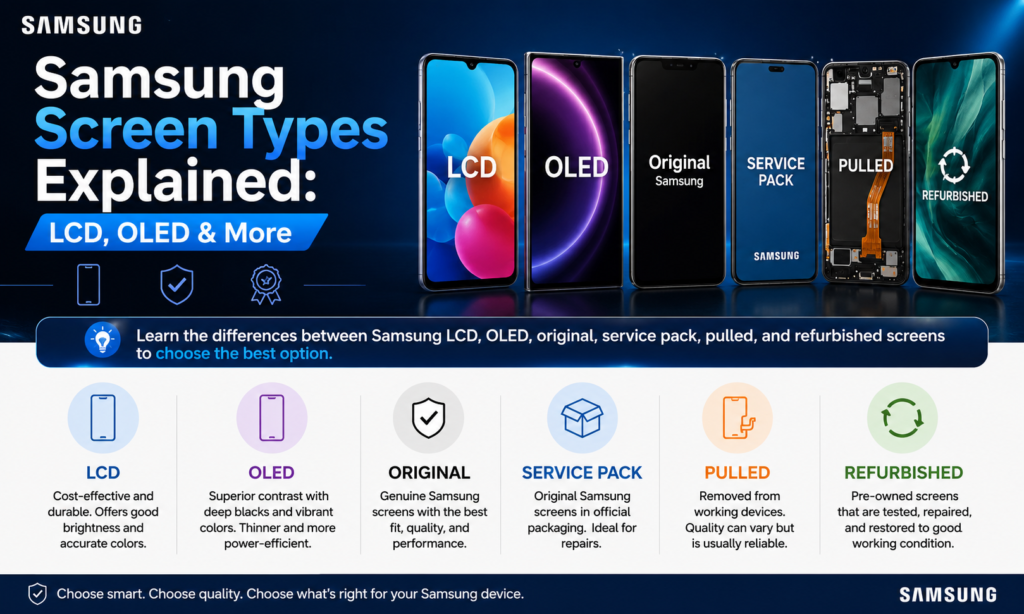
LCD stands for Liquid Crystal Display. This technology uses a backlight positioned behind the display panel to illuminate the screen. Because LCD screens require constant backlighting, they generally consume more power and cannot produce true black colors. Black areas appear dark gray because light still passes through the panel. LCD displays are commonly found in budget smartphones and some aftermarket replacement screens designed to reduce repair costs. For Samsung devices originally equipped with OLED technology, replacing the screen with an LCD alternative often results in lower brightness, reduced color accuracy, thicker assemblies, and increased battery consumption. Despite these limitations, LCD replacements remain popular in price-sensitive repair markets because they are significantly cheaper than genuine OLED panels.
What Is an OLED Screen?
OLED stands for Organic Light-Emitting Diode. Unlike LCD technology, each OLED pixel generates its own light independently. This allows Samsung OLED displays to achieve true blacks, exceptional contrast ratios, vibrant colors, and lower power consumption during dark-mode usage. Most Samsung Galaxy flagship devices use AMOLED displays, which are Samsung’s advanced version of OLED technology. Industry data from 2026 indicates that flexible OLED demand continues to grow globally, driven by premium smartphone models and foldable devices. OLED technology has become the gold standard for modern smartphone displays because it delivers a premium visual experience while enabling thinner and more flexible device designs.
Why Samsung Leads the Display Industry
Samsung Display remains one of the most influential companies in the global display market. Industry analysts reported that Samsung Display held more than 52% of smartphone display panel revenue share during parts of 2025, supported by strong demand for premium flexible OLED panels. The company continues to invest heavily in brightness improvements, power efficiency, color reproduction, and flexible display innovation. Samsung’s OLED panels are used not only in Galaxy smartphones but also in devices produced by other major manufacturers. This dominance has helped establish Samsung as the benchmark for smartphone display quality. For repair professionals, genuine Samsung OLED screens often represent the highest-quality replacement option available on the market.
Types of Samsung Replacement Screens Available
When purchasing Samsung replacement displays, buyers will typically encounter five major categories.
Original Samsung Screen
An original Samsung screen is a display installed during the device’s manufacturing process. These screens meet Samsung’s strict quality standards and provide the exact performance intended for the smartphone. Original screens offer optimal brightness, touch sensitivity, color calibration, fingerprint sensor compatibility, and durability. Because they originate directly from Samsung’s production lines, they deliver the closest experience to a brand-new device. Many repair professionals consider original screens the premium choice for customers who want factory-level quality.
Service Pack Screen
A Service Pack Screen is an official Samsung replacement part distributed through Samsung’s repair and service channels. These displays are manufactured by Samsung and packaged specifically for repair purposes. Service Pack screens typically include the display assembly, frame, and sometimes additional components depending on the model. They are widely regarded as one of the safest options for professional repairs because they maintain original specifications and compatibility. Many Samsung authorized service centers use Service Pack displays during screen replacements.
Pulled Screen
A Pulled Screen is an original Samsung display removed from another device. The donor phone may have suffered motherboard failure, water damage, housing damage, or other issues unrelated to the display. Because the screen itself remains original, display quality is usually identical to factory specifications. Pulled screens are particularly popular in wholesale repair markets where cost savings are important. However, screen condition varies depending on the source device and previous usage history.
Refurbished Screen
A Refurbished Screen begins as an original Samsung display that has undergone repair or restoration. Typically, the original OLED panel remains intact while damaged glass is removed and replaced with new glass. High-quality refurbishment processes preserve the original OLED while restoring the screen’s appearance and functionality. Professional refurbishment can produce excellent results when performed using advanced equipment and strict quality control procedures.
Aftermarket LCD Replacement
Some suppliers offer LCD replacement screens for Samsung models originally equipped with OLED displays. These screens provide a budget-friendly alternative but often sacrifice visual quality and performance. Colors may appear washed out, fingerprint sensors may function inconsistently, and battery life can be negatively affected. LCD replacements serve a specific market segment where affordability takes priority over maintaining original device specifications.
Original Screen vs Service Pack Screen
Similarities
Both Original Screens and Service Pack Screens are manufactured by Samsung. They share identical display technology, resolution, brightness performance, color calibration, and touch functionality. In most cases, end users cannot visually distinguish between an original factory-installed screen and a genuine Samsung Service Pack replacement. Both options provide reliable compatibility with in-display fingerprint sensors, adaptive refresh rates, and Samsung’s software optimizations.
Differences
The primary difference lies in distribution rather than manufacturing quality. Original screens are installed during device assembly, while Service Pack screens are produced for after-sales repair services. Service Pack units are packaged separately and supplied through authorized repair channels. Some Service Pack assemblies may include frames or additional components, making installation easier and more efficient for repair technicians. From a performance perspective, both options are considered genuine Samsung products.
Pulled Screens Explained
Advantages of Pulled Screens
Pulled screens occupy an important position between premium and budget repair solutions. Since they originate from genuine Samsung devices, they preserve the original OLED quality that users expect. Colors remain vibrant, brightness levels stay consistent, and touch performance mirrors factory specifications. Cost savings are often significant compared to new Service Pack screens. For repair shops serving customers with limited budgets, pulled screens can offer an attractive balance between quality and affordability.
Disadvantages of Pulled Screens
The biggest challenge with pulled screens is uncertainty regarding prior usage. A screen may have accumulated micro-scratches, burn-in effects, pressure marks, or reduced brightness due to long-term use. Quality inspection becomes critical because appearance alone may not reveal hidden defects. Reputable suppliers conduct extensive testing to verify touch sensitivity, display uniformity, dead pixels, and overall functionality before resale. Buyers should always request testing reports and warranty coverage when purchasing pulled screens.
Refurbished Screens Explained
Refurbishment Process
The refurbishment process typically starts with a damaged original Samsung screen that still has a functional OLED panel. Specialized technicians separate the cracked glass from the OLED layer using precision equipment. New glass is then laminated onto the original panel using vacuum technology and optical adhesive. The display undergoes multiple testing stages to ensure image quality, touch responsiveness, and structural integrity. When executed correctly, refurbishment preserves the expensive OLED component while reducing waste and repair costs.
Quality Levels
Not all refurbished screens are created equal. Premium-grade refurbished displays often achieve performance levels remarkably close to original screens because they retain Samsung’s original OLED panel. Lower-grade refurbishment may involve inconsistent lamination, weaker adhesive materials, or insufficient quality control. Professional buyers frequently categorize refurbished displays according to cosmetic condition, display performance, and warranty support. Selecting suppliers with advanced refurbishment facilities significantly increases the likelihood of receiving reliable products.
Comparing All Samsung Screen Types
| Screen Type | Display Quality | Cost | Durability | Original OLED | Recommended For |
|---|---|---|---|---|---|
| Original Screen | Excellent | Highest | Excellent | Yes | Premium repairs |
| Service Pack Screen | Excellent | High | Excellent | Yes | Authorized repairs |
| Pulled Screen | Very Good | Medium | Good | Yes | Cost-conscious repairs |
| Refurbished Screen | Good to Very Good | Medium-Low | Good | Usually Yes | Wholesale repairs |
| LCD Replacement | Fair | Lowest | Moderate | No | Budget repairs |
This comparison highlights why understanding screen categories is essential before making purchasing decisions. Price differences can be substantial, but so can performance differences. Repair professionals must carefully match customer expectations with appropriate screen options.
Which Screen Is Best for Repair Shops?
The ideal screen choice depends on customer requirements and business positioning. Premium repair centers often favor Service Pack or Original Screens because they deliver the highest reliability and customer satisfaction. Independent repair shops may prefer high-quality Refurbished or Pulled Screens due to their attractive profit margins and competitive pricing. Successful repair businesses usually maintain multiple inventory categories to accommodate different customer budgets. Offering clear explanations about screen quality and origin helps build trust while reducing disputes after repairs.
How to Identify Genuine Samsung Displays
Identifying genuine Samsung displays requires attention to several details. Packaging quality, serial numbers, QR codes, flex cable markings, and assembly construction can provide important clues. Service Pack screens generally arrive in Samsung-branded packaging with traceable identification information. Genuine displays typically demonstrate superior brightness, color accuracy, touch responsiveness, and fingerprint sensor performance. Buyers should work with established suppliers that provide warranties and testing reports. Transparency throughout the supply chain remains one of the most effective methods for avoiding counterfeit products.
Future Trends in Samsung OLED Technology
The future of Samsung displays looks increasingly focused on advanced OLED technologies. Industry reports indicate continued growth in flexible OLED adoption, with global OLED smartphone shipments reaching approximately 202 million units during the first quarter of 2026 alone. Samsung continues to invest in brighter displays, improved energy efficiency, foldable screen durability, and next-generation panel architectures. As manufacturing volumes increase, OLED technology is expected to become more accessible across mid-range smartphone categories. Repair markets will likely see growing demand for original OLED recovery, refurbishment, and recycling solutions as sustainability becomes a higher priority throughout the electronics industry.
Conclusion
Samsung smartphone displays remain among the most advanced and desirable screens available in the mobile industry. Whether choosing an Original Screen, Service Pack Screen, Pulled Screen, Refurbished Screen, or LCD replacement, understanding the differences is essential for making informed repair decisions. Original and Service Pack screens provide factory-level performance, while Pulled and Refurbished screens offer cost-effective alternatives that preserve much of the original OLED experience. LCD replacements serve budget-focused repairs but cannot fully replicate Samsung’s AMOLED technology. As OLED adoption continues to expand worldwide, the demand for high-quality Samsung replacement screens will remain strong across both retail and wholesale repair markets.
FAQs
1. What is the difference between a Samsung Original Screen and a Service Pack Screen?
An Original Screen is installed during manufacturing, while a Service Pack Screen is an official Samsung replacement part produced for repair services. Both are genuine Samsung products.
2. Are Pulled Screens original Samsung displays?
Yes. Pulled screens are genuine Samsung displays removed from donor devices and reused after testing.
3. Are Refurbished Samsung Screens reliable?
High-quality refurbished screens can be very reliable because they retain the original Samsung OLED panel while replacing damaged glass.
4. Why are OLED screens more expensive than LCD screens?
OLED displays provide superior image quality, true blacks, higher contrast, better power efficiency, and more advanced manufacturing technology.
5. Which Samsung screen type offers the best value?
For many repair businesses, high-grade refurbished and tested pulled screens offer an excellent balance between quality and affordability.