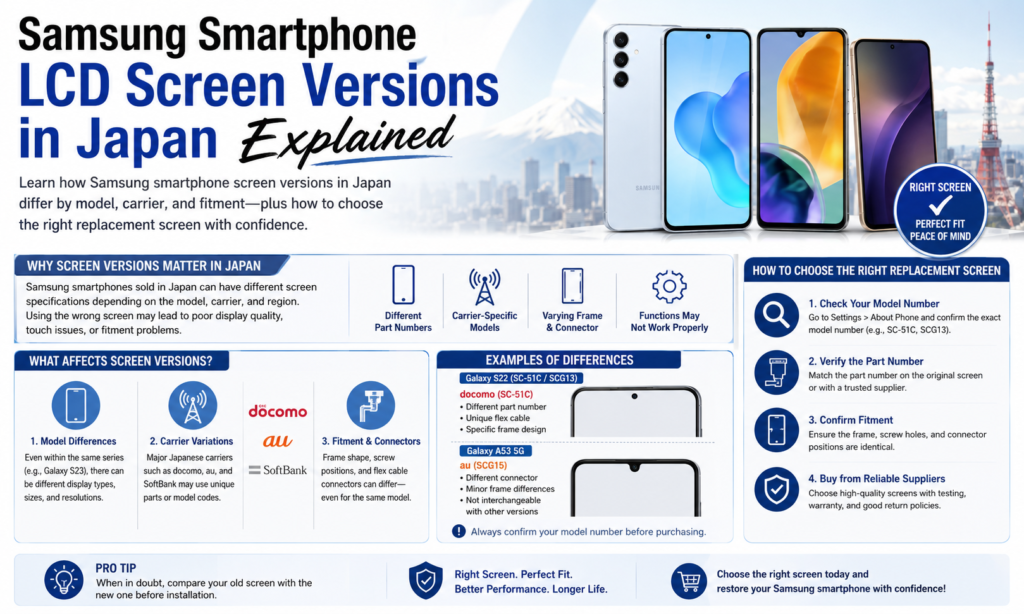
Почему версии экрана Samsung в Японии отличаются
Если вы работаете в ремонте мобильных телефонов, ремонт телефона, или экран оптом, Рынок Японии Дисплеи смартфонов Самсунг может показаться коробкой-головоломкой. На первый взгляд, Galaxy S23, продаваемый в Японии, выглядит почти идентично тому, что продается в Корее., Европа, или США. Тот же красивый дисплей. Тот же размер. Такое же ощущение премиум-класса в руке. Но как только вы откроете телефон или начнете искать запасные части, различия начнут быстро проявляться..
Вот тут все становится интереснее.
В Японии всегда была уникальная экосистема смартфонов.. Перевозчики любят НТТ Докомо, ау (КДДИ), и иногда SoftBank исторически настраивал устройства Samsung Galaxy специально для местного рынка.. Это означает номера моделей, прошивка, брендинг оператора связи, и иногда внутренние компоненты отличаются от глобальных версий. Для ремонтных предприятий, особенно поставщики экранов, это имеет большее значение, чем думает большинство людей.
На официальных страницах поддержки Samsung в Японии продолжают указываться цены на ремонт по конкретной модели, доступной на японском рынке., с отдельной обработкой в зависимости от того, является ли телефон версией оператора связи или версией без SIM-карты производителя.. Уже одно это говорит вам о чем-то важном: Samsung рассматривает многие японские варианты Galaxy независимо внутри сервисной экосистемы..
Поэтому, если вы заказываете экраны только на базе «дисплея Galaxy S23»,,» возможно, вы уже играете в азартные игры.
И никто не любит азартные игры с инвентарем.
Японский рынок смартфонов, ориентированный на операторов связи
В отличие от многих регионов, где преобладают разблокированные телефоны, Япония развивалась на основе аппаратного обеспечения, ориентированного на конкретного оператора связи.. В течение многих лет, покупка телефона Galaxy часто означала покупку напрямую через Докомо или ау.
Эти отношения с операторами связи создали локализованные версии устройств, такие как:
- СК-51Д
- СКГ19
- СК-53Б
- СКВ42
Потребителю, это похоже на случайные буквы.
К мастеру по ремонту, эти буквы решают, подойдет ли экран или он станет дорогим мертвым товаром.
Версии японского оператора часто включают в себя:
- уникальная прошивка
- загрузочные экраны оператора связи
- специфическая настройка сети
- маркировка региональной сертификации
- немного другая сборка рамы
Иногда сама панель экрана идентична.
Иногда только OLED идентичен, но рамка отличается.
Иногда расположение гибкого кабеля смещается настолько, что может возникнуть проблема с установкой..
Эта крошечная деталь может превратить 30-минутный ремонт в трехчасовую головную боль..
Региональные номера моделей и варианты оборудования
Система именования Samsung станет намного проще, если вы научитесь ее читать..
Примеры:
| Устройство | Глобальная модель | Докомо Япония | в Японии |
|---|---|---|---|
| Галактика С23 | СМ-С911Б | СК-51Д | СКГ19 |
| Галактика С24 | СМ-S921B | СК-51Э | СКГ25 |
| Галактика Z Fold5 | СМ-F946B | СК-55Д | СКГ22 |
| Галактика С10 | СМ-G973F | СК-03л | СКВ41 |
То же семейство телефонов.
Другая внутренняя ссылка.
Различный сервисный инвентарь.
Это наиболее важно при поиске:
- дисплеи в сборе
- прикрепленные экраны средней рамы
- сенсорные дигитайзеры
- гибкие разъемы дисплея
Покупать только по названию серии Galaxy недостаточно..
Код модели имеет значение.
Всегда.
Понимание технологии отображения Samsung
Люди часто ищут «замена ЖК-экрана Samsung».,» но вот самое смешное:
Большинство современных телефонов Samsung, особенно в Японии, на самом деле не используют традиционный ЖК-дисплей..
Они используют Амоль.
И да, это различие имеет большое значение.
Объяснение AMOLED, OLED и LCD
Давайте будем проще.
Думайте об экранных технологиях как об освещении комнаты..
ЖК -дисплей это как светить фонариком сквозь цветное стекло.
У вас всегда есть подсветка.
Сами пиксели не создают свет.
Олинг работает по-другому.
Каждый пиксель светится индивидуально.
За ним нет фонарика.
Всего лишь миллионы крошечных независимых огней.
Амоль это усовершенствованная версия OLED от Samsung.
Он предлагает:
- более глубокий черный цвет
- более высокий контраст
- более тонкая конструкция
- более низкое энергопотребление
- более насыщенная цветопередача
Этот фирменный образ Galaxy?
Этот суперчерный черный цвет, когда экран выключен?
Это AMOLED.
Обсуждения в сообществе вокруг ремонта Samsung продолжают указывать на то, что оригинальные замененные дисплеи Samsung остаются AMOLED, а не LCD., в то время как во многих недорогих заменах используются заменители ЖК-дисплеев с более низким качеством и пониженной производительностью..
Почему Samsung в основном использует панели AMOLED
Samsung Display — один из крупнейших в мире производителей OLED-экранов..
Так естественно, Телефоны Samsung демонстрируют эту силу.
Большинство устройств Galaxy на японском рынке — от флагманской серии S до моделей Fold и Flip — используют:
- Динамический AMOLED
- Динамический AMOLED 2X
- Супер АМОЛЕД
На последних официальных японских страницах с ценами на ремонт указана замена дисплея для таких устройств, как Галактика С24, С25, и С26 семьи, все построено на технологии дисплеев Samsung AMOLED.
Для ремонтных мастерских, это означает, что оригинальные замены экрана, как правило, остаются более дорогими по сравнению с заменой ЖК-дисплея iPhone..
Это нормально.
Это технология.
Основные версии телефонов Samsung, продаваемые в Японии
Теперь давайте разберем актуальные версии, которые вы чаще всего увидите в ремонтных и оптовых каналах..
Версии Docomo
Docomo исторически была крупнейшим оператором-партнером Samsung в Японии..
Они чрезвычайно распространены на вторичном рынке..
Примеры включают в себя:
- СК-02ЧАС
- СК-03л
- СК-51А
- СК-51Д
- СК-53Э
Общие примеры именования моделей
Галактика С7 Край:
- Глобальный: СМ-G935
- Докомо Япония: СК-02ЧАС
Галактика С23:
- Глобальный: СМ-С911
- Докомо Япония: СК-51Д
Эти версии могут иметь одинаковый размер дисплея, но различаться кодировкой рамы или сервисной сборки..
в версиях
Рынок au/KDDI также велик..
Общие примеры:
- СКВ33
- СКВ41
- СКГ19
- СКГ25
Совместимость при ремонте часто близка к Docomo., но никогда не предполагай.
Всегда проверяйте:
- положение разъема дисплея
- отверстия для крепления рамы
- размещение датчика
- клейкая раскладка
Соображения совместимости
Экран может:
- включите питание правильно
- покажи изображение правильно
…но все равно терпит неудачу, потому что:
- датчик приближения не выравнивается
- датчик отпечатков пальцев не калибруется
- клипы кадров не совпадают
- расположение водонепроницаемого уплотнения отличается
Вот почему профессиональные поставщики ремонта обычно сортируют инвентарь по точному коду японской модели, а не просто по «Galaxy S24».
Японские версии без SIM-карты
Samsung Japan также продает устройства с заводской разблокировкой..
Обычно они имеют номера моделей, например:
- СМ-S918Q
- СМ-S921Q
- СМ-F946Q
На текущих страницах поддержки Samsung в Японии модели этих производителей без SIM-карты перечислены отдельно с указанием цен на ремонт..
Это становится все более важным, поскольку рынок разблокированных телефонов в Японии продолжает расти..
Различия между японскими экранами Samsung
Это тот раздел, который больше всего волнует ремонтные мастерские..
Потому что именно здесь происходит прибыль или прибыль..
Различия в гибких разъемах
Гибкие различия могут включать в себя:
- разная длина разъема
- сложенная прокладка кабеля
- другое расположение колодок
- дополнительная защита
Одно несоответствие разъема делает всю сборку непригодной для использования..
Даже если сама панель в порядке.
Вот почему многие оптовики перечисляют:
- только OLED
- Олинг + трогать
- OLED с рамкой
- OLED полная сборка
как отдельные SKU.
Различия в сборке рамы
Это самая большая скрытая проблема.
Сам OLED может быть универсальным.
Рамки может не быть.
Общие различия включают в себя:
- расположение отверстия под винт
- вырезы в кронштейне антенны
- расположение боковой кнопки
- выравнивание сетки динамика
- Размещение компонентов NFC
При покупке сборок в рамке без проверки кода версии случается множество ошибок..
Различия в яркости и частоте обновления
В целом, характеристики дисплея остаются очень похожими в разных регионах.
Например, последние японские модели Galaxy S-серии продолжают поставляться с:
- 120Частота обновления Гц
- Поддержка HDR
- высокая пиковая яркость
- Разрешение QHD или FHD+ в зависимости от модели
Информация о запуске Galaxy S23 в Японии подтвердила те же характеристики AMOLED с частотой 120 Гц, что и во всем мире..
Таким образом, производительность обычно остается стабильной.
Механическая совместимость — более серьезная проблема.
Выбор подходящего сменного экрана для телефонов Samsung на японском рынке
Покупка дисплея Samsung для устройств на японском рынке – это не только вопрос цены..
Речь идет об управлении рисками.
OEM, снятый, восстановленный или послепродажный
Вот быстрое сравнение.
| Тип | Качество | Цена | Рекомендуется |
|---|---|---|---|
| OEM оригинал | Отличный | Высокий | Лучший |
| Вытянутый экран | Отличный | Средне-высокий | Очень хороший |
| Восстановленный OLED | Хороший | Середина | Хороший |
| Послепродажный ЖК-дисплей | Ниже | Низкий | Только бюджет |
OEM: Абсолютно новый оригинальный Самсунг..
Вытащил: Удален из оригинальных телефонов.
Отремонтированный: Оригинальный OLED с замененным стеклом..
вторичный рынок: Экран стороннего копирования.
Для устройств Galaxy, продаваемых в Японии, вытащенный и OEM обычно остается самым безопасным выбором.
Распространенные ошибки, которых следует избегать ремонтным мастерским
Самые распространенные ошибки?
Покупка только по имени телефона.
Игнорирование суффикс-кодов.
Предполагая, что все экраны серии S идентичны..
Заказ каркасных сборок без проверки.
Смешивание Docomo с глобальными запасами без тестирования.
Более безопасный рабочий процесс выглядит так:
- Подтвердите номер модели в настройках или на задней этикетке.
- Подтвердите точную версию оператора связи
- Код сервиса соответствия
- Совместимость с версией с рамкой/без рамки
- Проверьте перед полной установкой
Пять дополнительных минут могут сэкономить недели возвратов спустя.
Заключение
Экраны смартфонов Samsung, продаваемые на японском рынке, достаточно похожи, чтобы вызвать доверие, и достаточно различны, чтобы привести к дорогостоящим ошибкам..
Вот что делает их сложными.
Если вы мастерская по ремонту мобильных телефонов, реселлер запчастей, реставратор, или оптовый покупатель, ключ прост:
Никогда не покупайте, основываясь только на названии Galaxy..
Всегда проверяйте:
- полный номер модели
- операторская версия
- конфигурация фрейма
- Тип OLED
- расположение разъемов
Японский рынок Samsung продолжает расти благодаря устройствам Galaxy как операторов мобильной связи, так и устройствам Galaxy без SIM-карты., а это означает, что спрос на точные источники замены дисплеев будет только расти.
И в ремонтном деле, точность каждый раз превосходит скорость.
Правильный экран приносит прибыль.
Неправильный экран становится инвентарем, который никому не нужен.
Вот и вся игра.
Часто задаваемые вопросы
1. Отличаются ли японские экраны Samsung Galaxy от мировых версий?
Иногда да. OLED-панель может быть такой же, но сборка рамы, расположение гибкого кабеля, или компоненты, зависящие от оператора связи, могут отличаться в зависимости от конкретной модели.
2. Используют ли телефоны Samsung в Японии ЖК-дисплей или AMOLED??
Большинство современных телефонов Samsung, продаваемых в Японии, используют Амоль, не ЖК-дисплей.
3. Могут ли экраны Docomo и au Galaxy быть взаимозаменяемыми??
Иногда — но не всегда. Всегда проверяйте точный код модели перед заказом..
4. Какая замена экрана на японских телефонах Samsung самая безопасная?
Оригинальные или оригинальные съемные экраны OEM, как правило, самые безопасные и надежные..
5. Почему сменные экраны Samsung в Японии дорогие?
Потому что оригинальные панели Samsung AMOLED — это компоненты премиум-класса со встроенными сенсорными и дисплейными блоками., часто продаются как полные модули.