
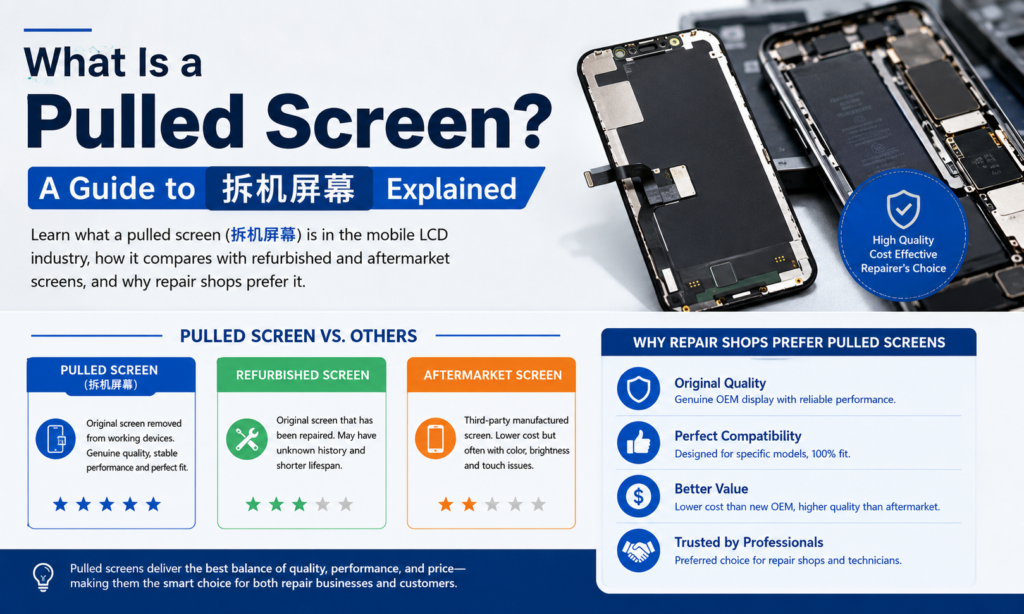
Понимание значения экрана разборки
Если вы когда-либо проводили время на заводах по ремонту мобильных телефонов, оптовые рынки запчастей, или прилавки ремонтной мастерской в Шэньчжэне, Гуанчжоу, или даже онлайн-платформы B2B, скорее всего, вы слышали этот термин «Разбор экрана» много разбросано. В буквальном переводе с китайского, это значит «разобранный экран»— но в индустрии мобильных дисплеев, большинство людей называют это вытянутый экран.
Так что же это такое??
Вытянутый экран - это оригинальный дисплей смартфона снят с бывшего в употреблении или поврежденного телефона. У самого телефона могла быть повреждена материнская плата., проблемы с аккумулятором, повреждение жилья, или другие проблемы, не связанные с экраном, пока дисплей оставался работоспособным. Технические специалисты осторожно снимают оригинальный дисплей в сборе., протестируй это, оцени это, и перепродать его на ремонтном рынке.
Думайте об этом как о спасении совершенно исправного двигателя из разбитой машины.. Транспортное средство может быть пересчитано, но двигатель по-прежнему работает прекрасно. По сути, это и есть вытянутый экран.. Экран внутри телефона уже прожил одну жизнь, был удален, и теперь получает вторую жизнь в очередном ремонте.
Этот термин особенно распространен в Китае, поскольку Китай является одним из крупнейших в мире центров ремонт смартфона, переработка дисплея, и дистрибуция запасных частей. В ремонтных мастерских часто экраны разделяются на категории, например:
| Тип экрана | Значение | Оригинальная деталь производителя | Состояние |
|---|---|---|---|
| Вытянутый экран (Экран разборки) | Удален из б/у телефона | Да | Использовал |
| Восстановленный экран | Оригинальная панель с замененным стеклом. | Да | Отремонтировано |
| OEM новый экран | Новый заводской оригинал | Да | Новый |
| Экран послепродажного обслуживания | Сторонняя копия | Нет | Новый |
Это различие имеет большее значение, чем думают многие покупатели..
Почему этот термин распространен в китайской индустрии ремонта телефонов
Экосистема мобильного ремонта Китая развивается невероятно быстро. Ежегодно миллионы поврежденных смартфонов поступают в каналы переработки и восстановления.. Некоторые становятся устройствами-донорами. Другие разобраны на компоненты многократного использования..
Дисплеи являются одними из самых ценных частей.
Поскольку современные экраны смартфонов (особенно OLED-панели) стоят дорого, их восстановление имеет большой экономический смысл.. Разбитый iPhone с работающим OLED-дисплеем по-прежнему имеет значительную ценность. Вместо того, чтобы отказаться от него, оптовики восстанавливают экран и продают его.
Вот почему «拆机屏» стал таким стандартным отраслевым языком..
Вытащенный экран, отремонтированный экран и экран послепродажного обслуживания
Люди часто путают эти вещи.
А вытянутый экран оригинально и нетронуто, просто удалил с другого телефона.
А отремонтированный экран обычно означает, что оригинальная OLED- или ЖК-панель была сохранена, но разбитое верхнее стекло заменили путем ламинации и реставрации.
Ан экран послепродажного обслуживания недавно произведено сторонним производителем и не является оригинальным для бренда.
Эта разница меняет все — от яркости до реакции на прикосновение и точности цветопередачи..
Откуда берутся выдернутые экраны
Вытащенные экраны волшебным образом не появляются на складах.. Они происходят из удивительно большой и сложной цепочки поставок вторичных устройств..
Спасено от б/у телефонов.
Самый распространенный источник – телефоны-доноры..
Эти устройства могут иметь:
- мертвые материнские платы
- повреждение водой
- повреждена микросхема зарядки
- гнутые рамы
- плохие батарейки
- заблокированные устройства
- проблемы с черным списком операторов связи
Но экран все равно работает.
Техники отделяют дисплей, запустить функциональное тестирование, и если он пройдет проверку, он входит в инвентарь.
Получено из каналов обмена и восстановления.
Рынок восстановленных смартфонов продолжает расти во всем мире.
Компания Counterpoint Research сообщила, что мировой рынок восстановленных смартфонов вырос 5% по сравнению с прошлым годом в 2024, Apple увеличила свою долю до 56%.
Этот рост напрямую влияет на рынок выдвижных экранов..
Больше сделок по программе trade-in означает, что в процессинговые центры поступает больше бывших в употреблении телефонов.. Чем больше бывших в употреблении телефонов, тем больше оригинальных дисплеев, которые можно восстановить..
Отраслевые аналитики также оценивают рынок подержанных смартфонов, сформировавшийся примерно в $83 миллиард выручка за последнее время, повышение ценности повторно используемых компонентов.
Почему ремонтные мастерские предпочитают выдвижные сетки
Оригинальное качество дисплея
Это самая большая причина.
Вытянутый экран по-прежнему оригинальный дисплей бренда.
Это означает:
- исходная яркость
- оригинальный контрастный OLED
- заводская калибровка цвета
- встроенное поведение обновления
- оригинальная сенсорная микросхема
- правильные вырезы датчиков
- правильный размер безеля
По сравнению со многими альтернативами вторичного рынка, разница может ощущаться днем и ночью.
Дешевый ЖК-дисплей вторичного рынка часто напоминает прослушивание сжатого MP3.. Вытянутый оригинальный экран напоминает прослушивание студийного мастера..
Вы это сразу заметите.
Лучшая совместимость с Face ID, отпечаток пальца, и коснуться
Совместимость — еще одно важное преимущество..
Современные дисплеи глубоко интегрированы с программным и аппаратным обеспечением.:
- Гибкое выравнивание Face ID
- датчики отпечатков пальцев под дисплеем
- окна с датчиком внешней освещенности
- Калибровка True Tone
- прошивка сенсорного контроллера
Использование оригинального вытянутого экрана снижает вероятность сюрпризов совместимости..
Сообщества ремонтников продолжают сообщать, что оригинальные или снятые экраны обычно ведут себя более предсказуемо, чем недорогие замены послепродажного обслуживания., особенно на флагманских моделях OLED.
Оценка качества тянутых сит
Не каждый вытянутый экран одинаков.
Вот почему поставщики оценивают их.
А-класс
Обычно означает:
- без царапин и очень незначительного износа
- нет битых пикселей
- нет выгорания
- полная сенсорная функция
- отличный косметический вид
Они требуют премиальной цены..
B-класс
Может включать в себя:
- легкие царапины
- незначительные следы давления
- крошечное косметическое средство
Функциональность остается хорошей.
Экраны с пригарами или незначительными дефектами
Выгорание OLED — обычное дело.
Особенно с:
- тени в строке состояния
- ореолы клавиатуры
- Сжигание пользовательского интерфейса TikTok
- сохранение панели навигации
Они продаются дешевле и часто используются в бюджетных устройствах для ремонта..
Всегда спрашивайте у поставщиков:
- выгоревшие фотографии на белом фоне
- тест на черный экран
- тест сенсорной сетки
- тест яркости
- True Tone или проверка по отпечатку пальца
Вытянутый экран против нового OEM-экрана
Совершенно новый OEM-экран идеален, но дорог..
Из-за этого ценового разрыва существуют вытянутые экраны..
| Особенность | Вытянутый экран | OEM новый экран |
|---|---|---|
| Оригинальная деталь производителя | Да | Да |
| Ранее использовался | Да | Нет |
| Цена | Ниже | Выше |
| Косметическая одежда | Возможный | Никто |
| Производительность | Очень близко к оригиналу | Оригинал |
Для многих ремонтных мастерских, выбор сводится к экономике.
Если OEM новый стоит $150 и стоит проверенный выдернутый экран $95, многие клиенты выбирают вытянутый вариант.
Вытянутый экран против ЖК-дисплея послепродажного обслуживания
В этом сравнении все становится интереснее..
Яркость, цвет, и сенсорная производительность
Экраны послепродажного обслуживания могут сильно различаться.
Некоторые из них приличные.
Некоторые ужасны.
В недавних руководствах по закупкам для ремонтной отрасли отмечается, что OLED-дисплеи на вторичном рынке часто достигают примерно 85–90% точность цветопередачи по сравнению с оригинальными дисплеями, в то время как стоимость замены ЖК-дисплеев более низкого уровня может упасть намного ниже в зависимости от уровня качества..
Общие различия включают в себя:
- более низкая яркость
- холодные белые
- бедные чернокожие
- более толстые рамки
- медленное касание
- уменьшенная плавность обновления
Вытянутые оригинальные экраны обычно превосходят их по производительности.
Длительная долговечность
Долговечность также может способствовать выдвижным экранам..
Почему?
Потому что оригинальная панель была разработана производителем специально для этого телефона..
Запасные части на вторичном рынке иногда сокращают расходы на:
- прочность стекла
- качество гибкого кабеля
- клеи
- качество ИС
Это не значит, что каждый экран послепродажного обслуживания плох..
Но гарантировать последовательность сложнее..
Риски, которые покупатели должны знать перед покупкой
Выдвижные экраны — это отлично, но небезопасно.
Скрытые повреждения и пригары
Потенциальные проблемы включают в себя:
- выгорание OLED
- трогать мертвые точки
- поднятая рама
- ослабленная гибкость
- повреждение до ремонта
- следы давления
Хорошие поставщики раскроют эти сведения..
Плохие поставщики не будут.
Надежность поставщика
Это имеет значение едва ли не больше, чем сам экран.
Покупайте у поставщиков, которые предоставляют:
- Видео контроля качества
- гарантия
- политика возврата
- стандарты оценивания
- реальные фотографии
- серийная маркировка
Без этого, покупка выдвижных экранов может показаться покупкой загадочных коробок.
И никто не любит дорогие сюрпризы.
Как определить качественный вытянутый экран
Вот практический контрольный список проверок, который используют покупатели..
Контрольный список проверок
Перед покупкой:
- проверить номер модели
- проверка однородности яркости
- проверь битые пиксели
- проверить гибкий кабель
- проверить контакты разъема
- проверить касание по всей панели
- inspect OLED burn-in on white screen
- inspect scratches under direct light
- verify Face ID or fingerprint compatibility
- request warranty terms
Если возможно, ask for video testing.
A quick test video often tells more than ten product photos.
Market Trends in 2025–2026 for Pulled Smartphone Screens
The pulled-screen business is riding a larger industry wave.
Consumers are keeping phones longer.
Repairing instead of replacing.
Buying refurbished instead of new.
That shifts demand toward reusable original parts.
Industry data shows global refurbished smartphone sales continued rising into 2025, growing around 3–5% year-over-year, even while new-device growth remained slower in many markets.
That trend supports demand for:
- вытянутые экраны
- original housings
- used camera modules
- reclaimed batteries
- отремонтированные дисплеи
Sustainability plays a role too.
A reused screen means:
- less e-waste
- более низкий производственный спрос
- более низкая стоимость ремонта
- более длительный срок службы устройства
Во многих отношениях, выдернутые экраны стоят прямо на пересечении улиц ремонтопригодность, доступность, и устойчивость.
Заключение
Термин «Разбор экрана», или вытянутый экран, Это одна из важнейших концепций в индустрии ремонта дисплеев для смартфонов..
На бумаге все просто: оригинальный дисплей, снятый с другого устройства.
Но на практике, он представляет собой огромную глобальную экосистему, построенную вокруг ремонта, повторное использование, и продление срока службы электроники.
Для ремонтных мастерских, выдвижные экраны предлагают золотую середину между цена и качество.
Для клиентов, они часто обеспечивают лучшее качество просмотра, чем более дешевые копии, проданные на вторичном рынке..
Для промышленности, они помогают сохранить миллионы дисплеев на свалках и вернуть их в руки людей..
Если вы покупаете сменные экраны смартфонов, особенно для iPhone, Samsung, или другие модели премиум-класса — понимание того, что такое вытянутый экран, поможет сэкономить деньги., улучшить качество ремонта, и поможет вам избежать покупки неправильной детали.
И иногда, лучший экран – не самый новый.
Оригинал получает второй шанс.
Часто задаваемые вопросы
1. Оригинальный ли вытянутый экран??
Да. Вытянутый экран - это оригинальный экран производителя удалено с бывшего в употреблении устройства.
2. Вытянутый экран лучше, чем экран послепродажного обслуживания??
Обычно да. Вытянутые экраны обычно обеспечивают лучшую яркость., цвет, и трогайте производительность, потому что они оригинальные.
3. Выдернутый экран означает, что его починили?
Не обязательно. Возможно, его просто удалили с другого телефона.. Это отличается от отремонтированного экрана.
4. Могут ли вытянутые экраны прогореть?
Да. Особенно выдвижные экраны OLED. Всегда проверяйте перед покупкой.
5. Почему вытянутые экраны дешевле, чем новые OEM-экраны?
Потому что они используются. Хоть они и оригинальные, предварительное использование снижает их цену при перепродаже.



