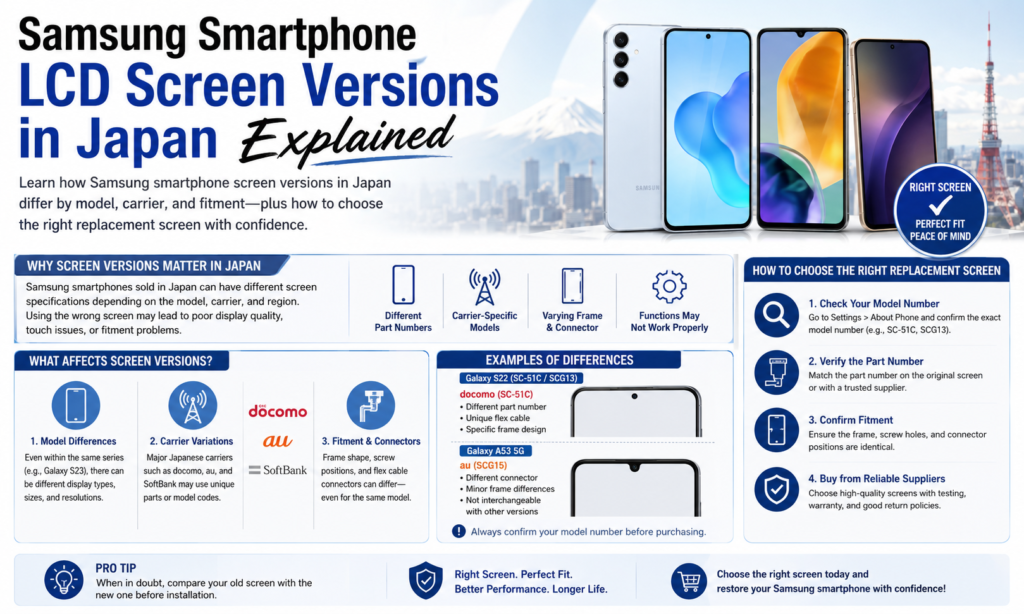
Prečo sú verzie obrazovky Samsung v Japonsku odlišné
Ak pracujete v opravárenstve mobilov, renovácia telefónu, alebo veľkoobchod s obrazovkami, Japonský trh Displeje smartfónov Samsung môže sa cítiť ako puzzle box. Na prvý pohľad, Galaxy S23 predávaný v Japonsku vyzerá takmer rovnako ako ten, ktorý sa predáva v Kórei, Európe, alebo U.S. Rovnako krásny displej. Rovnaká veľkosť. Rovnaký prémiový pocit v ruke. Keď však telefón otvoríte – alebo začnete hľadať náhradné diely – rozdiely sa začnú rýchlo prejavovať.
Tam sú veci zaujímavé.
Japonsko vždy malo jedinečný ekosystém smartfónov. Dopravcovia ako NTT Docomo, au (KDDI), a príležitostne SoftBank historicky prispôsobovala zariadenia Samsung Galaxy špeciálne pre miestny trh. To znamená čísla modelov, firmvéru, branding nosiča, a niekedy sa interné komponenty líšia od globálnych verzií. Pre opravárenské podniky, najmä dodávatelia obrazoviek, na tom záleží viac, ako si väčšina ľudí uvedomuje.
Oficiálne stránky podpory spoločnosti Samsung pre Japonsko naďalej uvádzajú ceny opráv podľa presného modelu japonského trhu, s oddelenou manipuláciou v závislosti od toho, či ide o verziu telefónu operátora alebo verziu výrobcu bez SIM karty. Už to samo o sebe hovorí niečo dôležité: Spoločnosť Samsung zaobchádza s mnohými japonskými variantmi Galaxy nezávisle v rámci ekosystému služieb.
Ak teda objednávate obrazovky iba na základe „displej Galaxy S23,“Možno už hráš hazardné hry.
A nikto nemá rád hazard s inventárom.
Japonský trh smartfónov riadený operátormi
Na rozdiel od mnohých regiónov, kde dominujú odomknuté telefóny, Japonsko sa vyvinulo okolo hardvéru špecifického pre operátorov. Celé roky, kúpa telefónu Galaxy často znamenala nákup priamo cez Docomo alebo au.
Ten vzťah s operátorom vytvoril lokalizované verzie zariadení ako napr:
- SC-51D
- SCG19
- SC-53B
- SCV42
Spotrebiteľovi, vyzerajú ako náhodné písmená.
K opravárenskému technikovi, tieto písmená rozhodujú o tom, či sa obrazovka zmestí - alebo či sa stane drahým mŕtvym materiálom.
Verzie japonského operátora často zahŕňajú:
- jedinečný firmvér
- bootovacie obrazovky nosiča
- špecifické ladenie siete
- regionálne certifikačné značky
- mierne odlišné zostavy rámu
Niekedy je samotný panel obrazovky identický.
Niekedy je identický iba OLED, ale rám sa líši.
Niekedy sa rozloženie flexibilného kábla posunie natoľko, že spôsobí problémy s inštaláciou.
Tento malý detail môže zmeniť 30-minútovú opravu na trojhodinovú bolesť hlavy.
Regionálne čísla modelov a hardvérové variácie
Systém názvov spoločnosti Samsung bude oveľa jednoduchší, keď budete vedieť, ako ho čítať.
Príklady:
| Zariadenie | Globálny model | Docomo Japonsko | v Japonsku |
|---|---|---|---|
| Galaxy S23 | SM-S911B | SC-51D | SCG19 |
| Galaxy S24 | SM-S921B | SC-51E | SCG25 |
| Galaxy Z Fold5 | SM-F946B | SC-55D | SCG22 |
| Galaxy S10 | SM-G973F | SC-03L | SCV41 |
Rovnaká rodina telefónov.
Iný interný odkaz.
Rôzne zásoby služieb.
Toto je najdôležitejšie pri získavaní zdrojov:
- zobrazovacie zostavy
- obrazovky pripojené k strednému rámu
- dotykové digitizéry
- flex konektory displeja
Nákup iba podľa názvu série Galaxy nestačí.
Dôležitý je kód modelu.
Vždy.
Pochopenie technológie displeja Samsung
Ľudia často hľadajú „výmena LCD obrazovky Samsung,“ ale tu je tá zábavná časť:
Väčšina moderných telefónov Samsung – najmä v Japonsku – v skutočnosti nepoužíva tradičné LCD.
Používajú AMOLED.
A áno, na tom rozdiele veľmi záleží.
Vysvetlenie AMOLED vs OLED vs LCD
Urobme to jednoducho.
Predstavte si technológiu obrazovky ako osvetlenie miestnosti.
LCD je ako svietiť baterkou cez farebné sklo.
Vždy máte podsvietenie.
Samotné pixely nevytvárajú svetlo.
OLED funguje inak.
Každý pixel sa rozsvieti samostatne.
Žiadna baterka za tým.
Len milióny malých nezávislých svetiel.
AMOLED je pokročilá verzia OLED od spoločnosti Samsung.
Ponúka:
- hlbšie čierne
- vyšší kontrast
- tenšia konštrukcia
- nižšia spotreba energie
- bohatšia reprodukcia farieb
Ten charakteristický vzhľad Galaxy?
Tá super čierna čierna, keď je obrazovka vypnutá?
To je AMOLED.
Diskusie komunity o opravách spoločnosti Samsung naďalej poukazujú na to, že originálne náhradné displeje Samsung zostávajú skôr AMOLED ako LCD, zatiaľ čo mnohé lacnejšie náhrady používajú náhrady LCD s nižšou kvalitou a zníženým výkonom.
Prečo Samsung používa hlavne AMOLED panely
Samsung Display je jedným z najväčších svetových výrobcov OLED.
Tak prirodzene, Telefóny Samsung ukazujú túto silu.
Používa väčšina zariadení Galaxy na japonskom trhu – od vlajkových lodí radu S až po modely Fold and Flip:
- Dynamický AMOLED
- Dynamický AMOLED 2X
- Super AMOLED
Nedávne stránky s oficiálnymi japonskými cenami opráv zobrazujú výmenu zariadení ako Galaxy S24, S25, a S26 rodiny, všetko postavené na technológii displeja Samsung AMOLED.
Pre opravovne, to znamená, že originálne náhrady obrazovky majú tendenciu zostať prémiové v porovnaní s náhradami LCD displeja iPhone.
to je normálne.
je to technológia.
Hlavné verzie telefónov Samsung predávané v Japonsku
Teraz poďme rozobrať skutočné verzie, ktoré najčastejšie uvidíte v opravárenských a veľkoobchodných kanáloch.
Verzie Docomo
Docomo je historicky najsilnejším prepravným partnerom spoločnosti Samsung v Japonsku.
Tie sú na trhu ojazdených vozidiel mimoriadne bežné.
Príklady zahŕňajú:
- SC-02H
- SC-03L
- SC-51A
- SC-51D
- SC-53E
Príklady spoločného pomenovania modelov
Galaxy S7 Edge:
- globálne: SM-G935
- Docomo Japonsko: SC-02H
Galaxy S23:
- globálne: SM-S911
- Docomo Japonsko: SC-51D
Tieto verzie môžu mať rovnakú veľkosť displeja, pričom sa líšia kódovaním rámu alebo servisnej zostavy.
vo verziách
Trh au/KDDI je tiež veľký.
Bežné príklady:
- SCV33
- SCV41
- SCG19
- SCG25
Kompatibilita opráv je často blízka Docomo, ale nikdy nepredpokladaj.
Vždy overte:
- polohu konektora displeja
- montážne otvory rámu
- umiestnenie snímača
- rozloženie lepidla
Úvahy o kompatibilite
Obrazovka môže:
- správne zapnúť
- zobraziť obrázok správne
...ale stále zlyháva, pretože:
- senzor priblíženia nie je zarovnaný
- snímač odtlačkov prstov sa nekalibruje
- klipy rámu sa nezhodujú
- umiestnenie vodotesného tesnenia sa líši
To je dôvod, prečo profesionálni dodávatelia opráv zvyčajne triedia zásoby podľa presného japonského kódu modelu, a nie iba podľa „Galaxy S24“.
Japonské verzie bez SIM karty
Samsung Japan tiež predáva zariadenia odomknuté z výroby.
Tieto zvyčajne nesú čísla modelov, napr:
- SM-S918Q
- SM-S921Q
- SM-F946Q
Aktuálne stránky podpory spoločnosti Samsung v Japonsku uvádzajú tieto modely bez SIM karty výrobcu samostatne pre ceny opráv.
Tie sú čoraz dôležitejšie, pretože japonský trh s odomknutými telefónmi neustále rastie.
Rozdiely medzi japonskými obrazovkami Samsung
O túto časť sa opravovne zaujímajú najviac.
Pretože tu dochádza k zisku – alebo návratnosti.
Rozdiely Flex konektorov
Flex rozdiely môžu zahŕňať:
- rozdielna dĺžka konektora
- skladané vedenie káblov
- rôzne umiestnenie podložky
- extra tienenie
Jeden nesúlad konektora robí celú zostavu nepoužiteľnou.
Aj keď samotný panel je v poriadku.
To je dôvod, prečo veľa veľkoobchodníkov uvádza zoznam:
- Iba OLED
- OLED + dotýkať sa
- OLED s rámom
- Kompletná zostava OLED
ako samostatné SKU.
Rozdiely v zostave rámu
Toto je najväčší skrytý problém.
Samotný OLED môže byť univerzálny.
Rám nemusí byť.
Medzi bežné rozdiely patrí:
- umiestnenie otvoru pre skrutku
- výrezy na držiak antény
- umiestnenie bočných tlačidiel
- zarovnanie siete reproduktorov
- Umiestnenie komponentov NFC
Pri nákupe zarámovaných zostáv bez kontroly kódu verzie dochádza k mnohým chybám.
Rozdiely v jase a obnovovacej frekvencii
Vo všeobecnosti, Špecifikácie displeja zostávajú v rôznych regiónoch veľmi podobné.
Napríklad najnovšie japonské modely Galaxy S-series sa naďalej dodávajú:
- 120Hz obnovovacia frekvencia
- Podpora HDR
- vysoký špičkový jas
- Rozlíšenie QHD alebo FHD+ v závislosti od modelu
Informácie o spustení Galaxy S23 v Japonsku potvrdili rovnaké špecifikácie 120Hz AMOLED, aké sa našli na celom svete.
Takže výkon zvyčajne zostáva konzistentný.
Mechanická kompatibilita je väčší problém.
Výber správnej náhradnej obrazovky pre telefóny Samsung na japonskom trhu
Nákup displeja Samsung pre zariadenia na japonskom trhu nie je len o cene.
Ide o riadenie rizík.
OEM vs ťahaný vs renovovaný vs aftermarket
Tu je rýchle porovnanie.
| Typ | Kvalita | Cena | Odporúčané |
|---|---|---|---|
| Originál OEM | Výborne | Vysoká | Najlepšie |
| Vytiahnutá obrazovka | Výborne | Stredne vysoké | Veľmi dobré |
| Repasovaný OLED | Dobre | Stredná | Dobre |
| Popredajný LCD | Nižšia | Nízka | Iba rozpočet |
OEM: Úplne nový originál Samsung.
Ťahané: Odstránené z pôvodných telefónov.
Zrekonštruovaný: Originál OLED s vymeneným sklom.
Aftermarket: Obrazovka kopírovania tretej strany.
Pre zariadenia Galaxy na japonskom trhu, ťahané a OEM zvyčajne zostávajú najbezpečnejšou voľbou.
Bežným chybám, ktorým by sa opravovne mali vyhnúť
Najčastejšie chyby?
Nákup len na meno telefónu.
Ignorovanie príponových kódov.
Za predpokladu, že všetky obrazovky série S sú identické.
Objednávanie rámových zostáv bez kontroly.
Miešanie Docomo s globálnymi akciami bez testovania.
Bezpečnejší pracovný postup vyzerá takto:
- Potvrďte číslo modelu v Nastaveniach alebo na zadnom štítku
- Potvrďte presnú verziu operátora
- Porovnajte kód služby
- Verzia s rámom/bez rámu
- Pred úplnou inštaláciou otestujte
Päť minút navyše tu môže ušetriť týždne návratov neskôr.
Záver
Obrazovky smartfónov Samsung na japonskom trhu sú dosť podobné na to, aby vzbudzovali dôveru – a dosť odlišné na to, aby vytvárali drahé chyby.
To ich robí zložitými.
Ak ste opravovňa mobilných zariadení, predajca dielov, renovátor, alebo veľkoobchodný kupujúci, kľúč je jednoduchý:
Nikdy nekupujte len na základe názvu Galaxy.
Vždy overte:
- celé číslo modelu
- verzia nosiča
- konfigurácia rámu
- Typ OLED
- rozloženie konektora
Japonský trh spoločnosti Samsung naďalej rastie so zariadeniami Galaxy s operátormi aj bez SIM karty, čo znamená, že dopyt po presných zdrojoch náhradných displejov sa bude len zvyšovať.
A v opravárenskom biznise, presnosť zakaždým prevyšuje rýchlosť.
Správna obrazovka prináša zisk.
Nesprávna obrazovka sa stáva inventárom, ktorý nikto nechce.
To je celá hra.
Časté otázky
1. Líšia sa japonské obrazovky Samsung Galaxy od globálnych verzií?
Niekedy áno. OLED panel môže byť rovnaký, ale zostava rámu, rozloženie flexibilného kábla, alebo komponenty špecifické pre operátora sa môžu líšiť v závislosti od presného modelu.
2. Používajú telefóny Samsung v Japonsku LCD alebo AMOLED?
Používa väčšina moderných telefónov Samsung predávaných v Japonsku AMOLED, nie LCD.
3. Môžu byť obrazovky Docomo a au Galaxy zameniteľné??
Niekedy – ale nie vždy. Pred objednaním si vždy overte presný kód modelu.
4. Aká je najbezpečnejšia náhradná obrazovka pre japonské telefóny Samsung?
Originálne alebo originálne ťahané zásteny sú vo všeobecnosti najbezpečnejšie a najspoľahlivejšie.
5. Prečo sú náhradné obrazovky Samsung v Japonsku drahé?
Pretože originálne AMOLED panely Samsung sú prémiové komponenty s integrovanými dotykovými a displejovými zostavami, často predávané ako kompletné moduly.