Indledning
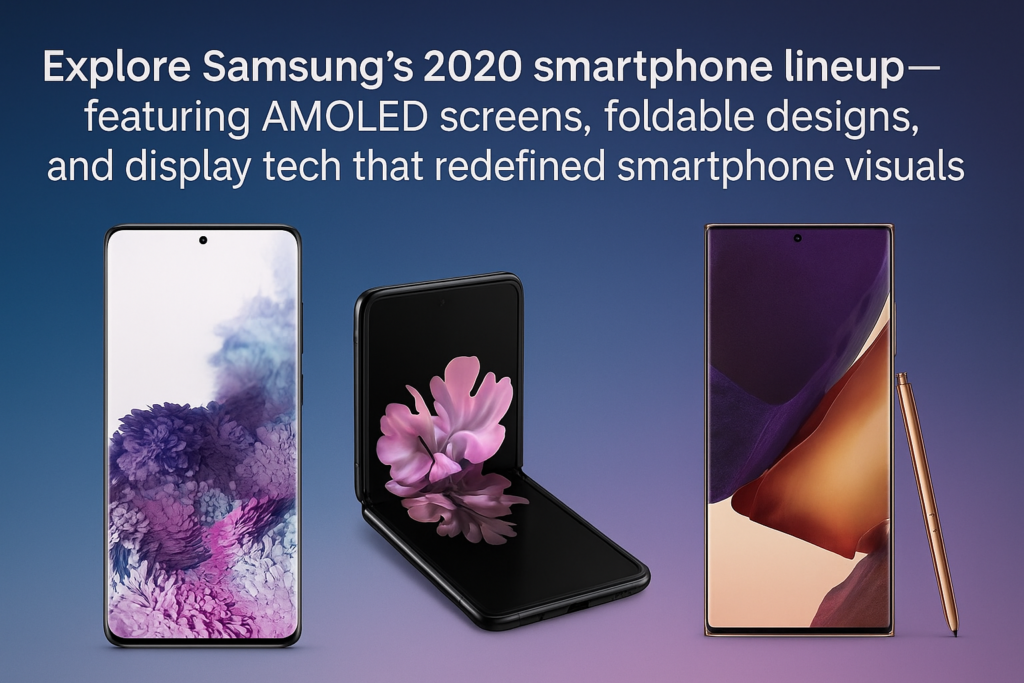
I 2020, Samsung demonstrerede sin uovertrufne dominans inden for smartphone-skærminnovation. Fra foldbare flagskibe til mellemklassehelte, hver lineup viste, hvor langt AMOLED-teknologien var nået. Året var afgørende - ikke kun forfinede Samsung det Dynamisk AMOLED 2X paneler til top-tier telefoner, men det udvidede sig også Super AMOLED skærme til mere overkommelige enheder, markerer den næsten fuldstændige udfasning af LCD-skærme i deres globale udvalg.
Samsungs Display Evolution
Før 2020, LCD-skærme var stadig almindelige på tværs af forskellige smartphone-niveauer. Men i år, Samsung gjorde én ting klart - AMOLED var fremtiden. Med rigere farver, bedre kontrast, og overlegen energieffektivitet, AMOLED-paneler blev en hjørnesten i Samsungs visuelle oplevelse.
Dynamisk AMOLED 2X vs. Super AMOLED
- Dynamisk AMOLED 2X: Findes på flagskibsmodeller, det understøtter HDR10+, 120Hz adaptive opdateringshastigheder, og overlegen lysstyrkekalibrering.
- Super AMOLED: Brugt til midten- og øvre mellemklassemodeller, leverer stadig fremragende kontrast, men mangler nogle avancerede funktioner som adaptiv opdateringshastighed og HDR10+-understøttelse.
Kort sagt, Dynamic AMOLED 2X var Samsungs statement, mens Super AMOLED var arbejdshestens teknologi, der drev dens dominans på massemarkedet.
Foldbare flagskibe – Z-serien
Galaxy Z Fold2 5G
Samsungs anden generation foldbar, de Med Fold2, fremvist en massiv 7.6-tommer dynamisk AMOLED 2X hovedskærm med 120Hz adaptiv opdateringshastighed. De 6.23-tommer dækskærm indeholdt også AMOLED-teknologi, gør den til en fuldgyldig smartphone, selv når den er lukket. Dens Ultratyndt glas (OFFENTLIGGØRELSE) forbedret holdbarhed og berøringsfølsomhed, hvilket gør den til en af de mest avancerede foldbare skærme, der nogensinde er produceret.
Galaxy Z Flip
I modsætning til Fold, de Z Flip vedtaget et nostalgisk lodret clamshell-design. Dens 6.7-tommer dynamisk AMOLED-skærm foldet sømløst, tilbyder en kompakt lommeoplevelse uden at gå på kompromis med farvenøjagtighed eller lysstyrke. Den lille 1.1-tommer Super AMOLED coverskærm tilføjet funktionalitet til hurtige notifikationer og selfies.
Galaxy S-serien – Flagskibsstandarden
Galaxy S20 Ultra 5G
I toppen af S-rækken, de S20 Ultra bød på en fantastisk 6.9-tommer WQHD+ Dynamic AMOLED 2X-skærm. Det støttede 120Hz opdateringshastighed, sikrer ultrajævne billeder til spil og rulning. Imidlertid, tidlige softwareversioner begrænsede 120Hz ved fuld opløsning - en afvejning, som Samsung senere forfinede.
Galaxy S20+ og S20
Begge modeller afspejlede Ultras glans, Tilbud 6.7-tommer og 6,2 tommer Dynamic AMOLED 2X-paneler henholdsvis. Hver forudsat livlige farver, dybe sorte, og HDR10+ certificering, fortsætter Samsungs tradition for fremragende display.
Galaxy S20 FE 5G
De Fan udgave bragt flagskibsforestillingen til et bredere publikum. Selvom den brugte en Super AMOLED skærm i stedet for Dynamic AMOLED, den beholdt en 120Hz opdateringshastighed, tilbyder en næsten premium-oplevelse til en mellemklassepris.
Business-Class Powerhouses – Galaxy Note-serien
Galaxy Note20 Ultra 5G
De Note20 Ultra var Samsungs første enhed med en variabel opdateringshastighed lige fra 10Hz til 120 Hz, intelligent justering for at spare strøm. Dens 6.9-tommer dynamisk AMOLED 2X-skærm var et mesterværk — skarpt, levende, og silkeblød til S Pen-brug.
Galaxy Note20
I modsætning hertil, standard Note20 indeholdt en 6.7-tommer Super AMOLED Plus skærm med en 60Hz opdateringshastighed. Det sprang nogle avancerede frynsegoder over, men forblev ideel til professionelle, der værdsatte praktiske forhold frem for flash.
Mellemklassemestere – Galaxy A-serien
Samsungs A-serien blev mærkets volumenleder inden for 2020. Udstyret mest med Super AMOLED skærme, disse telefoner fandt en balance mellem overkommelighed og visuel ekspertise.
- Galaxy A71 5G – 6,7 tommer Super AMOLED Plus, Infinity-O design, lyse og levende.
- Galaxy A51 5G – 6,5-tommer Super AMOLED, en af de bedst sælgende Android-telefoner globalt.
- Galaxy A41 & A31 – Super AMOLED-skærme med Full HD+ opløsning.
- Galaxy A21s & A11 – Budgetvenlige modeller ved hjælp af PLS TFT LCD, et sjældent ikke-AMOLED-valg i Samsungs 2020 opstilling.
Overkommelig ydeevne – Galaxy M-serien
Samsungs M-serien, fokuseret på online markeder og budgetbevidste købere, leveret solide AMOLED-oplevelser.
- Galaxy M51 – Udvalgt en 6.7-tommer Super AMOLED Plus skærm og en massiv 7000mAh batteri.
- Galaxy M31s & M21 – Begge sportede Super AMOLED viser, tilbyder levende billeder til konkurrencedygtige priser.
Disse modeller beviste, at fantastiske skærme ikke kun var for premium-købere.
Key Display Trends af 2020
- Høje opdateringshastigheder går til mainstream – Samsung lavede 120Hz-skærme til den nye standard for flagskibe.
- AMOLED dominans – Næsten alle modeller havde AMOLED-teknologi, reducere afhængigheden af LCD'er.
- Sammenfoldelig innovation – Z Fold2 og Z Flip markerede et stort skridt mod fleksible fremtidige designs.
- Adaptiv lysstyrke & Effektivitet – Skærme blev smartere, justering af opdateringshastigheder og lysstyrke for at spare strøm.
Sådan sætter Samsung standarden for smartphone-skærme
I 2020, konkurrenter som Apple og Huawei haltede bagefter Samsungs OLED-ekspertise. Mens andre adopterede OLED-paneler senere, Samsung skærm forblev den primær leverandør for mange mærker, inklusive sine rivaler. Denne dominans var ikke held - det var mange års forfining i kontrastkontrol, touch integration, og energistyring.
Fremtiden for Samsung-skærme
Samsungs vision for skærmteknologi rækker ud over 2020. Virksomheden fortsætter med at udvikle sig:
- Kameraer under display
- Rulbare og tri-fold displays
- Miljøvenlige OLED-materialer
Hver innovation skubber smartphones mod en æra, hvor skærme ikke kun er værktøjer, men oplevelser.
Konklusion
Samsungs 2020 lineup var mere end en produktudgivelse - det var et udstillingsvindue for innovation. Fra foldbar Z Fold2 til værdidrevne A- og M-serier, Samsung formåede at gøre AMOLED til guldstandarden. Uanset om du ønskede banebrydende ydeevne eller hverdagspålidelighed, Samsung havde en skærm til dig - og det var sandsynligvis en AMOLED.
FAQS
1. Hvad er forskellen mellem Dynamic AMOLED 2X og Super AMOLED?
Dynamic AMOLED 2X giver højere lysstyrke, HDR10+, og adaptive opdateringshastigheder op til 120Hz. Super AMOLED leverer fremragende billeder, men mangler disse avancerede funktioner.
2. Hvilke 2020 Samsung-telefonen havde den bedste skærm?
De Galaxy Note20 Ultra 5G og Galaxy S20 Ultra toppede listen med WQHD+ opløsning og adaptiv opdateringsteknologi.
3. Hvorfor gik Samsung væk fra LCD-skærme?
AMOLED-paneler er tyndere, mere energieffektiv, og giver overlegen kontrast, gør LCD mindre konkurrencedygtig.
4. Er der stor forskel på A-serie og M-serie skærme?
Begge bruger Super AMOLED, men A-seriens modeller har ofte lidt bedre kalibrering og byggekvalitet.
5. Hvilke skærminnovationer introducerede Samsung i 2020?
Nøgleinnovationer inkluderet foldbart ultratyndt glas, adaptive opdateringshastigheder, og fuldskærms AMOLED-dækning på tværs af de fleste modeller.