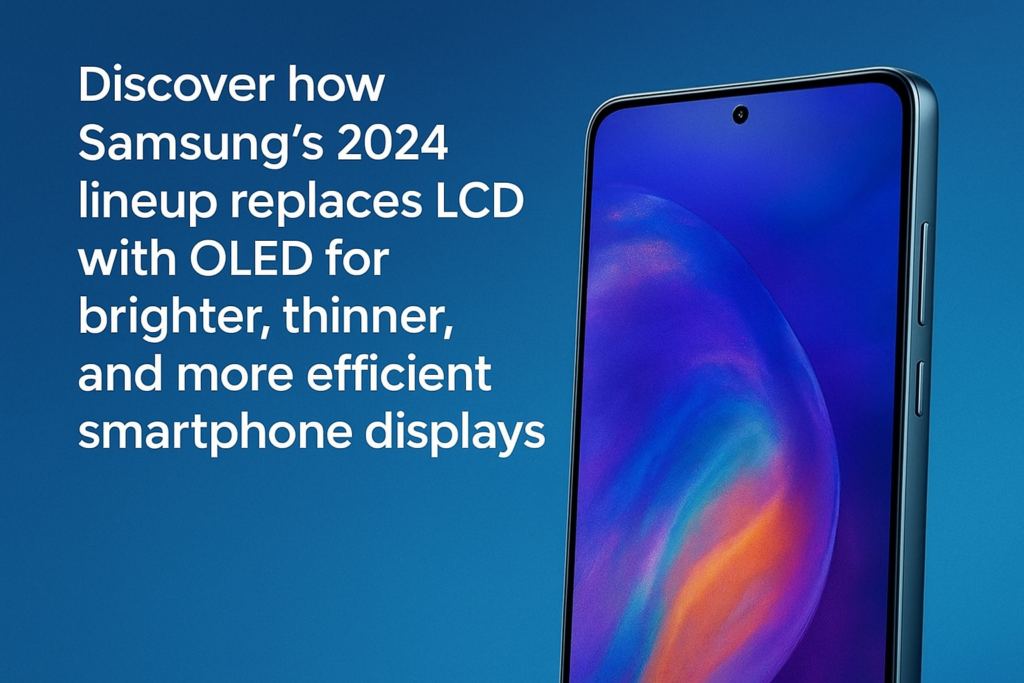
Zavedenie
Samsung je už dlho lídrom v inováciách displejov – a 2024 označuje rozhodujúci moment. Technologický gigant plne prešiel na OLED obrazovky pre takmer všetky modely smartfónov nad úrovňou základnej úrovne. LCD, kedysi štandardom v zariadeniach strednej triedy, teraz rýchlo miznú. Z Galaxy S24 Ultra k cenovo dostupný Galaxy A15, Vývoj displeja Samsungu ukazuje jeho víziu jasnejšieho, tenšie, a energeticky úspornejšie telefóny.
Takže, čo viedlo k tomuto úplnému prevzatiu OLED? Poďme sa ponoriť hlboko do toho, ako spoločnosť Samsung pretvorila svoj rad smartfónov pomocou ohromujúcich vizuálnych technológií.
Pochopenie technológie displeja
Čo je LCD a prečo mizne
LCD, alebo Kvapalina, bol kedysi kráľom obrazoviek smartfónov. Ponúkal slušný jas a cenovú dostupnosť. Avšak, LCD panely sa spoliehajú na podsvietenie, čo obmedzuje kontrast a hĺbku čiernej. V dôsledku toho, farby sa môžu javiť ako vyblednuté, najmä v porovnaní s OLED.
Skrátka, LCD je funkčné, ale už nie je vzrušujúce. Spotrebitelia teraz očakávajú hlbšiu čiernu, sýtejšie farby, a plynulejší obraz – to všetko OLED poskytuje bez námahy.
Čo robí OLED vynikajúcim
OLED (Organická dióda vyžarujúca svetlo) panely fungujú inak. Každý pixel vyžaruje svoje vlastné svetlo, eliminuje potrebu podsvietenia. Výsledok?
- Perfektné čierne
- Nekonečný kontrastný pomer
- Lepšia energetická účinnosť
- Tenšie a ľahšie panely
Obrazovky OLED od Samsungu sú celosvetovo uznávané živá reprodukcia farieb a dlhovekosť, vďaka čomu sú ideálne pre vlajkové lode aj zariadenia strednej triedy.
Varianty OLED od Samsungu – Super AMOLED vs. Dynamický AMOLED 2X
Samsung nevyrába len OLED panely – zdokonaľuje ich.
- Super AMOLED: Používa sa v telefónoch strednej a základnej úrovne, ako je napr A55 alebo M55. je svetlá, pestré, a energeticky efektívny.
- Dynamický AMOLED 2X: Nachádza sa vo vlajkových zariadeniach, ako je napr S24 Ultra a Záhyb do Z6. Ponúka vyššiu obnovovaciu frekvenciu, Podpora HDR, a adaptívny jas až 2600 hnidy.
Samsung 2024 Stratégia zobrazenia
Posun od LCD k OLED v rámci radov
In 2024, Samsung splnil svoj dlhodobý plán: vymeniť všetky LCD panely nad základnými modelmi s OLED. Značka už nepovažuje LCD za životaschopný pre akýkoľvek telefón strednej alebo prémiovej triedy. Dokonca aj cenovo dostupné modely ako napr Galaxy A15 teraz obsahujú OLED displeje – krok, ktorý signalizuje demokratizáciu prémiovej technológie.
Ako technológia panelov Samsung definuje svoj prémiový obraz
Samsung nie je len výrobcom smartfónov – je to tiež najväčší svetový dodávateľ OLED panelov. To mu dáva konkurenčnú výhodu v oblasti kontroly nákladov a zabezpečenia kvality. Úspech spoločnosti s OLED ovplyvnil celý priemysel smartfónov, núti konkurentov, aby nasledovali príklad.
2024 Vlajkové modely – séria Galaxy S24
Galaxy S24 Ultra – Ultimate Display Benchmark
Ten Galaxy S24 Ultra ponúka najlepší displej od Samsungu: a 6.8-palcový Dynamic AMOLED 2X s obnovovacou frekvenciou 120 Hz a rozlíšením QHD+. To, čím vyniká, je antireflexná vrstva a dizajn plochého skla, zlepšenie použiteľnosti a viditeľnosti pri slnečnom svetle.
Je tiež chránený pomocou Corning Gorilla Glass Armor, ktorý ponúka výnimočnú odolnosť. Či už pri hraní alebo streamovaní, tento displej nastavuje zlatý štandard 2024.
Galaxy S24+ a S24 – vyváženie výkonu a dokonalosti
Obaja S24+ a S24 pokračovať v tradícii OLED, pomocou Dynamické AMOLED 2X panely. S24+ ponúka rozlíšenie QHD+, zatiaľ čo S24 zostáva na FHD+, zachovanie čistoty a jasu pri optimalizácii životnosti batérie.
Varianty Snapdragon a Exynos
Samsung globálne ponúka dve verzie čipsetov:
- Snapdragon® 8 Gen 3 pre Galaxy (v USA, Kanada, Čína)
- Exynos 2400 (v Európe, India, a iné trhy)
Bez ohľadu na čip, kvalita zobrazenia zostáva trvalo na najvyššej úrovni.
Dizajn plochého displeja a antireflexná vrstva
Prvýkrát, dokonca aj model Ultra prijíma a plochý displej, končiace roky zakrivených hrán. V kombinácii s a nová antireflexná úprava, tento dizajn je praktický aj prémiový.
Séria skladacích vlajkových lodí – Galaxy Z Fold6 & Z Flip6
Umenie flexibility s Dynamic AMOLED 2X
Skladacie zariadenia Samsung –Záhyb do Z6 a Z Flip6-použitie Dynamický AMOLED 2X panely pre hlavné aj krycie obrazovky. Flexibilná povaha týchto displejov zvýrazňuje všestrannosť OLED, niečo, čo LCD nikdy nedokázalo dosiahnuť.
Zobrazte inovácie v skladacích zariadeniach
Funkcia skladania tenšie záhyby, lepší jas, a optimalizovaná spotreba energie. Samsung naďalej vedie v segmente skladacích zariadení, využíva prispôsobivosť OLED na vytváranie futuristických dizajnov.
Dokonalosť strednej triedy – Galaxy A55 a A35
Super AMOLED pre masový trh
Ten A55 a A35 použitie Super AMOLED displeje — jasnejšie, hladšie, a oveľa lepšie ako LCD ich predchodcov. To prináša presnosť farieb na úrovni vlajkovej lode a hlbokú čiernu na dostupné cenové úrovne.
Jas, Farba, a Value in Balance
Tieto zariadenia zasahujú medzi prémiovú estetiku a praktickú cenovú dostupnosť, posilnenie dominancie spoločnosti Samsung v strednej triede.
Cenovo dostupný, ale pokročilý – Galaxy A15 & Séria M15
Revolúcia OLED základnej úrovne
Dokonca aj Galaxy A15—rozpočtový model — sa inovoval na Super AMOLED, úplne nahradiť LCD. Tento posun znamená, že aj tí, ktorí si prvýkrát kúpia smartfón, získajú špičkový zážitok zo sledovania.
Prečo je tento posun pre spotrebiteľov dôležitý
OLED nie je len o vizuáli; ide o pohodlie a efektivitu. Obrazovky znižujú únavu očí a zlepšujú výdrž batérie. Samsung stanovuje nové očakávania: OLED je teraz štandardom, nie luxus.
Špeciálne regionálne modely – Galaxy M55 a F55
Rozšírenie AMOLED na rozvíjajúcich sa trhoch
Samsung rozširuje prijatie OLED na India, Latinská Amerika, a ďalšie rozvojové regióny s M55 a F55 séria. Tieto modely používajú Super AMOLED panely, ktoré poskytujú vysoký kontrast a plynulý výkon.
Vyváženie výdrže batérie a výkonu displeja
Vďaka energetickej účinnosti AMOLED, tieto modely dosahujú dlhú výdrž batérie bez toho, aby obetovali vizuálnu príťažlivosť – kritický faktor na trhoch riadených hodnotou.
Predpovede do budúcnosti pre neskoro 2024 Modely
Možné výpadky LCD v zariadeniach s ultra nízkou úrovňou
Samsung si môže ponechať LCD panely pre ultra-rozpočtové telefóny, ako sú Galaxy A05s, čisto na riadenie nákladov. Avšak, dokonca aj táto kategória sa môže posunúť na OLED o 2025.
Cena vs. Skúsenosti na trhoch vstupnej úrovne
Hlavným kompromisom zostáva cena a vizuálna kvalita. Ale ako sa výroba OLED stáva lacnejšou, dni LCD dominancie sú oficiálne spočítané.
Porovnávací prehľad vo forme tabuľky
| Kategória seriálu | 2024 Príklady modelov | Typ zobrazenia | Poznámky |
|---|---|---|---|
| Vlajková loď | Galaxy S24 Ultra, S24+, S24 | Dynamický AMOLED 2X | Najlepší OLED vo svojej triede s vysokým jasom a živými farbami. |
| Skladacia vlajková loď | Záhyb do Z6, Z Flip6 | Dynamický AMOLED 2X / Super AMOLED | Flexibilné a ultra jasné hlavné displeje. |
| Stredný rozsah | A55 5G, A35 5G, M55 5G | Super AMOLED | Vynikajúca rovnováha medzi výkonom a vizuálom. |
| Vstupná úroveň | A15 5G, M15 5G | Super AMOLED | OLED sa stáva mainstreamom. |
| Ultra-Low-End | (Napr., A05s, čaká na vydanie) | Možné LCD | LCD zostáva len pre extrémne rozpočtové úrovne. |
Väčší obraz – Prečo je OLED budúcnosť
Environmentálna a energetická efektívnosť
Obrazovky OLED spotrebujú menej energie, pretože neaktívne pixely sa jednoducho vypnú. To je skvelé pre oboch výdrž batérie a energetická udržateľnosť.
Očakávania spotrebiteľov a vnímanie značky
Pomocou OLED aj v zariadeniach základnej úrovne, Samsung posilňuje svoj prémiový imidž. Zákazníci teraz očakávajú bohatý vizuál od každého telefónu Galaxy, bez ohľadu na cenu.
Záver – Koniec LCD pre Samsung
In 2024, Samsung oficiálne vstúpil do svojho Éra „All-OLED“.. Od vlajkových lodí až po základné modely, OLED teraz definuje zážitok z Galaxy. LCD panely rýchlo miznú, nájdete len v najlacnejších segmentoch.
Prechod spoločnosti Samsung neznamená len technickú inováciu, ale aj nový štandard pre celý priemysel smartfónov.
Časté otázky
1. Prečo spoločnosť Samsung prestala používať LCD obrazovky vo väčšine telefónov?
OLED poskytuje lepší kontrast, energetickej účinnosti, a flexibilitu dizajnu.
2. Všetky telefóny Samsung teraz používajú OLED?
Takmer všetky – iba niekoľko modelov ultra nízkej triedy môže stále používať LCD.
3. Aký je rozdiel medzi Super AMOLED a Dynamic AMOLED 2X?
Dynamic AMOLED 2X ponúka vyšší jas, Podpora HDR, a plynulejšie obnovovacie frekvencie.
4. Sú OLED obrazovky krehkejšie?
Nie nevyhnutne. S pancierom Gorilla Glass Armor a pokročilými vrstvami, OLED diódy Samsung sú odolnejšie ako kedykoľvek predtým.
5. Budú budúce telefóny Samsung používať iba OLED?
Áno. Autor: 2025, Očakáva sa, že Samsung úplne vyradí LCD vo všetkých modeloch Galaxy.