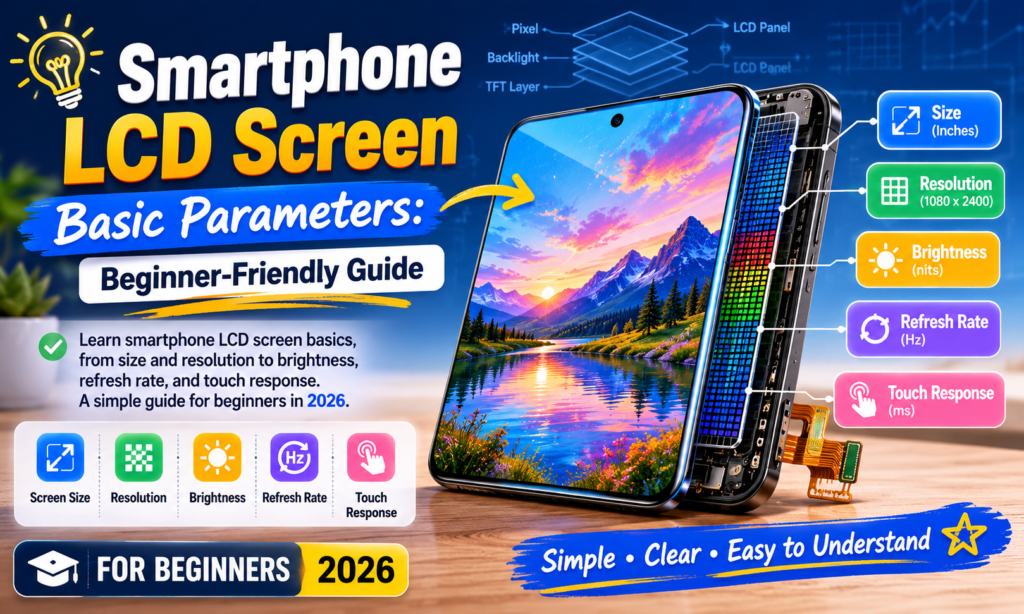
Prečo je dôležité pochopiť parametre LCD obrazovky
Ak ste sa niekedy pozreli na hárok so špecifikáciami obrazovky smartfónu a pomysleli ste si, Čo všetky tieto čísla vôbec znamenajú? - určite nie si sám. Pojmy ako FHD+, 120Hz, 1000 hnidy, a PPI hádzať všade, ale často sa cítia viac ako marketingový jazyk než užitočné informácie. Pravda je taká, na týchto číslach záleží. Oveľa viac, ako si väčšina ľudí uvedomuje.
Obrazovka smartfónu je súčasťou telefónu, s ktorým komunikujete viac než s čímkoľvek iným. Ťuknete naň stokrát denne. Čítate na ňom správy, pozerať videá, prehliadať webové stránky, upravovať fotografie, hrať hry, a pravdepodobne sa na to pozeráte pred spaním viac, než by ste si chceli pripustiť. Je to predné dvere vášho telefónu ku všetkému. Ak je zobrazenie slabé, celý zážitok je slabý – aj keď je procesor rýchly a fotoaparát je vynikajúci.
To je obzvlášť dôležité v priemysle výmeny a opravy LCD smartfónov. Či už kupujete náhradný LCD, získavanie dielov na ďalší predaj, alebo si jednoducho vyberiete svoj ďalší telefón, pochopenie parametrov LCD vám pomáha robiť lepšie rozhodnutia. Technický list prestáva byť stenou mätúcich čísel a stáva sa niečím praktickým. Stáva sa kontrolným zoznamom.
Predstavte si to ako nákup auta. Nemusíte byť mechanik, aby ste pochopili konskú silu, palivovej účinnosti, alebo bezpečnostné hodnotenia. Displeje smartfónov fungujú rovnako. Nemusíte byť inžinier – stačí vám vedieť, na čom záleží.
Čo je to LCD obrazovka smartfónu?
LCD znamená Kvapalina, a napriek tomu, že OLED dominuje vlajkovým telefónnym rozhovorom, LCD je stále neuveriteľne bežné - najmä v lacných telefónoch, zariadenia strednej triedy, a popredajné náhradné obrazovky.
LCD nevytvára svetlo samo o sebe. Namiesto toho, spolieha sa na a podsvietenie za panelom. Tekuté kryštály potom riadia, koľko svetla prejde cez farebné filtre, aby vytvorili obrázky, ktoré vidíte. To je dôvod, prečo LCD panely zvyčajne vyzerajú jasne a čisto, ale nevytvárajú rovnaký kontrast „skutočnej čiernej“, aký vidíte na OLED..
OLED funguje inak, pretože každý pixel vyžaruje svoje vlastné svetlo. Čierne pixely sa môžu úplne vypnúť. LCD pixely to nedokážu. Aj čierne plochy majú za sebou stále podsvietenie, vďaka čomu v porovnaní s čiernymi vyzerajú mierne sivo.
Stále, LCD má niekoľko výhod:
- Nižšie náklady
- Stabilný farebný výkon
- Žiadne riziko popálenia
- Výmena je často jednoduchšia a lacnejšia
- Spoľahlivá dlhodobá životnosť
Mnoho používateľov stále preferuje LCD z praktických dôvodov. Na trhu s náhradnými dielmi, LCD je obzvlášť dôležité, pretože náklady na výmenu sú nižšie a kompatibilita je často širšia.
Veľkosť obrazovky
Veľkosť obrazovky je zvyčajne prvé číslo, ktoré si ľudia všimnú.
Displej smartfónu sa meria diagonálne v palcoch – od jedného rohu k opačnému rohu.
In 2026, bežné veľkosti zahŕňajú:
| Veľkosť displeja | Typická skúsenosť | Najlepšie pre |
|---|---|---|
| 6.1″ | Kompaktný | Použitie jednou rukou |
| 6.4″ | Vyvážený | Denní používatelia |
| 6.6″ | Veľký | Videá & sociálnych médií |
| 6.7–6.9″ | Extra veľké | Hranie & streamovanie |
Väčšina telefónov teraz sedí niekde medzi 6.1 a 6.8 palcov. Väčšie neznamená vždy lepšie.
Ponúka vám väčšiu obrazovku:
- Pohlcujúcejšie prehrávanie videa
- Väčšia klávesnica
- Lepšia herná viditeľnosť
- Ľahšie čítanie
Ale tiež to znamená:
- Ťažšie ovládanie jednou rukou
- Ťažšie zariadenie
- Väčší rozmer vrecka
Výber veľkosti obrazovky je individuálny. Je to menej o „najlepšom“ a viac o „najlepšom pre vás“.
Rozlíšenie
Rozlíšenie vám povie, koľko pixelov je vložených do displeja.
Viac pixelov vo všeobecnosti znamená viac detailov.
Bežné rozlíšenia LCD smartfónov zahŕňajú:
| Rozlíšenie | Počet pixelov | Úroveň kvality |
|---|---|---|
| HD | 1280 × 720 | Vstupná úroveň |
| FHD | 1920 × 1080 | Štandardné |
| FHD+ | 2400 × 1080 | Moderný štandard |
| Qhd | 2560 × 1440 | Premium |
FHD+ zostáva sladkým bodom v rokoch 2025–2026, ponúka silnú ostrosť bez nadmerného vybíjania batérie pri rozlíšení QHD.
Rozlíšenie ovplyvňuje:
- Ostrosť textu
- Čistota fotografie
- Detail videa
- Prehľadnosť používateľského rozhrania aplikácie
Súvisiaca metrika je PPI (pixelov na palec).
Typické PPI pre smartfóny:
- 300 PPI = prijateľné
- 400 PPI = ostrý
- 450+ PPI = veľmi ostré
- 500+ PPI = hustota prémiovej úrovne
Okrem toho 450 PPI, veľa ľudí má problém všimnúť si obrovský rozdiel pri bežnom používaní.
Jas
Jas sa meria v hnidy.
Jedna nit sa rovná jednej kandele na meter štvorcový. Znie to technicky – ale v skutočnosti je to jednoduché.
Vyššie nity = jasnejší displej.
Jas je jednou z najdôležitejších špecifikácií LCD v reálnom svete, pretože ovplyvňuje, či skutočne vidíte svoju obrazovku vonku.
Typický sprievodca jasom:
| Jas | Skúsenosti |
|---|---|
| 400– 500 nitov | Len na použitie v interiéri |
| 700– 900 nitov | Dobre |
| 1000+ hnidy | Výborná vonkajšia viditeľnosť |
| 2000+ hnidy | Špičkový jas na úrovni vlajkovej lode |
Nedávne správy o displeji smartfónu odporúčajú 800– 1000 nitov alebo viac pre pohodlnú viditeľnosť na slnku.
Ovplyvňuje aj jas:
- HDR prehrávanie
- čitateľnosť na slnku
- presnosť úpravy fotografií
- pohodlie očí
Jasný displej pôsobí okamžite prémiovejšie. Je to jedna z tých špecifikácií, ktoré si používatelia všimnú bez toho, aby vedeli prečo.
Obnovovacia frekvencia
Obnovovacia frekvencia sa meria v Hz.
Opisuje, koľkokrát za sekundu sa displej obnoví.
Bežné obnovovacie frekvencie:
| Obnovovacia frekvencia | Používateľská skúsenosť |
|---|---|
| 60Hz | Štandardné |
| 90Hz | Hladký |
| 120Hz | Veľmi hladká |
| 144Hz+ | Zamerané na hry |
60Hz znamená 60 osviežuje každú sekundu.
120Hz znamená dvojnásobok.
To ovplyvňuje:
- plynulosť rolovania
- animácie aplikácií
- hranie
- dotykový pocit
Akonáhle budete pravidelne používať 120 Hz, návrat na 60 Hz môže byť prekvapivo trhaný.
Ale je tu kompromis.
Vyššia obnovovacia frekvencia často znamená:
- väčšia spotreba batérie
- vyššia záťaž GPU
To je dôvod, prečo sa adaptívne obnovovacie displeje stali bežnejšími.
Autor: 2025, 120Hz je teraz bežný aj na zariadeniach strednej triedy.
Farebný výkon
Rozlíšenie priťahuje pozornosť, ale kvalita farieb je to, čo robí displej živým.
Medzi dôležité parametre farieb LCD patrí:
- Farebná škála
- Teplota farby
- Presnosť farieb
- Kontrast
- Pozorovací uhol
Farebný gamut
Toto určuje, koľko farieb dokáže displej reprodukovať.
Spoločné normy:
- sRGB
- DCI-P3
DCI-P3 je širší a bohatší ako sRGB.
Presnosť farieb
Často merané podľa Delta E.
Nižšie = lepšie.
- Delta E < 3 = veľmi dobré
- Delta E < 2 = vynikajúce
Niektoré prémiové displeje teraz dosahujú takmer profesionálnu kalibráciu.
Dôležitá je presnosť farieb:
- fotografovanie
- video
- online nakupovanie
- reprodukcia tónu pleti
Ak sú farby vypnuté, všetko sa cíti zle.
Dotknite sa položky Výkon
Dotyk už nie je len dotyk.
Sú tu dve dôležité merania:
Dotknite sa položky Citlivosť
Ako ľahko obrazovka reaguje na dotyk prsta.
Nekvalitný LCD sa môže zdať oneskorený alebo nekonzistentný.
Dotknite sa možnosti Vzorkovacia frekvencia
Takto často obrazovka rozpozná dotykový vstup každú sekundu.
Merané v Hz.
Príklady:
- 120Hz
- 240Hz
- 360Hz
Vyššie dotykové vzorkovacie prostriedky:
- rýchlejšia odozva na poklepanie
- plynulejšie ovládanie hier
- lepšia presnosť písania
Hráči si to okamžite všimnú.
Príležitostní používatelia si to nemusia vedome všimnúť, ale cítia to.
Je to ako riadenie auta s prísnejším ovládaním. Technicky to asi nevysvetlíš, ale cítite odozvu.
Záver
Pochopenie parametrov LCD obrazovky smartfónu nevyžaduje technické znalosti. Keď sa terminológia zoznámi, čítanie tabuľky so špecifikáciami displeja je oveľa jednoduchšie.
Ak si pamätáte len pár vecí, zamerať sa na tieto:
- Veľkosť obrazovky ovplyvňuje pohodlie
- Rozlíšenie ovplyvňuje ostrosť
- Jas ovplyvňuje viditeľnosť
- Obnovovacia frekvencia ovplyvňuje hladkosť
- Farebný výkon ovplyvňuje vizuálnu kvalitu
- Vzorkovanie dotykom ovplyvňuje schopnosť reagovať
Pre väčšinu používateľov v 2026, skvelý LCD displej zvyčajne vyzerá takto:
- 6.4-6,7 palca
- FHD+
- 450+ PPI
- 800+ jas hnid
- 120Hz obnovovacia frekvencia
- silná kalibrácia farieb
Táto kombinácia prináša sladkú bodku medzi cenou, použiteľnosť, a výkon displeja.
Na obrazovke sa odohráva celý váš zážitok zo smartfónu. Je to javisko. Každá aplikácia, každá fotka, každé video sa tam objaví ako prvé.
Vyberajte s rozumom.
Časté otázky
1. Čo je najdôležitejší parameter LCD v smartfóne?
Závisí to od použitia, ale jas a rozlíšenie sú zvyčajne najvýraznejšie pri každodennom používaní. Jas ovplyvňuje čitateľnosť vonku, kým rozlíšenie ovplyvňuje ostrosť.
2. LCD je lepší ako OLED?
Nie univerzálne. OLED má lepšiu čiernu a kontrast. LCD je často lacnejšie, odolný, a bez rizika popálenia.
3. 120Hz stojí za to?
Áno pre väčšinu používateľov. Posúvanie je plynulejšie a telefón celkovo pôsobí rýchlejšie.
4. Aké rozlíšenie je najlepšie pre LCD smartfóny?
Pre väčšinu ľudí, FHD+ ponúka najlepšiu rovnováhu medzi ostrosťou a výdržou batérie.
5. Koľko hníd je dobré pre obrazovku smartfónu?
Okolo 800– 1000 nitov je vynikajúci pre väčšinu každodenného používania, najmä vonku. Vyššie je ešte lepšie na priamom slnku.