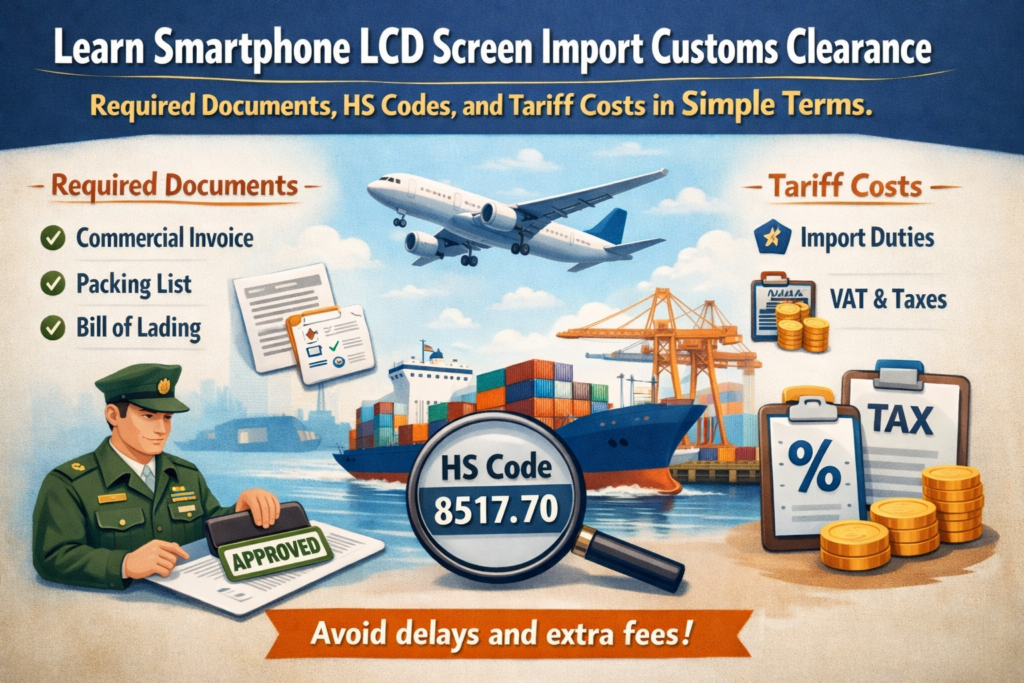
Introduktion til import af smartphone LCD-skærme
Smartphone LCD-skærme er det bankende hjerte i moderne mobile enheder. Knæk en, og telefonen er praktisk talt blind. Det er grunden til, at den globale efterspørgsel efter erstatning og originale smartphone LCD-skærme bliver ved med at vokse år efter år. Fra værksteder til store distributører, import af mobiltelefon LCD-skærme er blevet en daglig forretningsdrift snarere end en nichehandel.
Men her er fangsten: import af smartphone LCD-skærme handler ikke kun om at finde en leverandør og sende varerne. Fortoldningsprocedurer, dokumentationskrav, takster, og skattepolitikker kan gøre eller bryde din fortjenstmargen. Tænk på toldbehandling som lufthavnssikkerhed for varer – gå glip af ét dokument, og alt bliver forsinket.
Lad os opdele det hele på almindeligt engelsk.
Forstå importtoldklarering for smartphone LCD-skærme
Fortoldning er den juridiske proces med at angive varer til toldmyndighederne, når de kommer ind i et land. Til smartphone LCD-skærme, denne proces er især vigtig, fordi disse produkter falder ind under elektroniske komponenter, som ofte er underlagt strenge kontrol- og vurderingsregler.
Toldmyndighederne fokuserer på:
- Produktklassificering
- Deklareret værdi
- Oprindelsesland
- Tilsigtet kommerciel brug
Tag nogen af disse forkert, og du kan blive udsat for forsinkelser, bøder, eller endda beslaglæggelse af forsendelser.
HS-kodeklassificering for smartphone LCD-skærme
HS (Harmoniseret system) kode er rygraden i toldbehandlingen. Det bestemmer, hvor meget told du betaler, og hvilke regler der gælder.
Smartphone LCD-skærme er normalt klassificeret under HS-koder relateret til:
- Flydende krystal display moduler
- Dele og tilbehør til mobiltelefoner
Det er ikke valgfrit at vælge den korrekte HS-kode – det er obligatorisk. En forkert kode kan resultere i højere told eller toldrevision. Juster altid HS-koden med den faktiske produktfunktion, ikke kun hvad leverandøren foreslår.
Nødvendige importdokumenter til smartphone LCD-skærme
Papirarbejde kan føles kedeligt, men i toldbehandling, dokumenter er konge.
Kommerciel faktura
Dette dokument viser transaktionsværdien. Det skal indeholde:
- Køber og sælger detaljer
- Produktbeskrivelse (f.eks., smartphone LCD display modul)
- Enhedspris og samlet værdi
- Valuta og betalingsbetingelser
Nøjagtighed her er afgørende, fordi toldvæsenet bruger dette til at beregne told og afgifter.
Pakkeliste
Pakkelisten beskriver, hvordan varerne er pakket:
- Antal kartoner
- Brutto- og nettovægt
- Antal pr pakke
Toldvæsenet bruger dette under inspektioner til at verificere fysiske varer mod deklarerede data.
Salgskontrakt
The contract proves that the trade is legitimate. It usually includes:
- Produktspecifikationer
- Delivery terms (Incoterms)
- Payment conditions
While not always inspected line by line, customs may request it during audits.
Oprindelsescertifikat
This document shows where the LCD screens were manufactured. It plays a key role in:
- Determining applicable tariff rates
- Applying free trade agreement benefits
Certificates of origin can be:
- Non-preferential
- Preferential (used for tariff reductions)
Bill of Lading or Air Waybill
This is the transport document issued by the carrier. It confirms shipment details and ownership of the goods.
Import Declaration Form
This is submitted electronically or manually to customs, summarizing all shipment information.
Special Compliance Requirements for LCD Screen Imports
Customs often requires detailed product descriptions for LCD screens, inklusive:
- Skærmtype (LCD, Tft, IPS)
- Størrelse og opløsning
- Uanset om det er samlet eller halvfærdigt
Mærkeskærme kan også kræve mærkegodkendelse eller varemærkeerklæringer i nogle lande.
Importtakster for smartphone LCD-skærme
Importafgifter består normalt af:
- Grundlæggende importtold
- Merværdiafgift (moms)
Grundtoldsatsen varierer efter land og HS-kode, ofte lige fra 0% til 10%. Moms beregnes typisk af CIF-værdien (Koste + Forsikring + Fragt).
Formel for skattepligtig værdi:
CIF værdi + importafgift = momsgrundlag
Forståelse af denne formel hjælper dig med at forudsige landeomkostninger nøjagtigt.
Sådan kontrollerer du importtoldsatser
Du kan tjekke takster igennem:
- Officielle toldtarifdatabaser
- Nationale toldwebsteder
- Autoriserede toldmæglere
For et tip: Dobbelttjek altid tarifferne før forsendelse. Politikker ændres, og gårsdagens kurs gælder muligvis ikke i dag.
Politikker for refusion af importafgifter og rabat
Hvis importerede smartphone LCD-skærme senere eksporteres igen - almindelige i reparations- og distributionscentre - kan du være berettiget til skatterefusion.
Refusion af importafgift
Nogle lande tillader tilbagebetaling af importmoms, hvis varer reeksporteres inden for en bestemt periode.
Eksportmomsrabat
I fremstillings- eller reeksportscenarier, eksportmomsrabatter kan forekomme. LCD-relaterede produkter nyder ofte moderate rabatter, afhængig af klassificering.
Bekræft altid rabatberettigelse, før du planlægger import af store mængder.
Omkostningsoptimeringsstrategier for importører
Smarte importører klarer ikke bare tolden – de optimerer den.
- Vælg gunstige Incoterms som FOB eller CIF med omtanke
- Brug frihandelsaftaler, når det er relevant
- Konsolider forsendelser for at reducere logistikomkostningerne pr. enhed
Tænk på toldstrategi som et skakspil, ikke et terningkast.
Fælles risici for toldbehandling og hvordan man undgår dem
Typiske faldgruber er bl.a:
- Inkonsistente fakturaværdier
- Vage produktbeskrivelser
- Forkerte HS-koder
Løsningen? Konsistens, gennemsigtighed, og forberedelse.
Typisk toldbehandling trin for trin
- Forbered dokumenter før forsendelses ankomst
- Indsend toldangivelse
- Toldkontrol (om nødvendigt)
- Betal told og skatter
- Varer frigivet
Glat clearance handler om forberedelse, ikke held.
Samarbejde med toldmæglere og speditører
Hvis du importerer regelmæssigt, en professionel mægler er hver en øre værd. De:
- Håndtere erklæringer
- Løs HS-tvister
- Spar tid og reducer risikoen
Vælg partnere med erfaring med import af elektronik, ikke kun stykgods.
Casestudie: Importerer smartphone LCD-skærme fra Kina
En distributør importerer 1,000 LCD skærme:
- Deklareret værdi: USD 30,000
- Importafgift: 5%
- moms: 13%
Korrekt dokumentation og brug af HS-kode resulterer i problemfri rydning inden for to arbejdsdage – ingen forsinkelser, ingen bøder.
Fremtidige tendenser inden for import af smartphone LCD-skærme
Digitale toldsystemer, forhåndserklæring, og AI-assisteret inspektion er ved at blive normen. Gennemsigtighed og overholdelse vil betyde mere end nogensinde.
Konklusion
Import af smartphone LCD-skærme er en rentabel forretning - men kun hvis du mestrer toldbehandling og toldregler. Med de rigtige dokumenter, korrekte HS-koder, og en klar forståelse af told og skatterabatter, du forvandler tolden fra en vejspærring til en hurtig bane. Behandl overholdelse som en del af din forretningsstrategi, og dine importer vil bevæge sig lige så gnidningsløst som et nyt touchscreen-stryg.
FAQS
Hvilke dokumenter kræves for at importere smartphone LCD-skærme?
Du skal typisk have en handelsfaktura, pakkeliste, kontrakt, oprindelsescertifikat, og transportdokument.
Er smartphone LCD-skærme pålagt importafgift?
Ja, de fleste lande anvender grundlæggende importtold og moms, afhængig af HS-kodeklassificering.
Hvordan kan jeg reducere importafgifter på lovlig vis?
Brug korrekte HS-koder, frihandelsaftaler, og udforske re-eksportskatterefusionspolitikker.
Er et oprindelsescertifikat obligatorisk?
Ja, især hvis du ønsker at ansøge om præferencetakster.
Kan jeg importere brandede LCD-skærme uden tilladelse?
Nogle lande kræver mærkegodkendelse eller varemærkeregistrering – tjek altid lokale regler.