Proč na specifikacích obrazovky smartphonu záleží víc než kdy jindy 2026 Na specifikacích obrazovky záleží víc než kdy jindy 2026
Pokud o tom přemýšlíte, a obrazovka je duší smartphonu. Je to jedna část, které se každý den dotknete stokrát. Čtete na něm zprávy, sledujte na něm videa, rolujte na něm sociální média, upravovat na něm fotky, a možná z toho i pracovat. Bez ohledu na to, jak výkonný je procesor nebo kolik megapixelů fotoaparát nabízí, pokud je obrazovka matná, rozmazané, nebo nepříjemné na pohled, celý zážitek z telefonu mi přijde slabší. Proto je pochopení specifikací displeje smartphonu důležitější, než si mnoho lidí uvědomuje.
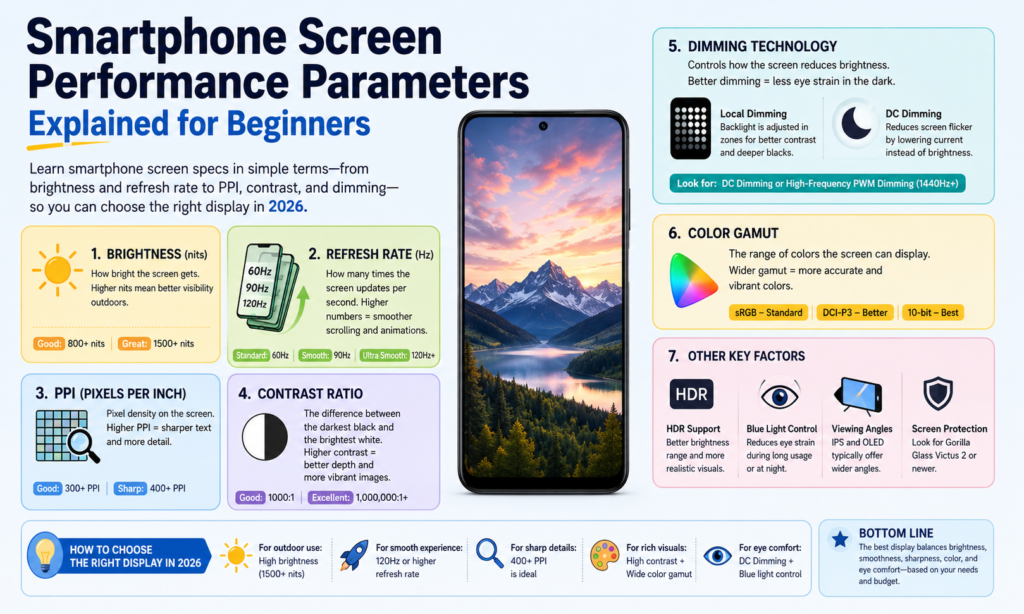
V 2026, technologie displeje se neustále vyvíjí rychle. Prémiové telefony nyní pravidelně dosahují 3,000+ jas hnid, zatímco 120Hz adaptivní obnovovací frekvence se staly běžnými u zařízení vyšší střední třídy. Vysokofrekvenční PWM stmívání výše 2,160Hz je také stále populárnější, zejména v komfortní vlajkové lodi OLEDe. citeotočte0hledejte0otočte0hledejte2
Záludná část? Většina listů se specifikacemi na vás hází čísla, aniž by vysvětlila, co vlastně znamenají. PPI, poměr kontrastu, obnovovací frekvence, barevný gamut – může to být jako čtení jiného jazyka. Tato příručka rozebírá vše v jednoduché angličtině, tedy ať už kupujete nový telefon, srovnání LCD vs OLED, nebo vás jen zajímá technologie displeje, budete přesně vědět, co hledat.
Technologie stmívání
Co je DC Dimming?
DC stmívání upravuje jas přímou změnou elektrického proudu dodávaného do displeje. Představte si to, jako byste pomalu otáčeli knoflíkem kohoutku – voda teče dál, jen s menší silou. Světlo zůstává nepřerušované, ale jas klesá.
Pro LCD obrazovky, jas pochází hlavně z podsvícení, takže snížení napětí nebo proudu sníží jas. Pro OLED obrazovky, každý pixel vyzařuje své vlastní světlo, takže jas se mění snížením proudu vyslaného do těchto jednotlivých pixelů.
Mnoho uživatelů preferuje DC stmívání, protože je vizuálně stabilní. Protože světlo rychle nebliká a nezhasíná, pro citlivé oči to může být jednodušší. To je zvláště důležité pro lidi, kteří tráví hodiny sledováním svých telefonů v tmavém prostředí.
Kompromisem je, že DC stmívání může někdy ovlivnit konzistenci barev při velmi nízkém jasu na OLED panelech. Černoši mohou zůstat vynikající, ale kalibrace barev se může mírně posunout v závislosti na designu panelu. Výrobci se zde často snaží vyvážit oční pohodlí a barevnou přesnost.
Co je PWM stmívání?
PWM znamená Pulse Width Modulation. Místo neustálého snižování výkonu, displej se mezi nimi rychle přepíná zapnuto → vypnuto → zapnuto → vypnuto vysokou rychlostí.
Představte si, že přepnete vypínačem stovky nebo tisícekrát za sekundu. Vaše oči obvykle nemohou přímo detekovat blikání, takže se zdá být tlumenější než blikat.
Doba, po kterou světlo zůstane „rozsvícené“ během každého cyklu, určuje jas:
- Delší doba zapnutí = jasnější obrazovka
- Kratší doba zapnutí = ztlumení obrazovky
PWM je u smartphonů OLED extrémně běžné.
V 2026, vlajková loď telefonů Android stále více inzeruje 2,160Hz až 3 840 Hz PWM stmívání, což je mnohem vyšší než u starších implementací 240Hz–480Hz. Uživatelé s vyšší frekvencí PWM. citeotočte0hledejte8otočte0hledejte6
Který je lepší pro pohodlí očí?
Neexistuje žádná univerzální odpověď, protože lidské oči jsou úžasně složité.
Někteří uživatelé si blikání PWM vůbec nevšimnou. Jiní pociťují bolesti hlavy 10 zápis.
Obvykle:
| Technologie | Hlavní výhoda | Hlavní nevýhoda |
|---|---|---|
| DC stmívání | Méně viditelné blikání, často snazší pro oči | Může mírně ovlivnit barevný výkon OLED |
| PWM stmívání | Lepší ovládání jasu a konzistence barev | Citlivým uživatelům může způsobit únavu očí |
Pokud jste citliví na blikání obrazovky, DC stmívání nebo vysokofrekvenční PWM stojí za to upřednostnit.
Barevný výkon
Nasycení
Nasycení popisuje, jak sytá nebo čistá barva vypadá.
Vysoce syté barvy působí živě a působivě. Nízká sytost vypadá tlumeně nebo vybledle.
Představte si zralou červenou jahodu nebo vybledlou růžovou košili, kterou necháte na slunci příliš dlouho. Stejná skupina barev – velmi odlišná intenzita.
Panely OLED jsou často nasycené, protože každý pixel vyzařuje své vlastní světlo nezávisle.
Někteří lidé milují ten „wow“ efekt. Jiní preferují pro úpravu fotografií přirozenější barvy.
Barevný gamut
Barevný gamut označuje celkový rozsah barev, které může obrazovka zobrazit.
Širší gamut znamená, že displej může reprodukovat více odstínů.
Mezi běžné standardy patří:
- sRGB
- DCI-P3
- Adobe RGB
- BT.2020
V chytrých telefonech, DCI-P3 je nyní velmi běžné u prémiových displejů.
Nejnovější koncepty displeje společnosti Samsung představené na SID Display Week 2026 předvedl až 96% Pokrytí BT.2020, celé displeje. citujteotočte0zprávy16otočte0zprávy17
Přesnost barev
Přesnost barev měří, jak blízko je zobrazená barva zamýšlené původní barvě.
Pro tohle hodně záleží:
- fotografové
- video editory
- návrháři
- online prodejci zobrazující barvy produktů
Pokud je bílý obrázek nažloutlý nebo červená fotografie produktu vypadá oranžově, přesnost barev je špatná.
Zde je běžné měření Delta E.
Nižší Delta E = přesnější reprodukce barev.
Stupnice šedé
Šedá stupnice označuje úrovně jasu mezi černou a bílou.
Dobrý výkon v odstínech šedé znamená hladké přechody.
Špatná škála šedé vytváří viditelné pruhy nebo nerovnoměrné stínování.
To je velmi patrné při sledování tmavých filmů nebo prohlížení fotografií při slabém osvětlení.
Jas a kontrast
Jas vysvětlen
Jas se měří v hnidy.
Vyšší nits = jasnější displej.
Proč na tom záleží?
Protože existuje sluneční světlo.
Telefon může uvnitř vypadat perfektně, ale venku je nečitelný.
Vlajková loď smartphonů v 2026 běžně dosáhnout 3,000– Špičkový jas 3 500 nitů. Například, OnePlus 15 je hlášeno kolem 3,500 hnidy, zatímco Pixe kolem 3,300 hnidy. citujteotočte0hledejte2
Vysvětlení kontrastního poměru
Kontrastní poměr je rozdíl mezi:
nejjasnější bílá ÷ nejtmavší černá
Vyšší kontrast vytváří:
- hlubší černoši
- silnější odlesky
- lepší HDR
- bohatší hloubka obrazu
OLED zde dominuje, protože pixely lze zcela vypnout.
To vytváří skutečnou černou.
LCD nemůže úplně vypnout podsvícení stejným způsobem.
Proto mají OLED černé často pocit, jako by se dívali do tmavé noční oblohy.
Jasnost a ostrost
Rezoluce (DPI)
Rozlišení udává, kolik pixelů existuje vodorovně a svisle.
Příklady:
- 1080 × 2400
- 1440 × 3200
Více pixelů = více detailů.
I když za určitým bodem, rozdíl je hůře rozpoznatelný při běžné pozorovací vzdálenosti.
Hustota pixelů (PPI)
PPI prostředek pixelů na palec.
Říká vám, jak těsně jsou pixely zabalené.
Vyšší PPI = ostřejší text a čistší okraje.
Příklady:
| Typ displeje | Typické PPI |
|---|---|
| Levné LCD | 300–400 |
| OLED střední třídy | 400–460 |
| Vlajková loď OLED | 450–550+ |
Zhruba výše 450 PPI, text obvykle vypadá jako břitva.
Pixel Pitch
Rozteč pixelů je vzdálenost mezi sousedními pixely.
Menší rozteč pixelů = vyšší ostrost.
Díky menším mezerám mezi pixely jsou obrázky hladší a uhlazenější.
Pohyb a odezva
Doba odezvy
Doba odezvy měří, jak rychle se pixel mění z jednoho stavu do druhého.
Často popisován jako:
Černá → Bílá → Černá
Nižší doba odezvy pomáhá snížit:
- duchů
- rozmazat
- rozmazávání
Zvláště patrné při hraní her nebo rychlém přehrávání videa.
Obnovovací frekvence
Obnovovací frekvence = kolikrát se displej obnoví každou sekundu.
Měřeno v Hz.
Příklady:
- 60Hz
- 90Hz
- 120Hz
- 144Hz
A 120Hz displej obnovuje dvakrát častěji než 60 Hz.
Díky tomu je posouvání plynulejší a animace plynulejší.
Jakmile budete pravidelně používat 120Hz, návrat na 60 Hz může mít pocit, jako byste se procházeli mokrým pískem.
Další důležité zobrazovací faktory
Úhel pohledu
Pozorovací úhel znamená, jak dobře stále vidíte na displej ze strany.
Dobré pozorovací úhly jsou zachovány:
- jas
- barva
- kontrast
OLED zde obvykle funguje lépe než LCD.
Spotřeba energie
Displeje spotřebují velkou část životnosti baterie smartphonu.
OLED může být efektivnější s tmavým režimem, protože černé pixely se mohou úplně vypnout.
Podsvícení LCD zůstává trvale zapnuté.
To je důvod, proč tmavý režim může šetřit baterii na zařízeních OLED.
Elektromagnetické záření
Displeje vyzařují energii prostřednictvím elektrických a magnetických polí, stejně jako viditelného světla a tepla.
Pro běžné použití smartphonu, to zůstává v rámci bezpečnostních norem spotřební elektroniky.
Čeho si uživatelé obvykle všimnou spíše prakticky:
- expozice modrého světla
- únava očí
- generování tepla
spíše než samotné elektromagnetické záření.
Jak vybrat správnou obrazovku smartphonu podle vašich potřeb
Výběr displeje smartphonu je jako výběr brýlí. Ten „nejlepší“ závisí na vás.
Pokud vám na tom záleží nejvíc sledování filmů, upřednostnit:
- OLED
- vysoký kontrast
- HDR
- vysoký jas
Pokud jste a mobilní hráč, zaměřit se na:
- 120Hz+
- rychlá doba odezvy
- vysoké dotykové vzorkování
Pokud jste citliví na únavu očí:
- DC stmívání
- vysokofrekvenční PWM
- nastavení pohodlí očí
Pokud nejvíce záleží na baterii:
- LTPO JSTE
- adaptivní obnovovací frekvence
- efektivní správa jasu
Nehoňte se za každým číslem.
Pronásledujte čísla, která odpovídají tomu, jak telefon skutečně používáte.
Závěr
Displeje smartphonů už nejsou jen svítící obdélníky. Jsou vstupními dveřmi do celého vašeho digitálního života.
Porozumění DC stmívání, PWM, nasycení, poměr kontrastu, rezoluce, PPI, obnovovací frekvence, doba odezvy, barevný gamut, a spotřeba energie vám pomůže číst za hranicemi marketingu.
Jasnější obrazovka není vždy lepší.
Vyšší obnovovací frekvence není vždy nutná.
Širší barevný gamut není užitečný, pokud je přesnost barev špatná.
Nejlepší obrazovka smartphonu je ta, která se cítí bez námahy pokaždé, když telefon odemknete.
A jakmile budete vědět, co tyto specifikace skutečně znamenají, výběr této obrazovky je mnohem jednodušší.
Časté časté
1. Což je pro oči lepší: DC stmívání nebo PWM stmívání?
Pro mnoho uživatelů citlivých na blikání, DC stmívání se cítí pohodlněji. Vysokofrekvenční PWM může být také pohodlné v závislosti na citlivosti.
2. Je vyšší PPI vždy lepší?
Ne vždy. Více než kolem 450–500 PPI, rozdíly jsou při běžném používání obtížnější.
3. OLED je lepší než LCD?
OLED obvykle nabízí lepší kontrast, hlubší černoši, a sytější barvu. LCD může stále nabízet vynikající jas a často se vyhýbá obavám z blikání OLED.
4. Stojí za to 120 Hz na smartphonu?
Ano – zvláště pokud často hrajete nebo rolujete. Hladší pohyb je velmi patrný.
5. Na kterých specifikacích obrazovky záleží nejvíce?
Neexistuje jediná odpověď. Pro většinu lidí, největší denní dopad pochází:
- jas
- obnovovací frekvence
- kontrast
- pohodlí pro oči