I display degli smartphone si sono evoluti notevolmente negli ultimi dieci anni. Quella che una volta era una semplice scelta tra un pannello LCD a basso costo e un display OLED premium si è trasformata in una sofisticata battaglia di tecnologie, capacità produttive, e le esperienze degli utenti. In 2026, consumatori che acquistano uno smartphone, officine di riparazione che acquistano schermi sostitutivi, e i grossisti che acquistano gruppi espositivi si trovano tutti ad affrontare la stessa domanda fondamentale: Dovresti scegliere uno schermo LCD TFT o uno schermo OLED?
La risposta non è più così semplice come lo era cinque anni fa. Secondo recenti ricerche di mercato, Gli smartphone dotati di AMOLED rappresentavano circa 63% delle spedizioni globali di smartphone nel primo trimestre 2025, mentre gli smartphone basati su LCD sono scesi a circa 37%, dimostrando l'accelerazione sia nei dispositivi di punta che in quelli di fascia media. citaturn0search4turn0search7
Allo stesso tempo, La tecnologia LCD TFT rimane dominante negli smartphone entry-level, dispositivi industriali, e il mercato post-vendita delle riparazioni mobili per la sua convenienza, durata, e un ecosistema produttivo maturo. Comprendere le differenze tra queste due tecnologie richiede di guardare oltre i termini di marketing ed esaminare come funziona effettivamente ciascun display, come si comportano nelle condizioni del mondo reale, e dove si sta dirigendo l’industria.
Cosa sono le tecnologie di visualizzazione degli smartphone?
I display degli smartphone sono essenzialmente il ponte di comunicazione tra uomo e macchina. Ogni foto che catturi, ogni video che guardi, ogni gioco a cui giochi, e ogni messaggio che invii dipende interamente dalla qualità del display sotto le tue dita. L'industria dei display ha vissuto una delle evoluzioni tecnologiche più rapide nell'elettronica di consumo, passando da schermi monocromatici a pannelli OLED ad alta risoluzione in grado di visualizzare miliardi di colori con contrasto e luminosità eccezionali.
L’importanza della tecnologia dei display è aumentata sostanzialmente perché gli smartphone sono diventati i nostri principali dispositivi informatici. I consumatori ora trascorrono diverse ore al giorno interagendo con gli schermi dei loro smartphone, fattori determinanti come il comfort degli occhi, Efficienza energetica, precisione del colore, prestazioni della frequenza di aggiornamento, e la visibilità esterna è più importante che mai. Produttori come Apple, SAMSUNG, Xiaomi, Oppo, e Google hanno investito miliardi di dollari nell’innovazione dei display perché riconoscono che lo schermo è spesso la prima caratteristica che gli utenti notano.
Gli analisti del settore stimano che le spedizioni globali di pannelli per smartphone supereranno 2.2 miliardi di unità in 2025, con OLED che continua a guadagnare quote di mercato grazie ai minori costi di produzione e all'aumento delle capacità produttive CSOT, Visionox, e Tianma. citaturn0search0turn0search1turn0search3
L'evoluzione dei display dei telefoni cellulari
Il viaggio dei display degli smartphone ricorda l’evoluzione dei trasporti. I primi telefoni cellulari erano come le biciclette: semplici, pratico, e affidabile. La tecnologia TFT LCD ha rappresentato l'era automobilistica, consegnare il colore, velocità, e accessibilità di massa. Tecnologia OLED, Nel frattempo, rappresenta la supercar elettrica: Più veloce, più efficiente, e più sofisticato.
All'inizio degli anni 2000, la maggior parte dei telefoni cellulari utilizzava display a matrice passiva. Questi furono rapidamente sostituiti da TFT (Transistor a film sottile) Tecnologia LCD, che offriva una migliore qualità dell'immagine, tempi di risposta più rapidi, e risoluzioni più elevate. Man mano che gli smartphone diventavano più avanzati, La tecnologia LCD TFT si è diversificata in LCD IPS, LTPS LCD, e varie implementazioni ad alta frequenza di aggiornamento.
La tecnologia OLED è entrata nel mercato mainstream degli smartphone con dispositivi come la serie Samsung Galaxy e successivamente è stata ampiamente adottata da Apple in seguito all'introduzione dell'iPhone X nel 2017. Oggi, praticamente tutti gli smartphone di punta utilizzano display OLED, e anche i dispositivi di fascia media adottano sempre più pannelli AMOLED flessibili. Apple ha completato la transizione dal movimento dell’industria degli iP LCD verso il dominio degli OLED. citaturn0news41turn0search4
Cos'è uno schermo LCD TFT?
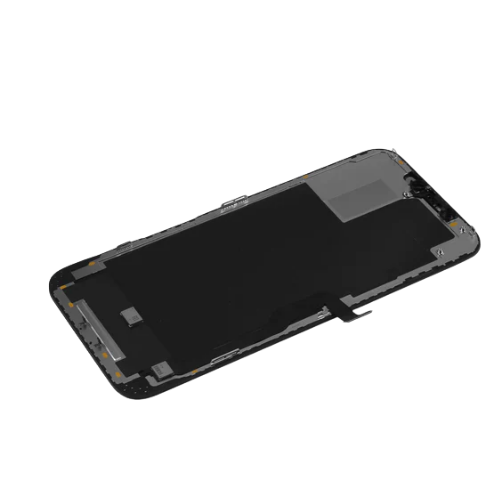
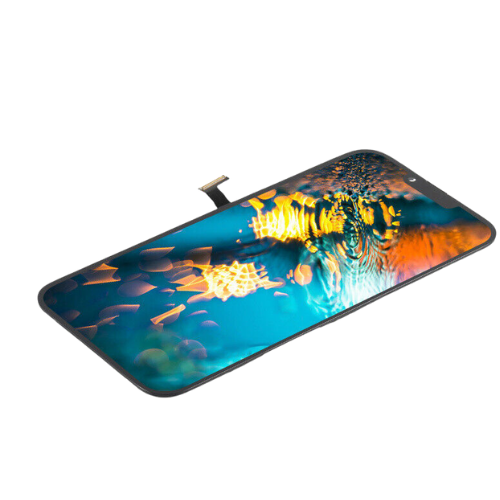
Uno schermo TFT, o display a cristalli liquidi con transistor a film sottile, è una delle tecnologie di visualizzazione più mature e ampiamente prodotte nella storia. A differenza dei display OLED che generano luce propria, Gli schermi LCD TFT dipendono da un sistema di retroilluminazione per illuminare gli strati di cristalli liquidi e creare immagini.
Pensa a un display TFT come a una vetrata illuminata dalla luce del sole. La retroilluminazione funge da sole, mentre milioni di minuscoli otturatori a cristalli liquidi controllano la quantità di luce che passa attraverso ciascun pixel. Questa architettura consente ai display TFT di produrre colori accurati, mantenere una lunga durata operativa, e raggiungere costi di produzione relativamente bassi.
I display TFT continuano a dominare gli smartphone entry-level, dispositivi industriali robusti, display automobilistici, e mercati degli schermi sostitutivi grazie al loro eccellente rapporto costo-prestazioni. Nonostante la crescita degli OLED, le spedizioni globali di pannelli LCD per smartphone sono ancora superate **340 milioni di unità, il che dimostra la loro continua rilevanza nel settore. citaturn0search0
Come funziona la tecnologia LCD TFT
All'interno di un pannello LCD TFT, ogni pixel contiene più transistor a film sottile responsabili del controllo dell'orientamento dei cristalli liquidi. Quando viene applicata la tensione, questi cristalli liquidi ruotano e bloccano o consentono alla luce proveniente dal sistema di retroilluminazione di passare attraverso i filtri colorati. La combinazione risultante crea le immagini visibili sullo schermo.
Questo processo offre diversi vantaggi. I display TFT offrono una qualità dell'immagine stabile, rischio minimo di conservazione permanente dell'immagine, caratteristiche di invecchiamento prevedibili, e costi di riparazione relativamente bassi. Perché il display si basa su una retroilluminazione condivisa, i rendimenti di produzione rimangono elevati e le spese di produzione rimangono relativamente basse rispetto alla fabbricazione di OLED.
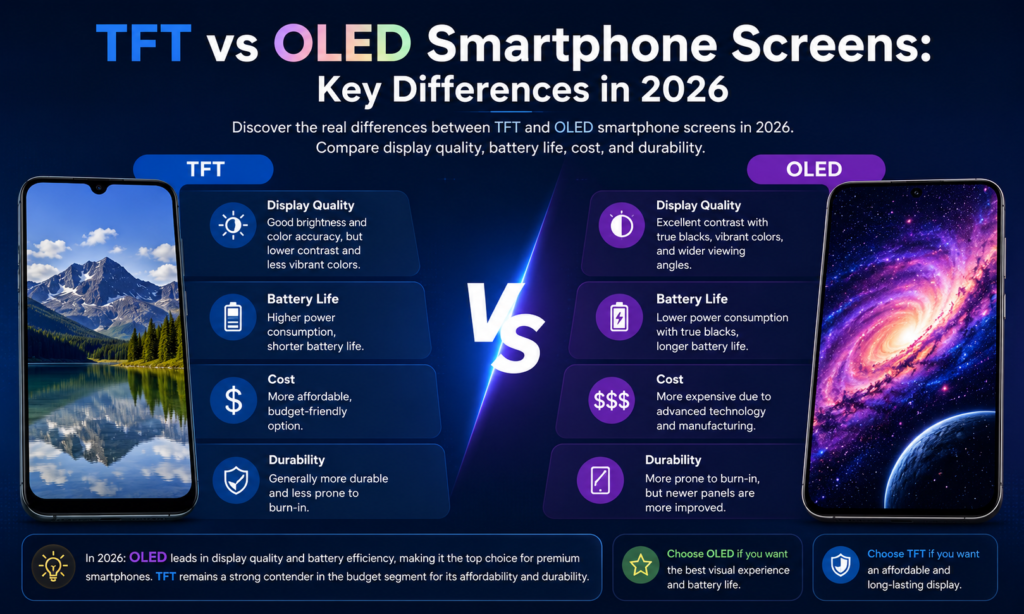
Tuttavia, questa architettura introduce anche delle limitazioni. Poiché i pixel neri non possono spegnere completamente la retroilluminazione, Gli schermi TFT faticano a raggiungere i veri neri. I rapporti di contrasto rimangono significativamente inferiori rispetto ai pannelli OLED, e il consumo energetico rimane relativamente costante indipendentemente dal contenuto visualizzato.
Tipi di pannelli LCD TFT utilizzati negli smartphone
Non tutti gli schermi TFT sono uguali. Gli smartphone moderni utilizzano principalmente tre principali tecnologie LCD:
| Tecnologia | Caratteristiche | Utilizzo tipico |
|---|---|---|
| a-Si LCD | Costo più basso, produzione matura | Smartphone economici |
| LTPS LCD | Risoluzione ed efficienza più elevate | Smartphone di fascia media |
| LCD IPS | Ampi angoli di visione e precisione del colore | Smartphone LCD di alta qualità |
Recenti rapporti di settore indicano che la tecnologia LCD a-Si rimane resiliente grazie alla sua convenienza e alla forte espansione della capacità produttiva tra i fornitori di pannelli cinesi. Infatti, globale da superare 1.3 miliardi di unità in 2025. citaturn0search3turn0search6
Cos'è uno schermo OLED?
OLED significa diodo organico a emissione di luce. A differenza della tecnologia LCD TFT, I pannelli OLED eliminano la necessità di una retroilluminazione separata perché ogni singolo pixel genera la propria luce. Questa differenza apparentemente semplice cambia radicalmente il modo in cui funzionano i display e perché OLED è diventata la tecnologia preferita per gli smartphone premium.
Immagina lo skyline di una città di notte. Su un display TFT, ogni edificio è illuminato da un proiettore gigante. In un display OLED, ogni finestra ha una propria fonte di luce indipendente. Questa indipendenza consente agli schermi OLED di creare neri perfetti, rapporti di contrasto straordinari, tempi di risposta più rapidi, e un'efficienza energetica superiore in molte condizioni operative.
La rapida crescita della tecnologia OLED è stata notevole. Le previsioni del settore suggeriscono che le spedizioni di smartphone OLED potrebbero avvicinarsi 900 milioni di unità durante 2025, che rappresentano quasi la metà della produzione globale. citaturn0search1turn0search2
Come funziona la tecnologia OLED
I display OLED sono costituiti da più strati di semiconduttori organici inseriti tra elettrodi conduttivi. Quando la corrente elettrica scorre attraverso questi materiali organici, emettono direttamente la luce visibile. Ogni subpixel funziona in modo indipendente, ciò significa che i pixel neri non consumano praticamente alcuna energia perché rimangono completamente spenti.
Questa architettura offre diversi vantaggi. Gli schermi OLED producono rapporti di contrasto infiniti, saturazione del colore eccezionale, tempi di risposta ultraveloci, Fattori di forma più sottili, e supporto per progetti di display flessibili. Queste caratteristiche spiegano perché gli smartphone pieghevoli e i display con bordi curvi dipendono quasi esclusivamente dalla tecnologia OLED.
Il processo di produzione, Tuttavia, rimane più complessa della produzione di LCD TFT. La fabbricazione di OLED richiede tecniche di deposizione avanzate, sofisticati metodi di incapsulamento, e rigorose misure di controllo della qualità per garantire l'affidabilità e la longevità del pannello.
AMOLED, SuperAMOLED, e LTPO OLED spiegato
I moderni display OLED per smartphone si sono evoluti in diverse categorie specializzate:
- AMOLED (OLED a matrice attiva): L'architettura standard utilizzata nella maggior parte degli smartphone.
- SuperAMOLED: La tecnologia OLED touch-layer integrata di Samsung.
- LTPO SEI: Tecnologia OLED avanzata a frequenza di aggiornamento variabile progettata per una migliore efficienza energetica.
I pannelli OLED LTPO sono diventati particolarmente importanti perché consentono alle frequenze di aggiornamento di adattarsi dinamicamente tra 1Hz e 120Hz o addirittura 144Hz. Questa funzionalità riduce significativamente il consumo della batteria mantenendo prestazioni visive fluide. Smartphone premium di Apple, SAMSUNG, Google, e i marchi di punta cinesi si affidano sempre più alla tecnologia LTPO.
TFT contro OLED: Confronto tecnico
La battaglia tra TFT e OLED assomiglia al confronto tra i tradizionali motori a benzina e i motori elettrici. Entrambi raggiungono lo stesso obiettivo, ma lo raggiungono attraverso filosofie ingegneristiche fondamentalmente diverse.
Struttura del display e controllo dei pixel
La differenza principale sta nel modo in cui vengono generate le immagini. I display TFT richiedono più livelli, compresa la retroilluminazione, cristalli liquidi, polarizzatori, e filtri colorati. I pannelli OLED semplificano questa architettura consentendo ai pixel di emettere luce in modo indipendente.
Questo vantaggio strutturale consente ai display OLED di essere più sottili, più leggero, e più flessibile. I produttori sfruttano questi vantaggi per produrre smartphone pieghevoli, display curvi, e dispositivi di punta ultrasottili.
Luminosità e visibilità esterna
Storicamente, I display TFT hanno mantenuto un vantaggio in termini di luminosità sostenuta. Tuttavia, la moderna tecnologia OLED ha ridotto notevolmente questo divario. I recenti pannelli OLED possono raggiungere livelli di luminosità di picco eccezionalmente elevati mantenendo un'eccellente visibilità sotto la luce solare diretta. Le certificazioni indipendenti hanno dimostrato una sostanziale imprudenza in condizioni di illuminazione reali. citaturn0news30turn0search2
Ancora, I pannelli LCD IPS di alta qualità continuano a funzionare in modo competitivo all'aperto grazie alle loro caratteristiche di luminosità costante a schermo intero.
Precisione del colore e rapporto di contrasto
Questa categoria favorisce in modo schiacciante la tecnologia OLED. Perché i pixel OLED possono spegnersi completamente, producono livelli di nero perfetti e rapporti di contrasto effettivamente infiniti. Film, Contenuti HDR, e i giochi traggono enormi benefici da questa capacità.
Display TFT, nonostante miglioramenti significativi, non è in grado di eliminare completamente la perdita di retroilluminazione. I loro neri appaiono grigio scuro piuttosto che veramente neri. Gli utenti professionali potrebbero comunque apprezzare la coerenza cromatica dei pannelli LCD IPS calibrati, ma la maggior parte dei consumatori percepisce i display OLED come più vivaci e visivamente impressionanti.
Frequenza di aggiornamento e prestazioni di gioco
I moderni smartphone da gioco utilizzano sempre più la tecnologia OLED grazie ai suoi tempi di risposta dei pixel eccezionalmente rapidi. La transizione dei pixel OLED avviene quasi istantaneamente, riducendo il motion blur e gli effetti ghosting durante il gioco.
Detto questo, I display da gioco TFT di fascia alta rimangono altamente competitivi. Molti pannelli LCD focalizzati sui giochi supportano frequenze di aggiornamento di 144 Hz o superiori offrendo allo stesso tempo un'eccellente reattività a costi di produzione inferiori.
Consumo energetico e durata della batteria
L’efficienza energetica dipende fortemente dai modelli di utilizzo. I display OLED eccellono quando si visualizzano interfacce scure perché i pixel neri non consumano praticamente alcuna energia. Questo vantaggio spiega perché la modalità oscura può prolungare notevolmente la durata della batteria sugli smartphone dotati di OLED.
I display TFT consumano un'energia relativamente costante indipendentemente dal contenuto dell'immagine perché la loro retroilluminazione rimane continuamente attiva. Le interfacce luminose spesso riducono il vantaggio in termini di efficienza degli OLED, sebbene le moderne tecnologie LTPO continuino a migliorare le prestazioni energetiche complessive.
Durevolezza e durata della vita
La durabilità rimane uno dei maggiori vantaggi della tecnologia TFT. I display TFT raramente subiscono effetti di burn-in e generalmente mantengono prestazioni costanti per tutta la loro durata operativa.
I pannelli OLED sono migliorati notevolmente negli ultimi anni, ma la conservazione dell'immagine a lungo termine rimane una potenziale preoccupazione in condizioni di utilizzo estreme. I produttori hanno introdotto sofisticati algoritmi di compensazione e materiali organici migliorati per ridurre al minimo questi rischi.
Costi di produzione e catene di fornitura
L’economia dei display degli smartphone è cambiata radicalmente. Dieci anni fa, La tecnologia OLED era proibitivamente costosa per i dispositivi del mercato di massa. Oggi, le economie di scala e l’espansione della capacità produttiva hanno ridotto significativamente i costi degli OLED.
Principali produttori di pannelli TFT e OLED in 2026
Il settore dei display per smartphone è dominato da diversi importanti produttori:
| Leader LCD TFT | Leader dell'OLED |
|---|---|
| Boe | Schermo Samsung |
| TCL CSOT | Schermo LG |
| Tianma | Boe |
| Innolux | Visionox |
| Affilato | TCL CSOT |
I produttori cinesi sono emersi come attori dominanti sia nella produzione di LCD che di OLED. Recenti analisi di mercato suggeriscono che la metà cinese delle spedizioni globali di smartphone OLED. citaturn0search1turn0search6
Perché OLED sta diventando lo standard del settore
Diversi fattori spiegano la rapida espansione degli OLED. I rendimenti manifatturieri sono migliorati sostanzialmente, i costi di produzione sono diminuiti, e la domanda dei consumatori favorisce sempre più esperienze visive premium. Secondo Omdia, gli smartphone dotati di display AMOLED rappresentavano circa 63% delle spedizioni globali durante la fase iniziale 2025, riflette il lusso premium in una necessità tradizionale. citaturn0search4turn0search7
Smartphone pieghevoli, display sempre attivi, sensori di impronte digitali sotto il display, e le tecnologie avanzate di frequenza di aggiornamento hanno anche accelerato l’adozione degli OLED.
Quale tecnologia di visualizzazione dovresti scegliere 2026?
La scelta tra TFT e OLED dipende in definitiva dalle tue priorità.
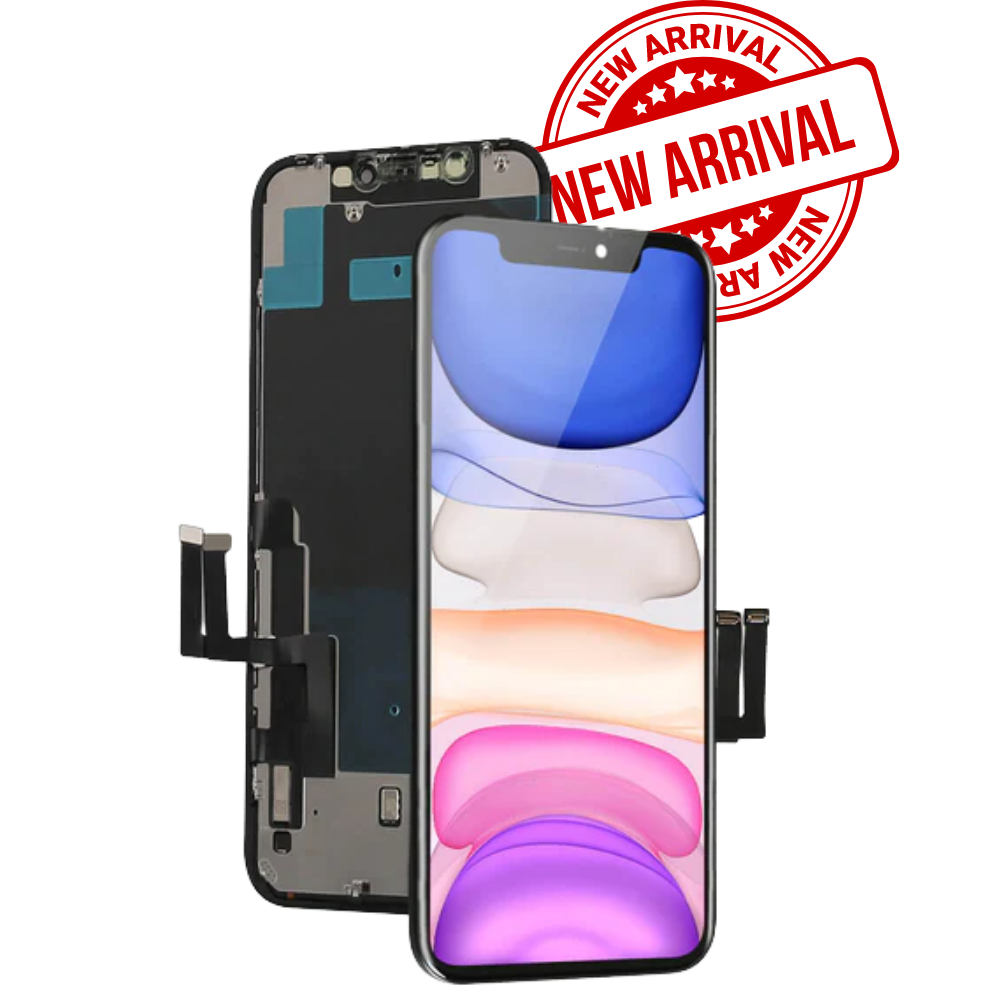
Se convenienza, durata, e la facilità di sostituzione è la cosa più importante, Il display LCD TFT rimane una scelta eccezionale. Le officine di riparazione e i grossisti spesso preferiscono gli schermi sostitutivi TFT perché offrono qualità stabile e prezzi competitivi.
Se la qualità dell'immagine, efficienza della batteria, design premium, e la tecnologia a prova di futuro sono priorità, OLED offre un'esperienza superiore. La differenza nella qualità del display tra i moderni pannelli OLED e i tradizionali pannelli TFT è immediatamente evidente per la maggior parte degli utenti.
Per produttori di smartphone e professionisti del settore delle riparazioni, la realtà pratica è chiara: OLED domina il mercato premium, mentre TFT continua a servire in modo efficiente il segmento value. Entrambe le tecnologie rimangono componenti essenziali dell’ecosistema globale degli smartphone.
Conclusione
La competizione tra display TFT e OLED non riguarda la sostituzione completa di una tecnologia con l'altra. Invece, riflette l’evoluzione delle priorità dei consumatori e delle capacità produttive. La tecnologia LCD TFT continua a offrire un valore eccezionale, affidabilità, e convenienza, mentre l'OLED spinge i confini delle prestazioni visive, Efficienza energetica, e disegno industriale.
Mentre i costi di produzione continuano a diminuire e la capacità produttiva si espande, OLED probabilmente rafforzerà la sua posizione tra gli smartphone tradizionali. Tuttavia i display TFT rimangono indispensabili per i dispositivi economici, applicazioni industriali, e il mercato globale delle riparazioni. Comprendere i punti di forza e i limiti di ciascuna tecnologia consente ai consumatori, grossisti, professionisti della riparazione, e ai produttori di prendere decisioni di acquisto migliori in un settore degli smartphone sempre più competitivo.
Domande frequenti
1. L'OLED è sempre migliore dell'LCD TFT?
NO. OLED offre qualità dell'immagine e contrasto superiori, mentre il display LCD TFT offre una migliore convenienza e spesso una maggiore durata.
2. Gli schermi OLED consumano meno batteria?
Generalmente sì, soprattutto quando si visualizzano contenuti oscuri o si utilizzano interfacce in modalità oscura.
3. Gli schermi TFT possono subire burn-in??
NO. I display LCD TFT non soffrono di ritenzione permanente dell'immagine come potenzialmente possono fare i pannelli OLED.
4. Perché gli schermi sostitutivi OLED sono più costosi?
La produzione di OLED implica processi di produzione più complessi, rendimenti più bassi, e maggiori costi dei materiali.
5. Gli schermi TFT scompariranno in futuro?
Improbabile. La tecnologia LCD TFT rimane altamente competitiva per gli smartphone economici, dispositivi industriali, e applicazioni di riparazione aftermarket.