
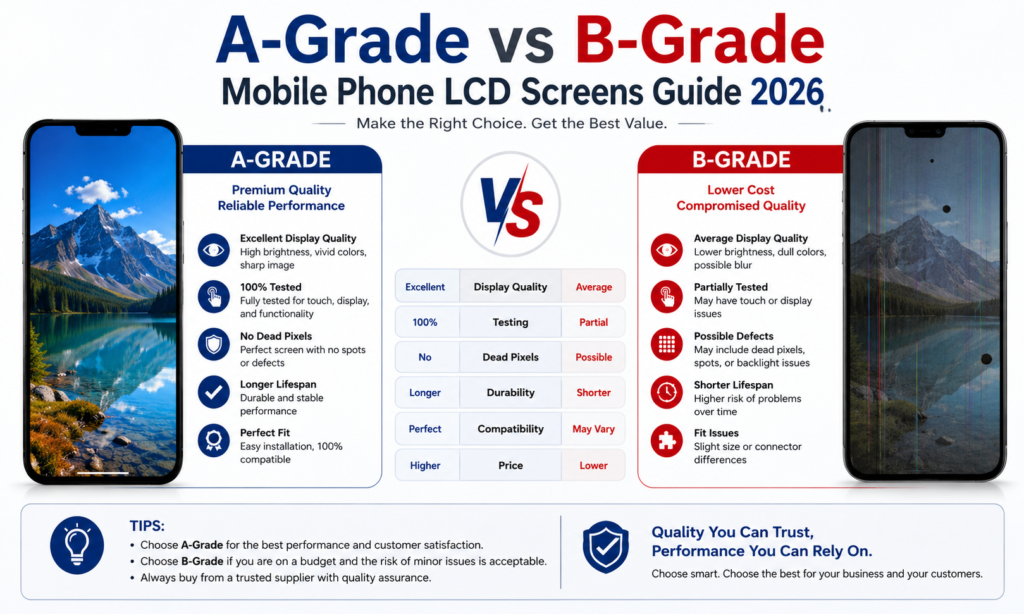
Il settore globale della riparazione e sostituzione degli smartphone continua ad espandersi poiché i consumatori conservano i propri dispositivi più a lungo e danno priorità alle riparazioni rispetto alla sostituzione. Secondo recenti ricerche di mercato, il mercato globale della riparazione degli smartphone ha raggiunto circa 193 miliardi di dollari in entrata 2025 e si prevede che supererà 247 miliardi di dollari entro 2032. Nel frattempo, Si prevede che le spedizioni mondiali di display per smartphone supereranno 2.24 miliardi di unità in 2025, trainato sia dalla produzione di nuovi dispositivi che dal crescente settore delle riparazioni aftermarket.
Per i grossisti, distributori, catene di riparazione, e responsabili degli acquisti, uno degli aspetti più confusi dell'acquisto in blocco di schermi LCD per telefoni cellulari è capire la differenza tra Classe A E Grado B schermi. Questi termini sono ampiamente utilizzati in tutta la catena di fornitura dei display per smartphone in Cina, soprattutto nel mercato Huaqiangbei di Shenzhen, tuttavia molti acquirenti internazionali fraintendono ciò che effettivamente significano. Alcuni acquirenti credono erroneamente che i prodotti di categoria B siano difettosi o inutilizzabili, mentre altri presumono che tutti i prodotti di classe A siano identici ai display OEM installati in fabbrica.
La realtà è molto più sfumata. Nel settore dei display dei telefoni cellulari, Le classificazioni di grado A e B descrivono principalmente gli standard estetici e di qualità degli schermi sostitutivi piuttosto che la loro funzionalità di base. Comprendere queste distinzioni può aiutare gli acquirenti a ridurre i costi, evitare controversie, ottimizzare la gestione delle scorte, e selezionare i prodotti giusti per i diversi segmenti di clientela.
Perché comprendere la classificazione dello schermo è importante nel settore degli LCD per smartphone
Immagina di acquistare 10,000 schermi degli smartphone senza definire chiaramente gli standard di qualità. La spedizione arriva, ogni schermo si accende, e le funzioni touch funzionano correttamente. Eppure alcuni schermi contengono minuscole particelle di polvere, alcuni hanno microscopiche macchie bianche, e diversi mostrano leggere irregolarità nella retroilluminazione. Si tratta di prodotti difettosi o di prodotti accettabili di livello commerciale?? La risposta dipende interamente dallo standard di classificazione concordato prima dell'acquisto.
L’ecosistema di riparazione degli smartphone è diventato sempre più complesso. I consumatori ora si aspettano una qualità di riparazione eccellente e allo stesso tempo chiedono prezzi più bassi. Officine di riparazione, grossisti, compagnie assicurative, restauratori, e i rivenditori online operano tutti con requisiti di qualità e margini di profitto diversi. Ciò crea molteplici segmenti di mercato in cui diversi gradi di schermi possono servire a scopi commerciali legittimi.
Gli analisti del settore riferiscono inoltre che la sostituzione dei display aftermarket rimane uno dei segmenti in più rapida crescita nel settore della riparazione degli smartphone perché i danni al display rappresentano più di 60% di tutte le custodie di riparazione per smartphone in tutto il mondo. Con l'aumento dei volumi di riparazione, i sistemi di classificazione standardizzati diventano essenziali per mantenere la trasparenza della catena di fornitura e la soddisfazione del cliente.
Per acquirenti professionisti, comprendere la gradazione dello schermo non è una semplice conoscenza tecnica: è un vantaggio competitivo che incide direttamente sulla redditività, soddisfazione del cliente, e costi di garanzia.
Il mercato globale della sostituzione dei display degli smartphone in 2026
L’industria dei display per smartphone in 2026 continua a sperimentare trasformazioni significative. L’adozione degli OLED sta accelerando rapidamente, mentre la tecnologia LCD rimane dominante nei dispositivi entry-level e nel mercato dei sostitutivi grazie alla sua efficienza in termini di costi e all’ampia base installata. I ricercatori di mercato prevedono che i display AMOLED supereranno 45% delle spedizioni totali di pannelli per smartphone, mentre le tecnologie LCD continueranno a rappresentare circa 55% delle spedizioni globali attraverso 2026.
I produttori cinesi ora svolgono un ruolo centrale nell’ecosistema globale dei display. Aziende come BOE, TCL CSOT, Tianma, e Visionox continuano ad espandere la capacità produttiva, competendo aggressivamente sui prezzi e sullo sviluppo tecnologico. Questa intensa competizione ha creato abbondanti opportunità di fornitura per le aziende di riparazione aftermarket, introducendo contemporaneamente variazioni significative negli standard di qualità tra i fornitori.
Un'altra importante tendenza del mercato è la rapida crescita del settore degli smartphone ricondizionati. I consumatori scelgono sempre più la riparazione e la ristrutturazione piuttosto che la sostituzione perché gli smartphone di punta sono diventati più costosi. Questa tendenza ha creato una forte domanda per più livelli di qualità di schermi sostitutivi, compresi sia prodotti premium di grado A che alternative economiche di grado B.
Per i professionisti degli appalti, il moderno mercato dei display per smartphone assomiglia a un'autostrada a più corsie piuttosto che a un'unica strada. Diversi gradi di qualità servono destinazioni diverse, e capire quale strada scegliere determina il successo commerciale.
Cosa fa “Grado A” Media dello schermo LCD del telefono cellulare?
Definizione di grado A (Originale, Completamente funzionale, Qualità premium)
Nel settore degli LCD per smartphone, Schermi di prima qualità generalmente si riferiscono a prodotti che soddisfano i più elevati standard di qualità commerciale disponibili all'interno di una particolare categoria. Queste schermate sono comunemente descritte utilizzando termini come originale, originale completo, Qualità AAA, originale di fabbrica, O 100% grado premium testato.
Il display di uno smartphone di classe A possiede in genere le seguenti caratteristiche:
- Aspetto nuovissimo
- Prestazioni di visualizzazione perfette
- Funzionalità touch perfetta
- Nessuna contaminazione visibile da polvere
- Nessun pixel morto
- Nessuna macchia bianca
- Nessuna perdita di luce
- Nessun problema anomalo di retroilluminazione
- Nessun graffio o difetto estetico
- Test funzionali completi completati
Il concetto chiave è che gli schermi di grado A forniscono un'esperienza che si avvicina molto al display originale installato in fabbrica. Quando i clienti installano uno schermo sostitutivo di grado A, non devono percepire alcuna evidente compromissione visiva o funzionale rispetto al dispositivo originale.
Per officine di riparazione premium, centri assistenza autorizzati, fornitori di riparazioni assicurative, e restauratori di fascia alta, I display di classe A rappresentano lo standard di approvvigionamento preferito perché le aspettative dei clienti lasciano pochissimo spazio alle imperfezioni visibili.
Caratteristiche tecniche dei display di grado A
Gli schermi di grado A sono sottoposti a rigorose procedure di controllo qualità. I fornitori professionali spesso eseguono decine di passaggi di ispezione prima della spedizione, compreso il test della luminosità, verifica della calibrazione del colore, test di sensibilità al tocco, test di compatibilità del riconoscimento facciale, verifica del sensore di impronte digitali, ispezione del cavo flessibile, ed esame estetico.
I display OLED e LCD di grado A generalmente lo dimostrano:
| Elemento di ispezione | Standard di grado A |
|---|---|
| Qualità di visualizzazione | Perfetto |
| Toccare Funzione | Perfetto |
| Pixel morti | Nessuno |
| Macchie di polvere | Nessuno |
| Macchie bianche | Nessuno |
| Uniformità della retroilluminazione | Eccellente |
| Aspetto superficiale | Perfetto |
| Test funzionali | 100% Testato |
A causa di questi requisiti rigorosi, I prodotti di fascia A richiedono naturalmente prezzi premium. Tuttavia, riducono inoltre al minimo i tassi di restituzione, richieste di garanzia, e reclami dei clienti.
Cosa fa “Grado B” Media dello schermo LCD del telefono cellulare?
Definizione dei display di grado B
Uno dei più grandi malintesi nel settore della riparazione degli smartphone è che gli schermi di classe B siano prodotti difettosi. In realtà, I display professionali di grado B rimangono prodotti perfettamente funzionanti che contengono piccole imperfezioni estetiche o ottiche che non influiscono in modo significativo sull'uso quotidiano.
Di solito è dotato di uno schermo per smartphone di grado B:
- Prestazioni di visualizzazione completamente funzionali
- Risposta al tocco completamente funzionale
- Luminosità normale
- Resa cromatica normale
- Piccole imperfezioni estetiche
- Piccole irregolarità ottiche
- Nessun difetto funzionale importante
La distinzione importante è che gli schermi di grado B rimangono prodotti utilizzabili commercialmente. Semplicemente non soddisfano gli standard visivi estremamente severi richiesti per la classificazione di grado A.
Molti grossisti esperti acquistano intenzionalmente inventario di livello B perché offre costi sostanzialmente inferiori pur mantenendo un'esperienza utente accettabile.
Difetti minori comuni riscontrati negli schermi di grado B
Diversi tipi di imperfezioni minori possono comportare la classificazione di grado B:
| Caratteristiche comuni del grado B | Effetto sull'esperienza dell'utente |
|---|---|
| Piccole particelle di polvere | Di solito inosservato durante il normale utilizzo |
| Contaminazione minore | Impatto visivo minimo |
| Piccole macchie bianche | Visibile solo su sfondi specifici |
| Leggero effetto Bleeding della retroilluminazione | Non influisce sulla funzionalità |
| Piccoli segni estetici | Puramente estetico |
| Piccole irregolarità del display | Influenza visiva limitata |
Pensa agli schermi di classe B come a un'auto di lusso con una piccola imperfezione della vernice nascosta sotto il paraurti. Il motore funziona perfettamente, il veicolo marcia perfettamente, ma non riesce a soddisfare gli standard di perfezione dello showroom.
Per molti consumatori attenti al budget e ai mercati delle riparazioni, questo compromesso rappresenta un valore eccellente.
Schermi per telefoni cellulari di grado A e di grado B: Differenze chiave
Visualizza il confronto delle prestazioni
Dal punto di vista funzionale, sia gli schermi di grado A che quelli di grado B si comportano in modo simile nell'uso quotidiano. Gli utenti possono navigare, guardare i video, giocare, e comunicare normalmente. Le differenze riguardano principalmente la perfezione visiva piuttosto che la capacità operativa.
Confronto della sensibilità al tocco
Gli schermi professionali di grado B mantengono la funzionalità touch completa. Funzionalità multi-touch, riconoscimento dei gesti, e la reattività rimangono generalmente identiche ai prodotti di classe A perché le prestazioni del controller touch non sono il criterio di classificazione principale.
Confronto della qualità dell'aspetto
L'aspetto rappresenta la distinzione più significativa tra i gradi. I prodotti di categoria A aspirano alla perfezione, mentre i prodotti di grado B accettano piccole imperfezioni che rimangono entro gli standard di usabilità commerciale.
Analisi della differenza di prezzo
| Elemento di confronto | Grado A | Grado B |
|---|---|---|
| Qualità di visualizzazione | Perfetto | Piccole imperfezioni |
| Toccare Funzione | Perfetto | Perfetto |
| Qualità cosmetica | Perfetto | Difetti minori |
| Segmento clienti | Premio | Bilancio |
| Tasso di rendimento | Il più basso | Leggermente più alto |
| Prezzo di mercato | Più alto | Inferiore |
A seconda della disponibilità del modello e delle condizioni di mercato, I display di grado B possono costare tra 10% E 40% meno rispetto ai prodotti di categoria A comparabili, creando sostanziali opportunità di risparmio per gli acquirenti all'ingrosso.
Perché esistono schermi di grado B nella catena di fornitura?
La perfezione produttiva è straordinariamente difficile. Anche i più grandi produttori di display al mondo producono occasionalmente pannelli con piccole variazioni estetiche. Piuttosto che scartare prodotti altrimenti funzionali, i fornitori li classificano secondo standard di qualità commerciale.
Questa pratica porta benefici a tutta la filiera. I produttori riducono gli sprechi, i grossisti hanno accesso a un inventario a basso costo, le officine di riparazione possono servire i clienti attenti al budget, e i consumatori ricevono opzioni di riparazione più convenienti.
La crescente enfasi sulla sostenibilità e sull’estensione del ciclo di vita dei dispositivi ha ulteriormente aumentato l’accettazione dei componenti classificati. Gli esperti del settore riconoscono sempre più che consentire piccole imperfezioni estetiche può ridurre significativamente i rifiuti elettronici mantenendo eccellenti prestazioni funzionali.
In molti mercati in via di sviluppo, I prodotti di fascia B costituiscono una parte sostanziale della domanda di riparazione di smartphone perché la convenienza rimane il criterio di acquisto principale.
Quali acquirenti dovrebbero scegliere gli schermi di grado A?
Gli schermi di classe A sono ideali per le aziende che operano in segmenti di mercato premium in cui le aspettative dei clienti sono eccezionalmente elevate.
I tipici acquirenti di grado A includono:
- Centri assistenza autorizzati
- Fornitori di riparazioni assicurative
- Catene di riparazione premium
- Specialisti Apple e Samsung
- Restauratori di fascia alta
- Fornitori di servizi di riparazione aziendali
- Venditori di e-commerce che offrono garanzie estese
Per queste aziende, la reputazione spesso conta più del costo iniziale dell’approvvigionamento. Un cliente che nota una piccola macchia bianca su una riparazione premium potrebbe non tornare mai più.
L’investimento aggiuntivo in scorte di classe A funziona effettivamente come assicurazione contro i danni alla reputazione e le spese di garanzia.
Quali acquirenti dovrebbero scegliere gli schermi di grado B?
I prodotti di categoria B servono un segmento di mercato altrettanto importante.
I tipici acquirenti di grado B includono:
- Officine di riparazione economiche
- Distributori dei mercati emergenti
- Commercianti all'ingrosso
- Centri di riparazione educativi
- Ricondizionatori secondari di smartphone
- Venditori di e-commerce sensibili al prezzo
Molti consumatori danno priorità alla convenienza rispetto alla perfezione estetica. Un cliente che ripara uno smartphone vecchio di quattro anni può accettare volentieri una piccola irregolarità nella retroilluminazione in cambio di un notevole risparmio sui costi.
I responsabili degli acquisti di successo comprendono che la selezione della qualità dovrebbe allinearsi alle aspettative dei clienti piuttosto che perseguire la perfezione in ogni situazione.
Come gli acquirenti professionisti ispezionano gli schermi LCD degli smartphone
Standard di ispezione visiva
L'ispezione di qualità professionale inizia con l'esame visivo in condizioni di illuminazione controllata. Gli ispettori valutano l'uniformità della luminosità, consistenza del colore, contaminazione, macchie bianche, e aspetto cosmetico.
Le sale di ispezione spesso utilizzano il nero, bianco, rosso, verde, e test su sfondo blu per rivelare difetti nascosti che potrebbero non apparire durante il normale funzionamento.
Procedure di test funzionali
Include il test del display degli smartphone moderni:
- Test di sensibilità al tocco
- Verifica multi-touch
- Test di luminosità
- Calibrazione del colore
- Funzionalità delle impronte digitali
- Compatibilità con il riconoscimento facciale
- Verifica della frequenza di aggiornamento
- Visualizza l'esame del burn-in
Alcuni fornitori professionali eseguono più di trenta controlli di qualità prima di approvare la spedizione.
Ispezione dell'imballaggio e del trasporto
Anche gli schermi perfetti possono diventare difettosi a causa di un imballaggio inadeguato. Gli acquirenti dovrebbero verificare:
- Protezione ESD
- Protezione contro le bolle
- Confezione individuale
- Resistenza alla compressione del cartone
- Protezione dall'umidità
- Assicurazione sui trasporti
La qualità dell'imballaggio determina spesso se gli schermi arrivano come prodotti di classe A o se vengono danneggiati durante il trasporto.
Rischi di incomprensione delle definizioni di grado A e B
Le più grandi controversie sugli appalti nel settore dei display per smartphone spesso derivano da aspettative di qualità poco chiare piuttosto che da prodotti difettosi.
Gli errori comuni includono:
- Supponendo che il grado B significhi difettoso
- Supponendo che tutti i prodotti di grado A siano originali OEM
- Mancata definizione dei criteri di accettazione
- Ignorare gli standard di ispezione
- Acquisto basato esclusivamente sul prezzo
Un contratto di appalto senza standard di classificazione chiaramente definiti assomiglia all’acquisto di una casa senza vedere le fotografie: potresti ricevere esattamente ciò che ti è stato promesso, eppure rimarrai deluso.
Gli acquirenti di successo stabiliscono specifiche dettagliate prima di effettuare ordini di grandi volumi.
Come reperire fornitori affidabili di LCD per telefoni cellulari in Cina
La Cina rimane il più grande centro di produzione e distribuzione di display per smartphone al mondo. Industry analysts estimate that Chinese manufacturers now account for approximately 70% of global smartphone panel production capacity.
When sourcing suppliers, buyers should verify:
- Company operating history
- Factory audit reports
- Quality control procedures
- Inspection standards
- Politiche di garanzia
- Shipment records
- Sample consistency
- Supporto post-vendita
Professional buyers should always request both A-grade and B-grade samples before committing to large-volume purchases. Physical inspection remains the most reliable method for establishing quality expectations.
Long-term supplier relationships often generate better outcomes than continuously pursuing the lowest available price.
Future Trends in Smartphone Screen Procurement in 2026
The smartphone display market continues evolving rapidly. OLED adoption is accelerating, while advanced technologies such as LTPO, display pieghevoli, under-display sensors, e i pannelli ad alta frequenza di aggiornamento stanno diventando sempre più comuni.
Allo stesso tempo, i mercati della riparazione continuano ad espandersi perché i consumatori conservano i dispositivi più a lungo e cercano alternative più sostenibili alla sostituzione. Questa tendenza probabilmente aumenterà la domanda di sistemi di classificazione trasparenti e definizioni di qualità standardizzate.
Gli esperti del settore prevedono sempre più che i futuri standard di approvvigionamento di display incorporeranno classificazioni più precise oltre la tradizionale terminologia di grado A e di grado B. Sistemi di punteggio della qualità digitale, Ispezione assistita dall'intelligenza artificiale, e i programmi di certificazione standardizzati potrebbero eventualmente sostituire le attuali pratiche di classificazione relativamente soggettive.
Per i professionisti degli appalti, il principio fondamentale rimane invariato: comprendere gli standard di qualità non è un centro di costo: è un centro di profitto.
Conclusione
Comprendere la differenza tra Classe A E Grado B Gli schermi LCD dei telefoni cellulari sono essenziali per chiunque sia coinvolto negli acquisti all'ingrosso, riparazione dello smartphone, ristrutturazione, o distribuzione.
Schermi di prima qualità offrono qualità premium con prestazioni di visualizzazione perfette, funzionalità touch perfetta, e aspetto impeccabile. Schermi di grado B rimangono perfettamente funzionanti ma contengono piccole imperfezioni estetiche come piccole particelle di polvere, leggera contaminazione, minuscole macchie bianche, o piccole irregolarità della retroilluminazione che non influiscono sul normale funzionamento.
Nessuno dei due gradi lo è intrinsecamente “Bene” O “Cattivo.” Invece, ciascuno serve un segmento di mercato diverso con aspettative dei clienti e requisiti di prezzo distinti. Gli acquirenti di successo si concentrano meno sulla ricerca del prodotto “migliore” grado e altro sulla selezione del grado giusto per il loro modello di business.
Mentre il settore globale della riparazione degli smartphone continua ad espandersi, la competenza nel procurement nella classificazione dei display diventerà un vantaggio competitivo sempre più prezioso.
Domande frequenti
Domande frequenti 1: Gli schermi LCD dei telefoni di grado B sono difettosi?
NO. Gli schermi di grado B sono generalmente display perfettamente funzionanti con piccole imperfezioni estetiche o visive che non influiscono in modo significativo sul normale utilizzo.
Domande frequenti 2: Gli schermi di grado B hanno funzionalità touch funzionanti?
SÌ. Gli schermi professionali di grado B mantengono la funzionalità touch completa e superano le procedure di test funzionali.
Domande frequenti 3: Quanto sono più economici gli schermi di grado B rispetto agli schermi di grado A?
A seconda del modello e delle condizioni di mercato, Gli schermi di grado B possono costare approssimativamente 10% A 40% meno dei prodotti di classe A.
Domande frequenti 4: Le officine di riparazione premium dovrebbero acquistare schermi di grado B?
I fornitori di riparazioni premium di solito preferiscono i prodotti di classe A perché le aspettative dei clienti in termini di aspetto e qualità sono significativamente più elevate.
Domande frequenti 5: Come possono gli acquirenti evitare controversie quando acquistano schermi LCD per smartphone?
Buyers should establish written quality specifications, request samples, define inspection standards, and confirm grading criteria before placing bulk orders.



