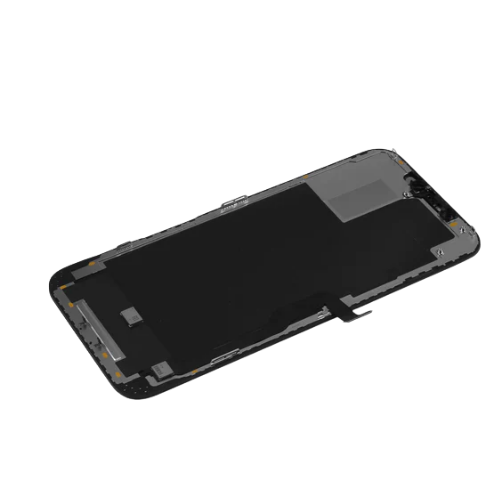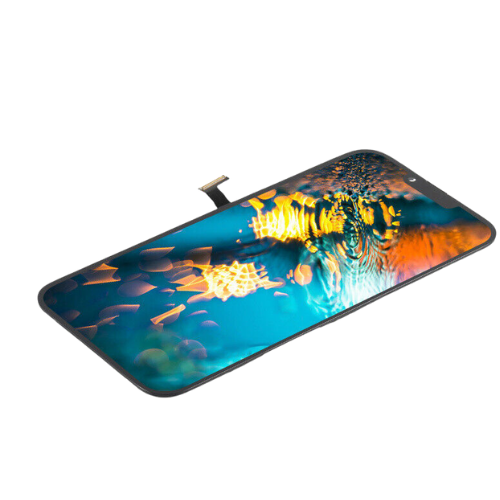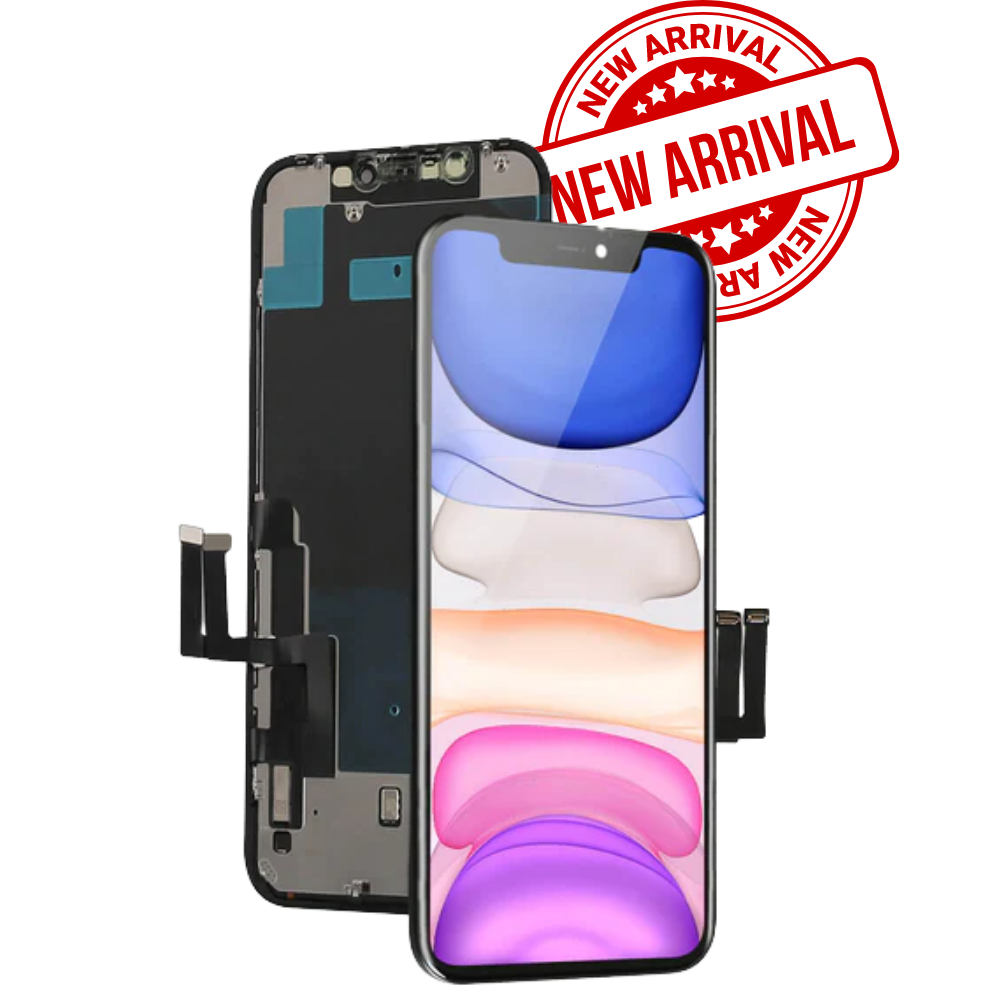
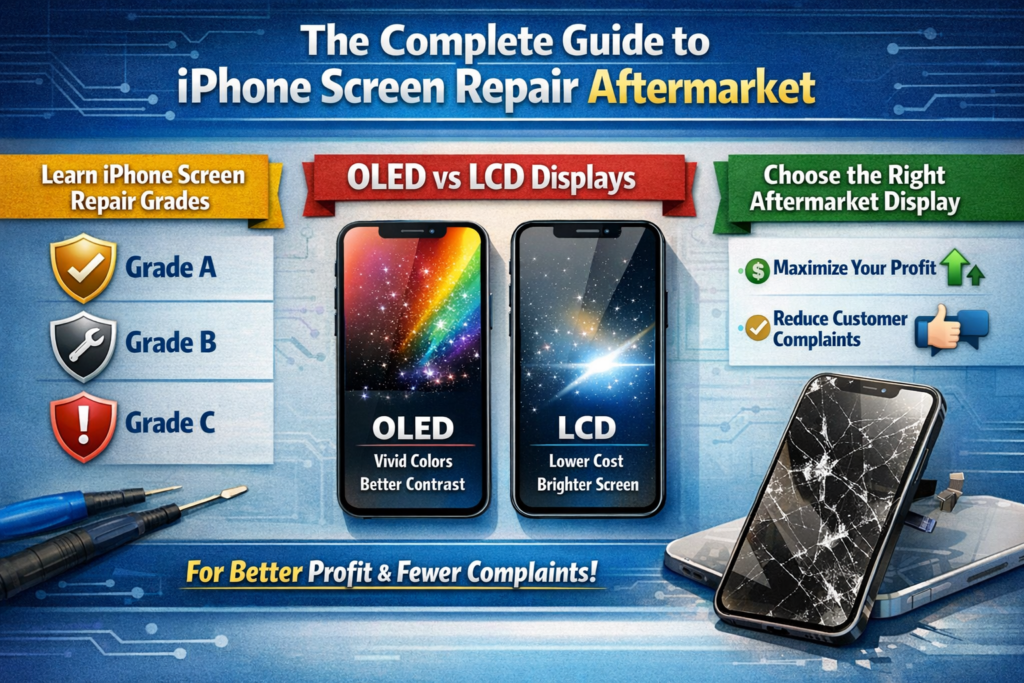
Рынок ремонта экранов iPhone огромен. Не просто большой — сложный, слоистый, и иногда сбивает с толку. Для ремонтных мастерских и оптовиков, понимание характеристик экрана послепродажного обслуживания не является обязательным. В этом разница между высокой прибылью и постоянными жалобами клиентов..
Думайте об экране iPhone как о сердце телефона. Это не просто кусок стекла. Это полностью интегрированный модуль, сочетающий в себе дисплей, сенсорный дигитайзер, Компоненты Face ID, датчики приближения, наушник, и более. Замените его неправильно, и весь опыт меняется.
Как же выбрать правильный экран? Давайте разберем это шаг за шагом.
Почему экраны iPhone доминируют в сфере ремонта
Повреждение экрана — ремонт iPhone номер один в мире. Падения случаются. Стеклянные трещины. Дисплеи становятся черными. И когда это произойдет, клиентам не нужны объяснения — им нужны решения.
Но вот сложная часть: не все сменные экраны одинаковы.
Вы можете купить экран для $15 или $150. Оба «подходят». Но делают ли они то же самое?? Абсолютно нет.
Именно здесь понимание спецификаций становится вашим конкурентным преимуществом..
Фонд – две основные экранные технологии
Прежде чем мы даже поговорим о комплектациях вторичного рынка, нам нужно понять одну основную истину:
В iPhone есть только две основные технологии отображения.
Объяснение технологии ЖК-дисплея
ЖК -дисплей (Жидкокристаллический дисплей) экраны использовались в таких моделях, как:
- iPhone 6 / 7 / 8
- айфон ХС
- iPhone 11
- айфон серии SE
ЖК-экранам требуется подсветка для освещения пикселей.. Вот почему черный цвет кажется слегка серым — подсветка всегда включена..
Преимущества:
- Более низкая стоимость
- Развитое предложение послепродажного обслуживания
- Стабильная производительность
Ограничения:
- Низкая контрастность
- Менее яркие цвета
- Немного более толстая структура
Объяснение технологии OLED
Начиная с iPhone X, Apple перешла на OLED для большинства моделей премиум-класса.
OLED-панели используются в:
- айфон х
- iPhone 12 / 13 / 14 / 15 / 16 ряд (кроме ЮВ)
Каждый пиксель излучает свой собственный свет. Это значит настоящие негры, бесконечный контраст, и лучшая энергоэффективность.
OLED тоньше, ярче, и более ярким, но и гораздо более дорогим в производстве.
Ключевые различия между ЖК-дисплеем и OLED
| Особенность | ЖК -дисплей | Олинг |
|---|---|---|
| Подсветка | Необходимый | Не требуется |
| Черный цвет | Сероватый | Настоящий черный |
| Контраст | Ограниченный | бесконечный |
| Толщина | Толще | тоньше |
| Расходы | Ниже | Выше |
Это технологическое различие определяет все на вторичном рынке..
Пять основных классов экранов iPhone для вторичного рынка
Теперь давайте перейдем к реальному полю битвы — классификации вторичного рынка..
1. Оригинальные выдвижные экраны (OEM в разобранном виде)
Это оригинальные экраны Apple, снятые с бывших в употреблении устройств..
Никакого стороннего производства. Без замены компонентов.
Почему они премиум-класса:
- Идеальная точность цветопередачи
- Исходные уровни яркости
- Истинный тон & ProMotion полностью поддерживается
- Совместимость с Face ID сохранена
Они обеспечивают производительность заводского уровня..
обратная сторона? Высокая стоимость и ограниченное предложение..
2. Восстановленные оригинальные экраны (Стекло заменено)
Вот где это становится интересным.
Технические специалисты удаляют битое стекло с оригинальной панели и ламинируют новый слой стекла..
Внутренняя OLED- или ЖК-панель остается оригинальной..
Производительность:
- Качество дисплея практически идентично OEM
- Качество сенсорного экрана зависит от качества стекла
- Истинный тон обычно сохраняется
Думайте об этом как о ремонте «окна» с сохранением оригинального двигателя..
Цена: Ниже, чем OEM-производитель, но все же премиум.
3. Оригинальные экраны, прошедшие диагностические испытания
Это оригинальные экраны, которые были профессионально протестированы и оценены..
Они могут поступать из официальных сервисных программ или крупных ремонтных центров..
Производительность стабильна и надежна, хотя могут иметься незначительные косметические дефекты.
Эта категория предлагает баланс между ценой и надежностью..
4. Сторонние OLED-экраны
Это самый конкурентный сегмент на современном рынке..
Полностью производится сторонними заводами..
Существуют два основных типа:
Жесткий OLED
Использует жесткие подложки.
Характеристики:
- Немного толще
- Более широкая нижняя рамка ("подбородок")
- Более доступный
Производительность:
- Достойный цвет
- Умеренная яркость
- Меньшая долговечность по сравнению с оригиналом.
Гибкий (Мягкий) Олинг
Используются гибкие подложки, аналогичные оригинальным панелям Apple..
Преимущества:
- Тонкий дизайн
- Узкая рамка
- Улучшенная цветопередача
- Более высокая яркость
Высококачественные мягкие OLED-экраны могут даже поддерживать True Tone после передачи данных..
Но даже мягкие OLED-экраны высшего уровня могут показывать:
- Небольшой сдвиг цвета под крайними углами
- Более высокий риск выгорания
- Более низкая однородность при низкой яркости
Системное предупреждение? Да — iPhone, скорее всего, отобразит сообщение «Невозможно проверить, что на этом iPhone установлен подлинный дисплей Apple».
5. Сторонний ЖК-дисплей (Инселл / TFT) для OLED-моделей
Это бюджетный вариант.
Некоторые рынки ремонта заменяют OLED-экраны альтернативными ЖК-дисплеями, чтобы сократить расходы..
Компромиссы производительности:
- Низкая яркость
- Выцветшие цвета
- Плохие углы обзора
- Нет истинного тона
Это работает, но это все равно, что поставить экономичные шины на спортивную машину..
Для моделей с собственным ЖК-дисплеем (как айфон 11), Качество ЖК-дисплея стороннего производителя более зрелое и приемлемое, хотя все равно уступает оригиналу.
Сравнение производительности ядра
Давайте упростим.
| Оценка | Цвет | Яркость | Истинный тон | Долговечность | Цена |
|---|---|---|---|---|---|
| OEM вытащил | Отличный | Отличный | Да | Отличный | $$$$ |
| Восстановленный OEM | Отличный | Отличный | Да | Очень хороший | $$$ |
| Мягкий OLED | Очень хороший | Очень хороший | Частичный | Хороший | $$ |
| Жесткий OLED | Умеренный | Умеренный | Нет | Умеренный | $$ |
| Инселл ЖК | Базовый | Низкий | Нет | Базовый | $ |
Одно ясно: цена отражает производительность.
Важные технические термины, которые вы должны знать
Инселл Технолоджи
Incell интегрирует сенсорный экран в слой ЖК-дисплея.
На языке послепродажного обслуживания, обычно это относится к более дешевым заменам ЖК-дисплеев..
Функциональность True Tone
True Tone регулирует цветовую температуру в зависимости от окружающего освещения..
Без оригинальных средств передачи данных, эта функция не будет работать на большинстве экранов сторонних производителей..
Совместимость микросхем IC
Микросхема драйвера дисплея управляет яркостью и откликом на прикосновение..
Экраны более высокого класса могут позволить переносить микросхемы с оригинальных панелей., улучшение стабильности.
Жесткий OLED против гибкого OLED
Гибкий OLED соответствует более высокому уровню.
Если поставщик не может это четко указать — это красный флаг..
Стратегия ценообразования для ремонтных мастерских
Умные магазины не предлагают ни одного варианта. Они предлагают три.
- Бюджет
- Стандартный
- Премиум
Объясните различия четко.
Клиенты ненавидят сюрпризы больше, чем высокие цены.
Прозрачность укрепляет доверие.
Как избежать ловушек низких цен
Если цена звучит слишком хорошо, чтобы быть правдой — это так..
Некоторые поставщики называют жесткие OLED-экраны «оригинальным качеством».
Задавайте прямые вопросы:
- Это гибкий OLED??
- Поддерживает ли он True Tone после передачи?
- Какой уровень яркости?
Детали отличают профессионалов от любителей.
Консультации по закупкам для оптовиков
Модели OLED сейчас доминируют на рынке.
Спрос на недорогие ЖК-заменители OLED-устройств снижается.
Стратегия инвентаризации должна быть сосредоточена на:
- Гибкий OLED
- Восстановленный OEM
- Выберите запас OEM
Дешевые замены Incell могут увеличить объемы продаж, но прибыль невелика, а жалоб больше.
Заключительные мысли о принятии более разумных решений
Рынок запчастей для экранов iPhone – это не просто покупка более дешевых запчастей..
Речь идет о понимании технологии, оценивание, производительность, и ожидания клиентов.
Думайте об этом как о вине. Есть столовые бутылки и винтажные подборки.. Оба можно пить. Но они обслуживают разную аудиторию.
Ваша работа? Сопоставьте продукт с клиентом.
Баланс бюджета и производительности.
И помните — при замене экрана, вы действительно получаете то, за что платите.
Заключение
Рынок ремонта экранов iPhone огромен, конкурентоспособный, и высокотехнологичный. От оригинальных вытянутых дисплеев до гибких OLED и бюджетных вариантов Incell LCD., каждая категория служит разным целям. Для ремонтных мастерских, предложение многоуровневых опций обеспечивает лучшую удовлетворенность клиентов. Для оптовиков, понимание различий в оценках обеспечивает более высокую прибыль и меньшую прибыль.. В конце концов, изучение характеристик экрана — это не просто технические знания, это бизнес-стратегия.
Часто задаваемые вопросы
1. Всегда ли гибкий OLED лучше жесткого OLED??
Да, в большинстве случаев. Гибкий OLED обеспечивает лучшее качество изображения., более тонкий дизайн, и производительность ближе к исходным экранам.
2. Могут ли сторонние экраны поддерживать True Tone??
Некоторые высококачественные гибкие OLED-экраны могут поддерживать True Tone после передачи исходных данных дисплея с помощью специализированных инструментов..
3. Почему iPhone показывает предупреждение о «неоригинальном дисплее»?
Потому что Apple проверяет серийные номера экранов. Большинство сторонних экранов вызывают это уведомление..
4. Надежны ли восстановленные оригинальные экраны??
Если профессиональный ремонт, они сохраняют оригинальные панели дисплея и обеспечивают производительность, близкую к OEM..
5. Должны ли ремонтные мастерские иметь в наличии ЖК-дисплеи Incell для моделей OLED??
Только для чрезвычайно чувствительных к ценам рынков.. Удовлетворенность клиентов может быть ниже по сравнению с заменой OLED.